Beneteau Sense 50 Buyer's Guide and Review
The 2010 boat that spun on its own axis at Annapolis, moved every cabin forward and gave production cruisers the hard chine.
- Length
- 50.1 ft15.27 m
- Beam
- 15.9 ft4.86 m
- Draft
- 7.3 ft2.2 m
- Cabins
- 3 (owner's cabin, guest double and a bunk cabin), or 2 plus an office and an optional cockpit-access cabin
- Used price
- $260K to $420K
On this page
- Overview
- From a 118 ft concept to the Beneteau Sense 50
- Dock & Go, the trick that stopped the show
- A cockpit as wide as the boat and every cabin forward
- How the chined hull sails
- Numbers to verify on any boat you view
- When the 50 became the Sense 51
- Owning a Sense 50 a decade on
- Specifications
- Price and value
- Strengths and weaknesses
- Used buyer checklist
- Rivals
- Our verdict
- FAQ
The Beneteau Sense 50 is a Berret-Racoupeau designed cruiser with a Nauta interior, launched in 2010 and built until the Sense 51 replaced it in 2016. It pioneered the Dock & Go joystick drive and an all-forward cabin plan.
- Couples who entertain at anchor
- Former catamaran sailors wanting a monohull
- Owners nervous about docking
- Coastal and island cruising
From a 118 ft concept to the Beneteau Sense 50
The Beneteau Sense 50 started life as a superyacht idea. Yachting World traced it to a 118 ft concept called Evoe that Berret-Racoupeau drew in 2006; Beneteau liked it and asked for something similar but smaller. Inside the company the project carried the code name LAO, for living aboard open, according to Cruising World. The brief was a boat whose cockpit worked like a terrace and whose living spaces were not buried deep in the hull.
Four prototypes later, the Sense 50 reached the autumn 2010 shows. Yachting World reported 20 sales during those shows, and Beneteau USA's president told Cruising World that the company had planned to build 40 in the first year but expected about 70 to leave the line by the end of August 2011. Cruising World's judges then named it Best Full-Size Cruiser, 50 to 55 Feet, in Boat of the Year 2011, calling it the show's most innovative new boat.
Beneteau Sense 50 by the numbers
- Sail area to displacement
- 20.3Plenty of sail for the weight, the boat should feel lively in light air.
- Displacement to length
- 154Light displacement for its length, quick but sensitive to added cruising weight.
- Theoretical hull speed
- 9.1 knThe practical top speed of a displacement monohull under normal sailing, based on waterline length.
- Ballast ratio
- 26%Relatively low ballast, form stability does more of the work.
- Capsize screening
- 1.97Below 2.0, the traditional threshold for offshore suitability.
- Motion comfort ratio
- 27.7Moderate motion comfort, typical of modern cruisers.
- Length to beam ratio
- 3.15 : 1Moderate proportions.
Dock & Go, the trick that stopped the show
Cruising World described the scene at the 2010 US Sailboat Show in Annapolis: cheering crowds watching a 50 ft sailboat crab sideways and spin in its own length. The system behind it, Dock & Go, combines a saildrive that rotates through 180 degrees, a powerful bow thruster and the autopilot, all controlled by a single joystick. Yachting World noted that Beneteau developed it with ZF and Yanmar for the 75 hp engine.
SAIL's tester threaded a marina entrance with a foot to spare on each side, then came back out the same way in reverse, and reckoned an average skipper would master the joystick in about 15 minutes. One caveat from that test still applies: switching to Dock & Go locks the twin rudders, so the boat maneuvers on thrust alone and must be handled at low speed. Cruising World's judges also asked what happens if the software fails, a fair question for a 15-year-old electronic system. Roughly half the early buyers chose it, Yachting World said.
A cockpit as wide as the boat and every cabin forward
Dropping the aft cabins let Berret-Racoupeau lower the cockpit sole and spread the cockpit across almost the full 15 ft 11 in beam. Three shallow steps at a 45 degree angle lead into the saloon, and Cruising World's judges compared the transition to stepping onto a catamaran bridge deck. Hinged helm seats lift out of the way for boarding and swimming, and a transom panel rises from a housing to close the stern at sea. The mainsheet runs to a fixed arch, and the U-shaped starboard seating converts to a large sun pad around a retractable table.
Below, the saloon and galley occupy the middle of the boat, with a long galley and a large porthole that serves as a pass-through to the cockpit. Batteries, fuel and water sit in a deep bilge under the raised saloon sole, while noisy machinery is aft, away from the sleeping cabins. Forward, the owner's cabin has an island berth and an en suite head with separate shower. Beneteau's 2015 list shows a three-cabin layout with a guest double and a bunk cabin, or a two-cabin version with an office, which Yachting World thought sensible for couples who rarely carry more than one set of guests. An extra cabin entered from the cockpit could replace the service area to port.
Testers had criticisms. Yachting World found berth stowage limited and the white leather option impractical, and Cruising World's judges wanted more footholds in the cockpit when heeled.
How the chined hull sails
Beneteau claimed the Sense heels about 5 degrees less than an equivalent Oceanis, and testers agreed it likes to be sailed flat. SAIL saw about 7 knots to windward in light air with little heel and tacking angles under 90 degrees; when the breeze built to 18 knots gusting 25 and the crew set a jib topsail, the boat accelerated easily to its 9 knot hull speed. Cruising World's judges, in a wet 14 knot breeze off Annapolis, logged 5.6 knots upwind and found it livelier on a reach.
Yachting World was more critical: in a Force 5 to 6 off Les Sables-d'Olonne the test boat had little feedback through the wheel and pointed only about 50 to 55 degrees, though it made over 7 knots and picked up another knot and a half off the wind. With a reef in the main the balance improved. The verdict across the tests is consistent: a comfortable, fast reaching cruiser rather than a close-winded one.
Under power SAIL measured 8.1 knots at a 2,600 rpm cruise, and full throttle brought the boat close to hull speed.
Numbers to verify on any boat you view
Beneteau's June 2015 equipment list gives the figures in our spec table: 50 ft 1 in overall, 46 ft 1 in on the waterline, 33,720 lb light displacement, 110 gallons of fuel with a second 110 gallon tank optional, and 151 gallons of water with an optional 42 gallon tank. Early press material differed, with SAIL's 2010 test quoting 6 ft 11 in for the deep keel and 5 ft 7 in for the shoal. Keel specifications may have changed during the run, so confirm the draft of the boat in front of you rather than trusting a brochure.
Sailboatdata calculates a sail area to displacement ratio of about 21 and a displacement to length ratio of about 154, with a comfort ratio near 28, which places the Sense 50 firmly among brisk modern coastal and offshore cruisers rather than heavy bluewater boats.
When the 50 became the Sense 51
In 2016 Beneteau refreshed the design as the Sense 51. SAIL reported in 2017 that the 50 had morphed into the 51 and the 55 into the 57, while the smaller Sense models were dropped. Sailboatdata shows the 51 on the same 46 ft 1 in waterline and 15 ft 11 in beam, with a bowsprit taking length to 52 ft 4 in and an 80 hp Yanmar. If you see a 2016 or later Sense with a fixed sprit, it is a 51; the earlier boats are the 50.
Owning a Sense 50 a decade on
The Sense 50 makes most sense for couples who spend more time at anchor than beating to windward, and for owners who value the single-level flow between saloon and cockpit. Budget about $25,000 to $50,000 a year for slip, insurance, haul-out, sails and systems on a 50 footer. Expect to replace original electronics, check every electric motor (tables, blinds, TV lift, companionway door) and service the saildrive diaphragm and seals on schedule.
Beneteau Sense 50 specifications
| Length overall | 50.1 ft15.27 m |
|---|---|
| Waterline length | 46.1 ft14.05 m |
| Beam | 15.9 ft4.86 m |
| Draft | 7.3 ft2.2 m |
| Air draft | 74.3 ft22.63 m |
| Displacement | 33,72 lbs15,295 kg |
| Ballast | 8,739 lbs3,964 kg |
| Sail area | 1,324 sq ft123 m² |
| Fuel capacity | 11 gal415 L |
| Fresh water | 151 gal57 L |
| Cabins | 3 (owner's cabin, guest double and a bunk cabin), or 2 plus an office and an optional cockpit-access cabin |
| Berths | 4 to 7 depending on layout |
| Heads | 2 |
| Maximum persons | 14 |
| Standard engines | Yanmar 75 hp diesel with saildrive |
| Optional engines | Dock & Go version with 180 degree rotating saildrive, bow thruster and joystick |
| Maximum power | 75 hp |
| Cruise speed | 8.1 knots |
| Hull type | Wide-sterned monohull with a hard chine aft and twin rudders |
| Keel | Cast iron fin, 7 ft 3 in deep (3,965 kg) or 6 ft 1 in shoal (4,450 kg) per Beneteau's 2015 list |
| Rig | Sloop with mainsheet on a fixed arch, 678 sq ft main and 646 sq ft 105 percent genoa, optional asymmetric spinnaker |
| Hull construction | Solid hand-laid fiberglass hull with internal grid, balsa-cored resin-infused deck, bolted cast iron keel |
| CE design category | A (9 persons), B (10), C (14) |
| Builder | Beneteau, France |
| Naval architect | Berret-Racoupeau Yacht Design |
| Other design credits | Nauta Design (interior) |
| Production | 2010 to 2016 |
| Status | Discontinued |
Figures come from builder documentation and independent tests where available. Displacement is usually quoted light, so a loaded cruising boat will weigh more. Compare these specs with another model.
How much does a Beneteau Sense 50 cost?
Dock & Go, the second fuel tank, a generator and electric winches add real value because they are costly to retrofit. Layout matters too: the three-cabin version suits families and charter, while two-cabin boats with the office appeal to couples. Many early boats were sold into the European market, so US-based examples in good order command a premium.
Estimate your yearly cost
A planning estimate using common rules of thumb: insurance near 1.5 percent of value, maintenance near 3 percent, haul out and bottom paint by length. Your marina, region and use will move these numbers. Open the full cost calculator.
Versions and options
- Three cabins, two heads
- Owner's cabin, guest double and a bunk cabin to starboard; best for families.
- Two cabins with office
- The bunk cabin becomes a desk and workshop, with an optional cockpit-access cabin to port.
- Dock & Go
- Rotating saildrive, bow thruster and joystick control; chosen by about half of early buyers.
- Sense 51 (2016)
- Refreshed successor with a bowsprit and 80 hp Yanmar.
Beneteau Sense 50 timeline
- 2006Berret-Racoupeau draws the 118 ft Evoe concept that inspires the Sense line
- 2010Sense 50 debuts at the autumn shows, including the US Sailboat Show in Annapolis
- 2011Named Cruising World's Best Full-Size Cruiser, 50 to 55 Feet
- 2015Beneteau issues its June 2015 equipment list for the 50
- 2016Replaced by the Sense 51
Strengths and weaknesses
What owners like
- Huge, low cockpit that flows into the saloon
- Dock & Go makes docking a 50 footer simple
- Sails flat and reaches fast
- Quiet sleeping cabins away from machinery
- Award-winning design with a strong following
- Flexible layouts including an office
What to weigh up
- Does not point as high as conventional cruisers
- Limited stowage in the cabins
- Open stern needs care in following seas
- Ageing electric systems and Dock & Go electronics
- Few footholds in the wide cockpit when heeled
Used Beneteau Sense 50 buyer checklist
Take this list to a viewing. Your ticks are saved in this browser so you can come back to it.
Always commission an independent marine survey and an engine survey before you buy. How a marine survey works.
Rivals to consider
Jeanneau Sun Odyssey 50 DS
A deck saloon from Beneteau's sister brand with conventional aft cabins and better visibility below.
Hanse 505
German cruiser of the following years with a self-tacking jib and a more conventional layout.
Beneteau Oceanis 58
The conventional Beneteau flagship launched the same season, much bigger and heavier.
Compare side by sideOur verdict on the Beneteau Sense 50
The Sense 50 is one of the most influential production sailboats of its decade, and it remains an excellent boat for people who live outdoors at anchor. It reaches quickly, sails flat, docks like a powerboat with Dock & Go and puts its guests in quiet cabins far from the engine. It is not a pointing machine or a heavy-weather passagemaker, and its electrics are now the main risk. Buy one with a documented Dock & Go history and a three-cabin or office layout that fits your crew, and you get a lot of innovation for the money.
Beneteau Sense 50 questions answered
When was the Beneteau Sense 50 launched?
It debuted at the autumn 2010 boat shows, including the US Sailboat Show in Annapolis, and was replaced by the Sense 51 in 2016.
What is Dock & Go on the Sense 50?
A joystick system combining a rotating saildrive, bow thruster and autopilot, developed with ZF and Yanmar, that lets the boat move sideways and spin in place.
How many cabins does the Beneteau Sense 50 have?
Two or three, all forward of the saloon. One version replaces the bunk cabin with an office, and an extra cabin reached from the cockpit was optional.
What engine powers the Sense 50?
A 75 hp Yanmar diesel with a saildrive, or the rotating Dock & Go drive on boats so equipped.
How much is a Beneteau Sense 50 for sale?
Used Sense 50s generally range from about $260,000 to $420,000 depending on year, layout, Dock & Go and condition.
Did the Sense 50 win awards?
Yes. Cruising World named it Best Full-Size Cruiser, 50 to 55 Feet, in Boat of the Year 2011.
Photos from the Beneteau range
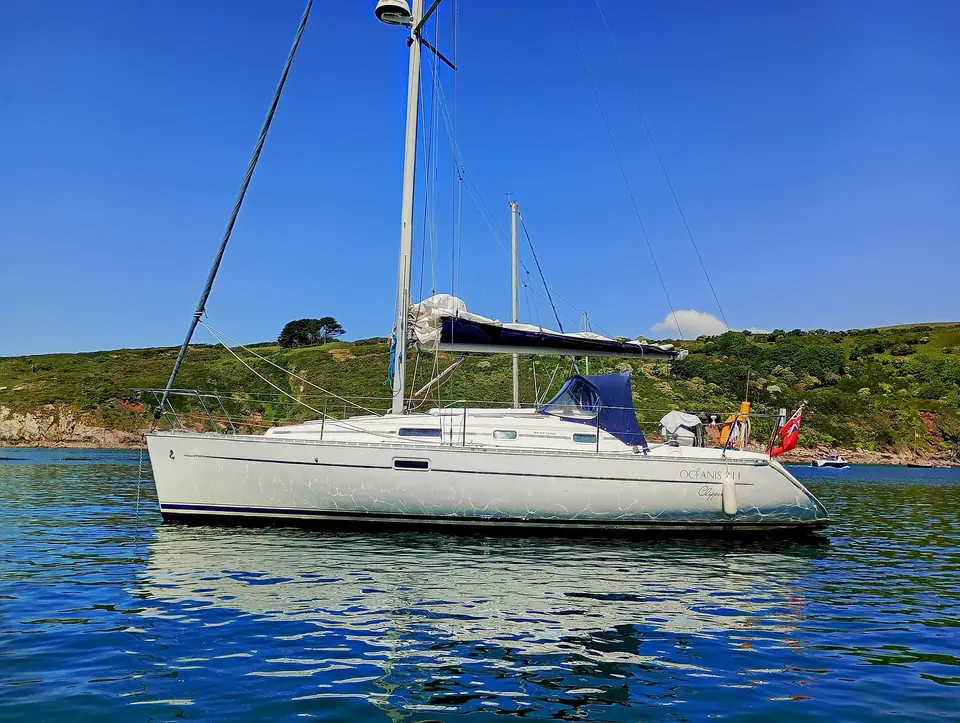
We have not found a freely licensed photo of the Beneteau Sense 50 yet, so these show other Beneteau boats, each captioned with the boat pictured.
More cruising sailboats to explore
Beneteau Oceanis 510
Cruising Sailboats, 50 ft
Used $90K to $165K
Gulfstar 50
Cruising Sailboats, 50 ft
Used $60K to $170K
Dufour 50 Classic
Cruising Sailboats, 50 ft
Used $85K to $165K
Beneteau Oceanis 500
Cruising Sailboats, 50 ft
Used $75K to $140K
Other Beneteau models
- Beneteau 49
- Beneteau 50
- Beneteau 57
- Beneteau 343
- Beneteau Antares 5.80
- Beneteau Antares 6
- Beneteau Antares 6.80
- Beneteau Antares 7
- Beneteau Antares 7.30
- Beneteau Antares 7.60
- Beneteau Antares 7.80
- Beneteau Antares 8
- Beneteau Antares 8.00
- Beneteau Antares 8.05
- Beneteau Antares 8.60
- Beneteau Antares 8.80
- Beneteau Antares 9
- Beneteau Antares 9.80
- Beneteau Antares 10.80
- Beneteau Antares 11
- Beneteau Antares 12
- Beneteau Antares 13.80
- Beneteau Antares 30
- Beneteau Antares 32
- Beneteau Antares 36
- Beneteau Antares 42
- Beneteau Antares 620 HB
- Beneteau Antares 650 HB
- Beneteau Antares 750 HB
- Beneteau Cyclades 39.3
- Beneteau Cyclades 43.3 and 43.4
- Beneteau Cyclades 50.5
- Beneteau First 18 SE
- Beneteau First 20
- Beneteau First 21.7
- Beneteau First 24
- Beneteau First 25
- Beneteau First 25.7
- Beneteau First 27
- Beneteau First 27.7
- Beneteau First 30
- Beneteau First 31.7
- Beneteau First 35
- Beneteau First 36
- Beneteau First 36.7
- Beneteau First 38
- Beneteau First 40
- Beneteau First 40.7
- Beneteau First 44
- Beneteau First 45
- Beneteau First 47.7
- Beneteau First 53
- Beneteau First 211
- Beneteau First 235
- Beneteau First 285
- Beneteau First 305
- Beneteau First 310
- Beneteau First 345
- Beneteau Flyer 6
- Beneteau Flyer 7
- Beneteau Flyer 8
- Beneteau Flyer 9
- Beneteau Flyer 10
- Beneteau Flyer 12
- Beneteau Flyer 500
- Beneteau Flyer 550
- Beneteau Flyer 650
- Beneteau Flyer 701
- Beneteau Flyer 750
- Beneteau Grand Trawler 62
- Beneteau Gran Turismo 32
- Beneteau Gran Turismo 36
- Beneteau Gran Turismo 40
- Beneteau Gran Turismo 41
- Beneteau Gran Turismo 44
- Beneteau Gran Turismo 45
- Beneteau Monte Carlo 6
- Beneteau Oceanis 30.1
- Beneteau Oceanis 31
- Beneteau Oceanis 34
- Beneteau Oceanis 34.1
- Beneteau Oceanis 35
- Beneteau Oceanis 35.1
- Beneteau Oceanis 36 CC
- Beneteau Oceanis 37
- Beneteau Oceanis 38
- Beneteau Oceanis 38.1
- Beneteau Oceanis 40
- Beneteau Oceanis 40 CC
- Beneteau Oceanis 41
- Beneteau Oceanis 41.1
- Beneteau Oceanis 42
- Beneteau Oceanis 42 CC
- Beneteau Oceanis 43
- Beneteau Oceanis 44 CC
- Beneteau Oceanis 45
- Beneteau Oceanis 46
- Beneteau Oceanis 46.1
- Beneteau Oceanis 48
- Beneteau Oceanis 50
- Beneteau Oceanis 51.1
- Beneteau Oceanis 54
- Beneteau Oceanis 55
- Beneteau Oceanis 58
- Beneteau Oceanis 311
- Beneteau Oceanis 320
- Beneteau Oceanis 321
- Beneteau Oceanis 323
- Beneteau Oceanis 331
- Beneteau Oceanis 350
- Beneteau Oceanis 351
- Beneteau Oceanis 370
- Beneteau Oceanis 390
- Beneteau Oceanis 400
- Beneteau Oceanis 411
- Beneteau Oceanis 423
- Beneteau Oceanis 430
- Beneteau Oceanis 440
- Beneteau Oceanis 461
- Beneteau Oceanis 473
- Beneteau Oceanis 500
- Beneteau Oceanis 510
- Beneteau Oceanis Clipper 361
- Beneteau Oceanis Clipper 373
- Beneteau Oceanis Clipper 381
- Beneteau Oceanis Clipper 393
- Beneteau Oceanis Yacht 54
- Beneteau Oceanis Yacht 60
- Beneteau Oceanis Yacht 62
- Beneteau Sense 43
- Beneteau Sense 46
- Beneteau Sense 55
- Beneteau Swift Trawler 30
- Beneteau Swift Trawler 34
- Beneteau Swift Trawler 35
- Beneteau Swift Trawler 41
- Beneteau Swift Trawler 44
- Beneteau Swift Trawler 48
- All Beneteau models