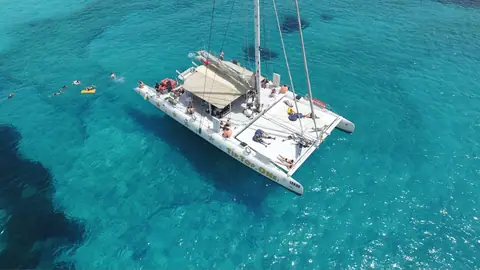
Antares 44i
Sailing Catamarans, 44 ft
Used $375K to $650K
A sailing catamaran trades the heel, the deep keel and the cave-like cabin of a monohull for a level platform, two private hulls and a saloon with a view. That trade has made the cruising cat the default choice in Caribbean charter fleets and, increasingly, the boat American couples buy when they plan to live aboard for a season or sail away for good. If you are browsing listings under "catamaran for sale", you are shopping in one of the most liquid and most standardized corners of the yacht market.
Sailing Catamarans, 44 ft
Used $375K to $650K
Sailing Catamarans, 39 ft
Used $260K to $380K
Sailing Catamarans, 40 ft
Used $360K to $470K
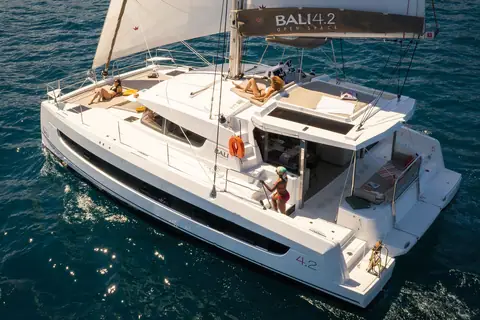
Sailing Catamarans, 42 ft
Used $400K to $620K
Sailing Catamarans, 43 ft
Used $290K to $450K
Sailing Catamarans, 44 ft
Used $650K to $820K
Sailing Catamarans, 45 ft
Used $330K to $520K
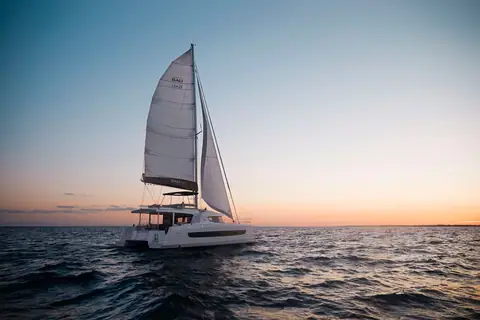
Sailing Catamarans, 47 ft
Used $620K to $850K
Sailing Catamarans, 49 ft
Used $780K to $1.15M
Sailing Catamarans, 55 ft
Used $780K to $1.8M
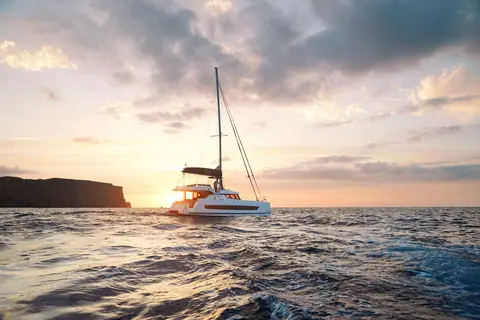
Sailing Catamarans, 40 ft
Used $380K to $560K
Sailing Catamarans, 34 ft
Used $240K to $360K
Sailing Catamarans, 39 ft
Used $150K to $330K
Sailing Catamarans, 27 ft
Used $18K to $42K
Sailing Catamarans, 30 ft
Used $28K to $55K
Sailing Catamarans, 34 ft
Used $55K to $100K
Sailing Catamarans, 41 ft
Used $360K to $520K
Sailing Catamarans, 46 ft
Used $450K to $720K
Sailing Catamarans, 50 ft
Used $430K to $650K
Sailing Catamarans, 53 ft
Used $1M to $1.45M
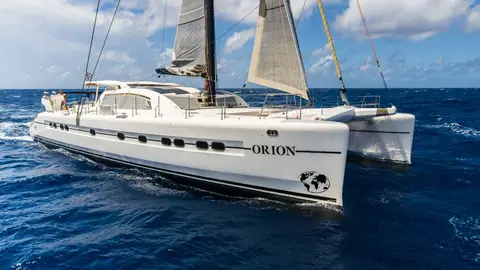
Sailing Catamarans, 90 ft
Used $1.2M to $1.4M
Sailing Catamarans, 43 ft
Used $220K to $360K
Sailing Catamarans, 47 ft
Used $260K to $420K
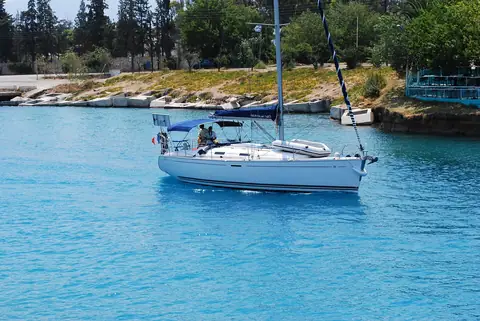
Sailing Catamarans, 48 ft
Used $430K to $700K
No models match these filters. Clear a filter to see more.
The category is broader than it first looks. At one end sit volume builders such as Lagoon, Leopard, Fountaine Pajot and Bali, whose 38 to 50 foot boats are designed around four cabins, big cockpits and easy handling. At the other end are performance cruisers like the Outremer 51, the Seawind 1600 and the Gunboat 68, which give up some volume to sail upwind properly and cover 200 mile days. In between, newer lines such as Excess and the Nautitech 46 Open aim at owners who want production pricing with a more engaging helm.
This page explains how those segments differ, what charter history does to a used boat and what you should expect to pay in 2026.
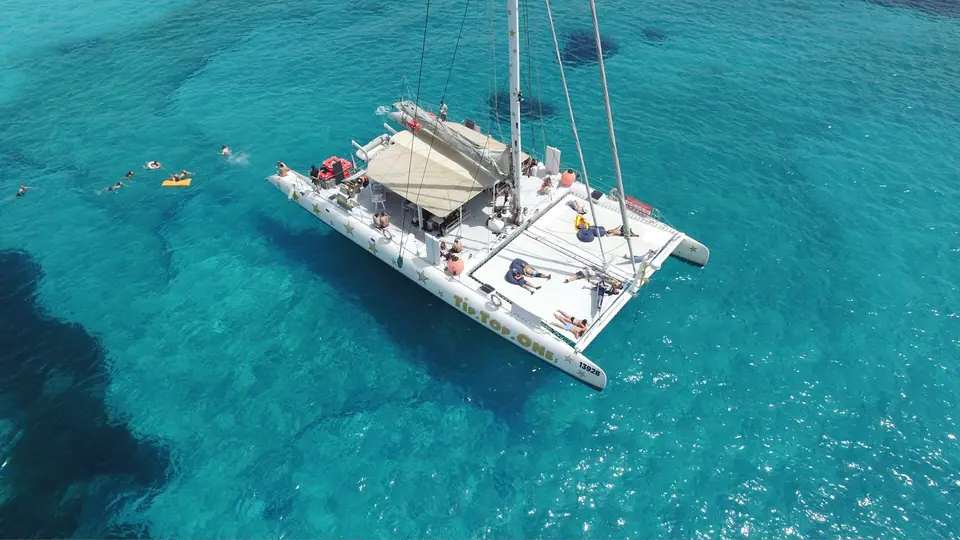
Most of a cruising life happens at anchor or on a mooring, and that is where a catamaran makes its strongest case. Two hulls spaced 20 to 26 feet apart resist rolling in a swell, so a cup of coffee left on the saloon table usually stays put. The saloon sits on the bridgedeck with wraparound windows, the galley is on the same level as the cockpit, and the cabins in each hull are separated by the full width of the boat. Two couples can share a 45 foot cat without feeling like they are camping in each other's laps.
Shallow draft is the other everyday advantage. Most production cats with fixed mini keels draw between 3.5 and 4.5 feet, which opens up the Bahamas banks, the Florida Keys and the thin anchorages of the Chesapeake that deep monohulls have to skip. Daggerboard boats can draw even less with the boards up.
The compromises are real. A catamaran needs a wider slip, and marinas often charge 1.5 to 2 times the monohull rate for the beam. Upwind performance on most production cats is modest, with tacking angles well wide of a good monohull. And because a cat does not heel to warn you that it is overpowered, sail handling is about reefing by the numbers rather than by feel.
It helps to sort the market into three families before you start comparing individual boats, because a Lagoon 42 and an Outremer 51 are aimed at completely different owners even though both are roughly 45 to 50 feet long.
Production cruisers dominate the used market by sheer numbers. They are built in large series, they appear in every charter fleet, and parts and service are easy to find in Florida, the Virgin Islands and the Bahamas. Performance cruisers use lighter laminates, daggerboards and taller rigs, and they reward owners who want to sail rather than motor between islands. The open-plan newcomers, led by Bali, rethink the layout by joining cockpit and saloon into one space and adding a forward cockpit on a solid foredeck.
| Family | Typical models | Character under sail | Best suited to |
|---|---|---|---|
| Volume production cruiser | Lagoon 42, Lagoon 46, Leopard 45, Fountaine Pajot Elba 45 | Comfortable, steady, modest upwind ability | Charter, family cruising, first-time cat owners |
| Open-plan cruiser | Bali 4.6, Bali Catspace | Easy, sociable, more windage | Liveaboards who entertain, warm-water cruising |
| Sporty production | Excess 14, Nautitech 46 Open | Twin aft helms, better feel on the wheel | Owners who sail more than they motor |
| Performance cruiser | Outremer 51, Seawind 1600, Gunboat 68 | Daggerboards, fast passages, real upwind work | Ocean crossings, experienced crews |
| Luxury semi-custom | Sunreef 60, Lagoon 55 | Large, crewed or semi-crewed | Owners stepping up from 50 feet, charter yachts |
No other yacht category is shaped by charter companies the way sailing catamarans are. Leopard, built by Robertson and Caine in Cape Town, supplies boats to The Moorings and Sunsail, and Lagoon and Fountaine Pajot boats fill fleets from the British Virgin Islands to Greece. Most of those boats are bought by private owners through management programs and sold after five or six years of service.
That steady flow of ex-charter boats does two things. It keeps used prices for the most common models predictable, which is good for financing and insurance. It also means a large share of the 40 to 46 foot inventory has done thousands of guest days, with the wear that implies on winches, upholstery, toilets, saildrives and running rigging. An ex-charter boat with a documented refit can be a smart buy. One sold straight off the fleet line usually needs a budget of 10 to 20 percent of the purchase price before it is ready for long-term cruising.
Owner-version boats, with a master suite filling one hull, carry a premium of tens of thousands of dollars over the same model in four-cabin charter layout. If you will rarely have more than one guest couple aboard, the owner version is worth paying for, and it is also easier to resell to the next private buyer.
Helm placement is the single most debated layout choice in modern cats. Flybridge helms, used on many Lagoon and Leopard models (the Leopard 45 among them), on the Bali 4.6 and on the Fountaine Pajot range, give a commanding view and keep all lines in one place, but the helmsman is isolated from the cockpit and the motion up there is livelier. Bulkhead helms, a common alternative, put the wheel on a raised step near the saloon door. Twin aft helms, the choice on the Excess 14, the Nautitech 46 Open and most Outremers, feel more like sailing a monohull, with direct sightlines to the sails and the dock.
Whatever the layout, reefing on a catamaran is a matter of discipline. Most builders publish a reefing table by true wind speed, and sensible owners reef early because the load on the rig keeps climbing as the boat stays upright. Learn to read apparent wind and boat speed rather than heel angle, and practice docking with the twin engines split, which is the cat's great maneuvering trick.
Catamarans have room on the hardtop for serious solar arrays, and that has changed how cruisers power their boats. A typical 45 foot cat set up for long-term living will carry 1,200 to 2,000 watts of panels, a lithium house bank, a watermaker and an inverter large enough to run the galley without starting the generator. Many recent Lagoon, Leopard and Fountaine Pajot boats can be ordered with such packages from the factory, and the Sunreef 60 is offered in an Eco version with electric drive and diesel generators as range extenders.
When you compare used boats, the systems list often matters more than the model year. A 2017 boat with a new lithium bank, a recent watermaker and a fresh standing rigging survey can be the better buy than a 2020 boat that left charter with nothing added. Price the upgrades realistically, because a quality lithium conversion with the charging changes it requires is a five-figure job.
The 38 to 42 foot range, covered by the Lagoon 380, Lagoon 40, Leopard 40 and Fountaine Pajot Isla 40, is the entry point for couples. These boats can be handled by two people without crew, fit more marinas and keep running costs manageable. The 44 to 47 foot band, home of the Lagoon 450 and 46, Leopard 45 and 46, Elba 45, Bali 4.6 and Nautitech 46 Open, is where most liveaboard couples end up, because it adds tankage, payload and a usable owner suite.
Above 50 feet, with the Lagoon 50 and 55, Leopard 50, Outremer 51 and Sunreef 60, systems multiply and so do maintenance hours, and many owners hire a part-time captain for longer passages.
| Size | New | Used |
|---|---|---|
| 38 to 42 ft | $550,000 to $900,000 | $180,000 to $650,000 |
| 44 to 47 ft | $850,000 to $1,400,000 | $350,000 to $1,100,000 |
| 48 to 55 ft | $1,200,000 to $2,600,000 | $600,000 to $2,000,000 |
| Performance cats 50 to 60 ft | $1,800,000 to $3,500,000 | $900,000 to $2,800,000 |
| 60 ft and up | $3,000,000 to $12,000,000+ | $1,800,000 to $9,000,000 |
Typical US asking and sail-away ranges in 2026. Condition, engines and equipment move individual boats well outside these bands.
New production cruising cats from 40 to 47 feet typically cost $550,000 to $1.4 million sail-away in 2026. Used boats of the same size range from about $180,000 for an older ex-charter 38 footer to over $1 million for a late-model owner version.
Yes, well-built and properly sailed catamarans cross oceans every year, and many Atlantic rally entries are cats. The key is conservative reefing, because a cat that is overpowered does not heel to warn you, and choosing a design with good bridgedeck clearance and sound construction.
Most couples settle on something between 42 and 47 feet, such as a Lagoon 42 or 46, Leopard 45, Fountaine Pajot Elba 45 or Bali 4.6, in an owner layout. Couples who sail long distances often prefer a performance cruiser such as an Outremer 51.
It can be excellent value if the boat has been properly refit and the maintenance history is documented. Expect heavy wear on soft goods, heads, winches and saildrives, and price that work into your offer.
Production cruising cats with fixed mini keels sail upwind adequately but tack through wider angles than a good monohull. Daggerboard performance cats such as the Outremer 51 and Gunboat 68 point and foot far better.