Lagoon 380 Buyer's Guide, Specs and Used Prices
Roughly a thousand built over two decades, the Lagoon 380 is the catamaran most first-time multihull owners end up buying, for good reasons and a few bad ones.
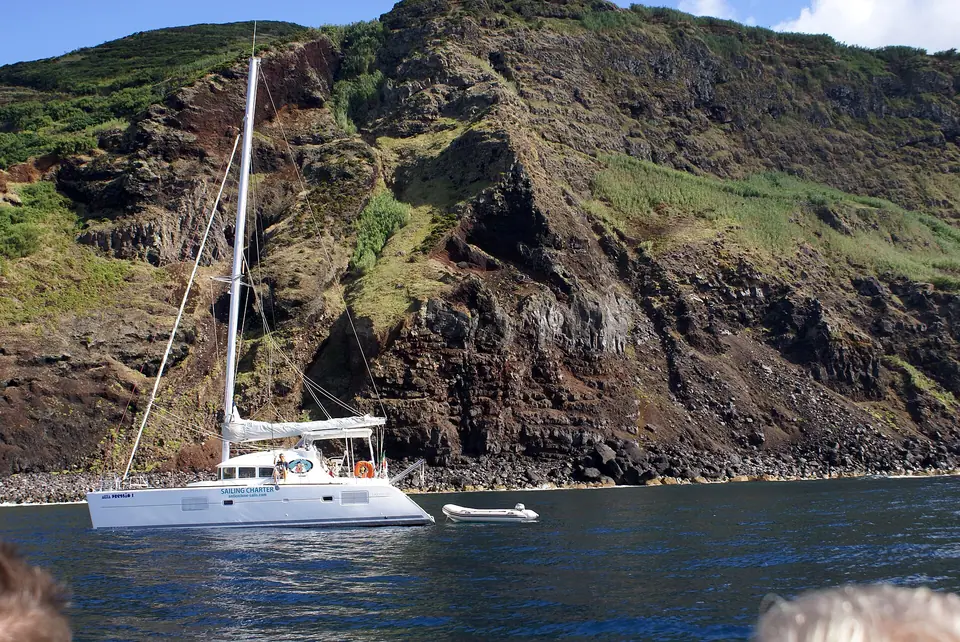
- Length
- 37.9 ft11.55 m
- Beam
- 21.4 ft6.53 m
- Draft
- 3.8 ft1.15 m
- Cabins
- 3 or 4
- Used price
- $150K to $310K
On this page
- Overview
- How the Lagoon 380 became the default first catamaran
- Original 380 or 380 S2, and why the badge matters less than you think
- What 38 feet and a 21-foot beam actually buy you
- Inside the hulls: owner's version against the four cabin charter plan
- Under sail, with honest expectations
- Small diesels, small tanks and what that means for cruising range
- Buying a 20-year-old Lagoon: where age shows first
- The ownership budget most sellers do not mention
- Resale and the logic of buying the most common catamaran
- Specifications
- Price and value
- Strengths and weaknesses
- Used buyer checklist
- Rivals
- Our verdict
- FAQ
A 38-foot VPLP cruising catamaran built in France from 1999 to 2019. Simple, roomy and widely available used, but small tanks and modest upwind ability shape how it cruises.
- Couples buying a first catamaran
- Bahamas and Caribbean island hoppers
- Budget-conscious liveaboards
- Families with two young children
How the Lagoon 380 became the default first catamaran
Ask a multihull broker which boat they have sold more times than any other and a surprising number will say the Lagoon 380. Lagoon, then part of Construction Navale Bordeaux and owned by Groupe Beneteau since 1995, launched it at the turn of the millennium and kept building it until 2019. Around 1,000 hulls left the factory, a figure that makes it one of the most produced cruising catamarans in history and, until the Lagoon 42 came along, the brand's single biggest seller.
The reason is not glamour. VPLP drew a boat that fits a slip most monohull sailors can imagine paying for, sleeps two couples in privacy, and is simple enough for a husband and wife to run without crew. Charter companies loved it because it was cheap to build and hard to break, and that charter history is exactly why so many are on the used market today. If you are shopping for a Lagoon 380 for sale, you are shopping in the deepest pool of any catamaran under 40 feet.
Lagoon 380 by the numbers
- Sail area to displacement
- 22.2Plenty of sail for the weight, the boat should feel lively in light air.
- Displacement to length
- 152Light displacement for its length, quick but sensitive to added cruising weight.
- Theoretical hull speed
- 8.0 knDisplacement hull speed for the waterline. Light catamarans regularly sail faster than this because their slim hulls do not make a large bow wave.
- Length to beam ratio
- 1.77 : 1Catamaran overall proportions. Wider platforms resist pitching and heel.
Original 380 or 380 S2, and why the badge matters less than you think
In 2003 Lagoon refreshed the boat as the 380 S2. The changes were evolutionary rather than structural: larger hull windows that brighten the cabins, a reworked galley, repositioned shower bulkheads that enlarge the head compartments, more storage, and a double helm seat so the skipper has company at the wheel. The hull, rig and basic deck plan stayed the same.
Because the S2 ran for some sixteen years, the label covers boats with very different equipment. Late boats often came with better electronics, more solar capacity and the square-top mainsail option, while early S2 boats look a lot like the originals. In practice you should judge a Lagoon 380 by what has been replaced since it left the factory rather than by the sticker on the transom.
- 1999 to 2002: original 380, smaller hull ports, single helm seat
- 2003 onward: S2 with bigger windows, revised galley and larger heads
- Later production: improved equipment packages, same hull and rig
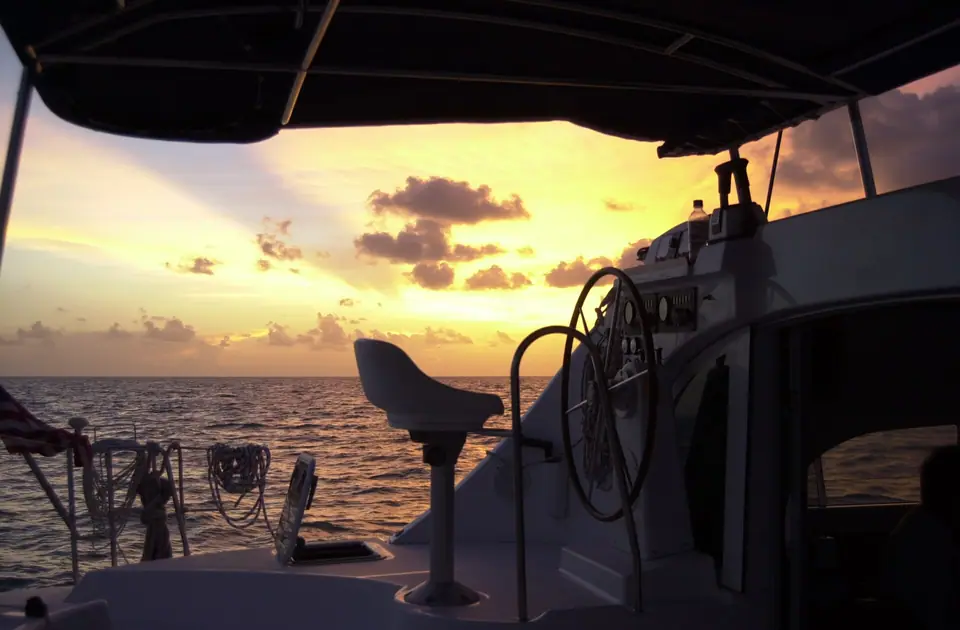
What 38 feet and a 21-foot beam actually buy you
The numbers are modest by modern catamaran standards: 37 feet 11 inches overall, 21 feet 5 inches of beam and a draft of just 3 feet 9 inches. Light displacement is about 16,000 pounds. That shallow draft is a genuine advantage in the Bahamas, the Florida Keys and the Chesapeake, where the 380 can tuck into anchorages that deeper monohulls cannot reach.
The 21-foot beam is also narrow enough that a few marinas will squeeze the boat into a wide single slip rather than charging for a double. That is not universal, but it is far more common than with a 25-foot-wide 45-footer, and it is one of the quiet reasons the 380 remains cheaper to keep than its newer, beamier replacements.
Bridgedeck clearance is generous for the era, so the 380 slams less in short chop than its compact dimensions suggest.
Inside the hulls: owner's version against the four cabin charter plan
Two layouts dominate the brokerage market. The four cabin version puts a double berth in each corner and shares two heads, one per hull. It sleeps eight adults in privacy and is the configuration almost every charter fleet ordered, so it is the most common boat on the used market and usually the cheapest.
The three cabin owner's version gives the entire starboard hull to a master cabin with a desk or office space and a separate stall shower. For a couple who cruise alone and host guests a few weeks a year, it is the one to find, and it typically commands a premium of $20,000 to $40,000 over a comparable charter boat.
The saloon follows the classic Lagoon pattern of the period, with vertical coachroof windows, a dinette forward and the galley on the bridgedeck. The navigation station is the weak spot. There is little room for modern electronics and almost no space to spread a paper chart, so most owners move the business end of navigation to a plotter at the helm and treat the inside station as a phone and laptop desk.
Under sail, with honest expectations
Nobody buys a Lagoon 380 to win races, and you should not expect it to point like a monohull. With a strong breeze near the beam it will reach 10 knots, and in good downwind conditions with a gennaker some owners see bursts into the low teens. Typical passage averages in a decent breeze run 6 to 9 knots.
Upwind is where the fixed mini keels and modest sail plan show. The boat does not hold much speed when pinched closer than about 50 degrees apparent, which translates to roughly 55 to 60 degrees true. Below about 10 knots of wind most cruisers will start an engine, and that is not a character flaw, it is how this boat is meant to be used. A sprit and a lightweight gennaker or screecher make a real difference in light air and are worth paying for on a listing.
Older boats lack a winch at the helm station, which turns furling the genoa on starboard tack into a chore because two lines share one winch. Adding a second winch, or an electric primary, is a common and worthwhile upgrade.
Small diesels, small tanks and what that means for cruising range
Most boats carry twin diesels of roughly 18 to 21 hp from Yanmar or Volvo Penta driving saildrives, with 28 to 29 hp engines on many hulls. On one engine the boat motors at roughly 5.5 knots burning about 2.5 liters (two-thirds of a gallon) per hour, and on both engines it cruises at 7 to 8 knots. Running on one engine in calm water and alternating between hulls is a common way to save fuel and balance engine hours.
Tankage is the one specification that genuinely limits long-range cruising. Diesel capacity is only about 53 to 58 gallons depending on the source and configuration, split between two tanks, and fresh water is about 79 gallons. Four people burn through that water in a few days without a watermaker. If you plan to cruise beyond the reach of marina hoses, budget for a watermaker and possibly extra jerry can storage for fuel, or buy a boat that already has both.
Electrical systems on early boats are basic, so a boat that already has lithium batteries, solar, an inverter and LED lighting is worth several thousand dollars more than one that does not.
Buying a 20-year-old Lagoon: where age shows first
A large share of the boats on the market are now 15 to 25 years old, and most have spent some of that time in charter. Build quality is typical of mass-production cruising catamarans: practical rather than refined, with interior finishes that wear fast under heavy use. The structural questions are more important than the cosmetic ones.
Interior bulkheads on the 380 are bonded to the outer hull skins and tabbed on the inner sides, and there have been reports across the Lagoon range of bulkhead separation. A good multihull surveyor will look closely at bulkhead tabbing, the forward crossbeam and the area around the mast compression post. Moisture readings on the balsa-cored deck, especially around hardware and stanchion bases, are equally important.
Saildrive diaphragms and seals have a fixed replacement interval regardless of hours, so ask for documented service. Rudder bearings, steering cables, the coachroof window seals and hatch frames are other classic wear points. None of these items is a deal breaker by itself, but together they can add $15,000 to $30,000 to the real purchase price of a neglected boat.
The ownership budget most sellers do not mention
Annual costs for a privately used Lagoon 380 in the US typically run $18,000 to $38,000 excluding depreciation. Insurance for an older catamaran in hurricane country has become the most volatile line item, and some underwriters now ask for a recent survey and named-storm plan before quoting. Berthing is the next big variable and depends heavily on whether your marina charges the 380 as a wide single or a double.
Two small diesels, a simple rig and no lifting keel or daggerboards keep mechanical costs predictable. Plan on antifouling every one to two years, saildrive service on schedule, standing rigging replacement roughly every ten to twelve years, and new sails every eight to ten seasons of active cruising. Because so many 380s exist, parts and know-how are easy to find in almost any cruising port in the Caribbean and the Mediterranean.
Resale and the logic of buying the most common catamaran
Values have held up remarkably well. A 380 bought for $200,000 a decade ago and kept in good order often resells for something close to that number, because demand for an affordable, proven catamaran has outrun supply ever since the post-2020 boom. Recorded sales sit around a median of roughly $230,000, with asking prices from about $150,000 for tired early boats to just over $300,000 for well-upgraded late owner's versions.
The newest boats, from 2015 to 2019, carry less premium than you might expect because buyers compare them with ex-charter Lagoon 40s and Leopard 40s. Buy condition and equipment first, layout second and year third.
Lagoon 380 specifications
| Length overall | 37.9 ft11.55 m |
|---|---|
| Waterline length | 36.1 ft11 m |
| Beam | 21.4 ft6.53 m |
| Draft | 3.8 ft1.15 m |
| Displacement | 16,005 lbs7,26 kg |
| Sail area | 883 sq ft82 m² |
| Fuel capacity | 58 gal22 L |
| Fresh water | 79 gal3 L |
| Cabins | 3 or 4 |
| Berths | 6 to 10 |
| Heads | 2 |
| Standard engines | 2 x Yanmar or Volvo Penta diesel of roughly 18 to 21 hp with saildrives |
| Optional engines | 2 x 28 to 29 hp diesel |
| Maximum power | 58 hp |
| Cruise speed | 7 knots |
| Hull type | Catamaran, twin displacement hulls |
| Keel | Twin fixed mini keels |
| Rig | Fractional sloop, full-batten mainsail, furling genoa |
| Hull construction | Solid fiberglass below the waterline, balsa or foam cored topsides and balsa-cored deck |
| Builder | Lagoon (CNB, Groupe Beneteau), France |
| Naval architect | VPLP (Marc Van Peteghem and Vincent Lauriot-Prevost) |
| Production | 1999 to 2019 |
| Status | Discontinued |
Figures come from builder documentation and independent tests where available. Displacement is usually quoted light, so a loaded cruising boat will weigh more. Compare these specs with another model.
How much does a Lagoon 380 cost?
Age matters less than history on a Lagoon 380. A 2003 owner's version with fresh rigging, lithium power and a recent saildrive service can outsell a tired 2016 four cabin boat that spent five seasons in a Caribbean charter base. Duty status matters too, since many boats sit in the Caribbean or Europe and must be imported, and a VAT-paid or US duty-paid boat commands a premium. Recorded sales cluster around a median of roughly $230,000.
Estimate your yearly cost
A planning estimate using common rules of thumb: insurance near 1.5 percent of value, maintenance near 3 percent, haul out and bottom paint by length. Your marina, region and use will move these numbers. Open the full cost calculator.
Lagoon 380 timeline
- 1999First Lagoon 380 hulls built in France to a VPLP design
- 2003Lagoon 380 S2 update with larger windows, new galley and bigger heads
- 2012Still in production and widely regarded as the most successful contemporary cruising cat on the market
- 2017Lagoon 40 launched as the modern entry-level alternative
- 2019Production ends after roughly 1,000 boats
Strengths and weaknesses
What owners like
- Enormous used market makes it easy to choose on condition and layout
- Shallow 3 foot 9 inch draft opens up Bahamas and Keys anchorages
- Bridgedeck clearance is good for a 38-foot cat
- Simple systems and twin small diesels keep running costs low
- Strong value retention for a boat of its age
What to weigh up
- Limited fuel and water tankage for long-range cruising
- Mediocre upwind performance and sluggish in light air
- Cramped navigation station
- Interior finishes wear quickly, especially on ex-charter boats
- Older boats lack a second winch at the helm
Used Lagoon 380 buyer checklist
Take this list to a viewing. Your ticks are saved in this browser so you can come back to it.
Always commission an independent marine survey and an engine survey before you buy. How a marine survey works.
Rivals to consider
Leopard 40
South African build with a forward saloon door and much larger water tankage, usually priced a step above the 380.
Compare side by sideLagoon 40
The modern replacement with an aft mast, larger sail plan and far more interior volume, at roughly 50 percent more money used.
Compare side by sideFountaine Pajot Isla 40
A much newer French 40 with a more contemporary interior, sold new rather than as a budget used buy.
Compare side by sideBali Catspace
Trades the trampoline for a solid foredeck and opens the saloon to the cockpit, appealing to buyers who prioritize living space over tradition.
Compare side by sideOur verdict on the Lagoon 380
The Lagoon 380 is not the fastest, roomiest or best-built 38-foot catamaran, but it is the easiest one to buy well. The used market is deep, values are stable, the systems are simple and the shallow draft suits American cruising grounds perfectly. Spend your money on a well-maintained owner's version with a watermaker, upgraded batteries and documented saildrive service, ignore the year on the title, and you will have a boat that is easy to live with and easy to sell.
Lagoon 380 questions answered
How much is a used Lagoon 380?
Most Lagoon 380s for sale ask between about $150,000 and $310,000. Recorded sales cluster around a median of roughly $230,000, with owner's versions and well-upgraded boats at the top of the range.
How many Lagoon 380 catamarans were built?
About 1,000 were built between 1999 and 2019, making it one of the most produced cruising catamarans ever.
What is the difference between the Lagoon 380 and 380 S2?
The S2, introduced in 2003, added larger hull windows, a reworked galley, larger shower compartments, more storage and a double helm seat. The hull and rig are the same.
Can a Lagoon 380 cross an ocean?
Many have crossed the Atlantic and Pacific, but the small fuel and water tanks mean a watermaker and careful preparation are essential. It is a capable coastal and island cruiser first.
How fast does a Lagoon 380 sail?
Expect 6 to 9 knots in a good breeze and up to about 10 knots on a beam reach. It struggles closer than 50 degrees apparent and needs an engine in under about 10 knots of wind without a light-air sail.
Lagoon 380 photos
More sailing catamarans to explore
Excess 11
Sailing Catamarans, 38 ft
Used $340K to $560K
Lagoon 40
Sailing Catamarans, 39 ft
Used $280K to $490K
Broadblue 385
Sailing Catamarans, 39 ft
Used $150K to $330K
Fountaine Pajot Isla 40
Sailing Catamarans, 39 ft
Used $360K to $560K