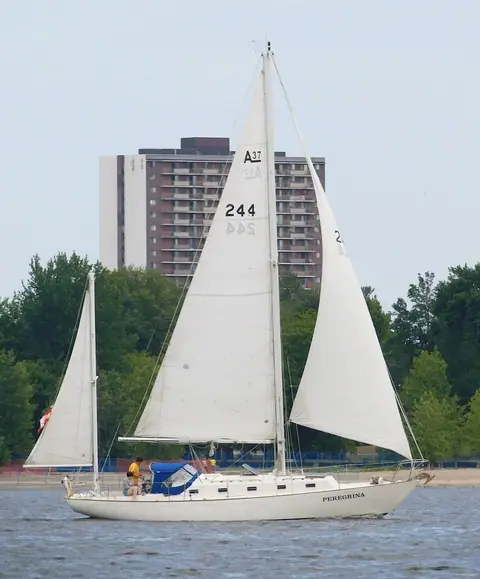
Alberg 37
Bluewater Sailboats, 37 ft
Used $20K to $65K
A bluewater sailboat is a monohull built with the expectation that it will spend days or weeks far from help. That expectation changes everything from the keel and rudder to the size of the cockpit drains and the number of handholds below. These boats are heavier, more expensive per foot and often slower in a light breeze than a modern production cruiser, and their owners would not have it any other way.
Bluewater Sailboats, 37 ft
Used $20K to $65K
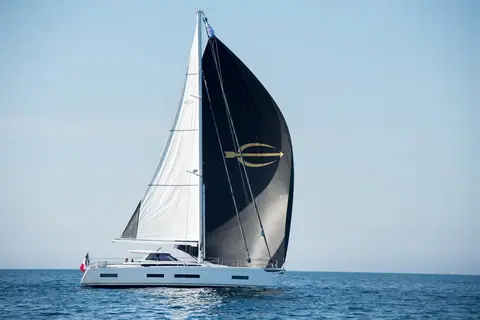
Bluewater Sailboats, 54 ft
Used $850K to $1.35M
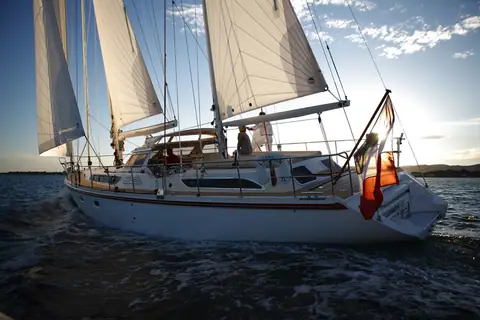
Bluewater Sailboats, 56 ft
Used $425K to $700K

Bluewater Sailboats, 62 ft
Used $1.5M to $2.3M
Bluewater Sailboats, 64 ft
Used $1.1M to $1.9M
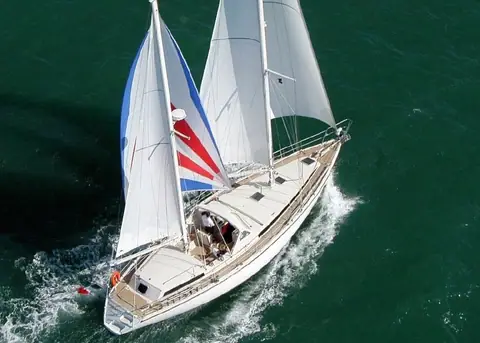
Bluewater Sailboats, 52 ft
Used $150K to $320K
Bluewater Sailboats, 30 ft
Used $30K to $75K
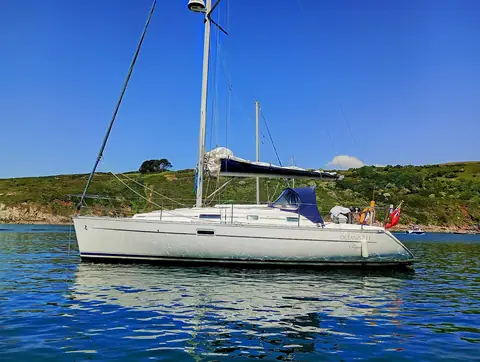
Bluewater Sailboats, 58 ft
Used $260K to $480K
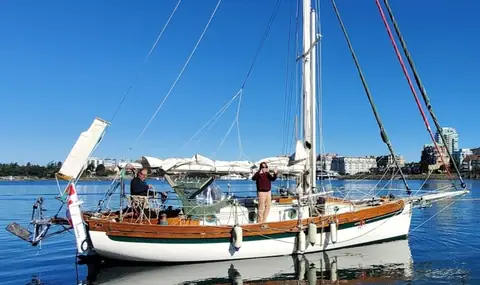
Bluewater Sailboats, 28 ft
Used $60K to $175K
Bluewater Sailboats, 38 ft
Used $55K to $190K
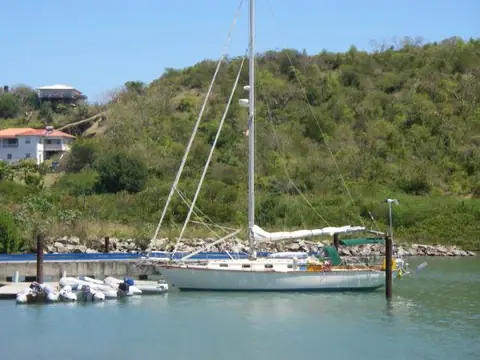
Bluewater Sailboats, 28 ft
Used $12K to $40K
Bluewater Sailboats, 36 ft
Used $35K to $95K
Bluewater Sailboats, 68 ft
Used $1.85M to $2.6M
Bluewater Sailboats, 76 ft
Used $1.9M to $2.9M
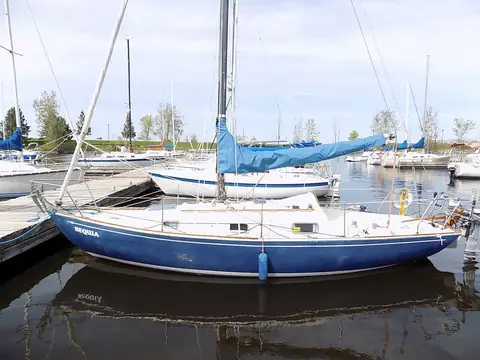
Bluewater Sailboats, 26 ft
Used $8K to $40K
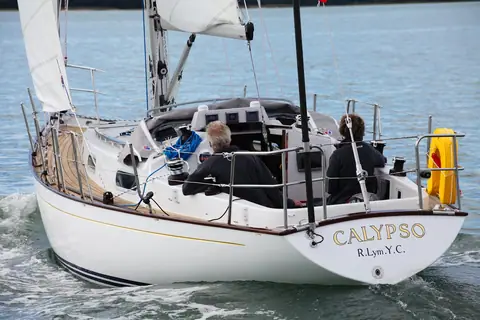
Bluewater Sailboats, 32 ft
Used $25K to $85K
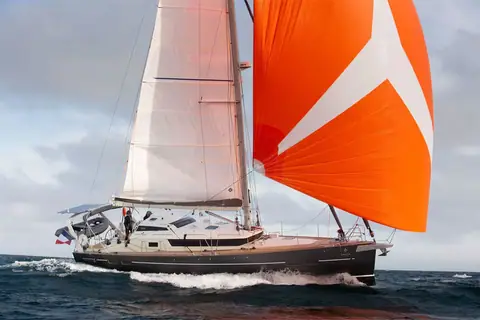
Bluewater Sailboats, 46 ft
Used $650K to $1M
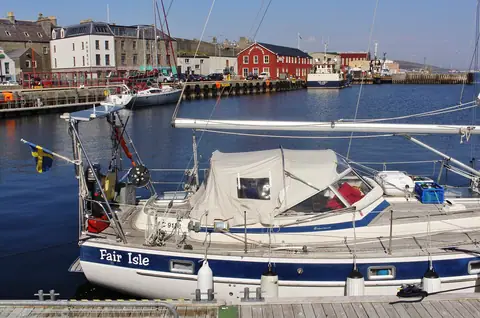
Bluewater Sailboats, 37 ft
Used $75K to $165K
Bluewater Sailboats, 47 ft
Used $750K to $1.15M
Bluewater Sailboats, 35 ft
Used $38K to $85K
Bluewater Sailboats, 37 ft
Used $200K to $430K
Bluewater Sailboats, 41 ft
Used $60K to $260K
Bluewater Sailboats, 59 ft
Used $1.5M to $2.3M
Bluewater Sailboats, 34 ft
Used $35K to $60K
No models match these filters. Clear a filter to see more.
The category spans six decades. Classic American and Taiwanese designs from the 1970s and 1980s, such as the Westsail 32, Tayana 37, Valiant 40, Cape Dory 36 and Pacific Seacraft 37, remain the most affordable route to a proven offshore hull. Modern Scandinavian and European yards, led by Hallberg-Rassy, Amel and Oyster, build passagemakers with center cockpits, protected watch stations and systems designed for years of continuous living aboard.
This guide covers the design features that matter offshore, a shortlist by size and budget, and the refit realities of buying an older ocean boat in the US market.
There is no official bluewater certification. The closest formal measure is the CE Category A rating for European-built boats, which covers open-ocean use, but the label only confirms a design standard. Experienced offshore sailors look for a cluster of practical features instead.
Keel shape drives a long-running debate. Traditional full keels, found on the Westsail 32, Bristol Channel Cutter 28 and many Island Packets, track straight, protect the rudder and the propeller, and handle groundings gracefully. They are also slow to turn, awkward to back into a slip and less weatherly.
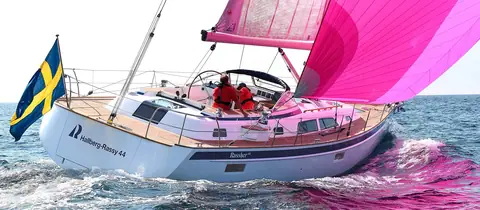
The fin keel with a skeg-hung rudder, popularized offshore by Robert Perry's Valiant 40 from 1973, a boat often credited with creating the performance cruiser category, is the compromise many sailors prefer. It sails noticeably faster and points higher while still giving the rudder structural support. Recent bluewater yachts such as the Hallberg-Rassy 44, Amel 50 and Oyster 495 have moved on again, pairing a deep or bulbed fin with twin rudders under a wider stern.
Pure fin and spade configurations are common on fast modern passagemakers too. There is no single right answer, but the keel attachment, the rudder bearings and the rudder stock deserve the closest survey attention on any offshore boat.
Our reviews cover the boats US cruisers ask about most often. The table groups them by size and character to help you build a shortlist that matches your crew and budget.
| Model | Era | Keel and rig | Why sailors choose it |
|---|---|---|---|
| Pacific Seacraft Flicka 20 | 1975 to 1998 | Full keel, masthead sloop with bowsprit | Tiny, tough and capable for single-handers |
| Pacific Seacraft Dana 24 | 1984 to 2007 | Long keel, sloop or cutter with bowsprit | A real offshore boat that fits a small budget |
| Contessa 32 | From 1970 | Fin keel, skeg-mounted rudder | Only small-class finisher of the 1979 Fastnet |
| Westsail 32 | 1970s | Full keel, cutter | Heavy double-ender with a loyal fan base |
| Pacific Seacraft 37 | Late 1970s onward | Fin and skeg, sloop or cutter | Crealock canoe stern, superb build quality |
| Tayana 37 | 1970s onward | Full keel with cutaway forefoot, cutter | Perry design, Taiwanese joinery, lots of value |
| Valiant 40 | 1973 to 1992 | Fin and skeg, cutter | The original performance bluewater cruiser |
| Hallberg-Rassy 44 | 2016 to 2026 | Fin keel, twin rudders, sloop | Center cockpit, windshield, Swedish build |
| Amel 50 | 2017 to 2026 | Bulb fin, twin rudders, sloop | Designed for a couple to sail around the world |
| Oyster 495 | 2021 to 2026 | L-shaped bulb fin, twin rudders, sloop | Semi-custom luxury passagemaker |
Some of the most admired voyaging boats are tiny. The Bristol Channel Cutter 28, drawn by Lyle Hess, descends from his earlier designs that carried Lin and Larry Pardey around the world. The Pacific Seacraft Flicka 20 and Dana 24 pack genuine offshore construction into boats that can be trailered or kept in a cheap slip, and the Contessa 26 has made solo ocean voyages for decades.
The appeal is cost and simplicity. Sails, rigging, bottom paint and slips all scale with size, so a small boat can be outfitted to a high standard for the price of a mediocre 40 footer. The trade-offs are limited tankage, a lively motion and slower passages, which mean more days at sea and less margin for crew comfort.
At the top of the market, Amel, Hallberg-Rassy and Oyster build boats that put the crew inside a protected cockpit with a hard windscreen and keep systems accessible for repairs at sea. Amel's Super Maramu, with its ketch rig and enclosed doghouse, became a cult boat among circumnavigating couples, and the Amel 50 carried that philosophy into a sloop from 2017 until the 50.2 replaced it in 2026.
Older luxury racers turned cruisers form another niche. The Swan 65, drawn by Sparkman and Stephens, is remembered for Sayula II's win in the first Whitbread Round the World Race, and well kept examples still cross oceans in style. The Hinckley Bermuda 40, a Bill Tripp design built from 1959 to 1991, blends classic yawl looks with a centerboard keel that suits East Coast cruising.
The asking price of a classic bluewater boat is only the start. Many 1970s and 1980s hulls are structurally excellent, but they arrive with original chainplates, tanks, wiring and sometimes teak decks that are near the end of their lives. Taiwanese boats of that era, including some Tayana and Passport models, may have black iron fuel tanks that corrode from the outside and are expensive to replace.
A realistic offshore refit for a 35 to 40 footer can include new standing rigging, chainplate inspection or replacement, a repowered diesel, a modern electrical system, new sails, a windvane or autopilot, and safety gear such as a life raft and EPIRB. Those items can approach or exceed the purchase price. Buying a boat that has already been refit for passagemaking is usually cheaper than doing the work yourself.
| Size | New | Used |
|---|---|---|
| Under 30 ft | Limited new builds, about $250,000 to $450,000 | $15,000 to $175,000 |
| 30 to 37 ft | $500,000 to $900,000 | $35,000 to $275,000 |
| 38 to 45 ft | $800,000 to $1,700,000 | $110,000 to $950,000 |
| 46 to 55 ft | $1,500,000 to $4,000,000 | $300,000 to $2,600,000 |
| 56 ft and up | $3,500,000 to $9,000,000+ | $450,000 to $6,000,000 |
Typical US asking and sail-away ranges in 2026. Condition, engines and equipment move individual boats well outside these bands.
Many couples settle on 36 to 45 feet, enough for tankage and comfort without overwhelming two people. Boats like the Pacific Seacraft 37, Valiant 40 and Hallberg-Rassy 44 are popular choices in that range.
No. Full keels are robust and track well, but fin and skeg designs such as the Valiant 40 and Pacific Seacraft 37, and modern twin-rudder boats such as the Hallberg-Rassy 44, cross oceans routinely and sail faster.
A well kept classic in the 32 to 40 foot range can often be found for $60,000 to $250,000, but plan for refit costs that can match the purchase price. Modern center-cockpit passagemakers sell for several hundred thousand dollars and up.
It confirms the design meets an offshore standard, but it says nothing about tankage, sea berths, ease of repair or motion comfort. Treat it as a minimum, not a recommendation.
Many have excellent hull designs by Robert Perry, Bill Crealock and others. Inspect tanks, chainplates, teak decks and wiring carefully, since those are the expensive issues.
Brands with strong reputations for build quality, such as Hallberg-Rassy, Amel, Oyster and Pacific Seacraft, tend to hold value well. Well maintained classics with documented refits also sell faster than tired examples.