Knowledge
Types of Sailboats and Rigs Explained
A buyer-focused guide to the types of sailboats, sorted four ways: by rig, by keel, by hull and by purpose, with real models that show each design in practice.
On this page
- Four ways to classify a sailboat
- Rig types, from sloop to schooner
- Rig details that matter more than the label
- Keel types and what they do underwater
- Monohulls, catamarans and trimarans
- Purpose classes, from dinghy to bluewater cruiser
- Reading the numbers that hide behind the type
- Matching the type to US cruising grounds
- A practical way to choose
- FAQ
Four ways to classify a sailboat
Ask a sailor what type of boat they own and you might hear sloop, cruiser, full keel or cat, and each answer is correct. The types of sailboats overlap because people describe them by different features. Brokers, surveyors and designers usually work through four lenses.
Rig describes how many masts the boat has and how the sails are arranged. Keel describes the underwater appendage that resists sideways slip and usually carries ballast. Hull describes the number of hulls and their shape. Purpose describes what the builder designed the boat to do, which drives construction weight, tankage and interior. This guide takes each lens in turn.
Rig types, from sloop to schooner
Nearly every modern sailboat uses a triangular Bermuda (or Marconi) mainsail. What differs is how many masts there are and how many sails are flown ahead of the mast. The table summarizes the rigs you will see on the US market.
| Rig | Masts | Defining feature | Strengths | Trade-offs | Examples |
|---|---|---|---|---|---|
| Masthead sloop | 1 | Forestay reaches the masthead; large genoa | Powerful headsail, simple | Big genoa is work to tack and reef | Catalina 30, Catalina 27 |
| Fractional sloop | 1 | Forestay attaches below the masthead | Smaller jib, mainsail does more work, easy depowering | Relies on good mainsail trim | J/24, J/70, J/105, Alerion 28 |
| Cutter | 1 | Mast farther aft with two headsails, jib and staysail | Flexible sail plan in heavy air | Inner stay complicates tacking the jib | Valiant 40, Pacific Seacraft 34 |
| Ketch | 2 | Shorter mizzen mast forward of the rudder post | Sail area split into manageable pieces, balanced under jib and mizzen | Less efficient upwind, more rigging | Amel Super Maramu |
| Yawl | 2 | Small mizzen aft of the rudder post | Helps balance and steady the boat at anchor | Mizzen adds little drive | Hinckley Bermuda 40 |
| Schooner | 2 or more | Aft mast as tall as or taller than the foremast | Great reaching power, classic look | Complex, less weatherly | Traditional and custom yachts |
| Catboat | 1 | Mast far forward, single sail, no jib | Very simple to handle | Weather helm, limited upwind | Traditional New England catboats |
Rig details that matter more than the label
Two boats that are both sloops can sail very differently. When you compare boats, look past the rig name at these specifics.
- Mainsail handling. Slab reefing with a full-batten main sets the best shape. In-mast furling is convenient for couples but costs sail shape and can jam. In-boom furling sits between the two and requires careful boom angle.
- Headsail type. A large overlapping genoa adds power in light air; a self-tacking jib on a track makes short-handed tacking effortless but gives up some light-air drive.
- Downwind sails. Symmetric spinnakers need a pole; asymmetric spinnakers fly from the bow or a bowsprit and are easier for small crews. Code zeros fill the gap between genoa and spinnaker.
- Backstay and spreaders. Swept-back spreaders with no backstay, as on Hunter's B&R rig and many modern European boats, simplify the cockpit but limit how far the boom can be eased downwind.
- Gaff and junk rigs. Gaff rigs use a four-sided mainsail on a spar; junk rigs use fully battened panels. Both survive on traditional and specialist cruising boats.
Keel types and what they do underwater
The keel provides lateral resistance and, on most monohulls, carries the ballast that keeps the boat upright. Ballast commonly makes up a large share of a monohull's displacement, often somewhere between a quarter and a half. How that weight is shaped decides how the boat tracks, turns and handles shallow water.
| Keel type | How it works | Best for | Watch out for | Examples |
|---|---|---|---|---|
| Fin keel | Deep, short-chord fin bolted to the hull, separate spade or skeg rudder | Upwind performance, maneuvering in marinas | Keel bolts and keel-to-hull joint after groundings | Jeanneau Sun Odyssey 440, J/109 |
| Bulb or wing keel | Fin with a weighted bulb or wings at the tip | Lower center of gravity with less draft | Wings can trap in mud; harder to unground | Catalina 320 wing option |
| Full keel | Keel runs most of the hull length, rudder hung on its trailing edge | Tracking offshore, protection for rudder and prop | Poor backing control and slower to turn | Westsail 32, Island Packet 380, Contessa 26 |
| Modified full keel | Long keel with a cutaway forefoot | Compromise between tracking and agility | Still sluggish in tight marinas | Cape Dory 36 |
| Keel and centerboard | Shoal keel with a pivoting board inside | Shallow cruising grounds with good upwind ability | Board pins, cables and trunk maintenance | Hinckley Bermuda 40, some Tartan 37s |
| Swing or lifting keel | Ballasted keel that pivots or lifts | Trailering and beaching | Mechanism wear, rattle | Catalina 22 swing keel |
| Water ballast | Tank fills with seawater for stability | Light trailerable boats | Less stiff than lead ballast | MacGregor 26X |
| Daggerboards (multihull) | Retractable foils in each hull | Upwind performance with shoal draft option | Damage risk if grounded with boards down | Outremer 51 |
Monohulls, catamarans and trimarans
A monohull relies on ballast and hull form for stability. It heels when sailing and rights itself after a knockdown. Monohulls make up most of the US used sailboat market and range from 8 ft dinghies to 100 ft superyachts.
A catamaran uses two hulls spread wide apart. It gets its stability from beam rather than ballast, so it sails flatter and can be lighter, with shallow draft. Cruising catamarans have exploded in popularity since the 1990s because of their living space, while performance cats with daggerboards cover real distance quickly. Our catamaran vs monohull guide compares the two in detail.
A trimaran adds a slim float on each side of a main hull. Trimarans are fast and often foldable for trailering in smaller sizes, but cruising interiors are compact compared with a cat of the same length. They remain a niche in the US cruising market.
Purpose classes, from dinghy to bluewater cruiser
Purpose is where the type label starts to predict price, construction and comfort. These are working definitions rather than formal categories, and many boats straddle two.
- Dinghy. Small open boats, usually under 20 ft, often without ballast, used for learning, racing and fun. They capsize and are designed to be righted.
- Daysailer. Open or lightly enclosed boats for afternoons on the water, often with elegant lines and simple controls. The Alerion 28 is a classic example with a small cabin for comfort.
- Trailerable or pocket cruiser. Roughly 20 to 27 ft, with a small cabin and a keel or board that allows trailering. The Catalina 22 and MacGregor 26X dominate this category in the US.
- Coastal cruiser. Roughly 27 to 45 ft production boats built for weekends, island hopping and the occasional overnight passage. Catalina, Hunter, Beneteau and Jeanneau fill most US marinas with them.
- Bluewater or offshore cruiser. Heavier construction, deep bilges, protected rudders, sea berths, large tankage and handholds everywhere. Hallberg-Rassy, Valiant, Pacific Seacraft, Amel and Tayana built reputations here.
- Racer-cruiser. Performance hulls with usable interiors that can win a club race on Saturday and cruise on Sunday, such as the J/109 or X-Yachts X4.3.
- One-design racer. Boats built to identical specifications for class racing, such as the J/24, J/70 and J/22, where crew skill decides the result.
Reading the numbers that hide behind the type
Two coastal cruisers of the same length can feel completely different, and published ratios explain why. The displacement to length ratio tells you how heavy the boat is for its waterline; lower numbers usually mean lighter, quicker boats and higher numbers mean heavier, more seakindly ones. The sail area to displacement ratio shows how much power the rig provides for that weight, which predicts light-air performance. The ballast ratio, ballast divided by displacement, hints at stiffness, though where the ballast sits matters as much as how much there is.
As rough guidance, heavy bluewater designs tend toward high displacement to length and moderate sail area, while racer-cruisers combine low displacement with generous sail area. Sites like sailboatdata.com publish these figures for most production boats, and our model pages list verified specs where available.
Matching the type to US cruising grounds
Local conditions should narrow your choice quickly.
- Chesapeake Bay, Florida Keys and Bahamas. Shoal draft matters. Centerboard boats, wing keels, modified full keels and catamarans open up anchorages that a 7 ft fin keel cannot reach.
- New England and Pacific Northwest. Strong currents, fog and varied winds favor a well-balanced boat with a reliable engine, good upwind ability and secure handholds below.
- Great Lakes. Short, steep seas and a short season reward easy-to-handle fin-keel sloops and racer-cruisers.
- Southern California. Light air much of the year favors boats with a generous sail area and a lightweight hull.
- Ocean passages. Prioritize a proven bluewater design, a protected rudder, a rig that can be shortened easily, and tankage, over interior volume.
A practical way to choose
Write down your typical sailing day: who is aboard, how many hours, how far, and what the weather is usually like. Then pick the purpose class that matches it, the keel that suits your water depth, and the rig your crew can handle when the wind builds. Only after that start comparing brands. A sloop-rigged, fin-keel coastal cruiser will suit most first-time owners best, and our guide to the best sailboats for beginners lists strong candidates.
Models mentioned in this guide
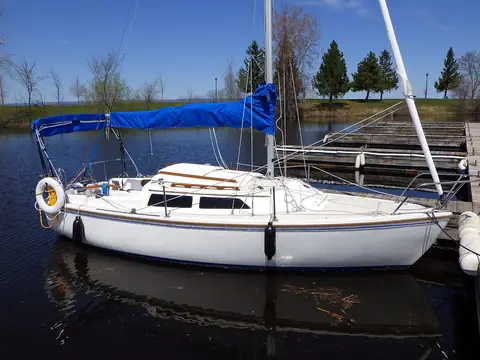
Catalina 22
Cruising Sailboats, 22 ft
Used $3K to $40K
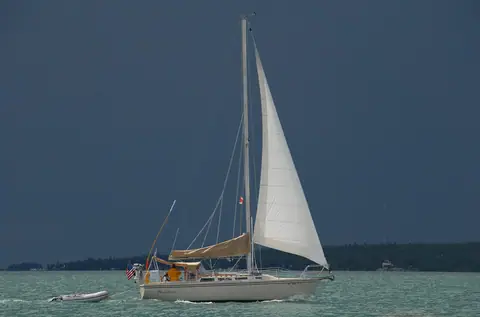
Catalina 30
Cruising Sailboats, 30 ft
Used $8K to $58K

J/70
Performance Sailboats, 23 ft
Used $30K to $70K
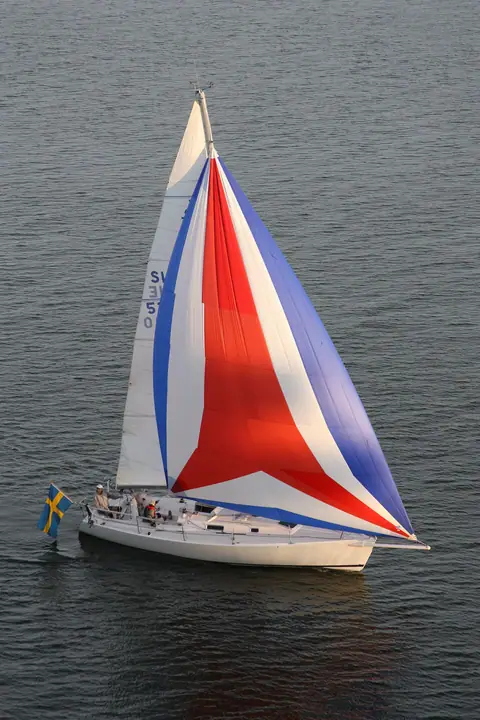
J/105
Performance Sailboats, 35 ft
Used $40K to $135K
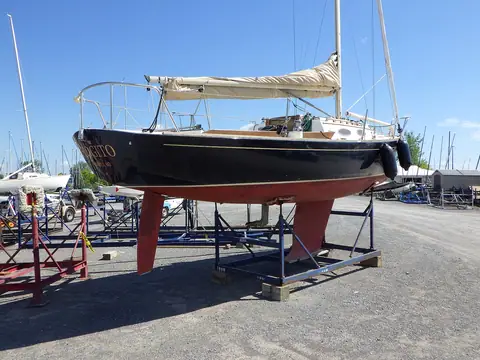
Alerion 28
Performance Sailboats, 28 ft
Used $38K to $95K
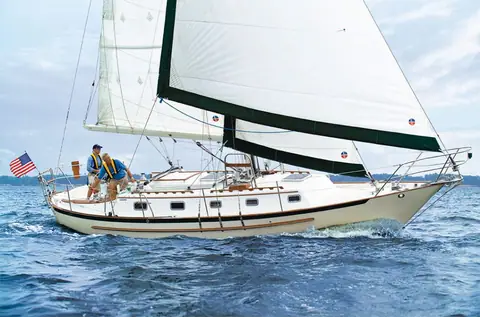
Pacific Seacraft 37
Bluewater Sailboats, 37 ft
Used $70K to $260K
Frequently asked questions
What is the most common type of sailboat?
The Bermuda-rigged sloop with a fin keel is by far the most common modern sailboat. It is efficient, simple to sail and used on most production cruisers and racers.
What is the difference between a sloop and a cutter?
Both have one mast. A sloop flies one headsail, while a cutter carries two, a jib and an inner staysail, with the mast set farther aft.
What is the difference between a ketch and a yawl?
Both have a smaller mizzen mast behind the mainmast. On a ketch the mizzen is forward of the rudder post; on a yawl it is aft of the rudder post and smaller.
Is a full keel better than a fin keel?
Neither is better overall. Full keels track steadily and protect the rudder offshore, while fin keels sail faster, point higher and maneuver better in marinas.
What type of sailboat is best for beginners?
A small, forgiving sloop between about 20 and 30 ft, such as a Catalina 22 or Catalina 27, is a common starting point. These boats are simple, affordable and easy to resell.
What sailboat type is best for crossing an ocean?
A proven bluewater monohull or a well-built cruising catamaran, properly prepared. Look for strong construction, a protected rudder, an easily reefed rig and generous tankage.
Keep reading
Catamaran vs Monohull, Which Should You Buy?
An honest comparison of cruising catamarans and monohull sailboats for US buyers, covering comfort, safety, sailing ability…
BuyingBest Sailboats for Beginners
Our picks for the best first sailboats in the US market, grouped by how you want to sail, with real specs, typical used prices…
BuyingBest Bluewater Sailboats for Ocean Crossings
Our shortlist of the best bluewater sailboats for ocean crossings, from $25,000 classics to million-dollar passagemakers, with…
KnowledgeTypes of Yachts Explained
A plain-English map of the main types of yachts sold in the US, from sailboats and catamarans to trawlers, sportfish…
KnowledgeBoating Terminology, 150 Terms Every Owner Should Know
A themed glossary of boating terminology for new and experienced owners, grouped by hull, deck, lines, sails, engines…
KnowledgeBoat Hull Types Explained, Displacement, Planing and More
How the shape of a hull decides a boat's speed, ride, fuel burn and stability. Covers displacement, semi-displacement and…