Knowledge
Types of Yachts Explained
A plain-English map of the main types of yachts sold in the US, from sailboats and catamarans to trawlers, sportfish convertibles and superyachts, with what each is built to do.
On this page
- The quick map of yacht categories
- Start with the hull, because it decides everything else
- Sailing yachts, monohull and multihull
- Motor yacht layouts, decoded
- Trawlers and explorer yachts for range and economy
- Sportfish convertibles and big center consoles
- Downeast, dayboats and performance boats
- Power catamarans, the fastest-growing niche
- Superyachts, briefly
- Matching the type to how you boat
- FAQ
The quick map of yacht categories
There is no legal definition of a yacht in US recreational boating. In common usage it means a pleasure vessel large enough to stay aboard overnight, usually from the low 30 ft range upward, though builders use the word for smaller luxury dayboats too. Above 79 feet (24 meters), the term large yacht appears in commercial codes, and above roughly 131 feet (40 meters), most of the industry says superyacht.
This table lays out the main types of yachts you will meet at a US boat show or brokerage, with typical sizes and speeds. Speed and price figures are editorial estimates for mainstream models.
| Type | Typical length | Hull form | Typical cruise | Built for | Examples |
|---|---|---|---|---|---|
| Cruising sailboat | 30 to 50 ft | Ballasted monohull | 6 to 8 kn | Coastal and offshore cruising | Catalina 320, Jeanneau Sun Odyssey 440 |
| Bluewater sailboat | 32 to 65 ft | Heavy-displacement monohull | 6 to 8 kn | Ocean passages | Hallberg-Rassy 44, Valiant 40 |
| Sailing catamaran | 38 to 60 ft | Twin hulls | 7 to 10 kn | Liveaboard, charter, warm-water cruising | Lagoon 46, Leopard 50 |
| Trawler or explorer | 34 to 70 ft | Full or semi-displacement | 7 to 10 kn (semi-displacement faster) | Long-range, economical cruising | Nordhavn 47, Kadey-Krogen 44 |
| Express cruiser | 30 to 50 ft | Planing | 22 to 30 kn | Weekends and coastal hops | Sea Ray Sundancer 350, Regal 38 XO |
| Flybridge motor yacht | 45 to 90 ft | Planing or semi-displacement | 18 to 26 kn | Entertaining and coastal cruising | Princess F65, Galeon 500 Fly |
| Sportfish convertible | 35 to 90 ft | Deep planing | 25 to 35 kn | Offshore fishing and tournaments | Viking 72, Bertram 54 |
| Downeast or lobster yacht | 30 to 55 ft | Semi-displacement or planing | 18 to 30 kn | Classic styling, day and weekend cruising | Back Cove 37, Hinckley Picnic Boat |
| Center console | 25 to 65 ft | Deep-V planing | 28 to 45 kn | Fishing and day runs offshore | Freeman 42LR, Boston Whaler 420 Outrage |
| Power catamaran | 35 to 70 ft | Twin hulls | 15 to 25 kn | Stable, efficient cruising | Aquila 44, Leopard 53 Powercat |
| Superyacht | 130 ft and up | Displacement or planing | 12 to 25 kn | Crewed luxury and world cruising | Benetti Oasis 40M, Sanlorenzo SD118 |
Start with the hull, because it decides everything else
Every power yacht falls into one of three hull families, and understanding them explains most differences in speed, fuel burn and comfort.
A full-displacement hull pushes water aside and is limited to roughly its hull speed, which for a 45 ft waterline is around 9 knots. It is efficient, seakindly and capable of very long range. Trawlers such as Nordhavns and Kadey-Krogens and every sailboat fall into this family.
A planing hull climbs onto the surface at speed and skims, allowing 20, 30 or 40 knots with enough power. The cost is fuel: burn rises steeply with speed, and a planing yacht pushed slowly can be less comfortable and less efficient than a true displacement design.
A semi-displacement hull sits between the two, cruising efficiently at displacement speeds but able to run in the mid-teens to low 20s when needed. Classic Grand Banks trawlers, many downeast boats and fast trawlers like the Beneteau Swift Trawler use this approach. Our boat hull types guide covers the shapes in more depth.
Sailing yachts, monohull and multihull
Sailing yachts are the most varied category. At one end are trailerable pocket cruisers like the Catalina 22; at the other are 60 ft bluewater ketches and 100 ft performance sloops. Most US buyers shop one of four subtypes.
Production cruisers from Beneteau, Jeanneau, Hanse, Dufour and Bavaria, along with the huge used fleet Catalina built before it ceased production in 2025, prioritize interior volume, easy handling and value. Bluewater yachts from builders such as Hallberg-Rassy, Oyster, Amel, Pacific Seacraft and Island Packet trade some interior space and speed for strength, tankage and sea-keeping. Performance and racer-cruiser boats from J/Boats, X-Yachts and Swan put sailing quality first. Sailing catamarans from Lagoon, Leopard, Fountaine Pajot and Bali dominate charter fleets and the liveaboard market.
Our separate guides on types of sailboats and on catamaran vs monohull go deeper into rigs, keels and the two-hull question.
Motor yacht layouts, decoded
Power yacht names often describe the deck arrangement rather than the hull. These are the terms you will see on US listings.
- Express cruiser or sport yacht. A single main deck with an open or hardtop cockpit and helm, with cabins forward below. Sleek, fast and simple to handle. Sea Ray Sundancers and Cruisers Yachts GLS models are typical.
- Sedan or salon express. An enclosed salon and helm on the main deck, sometimes with a flybridge above. Good all-weather visibility and a single-level living area.
- Flybridge motor yacht. An upper helm and lounge on top of the salon, with a lower helm often included. The dominant layout from about 45 to 80 ft in the US, from Princess, Azimut, Galeon, Prestige and Sunseeker.
- Aft cabin motor yacht. A raised master stateroom in the stern under an aft deck, popular in the 1980s and 1990s with Carver, Bayliner and Hatteras. Excellent master suites, high windage.
- Skylounge and tri-deck. Larger yachts with an enclosed upper salon, or three levels above the waterline, typical from about 80 ft upward.
- Coupe or hardtop. An enclosed helm deck with a sliding sunroof instead of a flybridge, common on European yachts between 40 and 60 ft.
Trawlers and explorer yachts for range and economy
Trawler yachts take their name and look from working fishing boats, but recreational trawlers are built for comfortable, slow cruising. A 40 to 50 ft trawler at 7 to 8 knots commonly burns a few gallons per hour, a small fraction of a planing yacht's consumption, which makes them the default choice for the Great Loop, the Inside Passage to Alaska and extended coastal cruising.
Full-displacement passagemakers like the Nordhavn range are designed for ocean crossings, with long range, stabilizers and heavy construction. Semi-displacement trawlers such as the Grand Banks 42 Classic or Mainship 390 can run faster for a few hours when the weather turns. Explorer yachts extend the concept upward in size, adding ice-capable hulls, big tenders and the range to cruise remote regions.
Sportfish convertibles and big center consoles
Fishing drives a huge part of the American yacht market. Sportfish convertibles combine a large cockpit with a fighting chair, a flybridge with sightlines to the cockpit, and luxurious interiors for traveling to tournaments. Builders like Viking, Hatteras and Bertram define the type, and the boats are fast, often cruising in the high 20s to low 30s of knots, with big fuel bills to match.
Center consoles have grown from small open boats into 40 to 65 ft offshore machines with multiple outboards, cabins in the console and speeds over 40 knots. Freeman, Yellowfin, Contender, Regulator and HCB are leading names. They are not yachts in the overnight sense at the smaller end, but many buyers now choose a large center console instead of a traditional express cruiser.
Downeast, dayboats and performance boats
Downeast or lobster yachts draw on Maine working boats: a fine entry, a long keel protecting the running gear, a low sheer and a practical cockpit. Hinckley, Back Cove, Sabre and MJM build in this tradition, with jet drives on some Hinckleys and joystick control on many models. They appeal to buyers who want classic looks with modern systems.
Luxury dayboats such as the Wajer 55, Axopar 37 or classic runabouts like the Riva Aquarama prioritize style and the experience of a day on the water over overnight accommodation. Performance powerboats from Cigarette and Fountain are built for speed, often well over 70 miles per hour, and are a world of their own.
Power catamarans, the fastest-growing niche
Power cats borrow the twin-hull layout of sailing catamarans and add more power. They offer stable, level running, a big single-level living area and lower fuel burn per mile than many monohull planing yachts of similar volume. Aquila, Leopard and Fountaine Pajot build cruising power cats, while Invincible and others build twin-hull fishing boats. The trade-offs mirror sailing cats: wide beam, higher marina charges and limited haul-out options in some yards.
Superyachts, briefly
Once a yacht passes about 130 feet, it typically has a steel or aluminum hull, a full-time crew, crew quarters, stabilizers at anchor and underway, and systems more like a small ship's. Builders range from semi-custom yards producing series models, such as Westport, Sanlorenzo, Benetti and Azimut Grande, to fully custom shipyards. Our guide to what a superyacht is explains the tiers, costs and how charter fits in.
Matching the type to how you boat
Start with your most common day, not your dream voyage. Then use this table as a first filter.
| If you mostly want to... | Look first at | Also consider |
|---|---|---|
| Sail on weekends and learn | Cruising sailboats 25 to 35 ft | Performance one-designs for racing |
| Live aboard in warm water | Sailing catamarans 40 to 50 ft | Trawlers, power catamarans |
| Cross oceans under sail | Bluewater sailboats | Performance cruising catamarans |
| Do the Great Loop or ICW | Trawlers under about 19 ft air draft | Power catamarans, express cruisers |
| Entertain at the sandbar or on the lake | Express cruisers, dayboats | Large center consoles |
| Fish offshore | Center consoles, sportfish convertibles | Downeast boats with fishing packages |
| Host family weekends in comfort | Flybridge motor yachts | Power catamarans |
| Travel with crew and guests | Motor yachts 70 ft and up | Superyachts |
Models mentioned in this guide
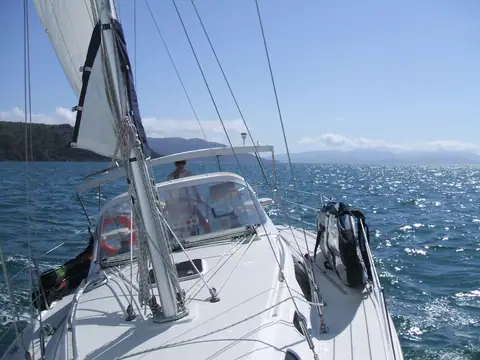
Catalina 320
Cruising Sailboats, 33 ft
Used $30K to $85K
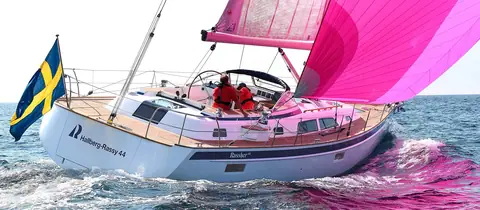
Hallberg-Rassy 44
Bluewater Sailboats, 47 ft
Used $750K to $1.15M
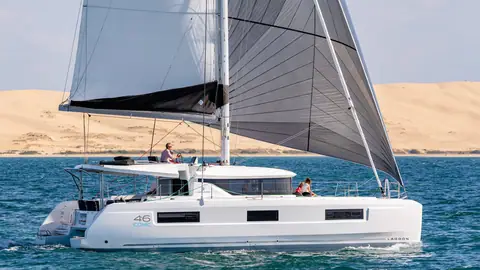
Lagoon 46
Sailing Catamarans, 46 ft
Used $620K to $950K
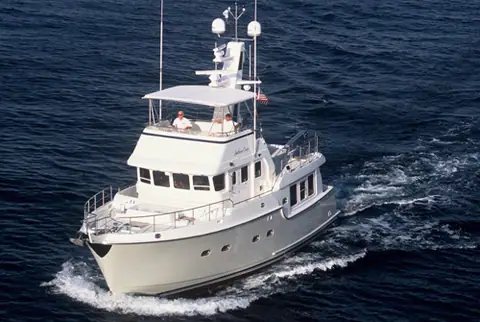
Nordhavn 47
Trawlers & Explorer Yachts, 48 ft
Used $520K to $900K
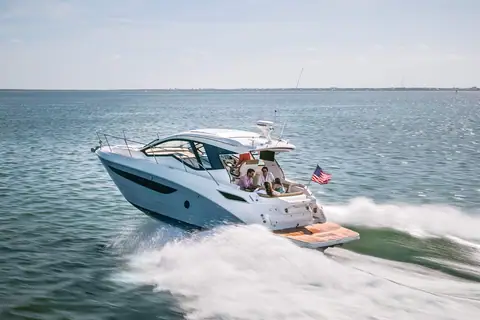
Sea Ray Sundancer 350
Sport Yachts & Express Cruisers, 35 ft
Used $85K to $310K
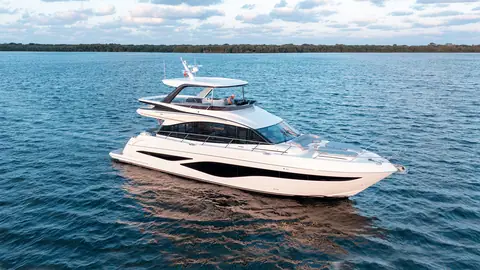
Princess F65
Motor Yachts, 67 ft
Used $2.6M to $3.9M
Frequently asked questions
What are the main types of yachts?
The main types are sailing yachts (monohull and catamaran), motor yachts (express, flybridge and aft cabin), trawlers and explorers, sportfish convertibles, center consoles, downeast boats, power catamarans and superyachts.
What size boat is considered a yacht?
There is no fixed rule in the US, but most people use the word for pleasure boats from roughly 30 to 35 ft upward with overnight accommodation. Above 79 ft is often called a large yacht, and above about 131 ft a superyacht.
What is the difference between a motor yacht and a trawler?
A trawler is a type of motor yacht with a displacement or semi-displacement hull built for slow, economical cruising. Most other motor yachts use planing hulls designed to cruise at 18 knots or more.
What is a flybridge yacht?
A flybridge yacht has an open or partly covered upper deck above the main salon with a second helm station. It gives better visibility and extra entertaining space.
Which type of yacht is cheapest to run?
Sailboats and displacement trawlers usually have the lowest fuel costs. Smaller boats are cheaper overall because dockage, haul-outs and insurance scale with length and value.
What type of yacht is best for living aboard?
Sailing catamarans and trawlers are the most popular liveaboard choices in the US. Both offer good volume and economical cruising.
Keep reading
Types of Sailboats and Rigs Explained
A buyer-focused guide to the types of sailboats, sorted four ways: by rig, by keel, by hull and by purpose, with real models…
KnowledgeBoat Hull Types Explained, Displacement, Planing and More
How the shape of a hull decides a boat's speed, ride, fuel burn and stability. Covers displacement, semi-displacement and…
KnowledgeWhat Is a Flybridge? Pros, Cons and Who Needs One
A flybridge is an upper helm and lounge deck above a boat's main cabin. This guide explains how it works, the main variations…
KnowledgeWhat Is a Superyacht? Size, Cost and Crew
A superyacht is a large, professionally crewed private yacht, generally 24 meters (79 feet) and up in industry usage, though…
KnowledgeYacht Sizes Explained, From Small Yachts to Megayachts
Yacht size categories are informal, but the length thresholds behind them are not. This guide explains how yachts are measured…
KnowledgeYacht vs Boat, What Is the Difference?
There is no single legal line between a boat and a yacht. This guide explains how the industry, insurers, lenders, regulators…