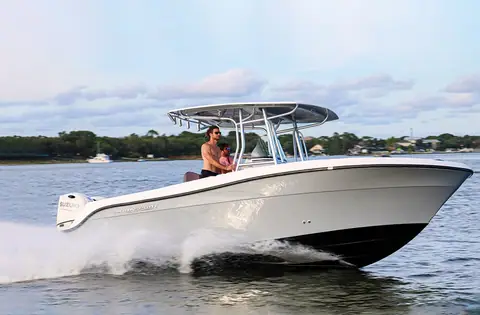
Aquasport 2500 CC
Center Consoles & Offshore Boats, 25 ft
Used $45K to $95K
The center console is the defining American boat of the last two decades. Its layout, a helm console in the middle of an open deck with walkaround space on all sides, makes it ideal for fishing, and powerful modern outboards have turned it into an offshore runabout, family dayboat and even a small yacht. Center console boats are now built in lengths from under 20 feet to more than 60.
Center Consoles & Offshore Boats, 25 ft
Used $45K to $95K
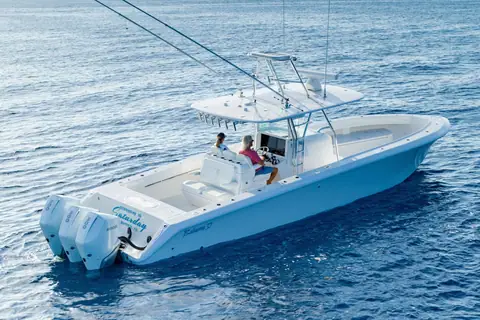
Center Consoles & Offshore Boats, 38 ft
Used $300K to $900K
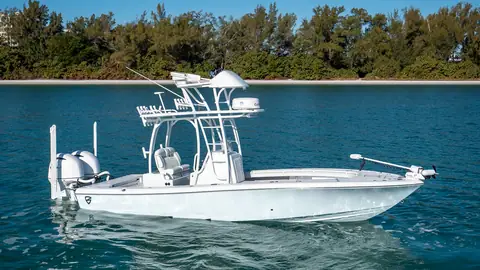
Center Consoles & Offshore Boats, 26 ft
Used $90K to $215K
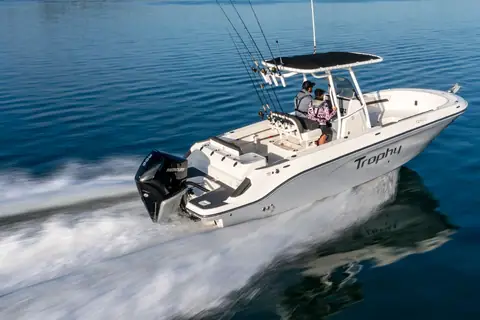
Center Consoles & Offshore Boats, 24 ft
Used $7K to $210K
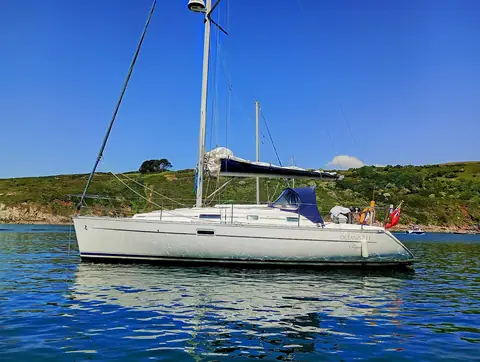
Center Consoles & Offshore Boats, 18 ft
Used $34K to $60K
Center Consoles & Offshore Boats, 21 ft
Used $48K to $90K
Center Consoles & Offshore Boats, 17 ft
Used $10K to $19K
Center Consoles & Offshore Boats, 18 ft
Used $11K to $24K
Center Consoles & Offshore Boats, 20 ft
Used $15K to $32K
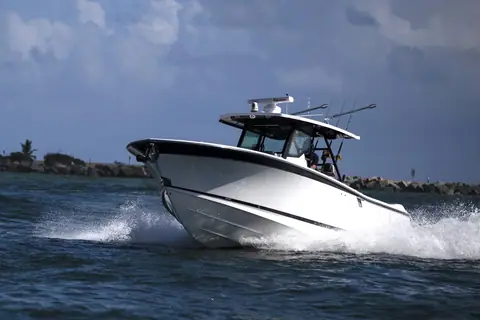
Center Consoles & Offshore Boats, 33 ft
Used $225K to $450K
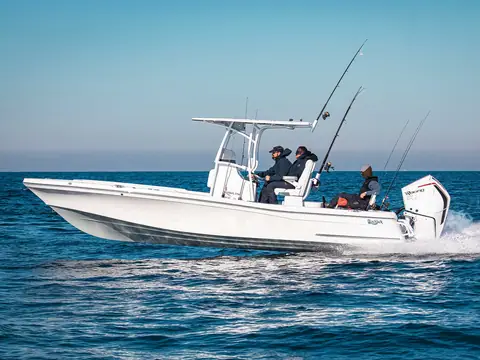
Center Consoles & Offshore Boats, 26 ft
Used $85K to $150K
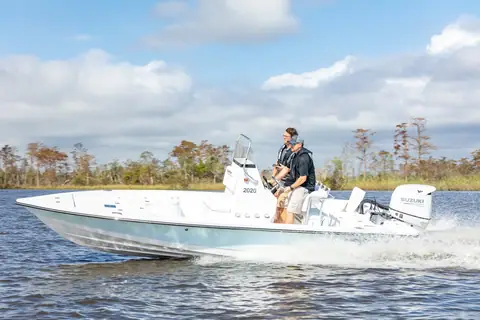
Center Consoles & Offshore Boats, 20 ft
Used $28K to $62K
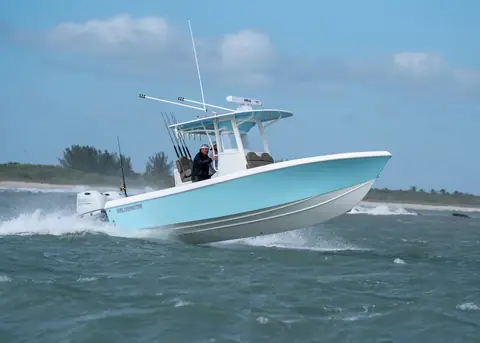
Center Consoles & Offshore Boats, 28 ft
Used $165K to $215K
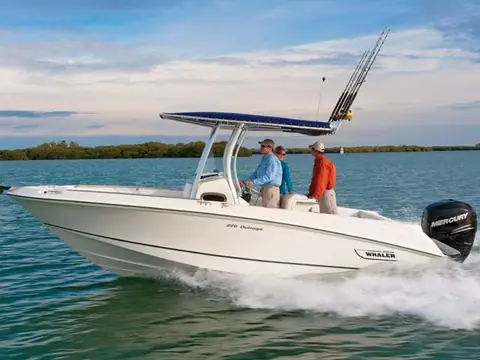
Center Consoles & Offshore Boats, 22 ft
Used $42K to $78K
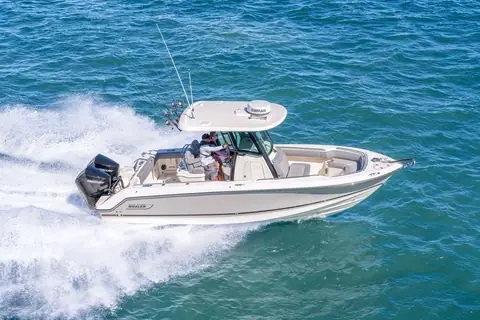
Center Consoles & Offshore Boats, 25 ft
Used $55K to $200K
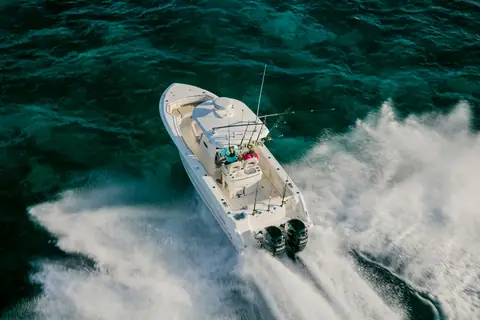
Center Consoles & Offshore Boats, 28 ft
Used $65K to $265K
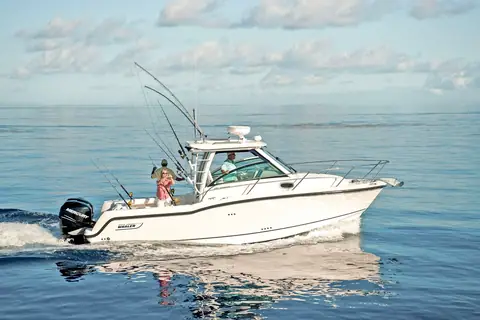
Center Consoles & Offshore Boats, 28 ft
Used $90K to $330K
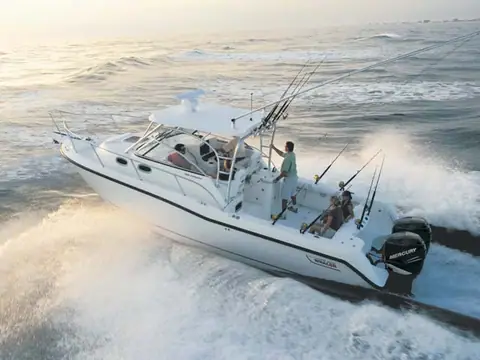
Center Consoles & Offshore Boats, 32 ft
Used $55K to $115K
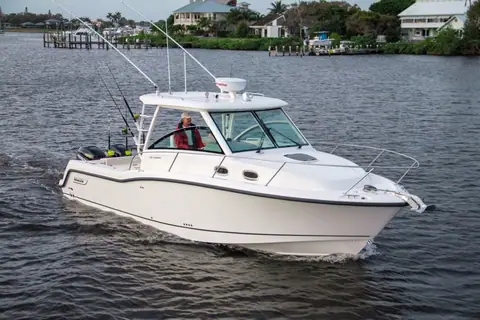
Center Consoles & Offshore Boats, 31 ft
Used $120K to $285K
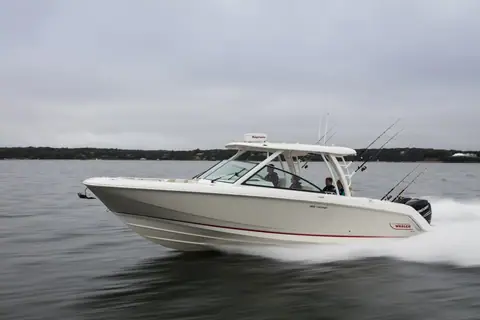
Center Consoles & Offshore Boats, 32 ft
Used $140K to $330K
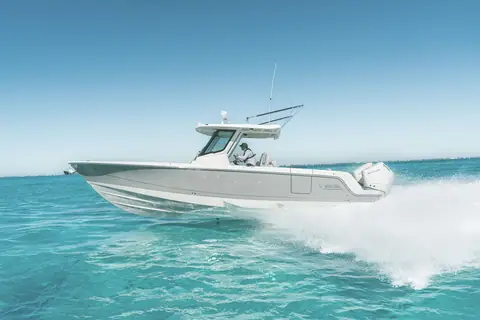
Center Consoles & Offshore Boats, 33 ft
Used $175K to $560K
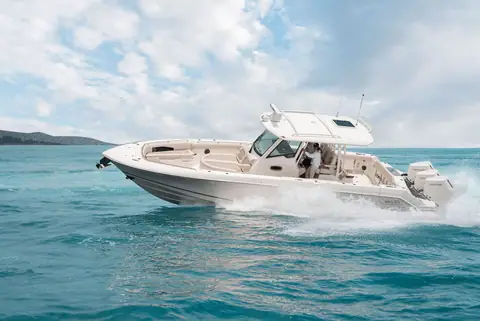
Center Consoles & Offshore Boats, 38 ft
Used $380K to $850K
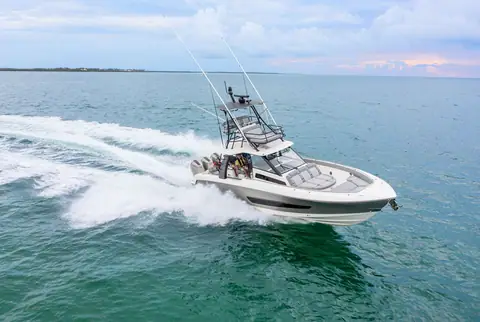
Center Consoles & Offshore Boats, 43 ft
Used $450K to $1.25M
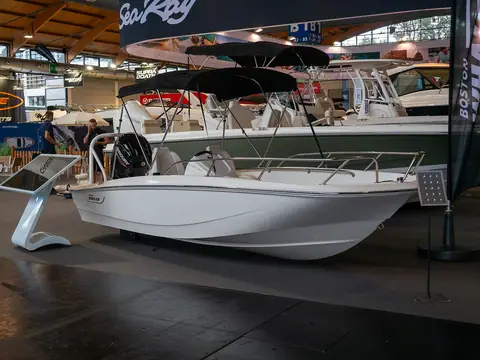
Center Consoles & Offshore Boats, 16 ft
Used $12K to $28K
No models match these filters. Clear a filter to see more.
Our reviews focus on offshore boats of about 28 feet and up, where the market is most competitive. Fishing-first builders such as Regulator, Contender, Yellowfin and Freeman sit alongside family-oriented brands such as Grady-White, Boston Whaler, Pursuit and Scout, and luxury flagships like the HCB 65 Estrella, Midnight Express 43 Open and Valhalla V-55.
Here is how the hull types differ, what all those outboards cost to own, and what to check when buying used.
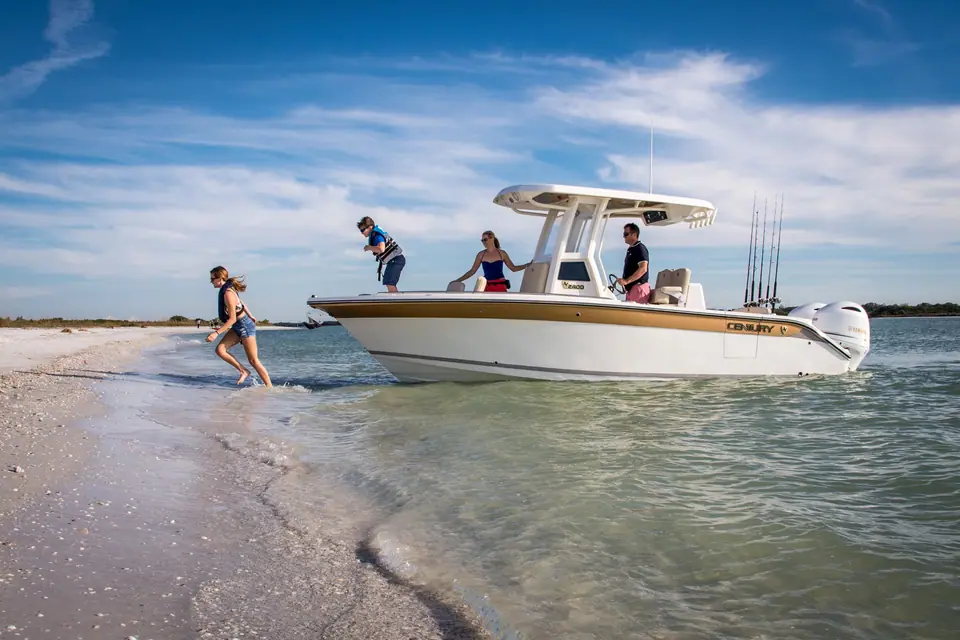
Early center consoles were simple open boats for inshore fishing. The Boston Whaler Montauk and similar designs showed how practical the layout was, and builders in Florida and the Carolinas developed deep-V offshore consoles for Gulf Stream and canyon fishing.
The arrival of larger, more reliable four-stroke outboards changed everything. With engines of 300 to 600 horsepower available, builders could hang three, four or even five outboards on a transom and push 40 to 65 foot hulls at high speed. Today's flagships include full cabins, air conditioning, gyro stabilizers and joystick docking.
Hull design is the biggest variable in ride quality and efficiency. The table compares the main types among the models we cover.
| Hull type | Examples | Ride and handling | Trade-offs |
|---|---|---|---|
| Classic deep-V | Regulator 28 and 37, Grady-White Canyon 456, Boston Whaler 420 Outrage, HCB 65 Estrella | Soft, predictable ride in a head sea | Needs more power to reach high speeds |
| Stepped deep-V | Yellowfin 36 and 42, Contender 32 ST and 39 ST, Midnight Express 43, the 2026 WhalerStep Boston Whaler 330 Outrage | High speed and efficiency on plane | Can feel different in hard turns, needs skilled trim |
| Catamaran | Freeman 34VH, 42LR and 47 | Smooth in a head sea, stable at rest | Wider, different handling in following seas |
| Family deep-V | Scout 670 LXS and Valhalla V-55 (both stepped), Pursuit OS 325 | Comfortable ride with luxury features | Heavier, higher fuel use |
Some center consoles are built for serious anglers. Contender, Yellowfin, Regulator and Freeman boats prioritize rod storage, livewells, fish boxes, leaning posts with tackle storage and clean cockpit space. Others, such as Scout, Pursuit, HCB and Valhalla, emphasize comfort with forward lounges, sun pads, galley stations and large consoles that hide a head or cabin.
Most buyers want some of both. Look at how the boat will be used most of the time, and choose features accordingly. A family-oriented boat can still fish well, and a fishing boat can carry guests, but the compromises are real.
Most offshore center consoles come from a few regions with deep fishing traditions. North Carolina is home to Regulator in Edenton and Grady-White in Greenville, both known for soft-riding deep-V hulls and strong dealer support. South Florida produces Contender, Yellowfin and Midnight Express, builders shaped by fast runs across the Gulf Stream to the Bahamas. Pursuit builds in Fort Pierce, Scout in South Carolina, and Freeman builds its catamarans in South Carolina, though the brand made its name with charter captains in Venice, Louisiana, where long runs to Gulf oil rigs reward a smooth ride.
Boston Whaler, founded by Dick Fisher in 1958 and owned by Brunswick since 1996, now builds in Edgewater, Florida, and still fills its hulls with foam so they stay afloat when swamped. Valhalla is the outboard-powered sister brand of Viking, and HCB builds its large luxury consoles in Tennessee.
Outboards are easy to maintain and to replace, but large ones are expensive. Repowering a center console with triple or quad 300 to 450 horsepower engines can cost hundreds of thousands of dollars. Engine hours, maintenance records and remaining warranty strongly affect used boat values.
More engines add redundancy and speed but also increase fuel burn and maintenance. A 35 foot boat with twin outboards is usually simpler and cheaper to run than the same boat with triples, but may be slower and less able to carry heavy loads.
Many center console owners in Florida and the Gulf keep boats in dry stack storage or on lifts. Dry stack keeps the hull clean and protected but has height and weight limits, so check before buying a larger boat. Trailers make sense for smaller boats, though a 35 footer becomes a serious towing project.
Hurricane plans are part of ownership. Boats stored on land or in rated storage are easier to protect than boats in the water, and insurers often have specific requirements.
Larger center consoles often have a cabin inside the console with a berth, head and sometimes a small galley. The HCB 65 Estrella and Valhalla V-55 offer real overnight accommodation, while a used Grady-White Express 330, built from 2001 to 2025, offers a more traditional cabin layout for fishing families who want to spend nights aboard.
These cabins are useful for changing, storing gear and occasional nights aboard, but for regular overnighting, an express or walkaround layout is often more comfortable.
When comparing used center consoles, look at engine hours, service records, warranty status and storage history. Inspect the hull for stress cracks and signs of hard use. Check stringers and transom areas for moisture, and test all electronics and pumps.
Boats from builders with strong reputations hold value well, but condition and engine history matter more than the name.
| Size | New | Used |
|---|---|---|
| 25 to 30 ft | $200,000 to $450,000 | $50,000 to $350,000 |
| 31 to 36 ft | $400,000 to $900,000 | $100,000 to $700,000 |
| 37 to 45 ft | $800,000 to $1,800,000 | $250,000 to $1,400,000 |
| 46 to 55 ft | $1,500,000 to $3,000,000 | $700,000 to $2,500,000 |
| 60 ft and up | $3,000,000 to $5,500,000 | $2,000,000 to $4,500,000 |
Typical US asking and sail-away ranges in 2026. Condition, engines and equipment move individual boats well outside these bands.
A center console has its helm console in the middle of an open deck, allowing walkaround access all around the boat. It is popular for fishing and family boating.
New offshore center consoles of 31 to 36 feet typically cost about $400,000 to $900,000 in 2026. Used boats of that size start around $100,000.
Catamarans like Freeman ride smoothly in a head sea and are very stable at rest. Monohulls often handle following seas more predictably and are easier to fit in slips and dry stack.
It depends on boat size and desired speed. Many 30 to 35 foot boats run well on twins, while larger boats use triples, quads or more.
Yes, offshore center consoles from builders like Regulator, Contender, Yellowfin and Grady-White are designed for Gulf Stream and offshore fishing. Weather judgment remains essential.