Grady-White Center Consoles & Offshore Boats
Grady White Fisherman 257, the Twin-Engine 25 Explained
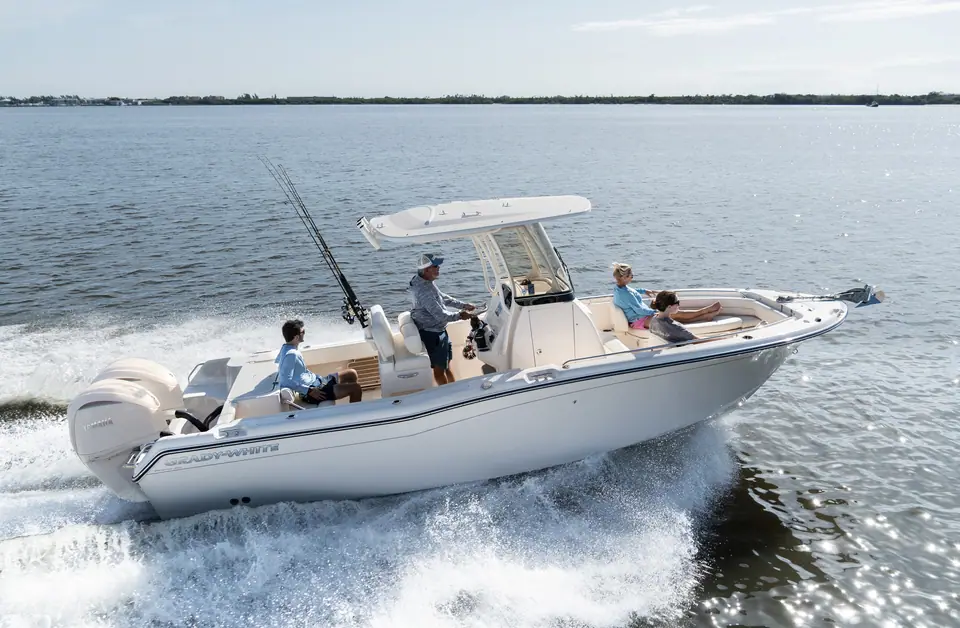
Twin Yamaha outboards, three insulated fish boxes and a 32-gallon livewell on a 24-foot 9-inch hull you can still tow without a wide-load permit.
- Length
- 24.8 ft7.55 m
- Beam
- 8.5 ft2.59 m
- Cruise
- 26.1 kn
- Cabins
- None (console head with hanging locker)
- Used price
- $55K to $205K
On this page
- Overview
- Grady White Fisherman 257, twin outboards on a towable beam
- From Advance 257 to Fisherman 257
- Why twins matter on a 25-footer, and what they cost
- Twin F200 test data, rpm by rpm
- Cockpit and console details that serious anglers notice
- Where the 257 falls short
- Values from early Advance hulls to new boats
- Specifications
- Price and value
- Strengths and weaknesses
- Used buyer checklist
- Rivals
- Our verdict
- FAQ
The Grady-White Fisherman 257 is a 24-foot 9-inch twin-outboard center console that began as the Advance 257 in the 2009 catalog. It carries 135 gallons of fuel, is rated for 400 hp and remains in Grady's 2027 lineup.
- Offshore anglers who trailer or dry-stack
- Bluewater day trips with twin-engine peace of mind
- Northeast striper and tuna fishing
- Owners stepping up from a single-engine 23
Grady-White Fisherman 257 by the numbers
- Speed to length ratio at cruise
- 5.62A planing cruise. Fast passages in exchange for much higher fuel burn per mile.
- Estimated range at cruise
- 281 nmUsing 90 percent of tank capacity at the cruise speed and fuel burn listed on this page.
- Fuel economy at cruise
- 2.31 nmpgNautical miles per gallon at cruise, both engines combined.
- Horsepower per ton
- 186 hpVery high power to weight, built for speed.
- Length to beam ratio
- 2.91 : 1A beamy hull with lots of volume for its length.
Grady White Fisherman 257, twin outboards on a towable beam
The Grady White Fisherman 257 solves a specific problem. Many offshore anglers want two engines for the run back from the canyon or the Gulf Stream edge, but they also want to keep the boat on a trailer or in a dry stack. At 8 feet 6 inches of beam, the 257 stays inside the standard towing width while carrying twin Yamaha outboards, a 135-gallon tank and a 400 hp rating. It is the largest boat in Grady-White's Fisherman series and the only one with twins.
Salt Water Sportsman's executive editor Chris Woodward summed it up in the magazine's 2022 buyer's guide: at 24 feet 9 inches, with twin outboards and plenty of fishing features, the 257 makes a solid offshore platform. In the 2019 edition, readers who owned offshore center consoles of any brand placed Grady-White first among builders they would consider when buying again.
From Advance 257 to Fisherman 257
This hull first appeared in Grady-White's 2009 catalog as the Advance 257, a 25-foot center console with 64 square feet of cockpit, a 27-inch cockpit depth and a 350 hp rating. One owner quoted in that catalog described landing a 192-pound thresher shark off Montauk and thanking the transom door for it. For the 2011 model year Grady-White reorganized its range: dual consoles became the Freedom series and center consoles up to 25 feet became the Fisherman series, so the Advance 257 became the Fisherman 257.
The numbers changed over time. The 2011 catalog lists 151 gallons of fuel and a weight of 4,045 pounds without engines. By the 2014 specification sheet the boat was rated for 400 hp with 135 gallons of fuel and 4,300 pounds of weight, the figures still quoted today. Later updates reworked the T-top with LED spreader lights and tricolor recessed lights, a full-height scratch-resistant windshield integrated into a painted aluminum frame and more stainless grab rails.
Why twins matter on a 25-footer, and what they cost
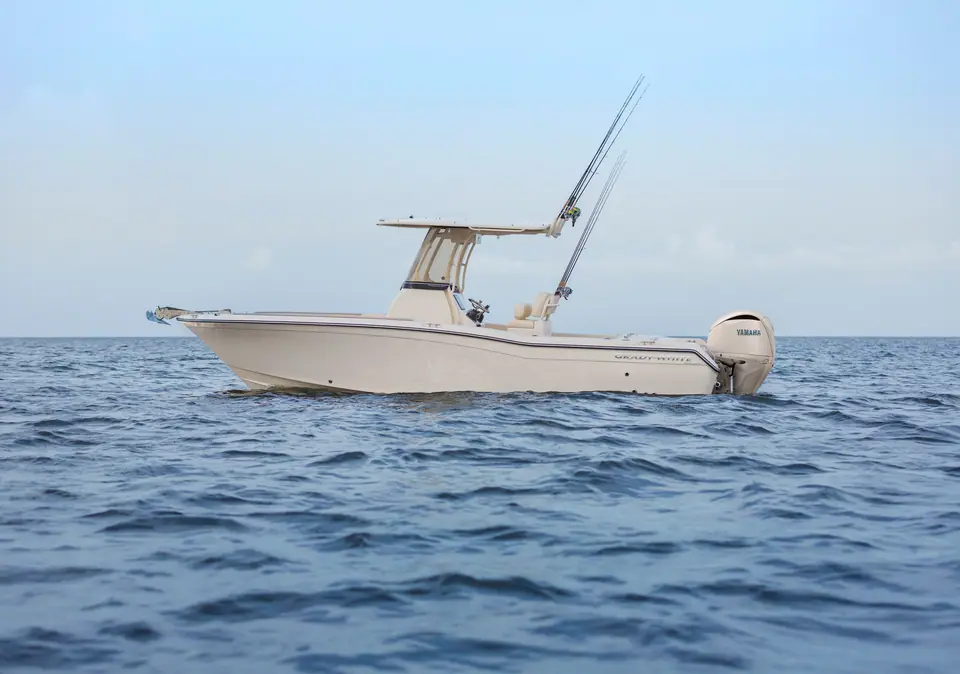
On a single-engine 23-footer, a fouled fuel filter 30 miles out means a tow. On the 257, it means a slower ride home. That redundancy, more than speed, is why the boat exists. Separate battery switches serve each engine, each Yamaha has its own flush fitting, and two automatic bilge pumps move a combined 2,600 gph.
The cost is real. Twins mean two sets of annual service, two lower units to inspect and repower bills that roughly double a single-engine boat's. Fuel burn at Grady-White's best cruise was 11.3 gph at 30 mph with twin F200s, against 9 to 10 gph for a single-engine 236 at a similar speed. Loaded test weight was 6,646 pounds before the trailer, so plan on a three-quarter-ton truck.
Twin F200 test data, rpm by rpm
Grady-White's published test from April 2015 used twin 2.8-liter Yamaha F200s with Reliance SDS props and a hardtop. The boat planed by 2,500 rpm, settled into its sweet spot between 3,500 and 4,000 rpm at 27.6 to 33.5 mph, and topped out at 52.5 mph at 6,000 rpm. Best economy was 2.73 mpg at 3,500 rpm, and the published optimum cruise of 30 mph at 3,700 rpm returned 2.66 mpg.
With 135 gallons and a 10 percent reserve, that cruise equates to about 320 statute miles, comfortably enough for a 50-mile run offshore, a day of trolling and the trip home. Even at 4,500 rpm and nearly 39 mph the boat still returns better than 2 mpg.
Cockpit and console details that serious anglers notice
Grady-White designed the 257 after listening to both offshore anglers and coastal families, and the fishing side is complete out of the box.
- 32-gallon aft livewell with light, full-column inlet and an 1,100 gph pump
- 185-quart insulated fish box aft plus two 120-quart boxes forward, the port one divided
- Thigh-high bolsters and toe rails all around the cockpit
- Four gunwale rod holders, four on the lean bar, four in the T-top and six horizontal rack slots
- Lean bar with footrest, backrest, split flip-up bolster, knife and plier holders and tackle trays
- Anchor windlass with bow roller and deck-level access to the bow
- Console with portable head, hanging locker, storage shelves and a composite cherry and holly sole
- Optional 18-foot crank outriggers, casting platform insert, bow table and a 65-quart Yeti under the lean bar
Where the 257 falls short
Narrow beam is both the selling point and the compromise. A 25-footer at 8 feet 6 inches will roll more at rest than a 9-foot 6-inch dual console or a Canyon 271, and the bow seating is comfortable for cruising but not a lounge. The head is a portable unit as standard, and there is no cabin. If you want to overnight or carry six adults offshore all day, the Marlin 300 or a Canyon will be kinder.
The 400 hp rating also caps you at twin 200s. That is plenty for 50 mph, but owners who want the punch of modern 300s will need a bigger hull.
Values from early Advance hulls to new boats
The 257's long run makes it one of the easier Gradys to shop because there is always inventory, from early Advance 257s to late-model Fisherman 257s with Helm Master EX joystick steering. Early boats are attractive if the engines have been repowered with modern four-strokes; otherwise, budget for that job. Boats from the 400 hp era onward are the safer buy because they match current parts and rigging.
Annual running costs for twin-engine ownership typically run $10,000 to $18,000 including two-engine service, insurance, storage and a normal season of fuel.
Grady-White Fisherman 257 specifications
| Length overall | 24.8 ft7.55 m |
|---|---|
| Beam | 8.5 ft2.59 m |
| Draft | 1.7 ft0.51 m |
| Air draft | 7.9 ft2.41 m |
| Displacement | 4,3 lbs1,951 kg |
| Fuel capacity | 135 gal511 L |
| Fresh water | 2 gal76 L |
| Cabins | None (console head with hanging locker) |
| Berths | None |
| Heads | 1 portable head in the console (macerator version optional) |
| Maximum persons | 10 |
| Standard engines | Twin Yamaha F200 four-stroke outboards |
| Optional engines | Yamaha Helm Master EX with full maneuverability (joystick) and Siren connected-boat monitoring |
| Maximum power | 400 hp |
| Cruise speed | 26.1 knots |
| Top speed | 45.6 knots |
| Range | 281 nm |
| Hull type | SeaV2 continuously variable deep-V, 20 degrees deadrise at the transom |
| Hull construction | Hand-laid fiberglass, composite stringer system and transom |
| Builder | Grady-White Boats, United States |
| Naval architect | C. Raymond Hunt Associates (SeaV2 hull concept) |
| Other design credits | Grady-White in-house engineering |
| Production | 2009 to present |
| Status | In production |
Figures come from builder documentation and independent tests where available. Displacement is usually quoted light, so a loaded cruising boat will weigh more. Compare these specs with another model.
Performance data
| RPM | Speed (mph) | Fuel (gph) | MPG |
|---|---|---|---|
| 1000 | 5.6 | 1.6 | 3.58 |
| 1500 | 7.4 | 2.5 | 3.02 |
| 2000 | 9 | 4.6 | 1.97 |
| 2500 | 14.2 | 6.5 | 2.19 |
| 3000 | 21.2 | 7.7 | 2.75 |
| 3500 | 27.6 | 10.1 | 2.73 |
| 3700 | 30 | 11.3 | 2.66 |
| 4000 | 33.5 | 13.4 | 2.51 |
| 4500 | 38.9 | 18.2 | 2.14 |
| 5000 | 43.6 | 23.7 | 1.84 |
| 5500 | 47.4 | 31.1 | 1.53 |
| 6000 | 52.5 | 40.2 | 1.31 |
Grady-White factory test, April 2015, twin Yamaha F200 (2.8L) with 14.25 x 18 Reliance SDS props, hardtop, 6,646 lb loaded weight. Fuel figures are totals for both engines.
How much does a Grady-White Fisherman 257 cost?
Twin engines are the main reason the 257 costs far more than the single-engine 236, and a 2026 boat with twin F200s, T-top options and electronics sits around $190,000 to $235,000 by our estimate. The used market spans 15 years, from early Advance 257 hulls with older Yamahas to nearly new boats. Engine hours and the age of the twin Yamahas matter more to value than model year alone.
Estimate your yearly cost
A planning estimate using common rules of thumb: insurance near 1.5 percent of value, maintenance near 3 percent, haul out and bottom paint by length. Your marina, region and use will move these numbers. Open the full cost calculator.
Versions and options
- Advance 257 (2009 to 2010)
- Original name for the hull, 350 hp rating, 151-gallon tank in the 2011 listing.
- Fisherman 257 (2011 onward)
- Renamed with the new Fisherman series; later rated for 400 hp with a 135-gallon tank and 4,300 lb weight.
- Helm Master EX full maneuverability
- Optional joystick docking on late boats, paired with Yamaha's Siren connected-boat monitoring.
Grady-White Fisherman 257 timeline
- 2009Hull appears in Grady-White's 2009 catalog as the Advance 257
- 2011Center consoles up to 25 feet become the Fisherman series and the boat is renamed Fisherman 257
- 2014Specification lists 400 hp maximum and 135 gallons of fuel
- 2015Grady-White publishes its twin F200 test, 52.5 mph top speed
- 2022Salt Water Sportsman buyer's guide highlights the reengineered hardtop and integrated windshield
Strengths and weaknesses
What owners like
- Twin-engine redundancy on a beam that tows without permits
- Three insulated fish boxes and a 32-gallon livewell standard
- Over 50 mph top speed and about 2.7 mpg at cruise
- Windlass, transom door and freshwater shower standard
- Long production run means good parts support and plentiful used boats
- SeaV2 ride in offshore chop
What to weigh up
- Narrow 8-foot 6-inch beam rolls at rest
- Two engines to maintain and eventually repower
- 400 hp cap limits engine choice
- No cabin and only a portable head as standard
Used Grady-White Fisherman 257 buyer checklist
Take this list to a viewing. Your ticks are saved in this browser so you can come back to it.
Always commission an independent marine survey and an engine survey before you buy. How a marine survey works.
Rivals to consider
Regulator 25
The classic twin-engine 25 rival, wider and heavier with a reputation for a dry ride.
Compare side by sideSea Hunt Gamefish 25
A budget-friendly offshore 25, usually on a single engine.
Compare side by sideBoston Whaler 250 Outrage
Whaler's take on the 25-foot center console, unsinkable foam construction and a higher price.
Compare side by sideContender 25 Tournament
A raw, fast fishing machine with a stepped-up offshore ride and fewer family comforts.
Compare side by sideOur verdict on the Grady-White Fisherman 257
The Fisherman 257 is the right Grady-White for anglers who want twin-engine security without giving up the trailer. It fishes like a much bigger boat, cruises efficiently on twin F200s and has been refined for more than 15 years, which means plenty of used choices and well-understood ownership. Accept the narrow-beam roll and the double maintenance bill, and it will carry you farther offshore with more confidence than any single-engine boat its size.
Grady-White Fisherman 257 questions answered
Is the Grady White 257 a twin engine boat?
Yes. Grady-White rigs it with twin Yamaha four-strokes, tested with a pair of F200s, under a 400 hp maximum rating.
How long is a 25 ft Grady White Fisherman 257?
The centerline length is 24 feet 9 inches with an 8-foot 6-inch beam and a 20-inch hull draft.
How fast is the Grady White Fisherman 257?
Grady-White's test with twin F200s recorded 52.5 mph at 6,000 rpm and an optimum cruise of 30 mph at 2.66 mpg.
What was the Advance 257?
It was the original name of the same hull in the 2009 catalog. It became the Fisherman 257 when Grady-White created the Fisherman series for 2011.
How much fuel does the Fisherman 257 hold?
Current boats carry 135 gallons. The 2011 catalog listed 151 gallons for early boats.
Can I tow a Grady White 257?
Yes, its 8-foot 6-inch beam needs no wide-load permit, but loaded weight is about 6,600 pounds before the trailer, so a heavy-duty truck is needed.
Grady-White Fisherman 257 photos
More center consoles & offshore boats to explore
Aquasport 2500 CC
Center Consoles & Offshore Boats, 25 ft
Used $45K to $95K
Hydra-Sports 2500 CC
Center Consoles & Offshore Boats, 25 ft
Used $35K to $85K
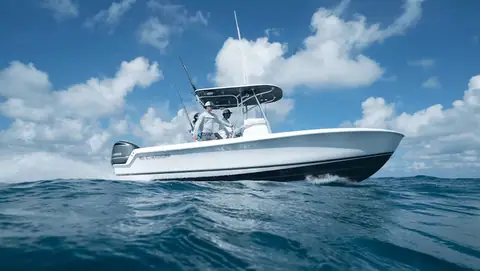
Contender 24S
Center Consoles & Offshore Boats, 25 ft
Used $55K to $145K
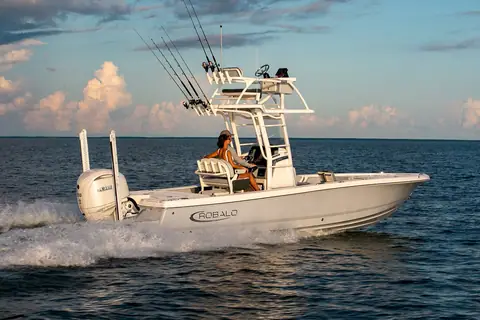
Robalo 246 Cayman SD
Center Consoles & Offshore Boats, 25 ft
Used $68K to $125K
Other Grady-White models
- Grady-White Canyon 336
- Grady-White Canyon 456
- Grady-White Express 330
- Grady-White Express 340
- Grady-White Express 370
- Grady-White Fisherman 216
- Grady-White Fisherman 236
- Grady-White Freedom 235
- Grady-White Freedom 275
- Grady-White Freedom 285
- Grady-White Gulfstream 232
- Grady-White Marlin 300
- Grady-White Seafarer 22
- All Grady-White models