Buying
Marine Surveys Explained, What a Surveyor Checks
What happens during a pre-purchase marine survey, what it costs, how to choose a surveyor, and how to turn the report into a better deal or a clean exit.
On this page
- What a marine survey is, and what it is not
- The main types of marine survey
- How to choose the right surveyor
- What a survey costs
- Out of the water, what the surveyor looks for below
- Deck, structure and the leaks you cannot see
- Systems and safety, measured against standards
- Engines and rigging, the specialist inspections
- The sea trial, and how to run it
- Reading the report and using it to negotiate
- FAQ
What a marine survey is, and what it is not
A marine survey is a professional inspection of a vessel's condition, written up in a report that also usually states the surveyor's opinion of fair market value and replacement cost. For a yacht buyer, the pre-purchase survey is the most important few thousand dollars in the deal. Lenders and insurers usually require one, and the findings are the normal basis for renegotiating price.
It is important to understand the limits. A survey is non-destructive. The surveyor will not cut holes in the deck, pull engines apart, or remove fixed panels and headliners without the owner's permission. Areas that cannot be reached are noted as not inspected. A good surveyor will tell you what they could not see as clearly as what they found, and will recommend further investigation when the evidence warrants it.
The US Coast Guard does not certify or license recreational marine surveyors, so the profession is largely self-regulated through professional associations. That makes choosing the right person your job.
The main types of marine survey
Different surveys answer different questions. Make sure you order the one that fits your purpose.
| Survey type | Purpose | Typical scope | Who orders it |
|---|---|---|---|
| Pre-purchase (condition and valuation) | Decide whether to buy and at what price | Full hull, structure, systems and safety, haul-out, sea trial, valuation | Buyer |
| Insurance condition and valuation | Satisfy an insurer on an existing boat | Condition, safety compliance and value; often less exhaustive than pre-purchase | Owner, at insurer's request |
| Appraisal | Value only, for loans, donations or estates | Valuation with limited condition review | Owner, lender or estate |
| Damage survey | Assess cause and cost of a loss | Focused on the damaged area and repair scope | Insurer or owner |
| New-build or warranty survey | Check a new boat before acceptance or warranty expiry | Construction, commissioning and defects list | Buyer or owner |
| Engine or machinery survey | Assess engines, gears and generators | Oil analysis, load testing, compression or borescope where justified | Buyer, alongside the hull survey |
| Rigging survey | Assess mast, boom, standing and running rigging | Inspection aloft, chainplates, terminals, furlers | Sailboat buyer |
How to choose the right surveyor
In the US, the most commonly cited credentials for yacht surveyors are the AMS designation from the Society of Accredited Marine Surveyors (SAMS) and the NAMS-CMS designation from the National Association of Marine Surveyors, which certifies members in categories including yachts and small craft. The International Institute of Marine Surveying (IIMS) is another recognized body. Many lenders and insurers ask for a surveyor with one of these credentials.
Credentials are a floor, not a ceiling. A surveyor who mainly inspects center consoles may be the wrong person for a 1985 cutter-rigged cruiser or a twin-engine catamaran. Ask these questions before you hire:
- How many boats of this type and size have you surveyed in the past two years?
- What does your inspection include, and what will you exclude?
- Do you use a moisture meter, and how do you confirm readings? Do you use thermal imaging or ultrasonic thickness testing where relevant?
- Who do you recommend for the engine and rigging surveys?
- Can I attend, and how quickly will the written report arrive?
- Do you have any relationship with the seller or the listing broker?
What a survey costs
Pricing varies by region, boat type and complexity, so treat these as editorial estimates. Multihulls, boats with complex systems and older boats needing more time can cost more. Remember that the buyer typically pays for all inspections, the haul-out and sea trial fuel, whether or not the deal closes.
| Item | Typical estimate | Example for a 42 ft boat |
|---|---|---|
| Hull and systems survey | $20 to $35 per foot | $840 to $1,470, often with a minimum fee |
| Haul-out and short-haul (yard) | $8 to $25 per foot | $340 to $1,050 |
| Engine survey, per diesel | $700 to $2,000 | $1,400 to $4,000 for twins |
| Oil analysis, per sample | $30 to $75 | $120 to $300 for engines, gears and generator |
| Generator inspection | $300 to $800 | Often bundled with engine survey |
| Rigging survey (sail) | $400 to $1,500 | Higher for tall or complex rigs |
| Travel time and expenses | Varies | Common when the boat is outside the surveyor's area |
Out of the water, what the surveyor looks for below
The haul-out is where many deal-breaking problems appear. With the boat in the slings or on blocks, the surveyor examines the bottom while it is still wet, which is when moisture readings are most informative.
Expect the surveyor to sound the hull with a phenolic hammer, listening for the dull note of voids or delamination, and to take moisture meter readings across the bottom and topsides. Readings are relative and need interpretation, so elevated numbers lead to further investigation rather than an automatic verdict. On metal hulls, ultrasonic thickness gauging measures plate loss from corrosion.
- Blisters, their size and density, and whether they are in the gelcoat or deeper in the laminate.
- The keel-to-hull joint on fin-keel sailboats, looking for cracks or a gap that suggests grounding or bolt problems.
- Rudder bearings, rudder play and moisture inside the rudder.
- Propellers, shafts, cutlass bearings, struts and saildrive seals.
- Through-hull fittings and seacocks, plus the condition of anodes and any signs of stray-current corrosion.
- Trim tabs, thrusters, stabilizer fins and transducers, and the hull around them.
Deck, structure and the leaks you cannot see
Cored decks and hulls are light and stiff, but water entering through poorly bedded hardware can saturate the core, leading to soft spots and, in freezing climates, delamination. Surveyors sound the deck around stanchions, cleats, winches, chainplates, hatches and windlass, and take moisture readings in suspect areas.
Inside, the surveyor checks bulkhead and stringer tabbing, the hull-to-deck joint, chainplate attachments, mast step and engine beds. Water staining on cabinetry or headliners, rust trails and compression at the mast step all point to leaks that may have been going on for years. On power boats, transom and stringer condition get extra attention because they carry the loads from engines, drives or outboards.
Systems and safety, measured against standards
Most US surveyors evaluate systems against the voluntary standards published by the American Boat and Yacht Council (ABYC), along with the mandatory USCG requirements for recreational vessels. A finding that a system does not meet a current ABYC standard does not always mean it is dangerous, especially on older boats built before that standard existed, but safety-related deviations are flagged.
Areas usually examined include AC and DC electrical systems (wire sizing, overcurrent protection, battery installation, shore power and galvanic isolation), fuel systems and fuel lines, LPG installation and solenoid, exhaust systems and carbon monoxide detection, bilge pumps and high-water alarms, plumbing, heads and holding tanks, steering, navigation lights, and electronics. Safety gear is checked against federal carriage requirements: life jackets, fire extinguishers, visual distress signals and sound-producing devices, plus ventilation on gasoline boats.
Engines and rigging, the specialist inspections
A general surveyor will note the visible condition of engines, but most do not perform detailed mechanical evaluations. On any diesel yacht, and certainly on twin-engine motor yachts where engines can represent a large share of the boat's value, hire a marine engine surveyor. They typically review service records and engine hours, check for leaks and corrosion, take oil samples from engines, gears and generator for laboratory analysis, scan electronic engines for fault codes, and run each engine under load during the sea trial while recording temperatures, pressures, RPM and smoke. Compression testing or a borescope inspection may be recommended when results suggest a problem.
On sailboats, the mast and rig are the largest single item a general survey may not fully cover from deck level. A rigger who goes aloft can inspect swage fittings for cracks, check spreader roots, sheaves, tangs and the masthead, and assess roller furlers. Many insurers have rules about the age of standing rigging, so ask what yours requires.
The sea trial, and how to run it
The sea trial puts the whole boat under real loads. On power boats, the engines should warm up, run at cruise and briefly at wide open throttle to confirm they reach rated RPM, then come back to idle while the surveyor checks for vibration, overheating and smoke. Steering, trim tabs, thrusters, stabilizers, autopilot and electronics should all be tested. On sailboats, hoist and reef every sail, tack and gybe, and motor at cruise RPM to check engine temperature and shaft alignment.
Sea trials are usually limited in time, so agree a plan beforehand. Bring a notebook or record observations on your phone, and ask the surveyor to explain anything unusual as it happens.
Reading the report and using it to negotiate
A survey report lists findings and recommendations, often ranked by priority. Some surveyors use categories such as items affecting safety, items to address before launch or within a set period, and general maintenance notes. The report also includes a valuation section stating fair market value and replacement cost based on comparable sales.
Sort the findings into three groups. Safety issues should be fixed before you use the boat, and it is fair to ask the seller to pay for them or reduce the price. Value-changing defects, such as wet core, failing engines or structural repairs, justify a price renegotiation or a decision to walk away. Normal wear consistent with the boat's age was presumably reflected in your offer and is a weak basis for negotiation.
Get repair estimates from yards before you negotiate, not after. A specific quote carries more weight than a guess, and it tells you whether the problem is a weekend fix or a season in the yard.
Models mentioned in this guide
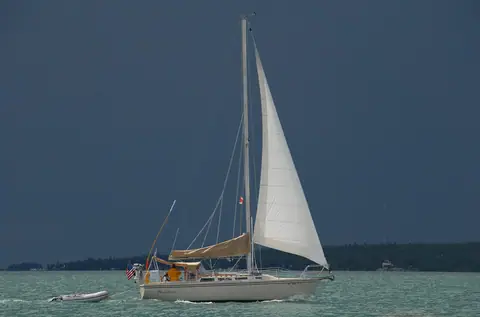
Catalina 30
Cruising Sailboats, 30 ft
Used $8K to $58K
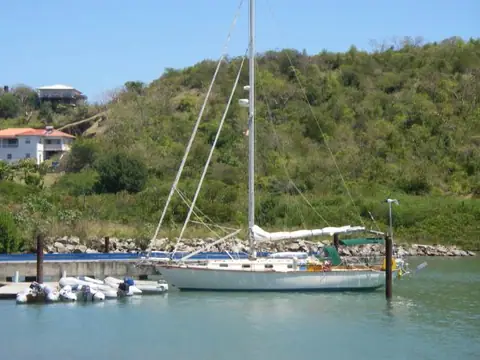
Cape Dory 36
Bluewater Sailboats, 36 ft
Used $35K to $95K
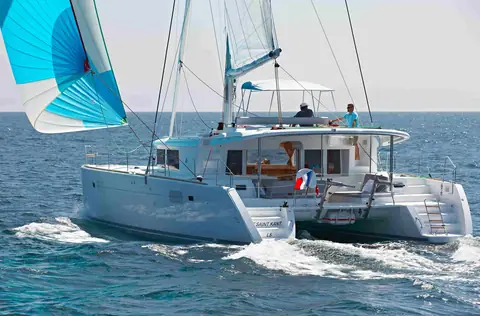
Lagoon 450
Sailing Catamarans, 46 ft
Used $250K to $580K
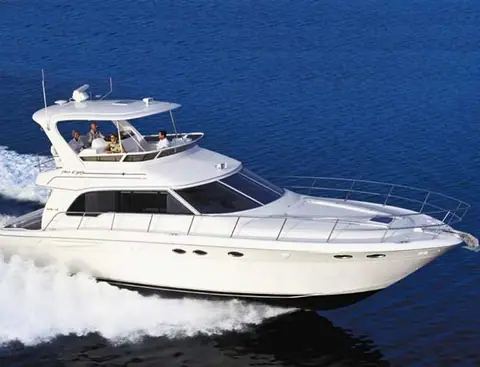
Sea Ray 480 Sedan Bridge
Motor Yachts, 51 ft
Used $200K to $350K
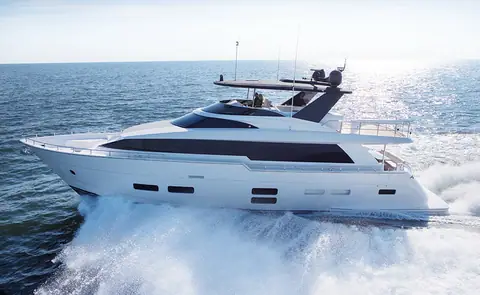
Hatteras 70 Motor Yacht
Motor Yachts, 75 ft
Used $350K to $4M
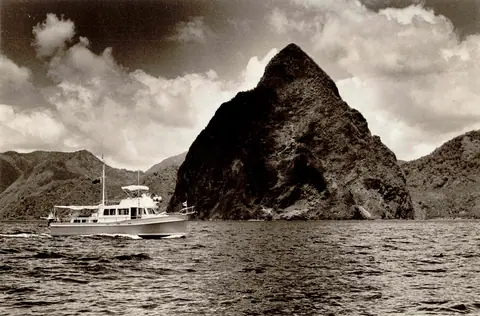
Grand Banks 42 Classic
Trawlers & Explorer Yachts, 43 ft
Used $75K to $360K
Frequently asked questions
How much does a marine survey cost?
A pre-purchase hull and systems survey commonly costs about $20 to $35 per foot, as an estimate, plus the yard's haul-out fee. Engine surveys, oil analysis and rigging inspections are extra.
How long does a marine survey take?
Most surveys on boats under about 50 ft take one full day including haul-out and sea trial. Larger or more complex yachts can take two days or more, and the written report often follows within a few days.
Is a marine survey required to buy a boat?
It is not legally required, but most lenders and insurers require one for financing and coverage. Buying a yacht without one is a serious gamble.
Who pays for the marine survey?
The buyer normally pays for the survey, haul-out, engine inspections and sea trial fuel. These costs are not refunded if the buyer walks away.
Does a survey include the engines?
A general survey covers the visible condition of the engines, but a detailed mechanical evaluation requires a separate engine surveyor. It is strongly recommended on any diesel-powered yacht.
Are marine surveyors licensed in the US?
No. The Coast Guard does not license recreational marine surveyors, so buyers should look for accreditation from SAMS, NAMS or IIMS and relevant experience.
Should I attend the survey?
Yes. Attending lets you see issues firsthand, ask questions and learn the boat's systems, which is valuable whether or not you buy.
Keep reading
How to Buy a Used Yacht, Step by Step
A step-by-step walkthrough of buying a used yacht in the US, from setting a real budget to closing, documentation and the first…
BuyingNew vs Used Yacht, Which Makes More Sense?
A practical comparison of buying a new versus a used yacht in the US market, with real price gaps from our model pages, the…
OwnershipYacht Insurance Guide, Costs and Coverage
A plain-English yacht insurance guide for US owners covering hull and liability coverage, agreed value versus actual cash value…
BuyingYacht Loans and Boat Financing Guide
A practical guide to yacht loans and boat financing in the US, covering typical 2026 loan structures, what marine lenders check…
BuyingHow Much Does a Yacht Cost? Prices by Size and Type
Realistic 2026 price ranges for new and used yachts in the US, from 30 ft sailboats to 130 ft superyachts, with the purchase-day…