Buying
How Much Does a Yacht Cost? Prices by Size and Type
Realistic 2026 price ranges for new and used yachts in the US, from 30 ft sailboats to 130 ft superyachts, with the purchase-day costs that sit on top of the sticker.
On this page
- The short answer, measured in feet
- Why two 45 footers can be $600,000 apart
- Price ranges by yacht type
- How depreciation shapes what a used yacht costs
- Costs that sit on top of the sticker price
- Three real-world budgets, worked out
- How new yacht pricing actually works
- When the number gets very large
- How to price the exact boat you want
- FAQ
The short answer, measured in feet
How much does a yacht cost? In the US market of 2026, the honest answer is anywhere from about $20,000 for a tired but sailable 1980s fiberglass sloop to well beyond $100 million for a custom superyacht. That range is useless on its own, so the table below breaks it into the bands where most American buyers actually shop.
Every figure here is an editorial estimate based on typical US dealer sail-away pricing and brokerage asking prices. Treat them as starting points for research, not appraisals. Boats with unusual equipment, premium brands, or recent refits will sit above these bands, and project boats will sit well below them.
| Length | New (typical sail-away) | Used (typical asking) | What you usually get |
|---|---|---|---|
| 25 to 29 ft | $70,000 to $250,000 | $5,000 to $120,000 | Trailerable or pocket cruiser, weekend sailing, small express cruiser |
| 30 to 35 ft | $200,000 to $700,000 | $15,000 to $450,000 | Coastal sailboat or express cruiser with one or two cabins |
| 36 to 40 ft | $350,000 to $1,000,000 | $40,000 to $700,000 | Serious cruiser, two or three cabins, generator on power boats |
| 41 to 50 ft | $500,000 to $2,500,000 | $80,000 to $1,800,000 | Liveaboard sailboats and catamarans, trawlers, flybridge cruisers |
| 51 to 65 ft | $1,300,000 to $5,000,000 | $300,000 to $4,000,000 | Flybridge motor yachts, large catamarans, sportfish convertibles |
| 66 to 80 ft | $3,500,000 to $9,000,000 | $800,000 to $7,000,000 | Owner-operator limit for many; part-time crew common |
| 81 to 130 ft | $7,000,000 to $35,000,000 | $2,000,000 to $25,000,000 | Full-time crew, production and semi-custom builders |
| 130 ft and up | $25,000,000 to well over $100,000,000 | $10,000,000 and up | Superyacht territory, custom or semi-custom steel and aluminum |
Why two 45 footers can be $600,000 apart
Length is the most quoted number and the least useful for pricing. A 45 ft production sailboat from Beneteau or Jeanneau, a 45 ft sailing catamaran from Leopard or Fountaine Pajot, and a 45 ft Grand Banks style trawler can easily differ by a factor of two or three, even when all three are new.
Five things move price far more than LOA:
- Volume and displacement. A catamaran with two full hulls and a bridgedeck saloon simply contains more boat than a monohull of equal length. A heavy trawler contains more fiberglass, tankage and machinery than a light planing cruiser.
- Propulsion. A sailboat carries one modest diesel. A 45 ft express cruiser may carry twin diesels or pod drives worth several hundred thousand dollars on their own. Quad outboards on a big center console can total more than many 35 ft sailboats.
- Build method and brand tier. Hand-laid, semi-custom builders such as Hinckley, Hallberg-Rassy, Oyster or Nordhavn price in labor hours that volume builders engineer out.
- Systems. Generators, watermakers, stabilizers, air conditioning, lithium battery banks and full electronics suites can add 15 to 30 percent to a base price.
- Market demand. Charter-friendly catamarans and well-known sportfish brands hold value because buyers chase them. Niche or orphaned brands trade at a discount even when the boat is excellent.
Price ranges by yacht type
The type of boat you choose sets your budget more than any other decision. This table compares the size band where each type is most commonly bought in the US, using new and used estimates consistent with the model pages on this site. Examples marked used are out of production and show where the type trades on the brokerage market.
| Type | Popular size band | New estimate | Used estimate | Example models |
|---|---|---|---|---|
| Cruising sailboat (monohull) | 38 to 46 ft | $350,000 to $750,000 | $60,000 to $600,000 | Bavaria C42, Jeanneau Sun Odyssey 410 (used) |
| Bluewater sailboat | 36 to 50 ft | $650,000 to $2,000,000 | $40,000 to $1,500,000 | Pacific Seacraft 37, Hallberg-Rassy 44 (used) |
| Sailing catamaran | 40 to 50 ft | $650,000 to $1,300,000 | $250,000 to $1,100,000 | Lagoon 42, Leopard 46, Bali 4.6 |
| Trawler | 40 to 50 ft | $900,000 to $3,000,000 | $120,000 to $2,000,000 | Nordhavn 47, Grand Banks 42 Classic (both used) |
| Express cruiser | 32 to 42 ft | $450,000 to $1,200,000 | $60,000 to $900,000 | Sea Ray Sundancer 320, Cruisers Yachts 38 GLS |
| Flybridge motor yacht | 50 to 70 ft | $1,700,000 to $5,000,000 | $300,000 to $4,000,000 | Galeon 500 Fly, Princess F65 |
| Sportfish convertible | 50 to 70 ft | $3,000,000 to $8,000,000 | $500,000 to $6,000,000 | Viking 58, Bertram 54 (used) |
| Large center console | 34 to 47 ft | $450,000 to $1,500,000 | $150,000 to $1,200,000 | Freeman 42LR, Yellowfin 42 |
| Superyacht | 100 ft and up | $12,000,000 and up | $5,000,000 and up | Sunseeker 100 Yacht, Sanlorenzo SD118 |
How depreciation shapes what a used yacht costs
Most new production yachts lose a meaningful slice of value the moment they are titled to their first owner, then keep sliding more slowly. As a broad estimate, many production boats trade at 70 to 85 percent of their new price after two or three years and around half of new after eight to twelve years, with large variation by brand, condition and the strength of the market when you sell.
That curve explains why three to seven year old boats are often the sweet spot. You get current engines, modern electronics and a hull that has already absorbed the steepest drop. Past roughly 20 years, prices flatten and condition becomes almost everything. Two identical 1998 sailboats can be $40,000 apart because one had new standing rigging, sails and an engine repower while the other did not.
Some segments break the pattern. Proven bluewater designs, quality trawlers and blue-chip sportfish brands depreciate more slowly because a steady pool of buyers wants them. Fleets of ex-charter catamarans do the opposite in some years, because a wave of boats leaving charter programs at the same age can push asking prices down.
Costs that sit on top of the sticker price
The purchase price is not the check you will write. Expect a stack of one-time costs at closing and in the first season. In the US, the buyer usually does not pay the broker commission directly (it comes out of the seller's proceeds, typically around 10 percent of the sale price split between the listing and selling brokers), but nearly everything else lands on the buyer.
| Item | Typical estimate | Notes |
|---|---|---|
| Sales or use tax | 0 to about 10% of price | Depends on the state where the boat is principally kept. Some states cap it; Florida, for example, caps sales tax on a boat at $18,000. |
| Pre-purchase survey | $20 to $35 per foot | Hull and systems survey by an accredited surveyor; price rises with length and complexity |
| Haul-out for survey | $8 to $25 per foot | Paid to the yard; catamarans may cost more where lifts are scarce |
| Engine survey and oil analysis | $700 to $3,000 per engine | Separate specialist; strongly advised on any diesel |
| Rigging inspection (sail) | $400 to $1,500 | Going aloft and inspecting chainplates, swages and spars |
| Documentation and title | Hundreds to low thousands | USCG documentation, state registration, title search, closing agent fees |
| Delivery | $0 to $30,000+ | Captain day rates plus fuel, travel and insurance if the boat is far away |
| First-season fixes | 3 to 10% of price | Survey findings, safety gear, electronics updates, canvas, batteries |
Three real-world budgets, worked out
Numbers become clearer when you run a full purchase. Here are three representative scenarios using mid-range estimates. They are illustrations, not quotes.
- The $100,000 coastal cruiser. A 1990s 34 to 36 ft sailboat such as a Catalina or Hunter, or a well-kept older Cape Dory, listed at $70,000 to $85,000. Add roughly $2,000 to $3,000 for survey and haul-out, about $4,000 to $6,000 in sales tax in a typical state, and $8,000 to $15,000 for sails, batteries and rigging the survey flags. Total outlay lands close to $100,000.
- The $750,000 liveaboard catamaran. A four to six year old 40 to 45 ft cat (a Leopard 45 or Lagoon 42 class boat) at $550,000 to $650,000 asking. Survey, haul and two engine inspections run about $3,500 to $6,000. Tax varies from near zero to the tens of thousands depending on state and structuring. Solar, lithium and safety upgrades for long-term cruising often add $25,000 to $60,000.
- The $2.5 million flybridge. A 55 ft European flybridge such as a Princess F55 or Galeon 500 Fly, five to eight years old, at roughly $1.4 to $2.2 million for an F55 (Princess has since stopped building it) or closer to $1 million for a Galeon of the same age. Twin engine surveys, generator checks, a full survey and fluid analysis total $6,000 to $12,000. Delivery, tax and a first-year list of canvas, electronics and service can push the real number well past $2 million before the first fuel bill.
How new yacht pricing actually works
A new yacht's advertised base price is rarely what anyone pays. Builders publish a base boat, then sell options in packages: electronics, generators, air conditioning, upgraded engines, teak decks, davits, thrusters and interior upgrades. On European production sailboats and catamarans, a commissioned, fully equipped boat often costs 25 to 45 percent more than the base price, sometimes more.
Dealers also add commissioning (stepping the mast, bending on sails, installing electronics, sea trials), freight from Europe or another US state, and prep. Ask for a sail-away or ready-to-cruise number in writing, with every option listed. That is the only figure you can compare between brands.
Timing matters. Lead times on popular catamarans and larger motor yachts have stretched to a year or more in strong markets, and builders reserve the right to raise prices before delivery on some contracts. Boat show pricing, dealer stock boats and outgoing model years are the usual places to find real discounts on new boats.
When the number gets very large
Above roughly 80 feet, costs stop scaling like recreational boats and start behaving like small ships. Steel or aluminum hulls, classification society rules, crew quarters, tenders, stabilizers and redundant systems all add cost. Semi-custom yachts in the 100 to 130 ft range from builders such as Westport, Sanlorenzo or Benetti commonly price in the low tens of millions new.
Past 130 feet (40 meters), the threshold usually used for the word superyacht, pricing is largely bespoke. Two yachts of similar length can differ by tens of millions depending on volume, interior finish, range and toys. For context on that end of the market, see our guide to what a superyacht is.
How to price the exact boat you want
Once you have a short list, move from ranges to evidence. A disciplined approach saves far more money than haggling.
- Pull sold comparables for the same model within three or four model years, adjusted for engines, hours and equipment.
- Separate the boat into age-sensitive components. Sails, standing rigging, engines, generators, canvas, batteries and electronics all have service lives. Price what is due in the next three years.
- Read the listing history. A boat that has dropped its price three times in a year tells you something about the seller's flexibility.
- Get an insurance quote and a slip quote before you offer. A boat you cannot insure or dock affordably is not a bargain at any price.
- Write the survey and sea trial in as contingencies, and expect to renegotiate on material findings.
Models mentioned in this guide
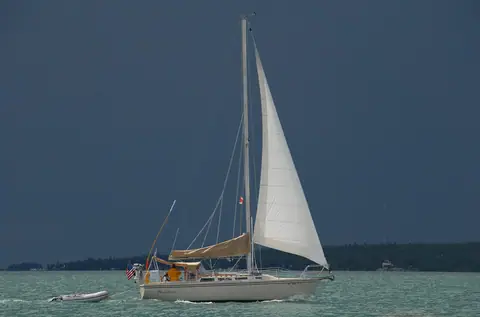
Catalina 30
Cruising Sailboats, 30 ft
Used $8K to $58K
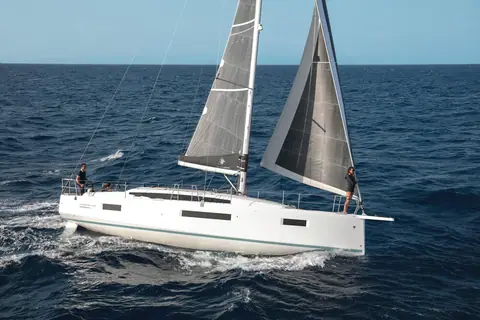
Jeanneau Sun Odyssey 410
Cruising Sailboats, 41 ft
Used $220K to $410K
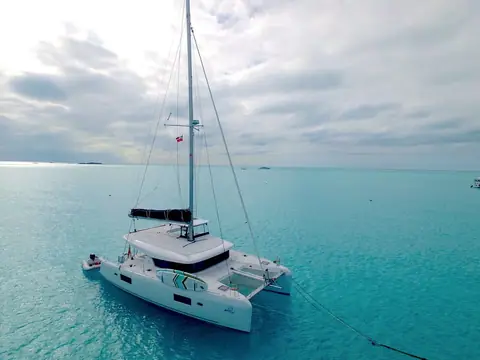
Lagoon 42
Sailing Catamarans, 42 ft
Used $340K to $600K
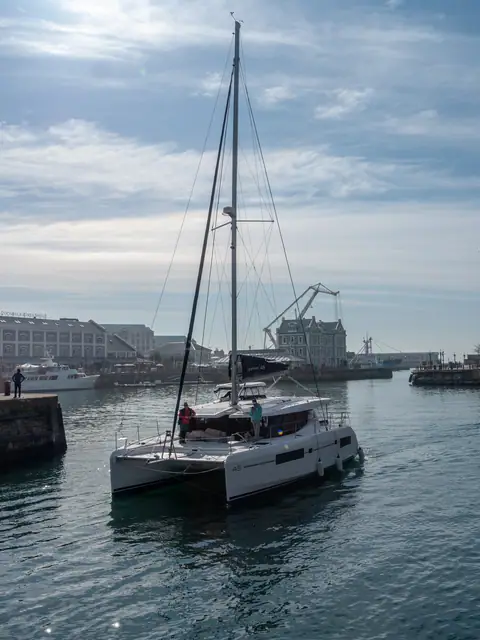
Leopard 45
Sailing Catamarans, 45 ft
Used $380K to $760K
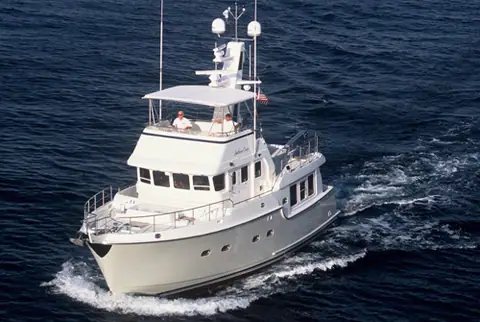
Nordhavn 47
Trawlers & Explorer Yachts, 48 ft
Used $520K to $900K
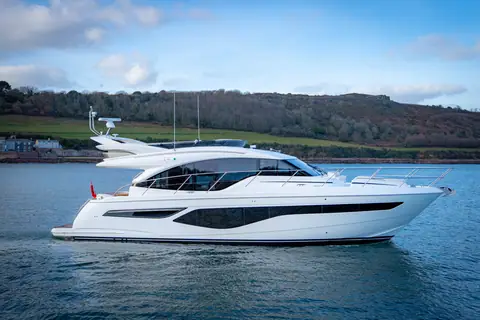
Princess F55
Motor Yachts, 58 ft
Used $1.35M to $2.7M
Frequently asked questions
What is the cheapest yacht you can realistically buy?
A sound older 27 to 32 ft fiberglass sailboat can be bought for roughly $10,000 to $40,000 on the US used market. Below that, most boats need significant work, and the repairs often cost more than the purchase.
How much does a 40 foot yacht cost?
A new 40 ft cruising sailboat typically runs about $350,000 to $600,000 sail-away, while a new 40 ft sailing catamaran or express cruiser is commonly $600,000 to $1 million. Used 40 footers range from about $50,000 for older monohulls to $700,000 or more for late-model cats.
How much does a 100 foot yacht cost?
New 100 ft yachts generally cost in the low to mid tens of millions of dollars depending on builder and specification. Used examples from well-known semi-custom builders often trade between roughly $5 million and $20 million.
Are yacht prices negotiable?
Yes. Used yachts commonly sell below asking, and survey findings are a normal basis for renegotiation. New boats have less room, but show specials, stock boats and outgoing models are often discounted.
Does the buyer pay the broker commission?
In the US the commission, typically around 10 percent, is normally paid by the seller from the sale proceeds. The buyer pays for the survey, haul-out, sea trial fuel, taxes and closing costs.
Is it cheaper to buy a yacht in Florida?
Florida has the largest used yacht inventory in the country, which helps selection and price competition, and it caps sales tax on boat purchases at $18,000. Your total tax depends on where the boat is ultimately kept, so check your home state's use tax rules.
Keep reading
The Real Annual Cost of Owning a Yacht
A line-by-line look at annual yacht ownership costs in the US, with worked budgets for four boat sizes and the levers that…
BuyingNew vs Used Yacht, Which Makes More Sense?
A practical comparison of buying a new versus a used yacht in the US market, with real price gaps from our model pages, the…
BuyingYacht Loans and Boat Financing Guide
A practical guide to yacht loans and boat financing in the US, covering typical 2026 loan structures, what marine lenders check…
BuyingHow to Buy a Used Yacht, Step by Step
A step-by-step walkthrough of buying a used yacht in the US, from setting a real budget to closing, documentation and the first…
BuyingMarine Surveys Explained, What a Surveyor Checks
What happens during a pre-purchase marine survey, what it costs, how to choose a surveyor, and how to turn the report into a…
KnowledgeWhat Is a Superyacht? Size, Cost and Crew
A superyacht is a large, professionally crewed private yacht, generally 24 meters (79 feet) and up in industry usage, though…