Knowledge
What Is a Superyacht? Size, Cost and Crew
A superyacht is a large, professionally crewed private yacht, generally 24 meters (79 feet) and up in industry usage, though many Americans reserve the word for boats of 100 feet or more. Here is how size, regulation, crew and cost actually define the category.
On this page
- The 24 meter line and why Americans say 100 feet
- Superyacht, megayacht, gigayacht, the informal ladder
- What changes once a yacht crosses into superyacht territory
- Crew size and who does what
- How much a superyacht costs to buy
- The 10 percent rule and where the money goes
- Flags, the 12 guest limit and the US charter problem
- Chartering a superyacht before you buy one
- The usual path from motor yacht owner to superyacht owner
- FAQ
The 24 meter line and why Americans say 100 feet
Ask what is a superyacht in a Fort Lauderdale boatyard and you will hear two answers. The European and regulatory answer is 24 meters, about 79 feet. That length matters because it is where the major codes for large yachts begin to apply, including the UK's Large Yacht Code and its successor framework in the Red Ensign Group Yacht Code used by flags such as the Cayman Islands and the UK. It is also roughly where yachts start needing professional crew in practice.
The American answer is usually 100 feet. In US brokerage language an 80 foot flybridge yacht is a large motor yacht, often run by an owner and a captain, while a 100 footer with a full-time crew of four or more is the entry point to the superyacht world. Neither answer is wrong. There is no official definition, and Wikipedia's own summary of the term notes that sizes are commonly described from about 24 meters upward to more than 180 meters.
A cleaner definition is functional. A superyacht is a private yacht big enough that it cannot reasonably be operated, maintained or provisioned by its owner, so it carries a professional crew who live aboard, and it is built and managed to standards that borrow heavily from commercial shipping.
Superyacht, megayacht, gigayacht, the informal ladder
The terms above superyacht are marketing language rather than regulation, and journalists use them loosely. The table shows how the words are commonly applied in the US and European yacht press.
| Term | Typical length | What it usually means |
|---|---|---|
| Large yacht | 65 to 79 ft (20 to 24 m) | Owner-operated or captain plus one; production flybridge and sport yachts |
| Superyacht | 79 ft (24 m) and up; 100 ft and up in common US usage | Full-time professional crew, crew quarters separated from guests |
| Megayacht | Roughly 200 ft (60 m) and up | Custom or semi-custom steel hulls, helipad or beach club common, 15 or more crew |
| Gigayacht | Roughly 300 ft (90 m) and up | One-off private ships, often 30 or more crew, built by a few yards worldwide |
What changes once a yacht crosses into superyacht territory
Length is a proxy. The real changes are in how the boat is built, staffed and run.
- Separate crew zones. Crew mess, galley access and cabins are designed so the crew can work without passing through guest spaces.
- Commercial-grade systems. Generators run around the clock, there is often a dedicated engine room with monitoring, and redundancy is designed in rather than optional.
- Classification and codes. Many yachts are built to a classification society's rules (Lloyd's Register, ABS, RINA, DNV, Bureau Veritas) and to a flag state code if they will charter.
- Materials shift with size. Up to roughly 40 meters, composite hulls dominate production and semi-custom builds from yards like Azimut, Sanlorenzo, Princess and Westport. Above that, steel hulls with aluminum superstructures become the norm.
- Gross tonnage starts to matter. The 500 gross ton threshold triggers heavier requirements for crew certification, safety management and equipment under the main yacht codes, so many designers work hard to keep a boat just under it.
- Management overhead. Most superyachts have a management company handling crew payroll, compliance, insurance and accounting.
Crew size and who does what
A superyacht crew falls into four departments: the bridge (captain and officers), deck (bosun and deckhands who handle tenders, lines, washing and water toys), interior (chief stew and stewards who run guest service and housekeeping), and engineering. A chef sits alongside the interior team. On smaller yachts these roles overlap heavily, and a mate may also be the engineer.
The table gives typical ranges. These are estimates, because crew size depends on how the yacht is used. A private yacht used for a few weeks a year can run lean, while a charter yacht with guests aboard most of the season needs the full complement.
| Length | Typical crew (estimate) | Typical structure |
|---|---|---|
| 80 to 100 ft (24 to 30 m) | 2 to 5 | Captain, mate or engineer, chef or stew, sometimes a deckhand |
| 100 to 130 ft (30 to 40 m) | 5 to 8 | Captain, mate, engineer, chef, two or three interior and deck crew |
| 130 to 200 ft (40 to 60 m) | 8 to 15 | Full departments with a chief engineer and head of interior |
| 200 to 300 ft (60 to 90 m) | 15 to 30 | Officers, second engineer, multiple chefs, dedicated tender drivers |
| 300 ft and up (90 m and up) | 30 and more | Ship-style organization, rotational crew, security and medical staff |
How much a superyacht costs to buy
Prices span two orders of magnitude, and they rise faster than length because volume and gross tonnage grow roughly with the cube of size. A 40 meter yacht is not a third bigger than a 30 meter yacht in any way that matters to the budget. It has far more interior volume, more crew and more systems.
The bands below are our 2026 estimates for the US and international market. New prices assume a semi-custom or custom build from an established yard. Used prices cover well-maintained yachts of roughly 5 to 20 years old; refit history and builder reputation move them sharply.
| Length | New build (estimate) | Used market (estimate) |
|---|---|---|
| 80 to 100 ft (24 to 30 m) | $8 million to $20 million | $2 million to $15 million |
| 100 to 130 ft (30 to 40 m) | $15 million to $40 million | $5 million to $30 million |
| 130 to 200 ft (40 to 60 m) | $35 million to $100 million | $15 million to $80 million |
| 200 to 300 ft (60 to 90 m) | $90 million to $250 million | $50 million to $200 million |
| 300 ft and up (90 m and up) | $250 million and well beyond | Rarely listed publicly |
The 10 percent rule and where the money goes
The most quoted rule of thumb in the industry is that a superyacht costs about 10 percent of its value to run each year. It is a starting point, not a law. A heavily chartered yacht with a full crew and a busy itinerary can run above it, while an older yacht bought at a deep discount can cost more than 10 percent of its purchase price simply because maintenance tracks the size of the boat, not what you paid.
Crew salaries, crew benefits and crew rotation are typically the largest single slice. After that come maintenance and refit (including periodic class surveys and shipyard periods), insurance, dockage, fuel, management fees, and provisioning. Fuel is often smaller than buyers expect on a yacht that spends most of the year at anchor or in a marina, and larger than expected on one that crosses oceans twice a year.
- Crew and crew costs, usually the largest category
- Maintenance, refit and class survey work
- Insurance (hull, protection and indemnity, crew)
- Dockage, especially in peak-season ports like Monaco, St. Barts or Palm Beach
- Fuel and lubricants
- Management, accounting and compliance
- Communications, satellite and IT
- Guest consumables and provisioning
Flags, the 12 guest limit and the US charter problem
Most superyachts are registered under a flag chosen for practical reasons: the Cayman Islands, the Marshall Islands, Malta and the UK are common. The flag determines which code the yacht must meet if it charters and which crew certifications apply.
Commercial yacht codes generally cap charter guests at 12. Above 12 passengers a vessel is treated as a passenger ship under international rules, with far heavier requirements. That is why so many large yachts, even well over 60 meters, are designed with six guest cabins and 12 berths, and why owners who want more guests overnight accept the cost of passenger-ship standards.
US waters add a specific wrinkle. Foreign-flagged yachts can visit on a cruising license, but the Passenger Vessel Services Act restricts foreign-built and foreign-flagged vessels from carrying paying passengers between US ports. In practice this pushes much of the large-yacht charter fleet serving American clients to the Bahamas, the Caribbean and the Mediterranean, and it gives US-flagged, US-built yachts a niche in domestic charter.
Chartering a superyacht before you buy one
Charter is the best way to learn what size you actually need. Weekly charter rates vary enormously with season, location and the yacht's age, but as a rough estimate a 30 to 40 meter yacht commonly charters in the low six figures per week, while large 60 meter and up yachts run well into the high six figures or more.
On top of the charter fee, expect an Advance Provisioning Allowance (APA), commonly 25 to 40 percent of the base fee, which covers fuel, food, drinks and port costs and is reconciled at the end of the trip. Crew gratuity, often 10 to 20 percent of the base fee by custom, is extra. Taxes depend on where the charter starts.
The usual path from motor yacht owner to superyacht owner
Few people buy a superyacht as their first boat. The common US path runs through a 50 to 70 foot flybridge yacht run by the owner, then an 80 to 95 footer with a full-time captain, then a 100 to 130 foot tri-deck with a crew of five or more. Each step is a jump in staff management as much as in boat size.
Production builders straddle the line. Boats like the Princess X95, the Sunseeker 100 and the Azimut Grande 27 Metri bring superyacht volume and crew quarters to the 24 to 30 meter range, while yards like Westport (building composite yachts in Washington State), Sanlorenzo and Benetti take buyers into full semi-custom builds at 34 meters and up.
The questions that matter at this step are not about finishes. They are about how many nights you will spend aboard, whether you will charter to offset costs, where the yacht will be based, and whether you want to manage a crew yourself or pay a management company to do it.
Models mentioned in this guide
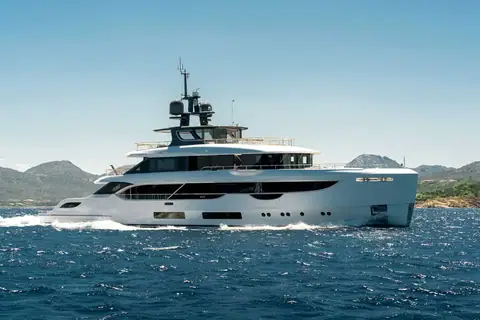
Benetti Oasis 40M
Superyachts, 134 ft
Used $16M to $25M
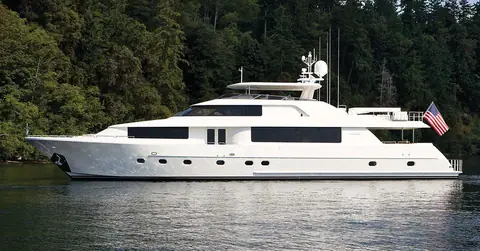
Westport 112
Superyachts, 112 ft
Used $3.2M to $9.5M
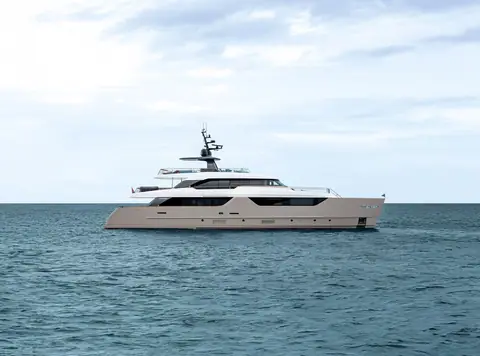
Sanlorenzo SD118
Superyachts, 117 ft
Used $11.5M to $17M
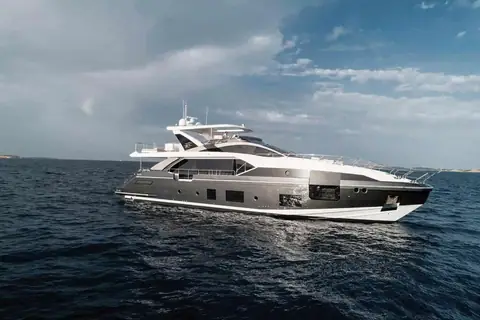
Azimut Grande 27 Metri
Superyachts, 88 ft
Used $4.6M to $9M
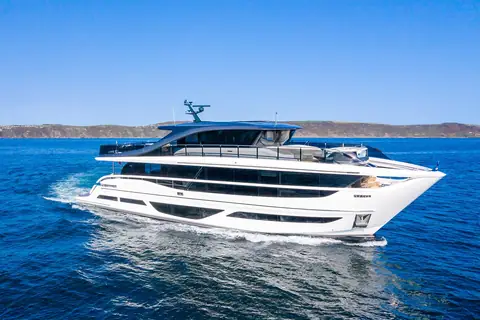
Princess X95
Superyachts, 95 ft
Used $9.5M to $14.5M
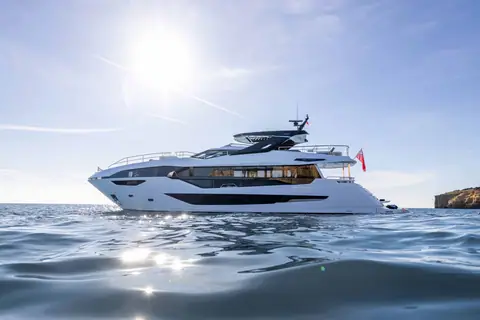
Sunseeker 100 Yacht
Superyachts, 98 ft
Used $10.5M to $15.5M
Frequently asked questions
What size is considered a superyacht?
In industry and regulatory usage, a superyacht is generally 24 meters (about 79 feet) or longer. In common American usage many people reserve the term for yachts of 100 feet and up with a full-time crew.
What is the difference between a superyacht and a megayacht?
Megayacht is an informal term usually applied to yachts of roughly 60 meters (about 200 feet) and up. Superyacht covers the whole professionally crewed category from 24 meters upward.
How much does it cost to run a superyacht per year?
A common rule of thumb is about 10 percent of the yacht's value per year. Crew is usually the largest cost, followed by maintenance, insurance and dockage, and the real figure depends heavily on use.
How many crew does a superyacht need?
Roughly 2 to 5 crew at 24 to 30 meters, 5 to 8 at 30 to 40 meters, and 15 or more above 60 meters, as estimates. Charter yachts usually run fuller crews than private ones.
Why do superyachts usually carry only 12 guests?
Most commercial yacht codes cap charter guests at 12. Carrying more turns the vessel into a passenger ship under international rules, with much stricter construction and safety requirements.
What is the largest superyacht in the world?
The motor yacht Azzam, at about 180.6 meters (592 feet), has long been cited as the world's longest private yacht.
Keep reading
Yacht Sizes Explained, From Small Yachts to Megayachts
Yacht size categories are informal, but the length thresholds behind them are not. This guide explains how yachts are measured…
KnowledgeThe Largest Yachts in the World
A ranked look at the largest private motor and sailing yachts in the world by overall length, who built them, how length and…
BuyingHow Much Does a Yacht Cost? Prices by Size and Type
Realistic 2026 price ranges for new and used yachts in the US, from 30 ft sailboats to 130 ft superyachts, with the purchase-day…
OwnershipThe Real Annual Cost of Owning a Yacht
A line-by-line look at annual yacht ownership costs in the US, with worked budgets for four boat sizes and the levers that…
KnowledgeTypes of Yachts Explained
A plain-English map of the main types of yachts sold in the US, from sailboats and catamarans to trawlers, sportfish…
KnowledgeYacht vs Boat, What Is the Difference?
There is no single legal line between a boat and a yacht. This guide explains how the industry, insurers, lenders, regulators…