Knowledge
Yacht vs Boat, What Is the Difference?
There is no single legal line between a boat and a yacht. This guide explains how the industry, insurers, lenders, regulators and owners actually use the two words, with size thresholds, feature checklists and the practical consequences of the label.
On this page
- The short answer
- From Dutch hunting ships to royal pleasure craft
- What US law actually recognizes
- The size ladder most buyers use
- Features, not feet, decide most arguments
- Where the label changes what you pay
- Sailboats, motor yachts and the language gap
- Four myths about calling something a yacht
- Boat, yacht and ship, three words in one sentence
- Which one do you actually need?
- FAQ
The short answer
The difference between a yacht and a boat is a matter of size, purpose and equipment rather than a legal rule. Boat is the general word for any vessel small enough to be carried aboard a ship, from a kayak to a 60-foot sportfisherman. Yacht is a narrower word for a pleasure vessel built for cruising, racing or entertaining, typically large enough to sleep aboard and fitted with systems that let you live on it for days at a time.
So a 20-foot bowrider is a boat, and nobody would call it a yacht. A 45-foot motor yacht with three cabins, a generator and air conditioning is both a boat and a yacht. The gray zone sits between roughly 26 and 40 feet, where cabin cruisers, express boats and cruising sailboats are called yachts by some owners and boats by others, and both are correct.
From Dutch hunting ships to royal pleasure craft
Yacht comes from the Dutch word jacht, meaning hunt. In the 1600s jachts were light, fast sailing vessels used by the Dutch navy and the Dutch East India Company to chase pirates and smugglers and carry dispatches. Wealthy Dutch merchants began using them for pleasure trips.
The leisure meaning crossed to England with King Charles II, who spent part of his exile in the Netherlands and was presented with a yacht after his restoration in 1660. The first recorded yacht race between two vessels followed in 1661. From then on, the word meant a vessel used for pleasure rather than for work, which is still the core of its meaning today.
The sailing world kept the older, broader sense. Sailors talk about yacht clubs, yachting and yacht racing for boats as small as a 22-foot keelboat, which is why a modest sloop can be a yacht in a club bulletin and a boat in a marina contract.
What US law actually recognizes
Federal law does not define yacht. The US Code instead uses the term recreational vessel, meaning a vessel operated primarily for pleasure or leased, rented or chartered to another person for their pleasure. A 16-foot skiff and a 150-foot superyacht are both recreational vessels as long as they are not carrying passengers for hire.
The categories that matter legally are about tonnage, documentation and passengers rather than prestige. A vessel of at least five net tons can be federally documented with the Coast Guard instead of, or in addition to, state registration, which in practice covers most boats from the mid-20-foot range upward. Once a boat carries paying passengers, it falls into passenger vessel rules, from the uninspected six-passenger limit that a six-pack captain's license covers to fully inspected vessels.
Outside the US, the word gets more formal. The British-developed commercial yacht codes widely used for charter yachts treat vessels of 24 meters (about 79 feet) load line length and over as large yachts, with stricter construction, safety and crewing standards. That 24-meter mark is why many builders cap a model just under it.
The size ladder most buyers use
Since the law leaves it open, the market uses rough length bands. These are conventions, not rules, but brokers, insurers and marinas use something close to them.
| Length | What people usually call it | Typical examples |
|---|---|---|
| Under 26 ft | Boat | Bowriders, center consoles, bay boats, daysailers |
| 26 to 33 ft | Boat or small yacht, depending on cabins | Small express cruisers, pocket cruising sailboats, trailerable trawlers |
| 33 to 40 ft | Yacht for most sailors and many power owners | Express cruisers, 35 to 40 ft cruising sailboats, sedan cruisers |
| 40 to 79 ft | Yacht, no argument | Motor yachts, sportfish, trawlers, cruising catamarans |
| 79 to 131 ft | Large yacht | Tri-deck motor yachts, expedition yachts |
| 131 ft and up | Superyacht | Custom and semi-custom vessels with full professional crew |
Features, not feet, decide most arguments
Length alone does not settle the question. A 38-foot center console with four 450-hp outboards and no cabin is a boat in everyone's vocabulary, while a 34-foot trawler with a galley, a stateroom and a generator is usually called a yacht. What tips the balance is whether the vessel is designed for living aboard, not just day use.
| Feature | Typical boat | Typical yacht |
|---|---|---|
| Primary use | Day trips, fishing, watersports | Cruising, overnighting, entertaining, racing |
| Accommodation | None or a small cuddy | Private cabins, galley, enclosed head with shower |
| Systems | Battery, bilge pump, basic electronics | Generator, air conditioning, watermaker, inverter, stabilizers |
| Propulsion | Outboards or a single sterndrive | Inboards, pods or a sailing rig with auxiliary diesel |
| Storage | Trailer, rack or lift | In-water slip year-round |
| Crew | Owner-operated | Owner-operated to fully crewed |
| Paperwork | State registration | Often Coast Guard documentation |
Where the label changes what you pay
The yacht or boat question is not only semantics. Several parts of ownership switch from one track to another around the same thresholds people use in conversation.
- Insurance. Many insurers split products into boat policies and yacht policies. Yacht policies typically use agreed-value coverage, navigation limits, named-storm clauses and survey requirements, while small-boat policies are simpler and often written on actual cash value.
- Financing. Lenders offer longer terms and different underwriting for larger, more expensive vessels. Bigger loans usually require a survey, documentation and a preferred ship mortgage recorded with the Coast Guard.
- Dockage. Marinas charge by length, and yacht-class slips with heavy shore power, deeper water and wider fairways cost more per foot than small-boat slips.
- Crew and licensing. Owner-operation is normal up to 50 or 60 feet. Beyond that, many owners hire a captain at least part time, and charter use triggers licensing and inspection rules.
- Running costs. Yacht systems, from generators to stabilizers, carry service schedules that day boats simply do not have.
Sailboats, motor yachts and the language gap
Sailors and power owners use the word differently. In sailing culture a yacht is any keelboat sailed for pleasure, and the vocabulary runs through yacht clubs, yacht designers and yacht races. A 30-foot Catalina at a club regatta is unambiguously a yacht in that world.
Power boaters tend to reserve the word for larger, more luxurious vessels, and many owners of 30 to 35-foot express cruisers feel self-conscious calling their boat a yacht. Builders lean into both sides, with brands using yacht in model names well below 40 feet because buyers like the sound of it.
Four myths about calling something a yacht
A few beliefs about the word come up again and again at boat shows and on dock walks. None of them hold up.
- Myth one, a yacht must have crew. Most yachts in the US, including many 50 to 60-foot motor yachts and nearly all cruising sailboats, are run by their owners.
- Myth two, a yacht must be a motor yacht. Sailing yachts came first, and the term is older in sailing than in power boating.
- Myth three, there is an official 40-foot cutoff. Forty feet is a common rule of thumb, not a regulation, and no agency uses it as a legal threshold.
- Myth four, calling a boat a yacht raises its taxes. Sales, use and property taxes depend on price, state and use, not on what the listing calls the vessel.
Boat, yacht and ship, three words in one sentence
The old naval rule of thumb says a boat can be carried aboard a ship, but a ship cannot be carried aboard a boat. Submarines are the famous exception and are called boats despite their size. Yachts sit between the two words, so a 200-foot superyacht with a helipad is technically a ship and is often registered and crewed like one, yet nobody calls it anything but a yacht.
For buyers, the useful takeaway is that the word yacht signals expectations about accommodation, systems and running costs. When a listing calls a 32-foot boat a yacht, read the spec sheet before believing the label.
Which one do you actually need?
If your plans are day trips, fishing and watersports with the occasional night at a marina hotel, a boat in the 20 to 35-foot range will be cheaper, easier to store and easier to use on short notice. If you want to spend weekends or weeks aboard, cruise between harbors or entertain overnight guests, you need yacht-level accommodation and systems, and that generally starts in the high 30s.
- Count overnights per year. Fewer than ten usually points to a boat.
- List the systems you consider essential, such as air conditioning or a generator, and check where they become standard.
- Price insurance, slip and maintenance for both sizes before choosing.
- Charter a yacht for a week before buying one to test the lifestyle.
Models mentioned in this guide
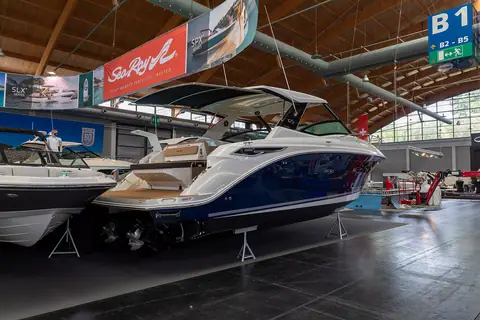
Sea Ray Sundancer 320
Sport Yachts & Express Cruisers, 33 ft
Used $210K to $480K
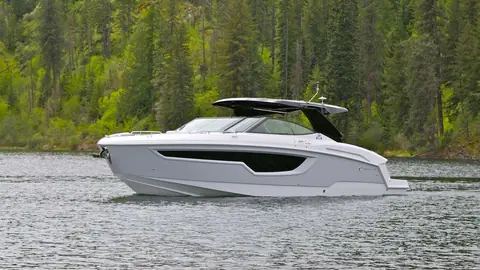
Cruisers Yachts 38 GLS
Sport Yachts & Express Cruisers, 38 ft
Used $380K to $780K
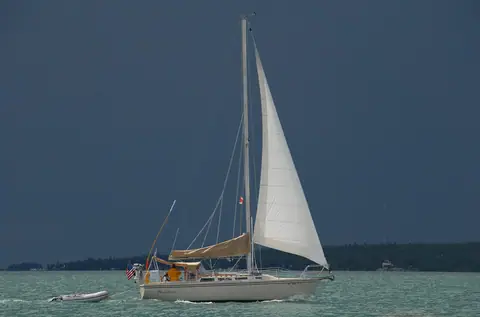
Catalina 30
Cruising Sailboats, 30 ft
Used $8K to $58K
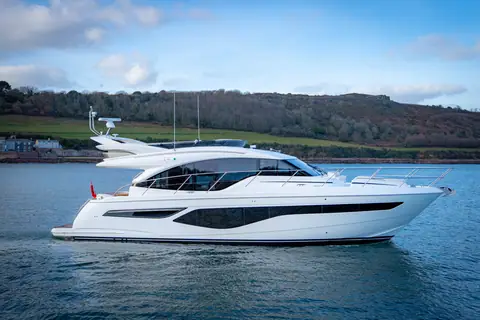
Princess F55
Motor Yachts, 58 ft
Used $1.35M to $2.7M
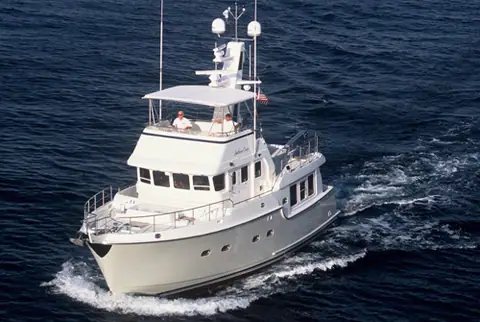
Nordhavn 47
Trawlers & Explorer Yachts, 48 ft
Used $520K to $900K
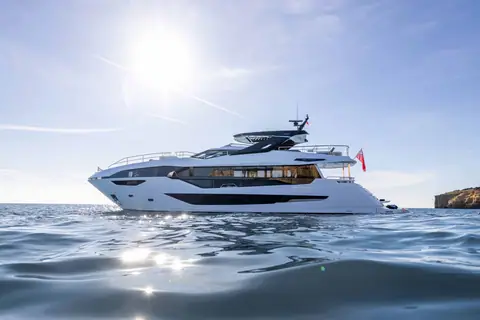
Sunseeker 100 Yacht
Superyachts, 98 ft
Used $10.5M to $15.5M
Frequently asked questions
At what size does a boat become a yacht?
There is no official length. Most people start using the word between 33 and 40 feet, and almost everyone calls a cruising vessel over 40 feet with cabins a yacht.
Is a yacht legally different from a boat in the US?
No. US law uses the term recreational vessel for both. Legal differences come from tonnage, documentation and whether passengers pay, not from the word yacht.
Is a 30-foot sailboat a yacht?
In sailing culture, yes. Any keelboat sailed for pleasure is commonly called a yacht, especially at yacht clubs and in racing.
What is the difference between a yacht and a superyacht?
A superyacht is a very large yacht, generally over about 40 meters (131 feet), usually run by a full-time professional crew.
Why do yachts cost more to insure than boats?
Yacht policies cover higher values, more complex systems and wider cruising areas, and they often use agreed-value coverage with survey requirements.
Where does the word yacht come from?
It comes from the Dutch jacht, meaning hunt, the name for fast sailing vessels of the 1600s that later became pleasure craft for the wealthy and royalty.
Keep reading
Yacht Sizes Explained, From Small Yachts to Megayachts
Yacht size categories are informal, but the length thresholds behind them are not. This guide explains how yachts are measured…
KnowledgeWhat Is a Superyacht? Size, Cost and Crew
A superyacht is a large, professionally crewed private yacht, generally 24 meters (79 feet) and up in industry usage, though…
KnowledgeTypes of Yachts Explained
A plain-English map of the main types of yachts sold in the US, from sailboats and catamarans to trawlers, sportfish…
BuyingHow Much Does a Yacht Cost? Prices by Size and Type
Realistic 2026 price ranges for new and used yachts in the US, from 30 ft sailboats to 130 ft superyachts, with the purchase-day…
OwnershipYacht Insurance Guide, Costs and Coverage
A plain-English yacht insurance guide for US owners covering hull and liability coverage, agreed value versus actual cash value…