Buying
Best Sailboats for Beginners
Our picks for the best first sailboats in the US market, grouped by how you want to sail, with real specs, typical used prices, what each boat teaches you and the mistakes first-time sailboat buyers most often make.
On this page
- What makes a good first sailboat
- Pick your path before you pick a boat
- Dinghies and daysailers, the fastest way to learn
- One-design keelboats for beginners who want to race
- Trailerable pocket cruisers
- First cruisers for coastal weekends
- Beginner sailboats compared
- Boats that make poor first sailboats
- How to buy your first sailboat without regrets
- FAQ
What makes a good first sailboat
A beginner sailboat should forgive errors without hiding them. It should be stable enough that a gust does not feel frightening, but responsive enough that you feel the difference when you trim a sail or steer badly. It should be simple, with a basic sloop rig, tiller steering on small boats, and systems a new owner can understand and fix. And it should be popular, because a boat with an active class association or owners' group comes with advice, used parts, local fleets and an easy resale.
Size matters more than most buyers expect. Every foot of length adds weight, sail loads, slip cost and maintenance. Many sailors who start on a 35-footer end up nervous about docking it and leave it tied up. A 22-footer that goes out twice a week teaches far more than a 35-footer that leaves the dock twice a month.
- Tiller steering and a simple sloop rig.
- Lines that can be handled without winches, or with small winches on boats over about 24 feet.
- A large owner base, an active class or a nearby fleet.
- Parts and sails still available from the builder or the aftermarket, which matters for orphaned brands such as Catalina.
- Low enough freeboard to recover someone who falls overboard.
- Trailerable or affordable to keep on a mooring in your area.
Pick your path before you pick a boat
Beginners usually fall into one of four groups, and the right first boat is different for each. Decide which one fits you, then look only at boats in that column.
| Your goal | Boat type | Size range | Good first picks |
|---|---|---|---|
| Learn to sail well, quickly | Dinghy or small daysailer | 13 to 19 ft | Sunfish, Flying Scot, Rhodes 19 |
| Race with friends | One-design keelboat | 22 to 25 ft | J/22, J/24, J/70 |
| Weekend and lake cruising, trailering | Trailerable pocket cruiser | 21 to 26 ft | Catalina 22, MacGregor 26X, Catalina 25 |
| Coastal weekends and short trips | Small cruising keelboat | 25 to 33 ft | Catalina 27, Catalina 30, Hunter 33, Flicka 20, Contessa 26 |
Dinghies and daysailers, the fastest way to learn
The Sunfish has introduced more Americans to sailing than any other boat. Alcort developed it in the early 1950s, and more than 300,000 had been built by 2001. It is 13 feet 9 inches long, the hull weighs about 120 pounds and it carries a single 75 square foot lateen sail. You can car-top it, rig it in minutes and learn the core of sail trim in a single summer. Used Sunfish are cheap and plentiful.
The Flying Scot is the family version of that lesson. Designed by Sandy Douglass and first built in 1958, the 19-foot centerboard daysailer weighs 850 pounds, is stable enough for three adults and a child, and still has an active racing class. Roughly 5,300 have been built, and the builder, Flying Scot, Inc., in Deer Park, Maryland, still supports the boat. It is a favorite of sailing schools and yacht club junior programs for good reason.
The Rhodes 19, a Philip Rhodes design first built in 1958, comes as a fin keel or centerboard boat and has about 3,200 hulls in the water. It is a popular choice for sailing schools in New England and a good bridge between a dinghy and a keelboat.
One-design keelboats for beginners who want to race
Racing teaches sailing faster than anything else because every race is a comparison with boats exactly like yours. The J/Boats family dominates beginner keelboat racing in the US.
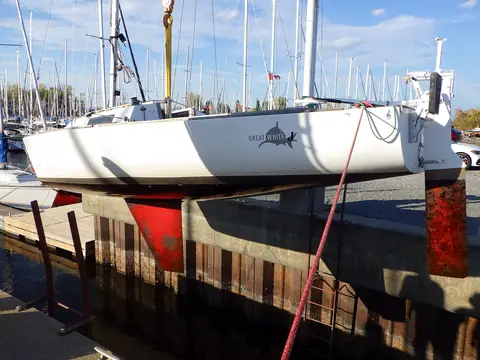
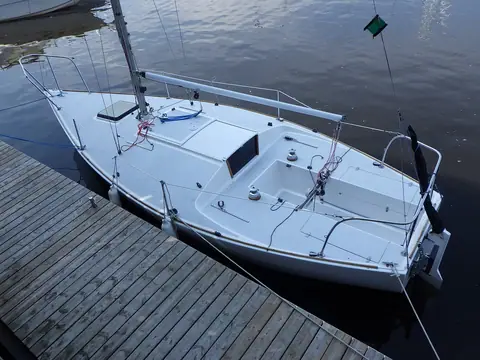
The J/22, designed by Rod Johnstone and introduced in 1983, is 22.5 feet long with a fixed keel and a forgiving, stable feel. It is widely used in sailing centers and college and adult training programs. The J/24, Johnstone's 1977 design and the boat that started J/Boats, is 24 feet long, displaces about 3,100 pounds and has more than 5,000 hulls built. It has an enormous used market and fleets around the country, though older boats need checks for wet decks and keel sump issues.
The J/70, designed by Alan Johnstone and launched in 2012, is the modern choice. At 22.75 feet with a lifting keel, a retractable sprit and an asymmetric spinnaker, it planes in a breeze and is trailered easily. It costs considerably more than a used J/22 or J/24 but gives access to one of the largest one-design fleets in the world.
Trailerable pocket cruisers
The Catalina 22 is the classic American first cruising sailboat. Frank Butler designed it, production ran from 1969 until Catalina Yachts shut down in 2025, and around 15,000 were built, which makes it one of the most produced boats of its size anywhere. It is 21.5 feet long, displaces about 2,250 pounds and has been built with swing, wing and fin keels. The swing keel versions draw 1 foot 8 inches with the keel up and 5 feet down, so they launch from ordinary ramps. Small berths, a pop-top on some versions and a simple outboard make it a capable lake and bay boat.
The MacGregor 26X is the opposite philosophy. Built from 1995 to 2003, it combines water ballast, a weighted centerboard and an outboard of up to 50 horsepower so it can motor at planing speeds and sail when conditions suit. It is light enough to trailer behind an SUV and has a large interior for its size. It is not a good boat for learning fine sail trim, and it is tender until the ballast tank is full, but it has given thousands of families an affordable way into cruising.
The Catalina 25, built from 1978 to 1991 with roughly 5,300 to 6,000 hulls (sources differ), is a larger trailerable option with fin, wing or swing keel versions. It has standing room for some and a real enclosed head, and it is a good choice for a couple who want overnight trips without stepping up to a 30-footer.
First cruisers for coastal weekends
Once you have the basics, a 25 to 33 foot keelboat with a cabin opens up weekends away and short coastal hops. These boats are kept in a slip or on a mooring rather than trailered.
- Catalina 27. Built from 1971 to 1991 with about 6,660 hulls, this Frank Butler design is the definitive cheap first cruiser on lakes and bays, with a huge owners' association and aftermarket parts support that matters more now that Catalina Yachts has closed.
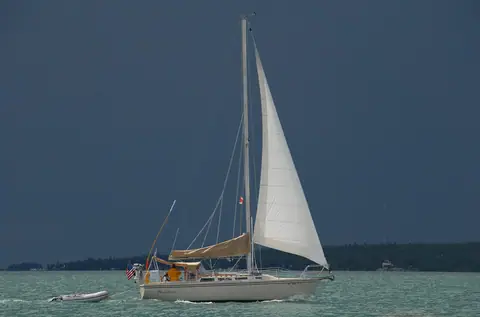
- Catalina 30. About 6,450 were built between 1975 and 2008. It is roomy, stable, easy to sail shorthanded and sells quickly, which makes it the most common step-up boat in the country.
- Hunter 33. The 2004 Glenn Henderson design adds a modern open interior, a walk-through transom and a B and R rig without a backstay. Newer, larger and pricier, it suits beginners who want comfort from the start.
- Pacific Seacraft Flicka 20. A tiny Bruce Bingham full-keel cruiser, very seaworthy for its size and much loved by solo sailors, though slow and cramped.
- Contessa 26. A David Sadler long-keel classic with a strong offshore reputation, a good choice for sailors in windy waters who value seakeeping over space.
Beginner sailboats compared
Used price ranges below are typical US asking prices in 2026 and depend heavily on condition, sails and engine. The low end usually means a project boat.
| Boat | Length | Displacement | Keel | Typical used price |
|---|---|---|---|---|
| Sunfish | 13 ft 9 in | About 120 lb hull | Daggerboard | $500 to $4,000 |
| Flying Scot | 19 ft | 850 lb | Centerboard | $3,000 to $25,000 |
| Catalina 22 | 21.5 ft | 2,250 lb | Swing, wing or fin | $3,000 to $40,000 |
| J/22 | 22.5 ft | 1,790 lb | Fixed fin | $3,000 to $22,000 |
| J/70 | 22.75 ft | 1,750 lb | Lifting bulb keel | $30,000 to $70,000 |
| J/24 | 24 ft | 3,100 lb | Fixed fin | $2,500 to $30,000 |
| Catalina 25 | 25 ft | 4,550 lb | Fin, wing or swing | $4,000 to $20,000 |
| MacGregor 26X | 25.8 ft | 2,350 lb dry | Centerboard plus water ballast | $9,000 to $25,000 |
| Catalina 27 | 26.8 ft | 6,850 lb | Fin or shoal fin | $3,000 to $20,000 |
| Catalina 30 | 29.9 ft | 10,200 lb | Fin or wing | $8,000 to $58,000 |
Boats that make poor first sailboats
Some excellent boats are poor teachers. High-performance skiffs and foiling dinghies punish mistakes so hard that new sailors spend more time swimming than learning. Big ex-race boats with running backstays, huge overlapping genoas and complex deck layouts need a trained crew. Heavy, deep-draft bluewater boats from the 1970s and 1980s can be wonderful, but many have teak decks, old wiring and tired engines that turn a first year of sailing into a first year of repairs.
Be cautious with very cheap free boats too. A $1,000 30-footer with a seized inboard and a wet deck can cost more to fix than a sound boat costs to buy, and the yard bills arrive before you have sailed. Catamarans are increasingly popular, but for learning sail trim and feel, a small monohull teaches more. Our catamaran vs monohull guide covers when a cat is the better choice.
How to buy your first sailboat without regrets
Take a course first. US Sailing certified schools and community sailing centers offer basic keelboat courses that let you sail several different boats before you buy one. You will learn what size feels manageable and which features matter to you.
When you shop, compare the full first-year cost, not the asking price. On a used 25 to 30 foot boat, new sails, standing rigging, an outboard or engine overhaul, safety gear and a slip can easily exceed what you paid for the boat. A professional survey is worthwhile on anything above trailer-sailer size, and our marine survey guide explains what it covers. Check that the trailer, if included, is roadworthy, with sound bunks, bearings, lights and tires.
Finally, think about resale. Popular, well-supported models such as the Catalina 22, J/24 and Catalina 30 sell quickly when you are ready to move up. Obscure designs can take a long time to sell, however good they are.
Models mentioned in this guide
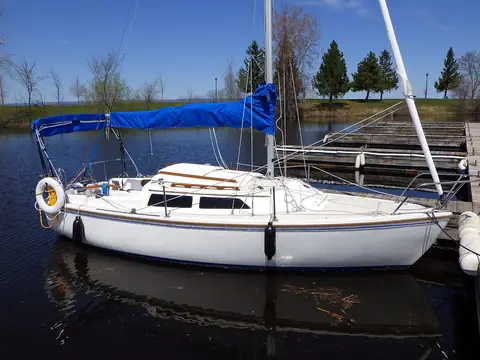
Catalina 22
Cruising Sailboats, 22 ft
Used $3K to $40K
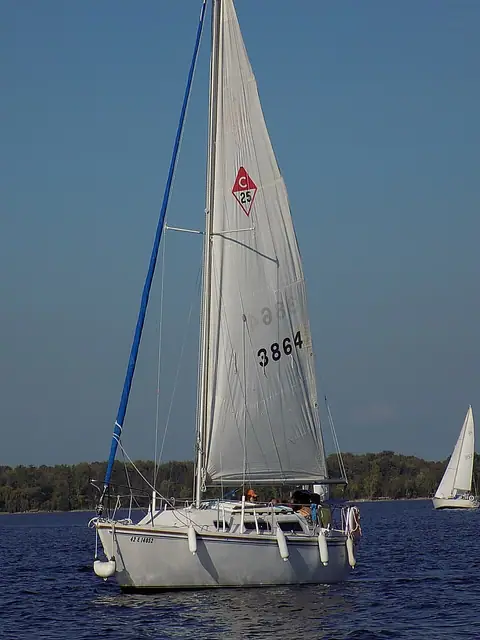
Catalina 25
Cruising Sailboats, 25 ft
Used $4K to $20K
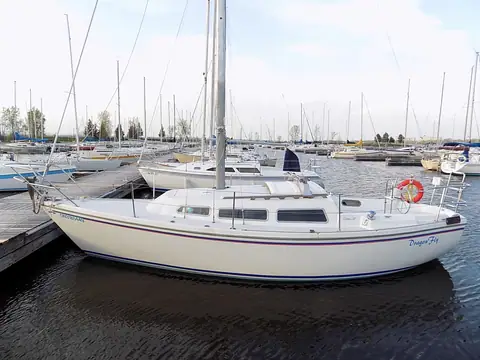
Catalina 27
Cruising Sailboats, 27 ft
Used $3K to $20K
Catalina 30
Cruising Sailboats, 30 ft
Used $8K to $58K
J/22
Performance Sailboats, 23 ft
Used $3K to $22K
J/24
Performance Sailboats, 24 ft
Used $3K to $30K
Frequently asked questions
What is the best sailboat for a beginner?
For learning to sail, a small dinghy such as a Sunfish or Flying Scot is hard to beat. For a first cruising boat with a cabin, the Catalina 22 is the most widely recommended choice in the US.
What size sailboat should a beginner buy?
Most beginners do best with a boat between 14 and 27 feet. Larger boats are harder to dock, cost more to keep and get used less often by new sailors.
How much does a beginner sailboat cost?
Used dinghies can cost as little as the low thousands, and a sound used Catalina 22 or J/22 often sells for roughly $5,000 to $20,000 depending on condition. Budget extra for sails, rigging and safety gear.
Can a beginner sail a 30-foot sailboat?
Yes, with training. Stable, simple boats such as the Catalina 30 are sailed by many first-time owners, but taking a keelboat course and sailing smaller boats first makes the transition much easier.
Is a trailerable sailboat a good first boat?
Yes. Trailerable boats such as the Catalina 22 and MacGregor 26X avoid slip fees, can be stored at home and let you sail different lakes and bays, which suits many beginners.
Should a beginner buy a new or used sailboat?
Most beginners are better off buying used, since tastes change quickly in the first few seasons and popular used boats resell close to what you paid. Our new vs used yacht guide covers the trade-offs.
Keep reading
Types of Sailboats and Rigs Explained
A buyer-focused guide to the types of sailboats, sorted four ways: by rig, by keel, by hull and by purpose, with real models…
BuyingHow to Buy a Used Yacht, Step by Step
A step-by-step walkthrough of buying a used yacht in the US, from setting a real budget to closing, documentation and the first…
BuyingMarine Surveys Explained, What a Surveyor Checks
What happens during a pre-purchase marine survey, what it costs, how to choose a surveyor, and how to turn the report into a…
BuyingNew vs Used Yacht, Which Makes More Sense?
A practical comparison of buying a new versus a used yacht in the US market, with real price gaps from our model pages, the…
BuyingCatamaran vs Monohull, Which Should You Buy?
An honest comparison of cruising catamarans and monohull sailboats for US buyers, covering comfort, safety, sailing ability…