Buying
New vs Used Yacht, Which Makes More Sense?
A practical comparison of buying a new versus a used yacht in the US market, with real price gaps from our model pages, the costs that do not appear on the sticker, how warranty and financing differ, and a decision framework for picking the right side.
On this page
The short answer
Buy new if you want a specific layout or engine package, plan to keep the boat for many years, value a warranty and a builder relationship, or are shopping a model that has just been launched. Buy used if you want the most boat for your money, expect your needs to change within a few seasons, or are comfortable managing a survey and some refit work.
Most of the difference comes down to depreciation and risk. With a new boat you pay a premium to avoid unknown history. With a used boat you save money by accepting it. The rest of this guide puts numbers and specifics around that trade.
Depreciation, seen through real models
Boats depreciate fastest in their early years, then the curve flattens. The rate varies a lot by brand and segment. Strong offshore center console and sportfishing brands tend to hold value better than mass-market express cruisers, and sailing catamarans have held value unusually well in recent years because demand from charter and liveaboard buyers has been strong.
The examples below use the price estimates from our own model pages, which reflect typical 2026 sail-away pricing for new boats and typical US asking prices for used ones. They are estimates, not appraisals, but they show the shape of the gap.
| Model | New price estimate | Used example and estimate | What it suggests |
|---|---|---|---|
| Sea Ray Sundancer 320 | $420,000 to $560,000 | 2021 model, $285,000 to $350,000 | Express cruisers lose a large share of value in the first five years |
| Regulator 37 | $1,000,000 to $1,200,000 | 2022 model, $700,000 to $820,000 | Premium center consoles hold up comparatively well, but outboard hours matter |
| Lagoon 42 | $650,000 to $850,000 | 2020 model, $420,000 to $520,000 | Charter history and equipment drive a wide spread between used boats |
| Back Cove 34O | $720,000 to $880,000 | 2021 model, $500,000 to $590,000 | Downeast boats from respected builders keep demand on the brokerage market |
Costs that do not appear on the sticker
Comparing a new boat's price list with a used boat's asking price is misleading. Both sides carry extra costs, they are simply different costs.
| Cost item | New yacht | Used yacht |
|---|---|---|
| Options and equipment | Electronics, canvas, generator, stabilizers, thrusters often extra | Usually already installed, though may be dated |
| Commissioning | Dealer prep, bottom paint, sea trial, delivery and freight | Minimal, but transport or delivery may apply |
| Survey and inspections | Optional but recommended for larger boats | Essential, plus engine oil analysis and rigging checks |
| Catch-up maintenance | Low in early years | Often significant in the first year, from batteries to hoses to sails |
| Sales or use tax | Applies to full price, state rules vary | Applies to purchase price, generally lower in dollars |
| Insurance | Easier to place, agreed value simple to set | May need survey, age limits can raise premiums |
| Financing | Longer terms and best rates usually available | Older boats may get shorter terms or higher rates |
When buying new is worth the premium
Warranty is the most obvious reason. Builders typically give a structural hull warranty lasting several years or longer, and engine makers add their own warranties, some extended. For a first-time owner of a complex boat, having the dealer and builder responsible for early teething problems has real value.
Customization is the second. Ordering new lets you choose the cabin layout, engine package, galley position, hull color and electronics suite. On a trawler like a Nordhavn or a sportfisher such as a Viking, these decisions shape the boat for decades. On production boats, choosing options at the factory is usually cheaper and neater than retrofitting them later.
Technology is the third. Recent outboards and diesels are quieter and cleaner than older engines, joystick docking systems and integrated electronics have changed how easily a couple can handle a larger boat, and lithium battery systems are becoming common on new sailboats and catamarans. If those features matter to you, a new or nearly new boat is the simplest way to get them.
The trade-off is time and price. Popular models can carry lead times of many months, and you may need to accept a build slot or a later delivery. Buyers who order new also absorb the full first-year depreciation.
When a used yacht is the better buy
Value is the headline. A used boat lets you buy more length, a better brand or a higher trim level for the same money, and the first owner has often added electronics, canvas, davits, solar panels and other equipment at full retail price.
A used model also has a track record. By the time a design has been in the water for five or more years, owners' forums, surveyors and brokers know its weaknesses, whether that is a leaking window design, a known engine installation issue or a deck core problem. Our model pages list those inspection points for each boat.
Used boats are also available now. You can sea trial the exact boat you will own, see how it handles and how it has been maintained, and close in weeks rather than waiting for a factory slot. The risk is history you cannot see. That is why a professional survey, engine survey and sea trial are not optional on a used yacht. Our step-by-step guide to buying a used yacht walks through the process.
The sweet spot, 3 to 7 years old
Many brokers point buyers toward boats roughly 3 to 7 years old. By then the steepest depreciation has passed, early warranty issues have usually been resolved, and the boat still has modern systems, styling and engines. Some remaining engine warranty or extended coverage may even transfer, so ask for the paperwork.
Other value pockets are worth knowing.
- Prior model year new boats at dealers, often discounted when the next model year arrives.
- Boat show and demo boats, lightly used and sometimes sold with full warranty.
- Charter-exit catamarans such as the Leopard 45 or Lagoon 42 at the end of a management program, priced below private boats but with heavy use to survey carefully.
- Repowered boats, where an owner has replaced older engines and you buy the hull at used prices with newer machinery.
- Orphan models from respected builders that never sold in big numbers, which can trade below the popular competition.
Financing, insurance and tax differences
Marine lenders prefer newer boats. Long amortization terms, sometimes up to 20 years on larger loans, are easier to get on new and late-model yachts, while older boats can face shorter terms, higher rates or larger down payments. Our yacht loans guide explains how lenders look at age, value and borrower profile.
Insurance follows a similar pattern. A new boat has a clear value and no condition questions. A used yacht, particularly one over about 10 to 15 years old, may need a condition and valuation survey before a carrier will bind coverage, and the surveyor's recommendations can become requirements. See our yacht insurance guide for how age affects coverage.
Sales and use tax rules vary by state and can include caps on the tax payable on boats or exemptions tied to where the boat is kept, so check your state's rules and ask your broker or tax advisor before you close. On a big purchase, the tax difference between states can be meaningful.
A decision checklist
Answer these questions honestly and the choice usually becomes obvious.
| Question | Leans new if | Leans used if |
|---|---|---|
| How long will you keep the boat? | Seven years or more | Two to five years, or you are unsure |
| Do you need a specific layout or engine? | Yes, and few used boats match | You can adapt to what is on the market |
| How much do you value a warranty? | Very much, especially as a first-time owner | You have a trusted mechanic and some DIY skills |
| Is depreciation a concern? | Less so, you buy for use not resale | Yes, you want to limit the loss |
| When do you want to be on the water? | You can wait for a build slot | This season |
| What is your experience level? | Any, with dealer support | Enough to judge a survey and plan repairs |
Our take
For first-time owners and anyone still learning what they want from a boat, a well-chosen used yacht is usually the better decision. The money saved on depreciation can pay for the survey, the catch-up maintenance and a season of fuel, and if the boat turns out to be the wrong size, you lose less when you move on.
For experienced owners who know exactly what they want and plan to keep it for a long time, buying new can make sense, particularly for custom or semi-custom trawlers, sportfishers and bluewater boats where the right specification matters more than the purchase price. Whichever way you lean, set your full budget first, including first-year ownership costs, using our guides to yacht prices and annual ownership costs.
Models mentioned in this guide
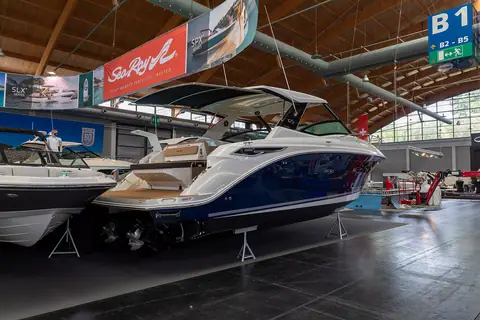
Sea Ray Sundancer 320
Sport Yachts & Express Cruisers, 33 ft
Used $210K to $480K
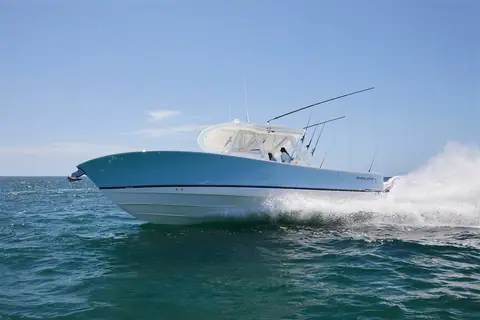
Regulator 37
Center Consoles & Offshore Boats, 38 ft
Used $640K to $1M
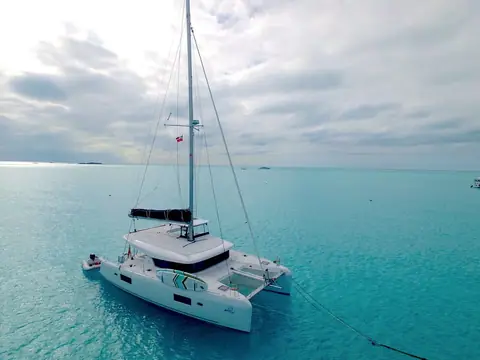
Lagoon 42
Sailing Catamarans, 42 ft
Used $340K to $600K
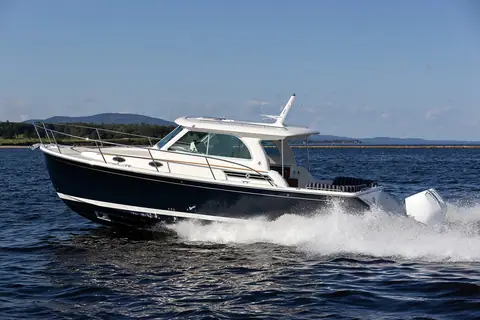
Back Cove 34O
Downeast Yachts, 40 ft
Used $440K to $760K
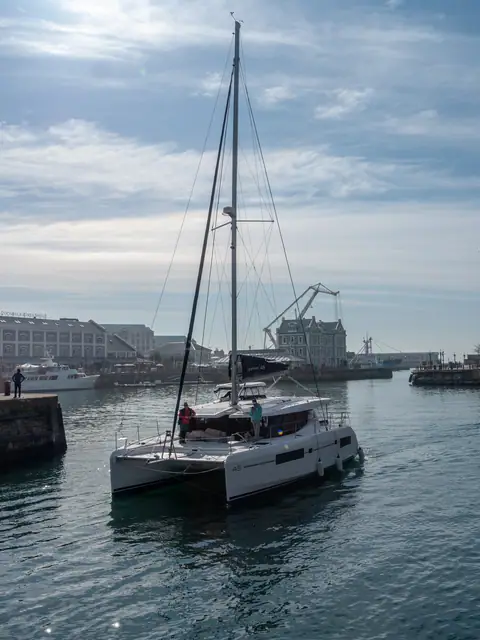
Leopard 45
Sailing Catamarans, 45 ft
Used $380K to $760K
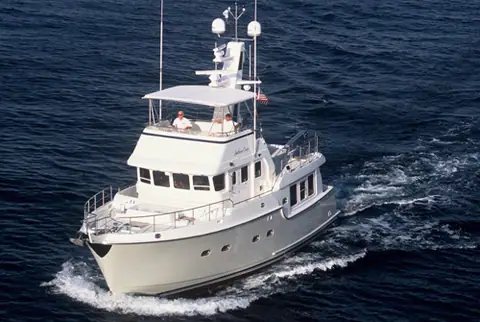
Nordhavn 47
Trawlers & Explorer Yachts, 48 ft
Used $520K to $900K
Frequently asked questions
Is it better to buy a new or used yacht?
For most buyers a used yacht offers better value because the first owner absorbs the steepest depreciation. New makes more sense if you want a warranty, a specific configuration and plan to keep the boat for many years.
How fast does a new boat depreciate?
Depreciation is steepest in the first few years and then slows. The rate varies by segment and brand, with popular center console, sportfishing and catamaran brands generally holding value better than mass-market cruisers.
What is the best age to buy a used yacht?
Many brokers suggest boats around 3 to 7 years old. They are past the steepest depreciation but still have modern engines, electronics and styling.
Do used yachts come with a warranty?
Brokerage boats are normally sold as is, but some remaining builder or engine warranty may transfer to a second owner. Ask for documentation and confirm transfer terms with the manufacturer.
Is it harder to finance a used boat?
Lenders usually offer the longest terms and best rates on new and late-model boats. Older boats can still be financed, but expect shorter terms, a bigger down payment or a survey requirement.
Are ex-charter boats a good buy?
They can be, especially catamarans leaving charter management programs, since they are often priced below private boats. Expect heavy use and get a thorough survey.
Keep reading
How to Buy a Used Yacht, Step by Step
A step-by-step walkthrough of buying a used yacht in the US, from setting a real budget to closing, documentation and the first…
BuyingMarine Surveys Explained, What a Surveyor Checks
What happens during a pre-purchase marine survey, what it costs, how to choose a surveyor, and how to turn the report into a…
BuyingHow Much Does a Yacht Cost? Prices by Size and Type
Realistic 2026 price ranges for new and used yachts in the US, from 30 ft sailboats to 130 ft superyachts, with the purchase-day…
OwnershipThe Real Annual Cost of Owning a Yacht
A line-by-line look at annual yacht ownership costs in the US, with worked budgets for four boat sizes and the levers that…
BuyingYacht Loans and Boat Financing Guide
A practical guide to yacht loans and boat financing in the US, covering typical 2026 loan structures, what marine lenders check…
OwnershipCatamaran Charter Management Programs Explained
A clear look at catamaran charter management programs, how guaranteed income and revenue-share contracts differ, what owner use…