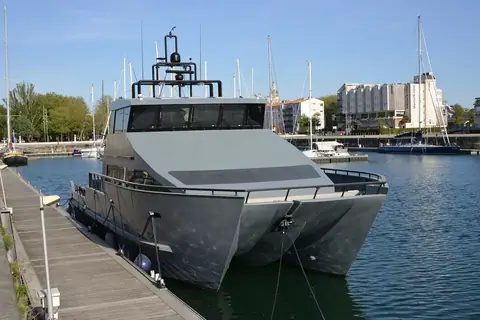
Aquila 32 Sport
Power Catamarans, 32 ft
Used $250K to $430K
A power catamaran puts a motor yacht's living space on two slender hulls instead of one wide one. The result is a boat that rolls far less at anchor, burns less fuel per mile than a monohull of similar volume, and offers a flybridge, saloon and cockpit that feel a size larger than the length suggests. For many American buyers moving up from a sailing cat or out of a sedan bridge cruiser, that combination is hard to ignore.
Power Catamarans, 32 ft
Used $250K to $430K
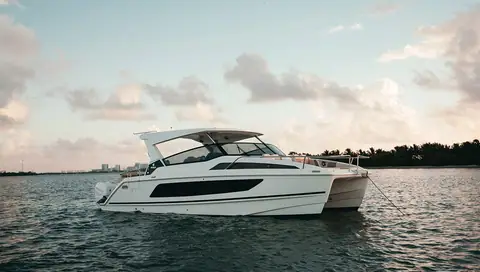
Power Catamarans, 36 ft
Used $380K to $700K
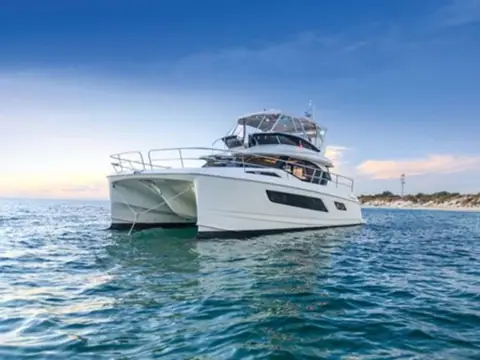
Power Catamarans, 45 ft
Used $450K to $900K
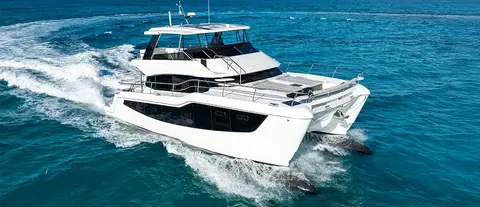
Power Catamarans, 53 ft
Used $1.3M to $1.75M
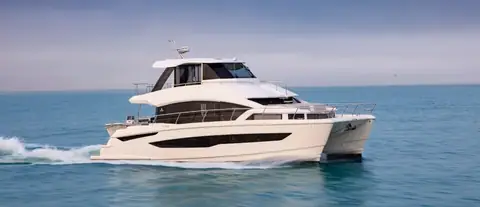
Power Catamarans, 54 ft
Used $1.15M to $2.4M
Power Catamarans, 70 ft
Used $3.8M to $5.6M
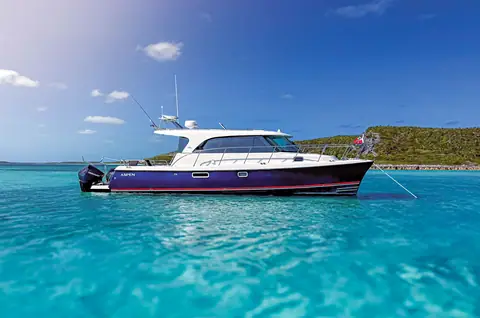
Power Catamarans, 38 ft
Used $340K to $580K
Power Catamarans, 42 ft
Used $350K to $520K
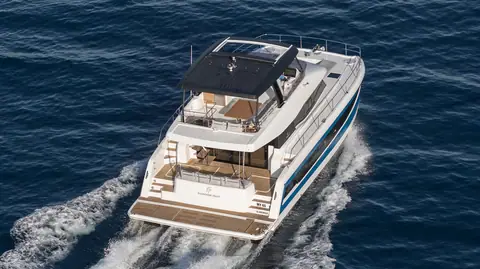
Power Catamarans, 51 ft
Used $620K to $1.25M
Power Catamarans, 65 ft
Used $2.6M to $3.9M
Power Catamarans, 79 ft
Used $7M to $9M
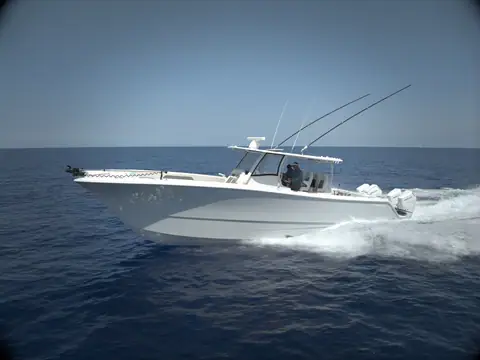
Power Catamarans, 44 ft
Used $850K to $1.2M
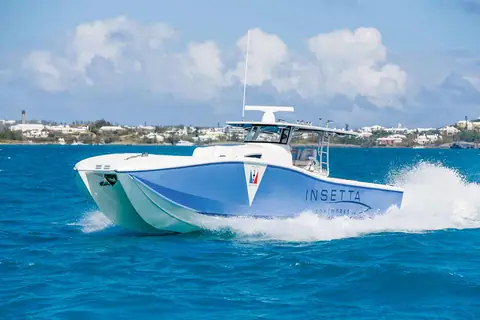
Power Catamarans, 47 ft
Used $250K to $550K
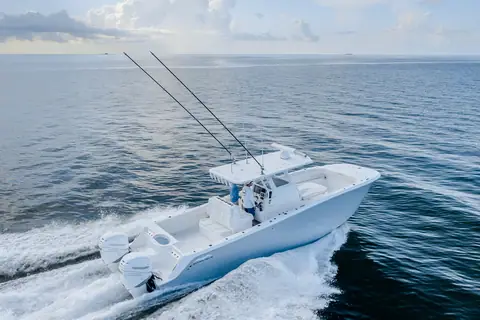
Power Catamarans, 34 ft
Used $400K to $560K
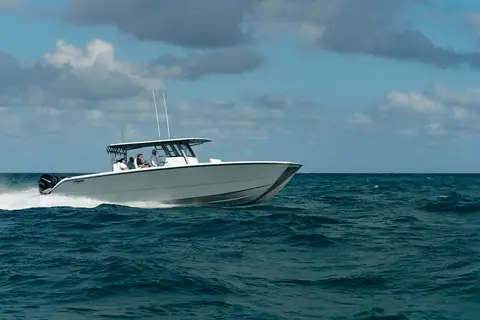
Power Catamarans, 40 ft
Used $360K to $800K
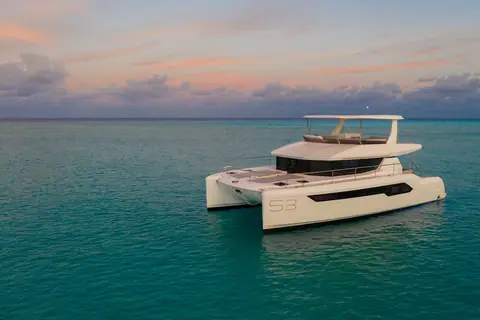
Power Catamarans, 53 ft
Used $820K to $1.75M
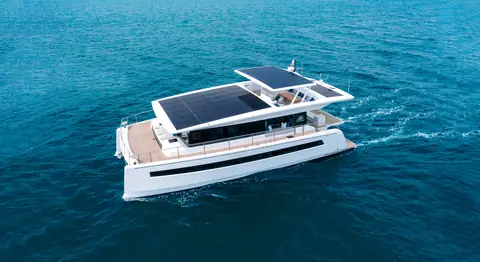
Power Catamarans, 59 ft
Used $1.6M to $2.6M
No models match these filters. Clear a filter to see more.
The segment is younger than the sailing catamaran market and still has fewer builders, but it is growing quickly. Aquila, sold through MarineMax, has made the powercat familiar in Florida and the Gulf. Leopard, built by Robertson and Caine, brought the Leopard 53 Powercat and its siblings into the charter fleets. Fountaine Pajot's motor yacht line, including the MY6, offers a French take on the same idea, and builders such as Invincible apply twin hulls to fast offshore fishing boats.
Here is how the different hull styles behave, where the compromises hide, and what to budget for a new or used powercat in 2026.
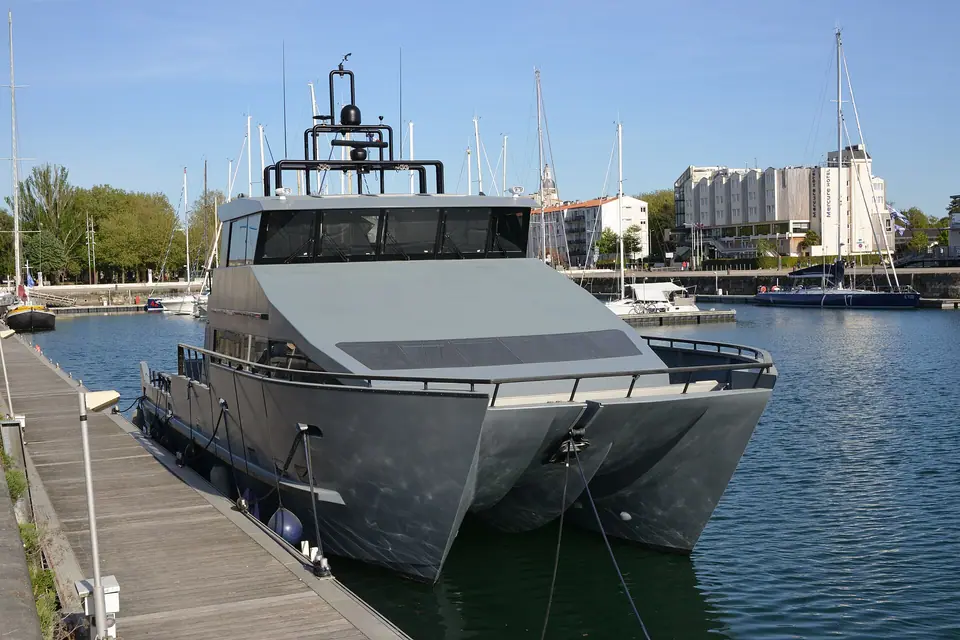
Long, slim hulls are easier to push through the water than one wide hull carrying the same weight. That is the physics behind the powercat's reputation for efficiency. At moderate speeds a well designed cat often uses noticeably less fuel per nautical mile than a monohull motor yacht with comparable interior volume, and it does so with smaller engines.
The advantage shrinks as speed rises and depends heavily on weight. A powercat loaded with a generator, air conditioning, a big tender and full tanks behaves very differently from the light-ship numbers in a brochure. Ask builders and owners for fuel figures at the speed you will actually cruise, and with the boat loaded the way you will actually use it.
Not every powercat is designed for the same speed. Some are trawler-like long-range cruisers that sit happily at 8 to 10 knots. Most production yachts from Aquila, Leopard and Fountaine Pajot use semi-planing or moderate planing hulls that cruise in the mid to high teens and can run faster when needed. Outboard-powered offshore cats such as the Invincible 40 Catamaran and the Freeman range are fully planing fishing machines.
| Hull style | Example models | Typical cruise range | Strengths | Trade-offs |
|---|---|---|---|---|
| Displacement or long-range | Trawler-style expedition cats | 8 to 10 knots | Very low fuel burn, long range | Slow to outrun weather |
| Semi-planing or planing cruiser | Aquila 44, Aquila 54, Leopard 53 Powercat, Fountaine Pajot MY6 | Mid to high teens, slower for range | Flexible speed, big living space | Fuel burn rises sharply at top speed |
| Planing outboard cat | Invincible 40 Catamaran, Freeman 42LR | 30 knots and up | Soft ride in a head sea, fishable | Limited accommodation, high fuel use at speed |
The real selling point is volume. Because the beam is carried all the way aft and both hulls hold cabins, a 44 foot powercat typically offers three or four double cabins, each with its own head, plus a full saloon and galley on the main deck and a flybridge that can seat a crowd. The cockpit and foredeck lounges add more living area that a monohull of the same length simply does not have.
That layout suits families, charter guests and liveaboards. The master cabin often sits forward on the main deck or across one full hull, and the guest cabins are well separated. Leopard's charter-bred layouts are the classic example, while the Aquila 54 and Fountaine Pajot MY6 lean further into owner comfort with larger master suites and upgraded finishes.
In a head sea, the narrow hulls slice through waves with less pitching than many monohulls, and at anchor the roll is dramatically reduced. The weakness is the tunnel between the hulls. When waves are steep and close together, water can strike the underside of the bridgedeck and produce a slam that shakes the boat. Designers fight this with higher tunnel clearance and shaped wave breakers, and the better boats handle it well.
Quartering and following seas deserve a sea trial. Some powercats feel very secure, while others can develop a corkscrew motion that takes getting used to. If you plan to run outside along the Atlantic coast rather than inside on the Intracoastal Waterway, sea trial in real conditions before you buy.
Beam is the cat's biggest practical constraint. A 44 to 54 foot powercat is often 20 to 26 feet wide, and many marinas either cannot fit it or charge a premium. Haul-out is another check, because a standard Travelift may be too narrow. Before buying, call the marinas and yards on your intended route.
Powercats are increasingly popular for the Great Loop, where their efficiency and level ride pay off on long days of river travel. The Loop's fixed bridge limit of roughly 19 feet of air draft applies to cats as well, so a flybridge hardtop, radar arch and antennas must fold or fit beneath it. Lock chambers are generally wide enough, but you will need large fenders on both sides.
Every powercat has two engines, one in each hull, which gives redundancy and excellent low-speed maneuvering with the throttles split. On inboard cruisers, engines usually sit aft under the cockpit or in hull lockers, and access varies widely between builders. Some give you headroom to kneel beside the engine, others require you to lie across it to reach the raw-water pump.
Open the hatches on any boat you are considering. Look for space around filters, belts and impellers, separate generator access, and a sensible layout for sea strainers. A boat that is miserable to service will be serviced less often, and that shows up in the survey of a used example.
Because the modern production powercat boom is recent, most used inventory is less than ten years old. Ex-charter Leopard powercats appear regularly, often at attractive prices relative to private-owner boats, but with the same caveats as ex-charter sailing cats about wear on soft goods, heads and machinery. Privately owned Aquilas from Florida are another large pool.
Resale has been reasonably firm for well kept boats with documented maintenance, but buyers are discerning about engine hours, generator condition and air conditioning systems, all of which work hard in Florida and Caribbean service.
| Size | New | Used |
|---|---|---|
| Outboard fishing cats 34 to 42 ft | $400,000 to $1,200,000 | $150,000 to $950,000 |
| Cruising powercats 40 to 46 ft | $900,000 to $1,500,000 | $450,000 to $1,200,000 |
| Cruising powercats 48 to 56 ft | $1,500,000 to $2,800,000 | $850,000 to $2,200,000 |
| Large powercats 58 to 70 ft | $2,800,000 to $6,000,000 | $1,700,000 to $4,500,000 |
Typical US asking and sail-away ranges in 2026. Condition, engines and equipment move individual boats well outside these bands.
At moderate cruising speeds, a well designed powercat usually burns less fuel per mile than a monohull motor yacht with similar interior volume. The gap narrows at high speed and when the cat is heavily loaded.
They pitch and roll less than many monohulls, especially at anchor. In steep, short seas, waves can strike the bridgedeck and cause slamming, so tunnel clearance and a real-condition sea trial matter.
New cruising powercats from 40 to 46 feet typically run about $900,000 to $1.5 million in 2026, and used examples of the same size range from roughly $450,000 to $1.2 million.
Yes, many loopers choose them for their efficiency and stable ride. Air draft must be under the Loop's fixed bridge limit of about 19 feet, and beam can limit marina options.
Aquila, Leopard and Fountaine Pajot lead the cruising segment in the US market, while builders such as Invincible and Freeman apply catamaran hulls to fast offshore fishing boats.