Cruising
The Great Loop, Route, Costs and Planning
A planning guide to America's Great Loop, the roughly 6,000 mile circuit of the eastern US and part of Canada, covering the route and its choices, the seasonal calendar, locks, limits, crossing into Canada and what a year on the Loop really costs.
On this page
- A 6,000 mile circle you can start anywhere
- The route, segment by segment
- The big route decisions you will face
- A month-by-month Loop calendar
- The limits your boat must meet
- Locks, lift locks and a railway for boats
- Crossing into Canada and back
- What a year on the Loop really costs
- Skills and preparation that matter most
- Doing the Loop in sections
- FAQ
A 6,000 mile circle you can start anywhere
The Great Loop is a continuous waterway circuit around the eastern United States and part of Canada. It links the Atlantic Intracoastal Waterway, the Chesapeake Bay, the New York canals, the Great Lakes, the inland rivers and the Gulf Coast, so a boat can cruise the whole circle mostly in protected water and return to its starting point. The America's Great Loop Cruisers' Association (AGLCA) describes it as a 6,000 mile route; its minimum is about 5,250 statute miles, and most Loopers log around 6,000 with side trips.
Because it is a loop, there is no official start. People begin from their home port, wherever that is, and most travel counterclockwise: north up the Atlantic coast in spring, west through the Great Lakes in summer, south down the rivers in fall, and around Florida in winter. Traditionally the trip takes about a year, though it has been done in as little as 12 days by record seekers and stretched over many years by people who do it in sections.
AGLCA tracks completions with burgees. Members fly a white burgee while underway, change to a gold burgee when they cross their wake and complete the Loop, and earn a platinum burgee for doing it more than once.
The route, segment by segment
Here is the counterclockwise route in the order most Loopers run it. Distances are given only where the waterway's length is well established; total miles depend on your choices.
| Segment | Key waterways | What to expect |
|---|---|---|
| Florida to Norfolk | Atlantic Intracoastal Waterway, about 1,090 miles from Miami to Mile 0 at Norfolk | Bridges, tidal currents, shoaling in Georgia and the Carolinas, many marinas |
| Norfolk to New York | Chesapeake Bay, C and D Canal, Delaware Bay, New Jersey coast | Open-water legs on Delaware Bay and outside along New Jersey; weather windows matter |
| New York to Lake Ontario | Hudson River, Erie Canal, Oswego Canal | Masts come down here for sailboats; frequent locks; canal towns |
| Lake Ontario to Georgian Bay | Trent-Severn Waterway, 240 miles with 44 locks | Lift locks at Peterborough and Kirkfield, Big Chute marine railway, 6 ft depth |
| Georgian Bay and North Channel | Small craft route, North Channel | Granite islands and some of the best cruising on the Loop; rocky, needs careful navigation |
| Lake Michigan | Mackinac to Chicago | Big open lake with few harbors of refuge on some stretches; plan for fall weather |
| Chicago to the Ohio | Illinois Waterway, then the Mississippi River for about 218 miles from Grafton to Cairo | Commercial barge tows, strong current, few marinas and long gaps between fuel |
| Ohio to Mobile | Ohio, Cumberland or Tennessee River, Kentucky Lake, Tenn-Tom Waterway (234 miles), Tombigbee | Lakes, locks and remote anchorages; ends at Mobile Bay |
| Mobile to Florida's Big Bend | Gulf Intracoastal Waterway to Carrabelle | Protected water and beach towns of the Florida Panhandle |
| Crossing the Gulf | Carrabelle to Tarpon Springs or Steinhatchee | About 170 nautical miles to Tarpon Springs; weather window critical |
| Southwest Florida and across | Okeechobee Waterway (about 154 miles) or around the Keys | Lake Okeechobee depth and a fixed bridge at Port Mayaca limit some boats |
The big route decisions you will face
The Loop is not a single line. At several points you choose between alternatives, and those choices change your boat requirements, timing and experience.
- Erie Canal west to Lake Erie or Oswego to Lake Ontario. The full Erie Canal to Buffalo requires an air draft of about 15 feet; the Oswego Canal route to Lake Ontario requires about 21 feet and leads to the Trent-Severn.
- Trent-Severn or the Welland. The Trent-Severn is the classic Canadian route, but it limits beam to 23 feet, length to 84 feet and depth to about 6 feet. Wider boats go via Lake Erie and the US shore instead.
- Lake Champlain detour. Boats with a 17 foot air draft can take the triangle loop through Lake Champlain and the Richelieu River into Canada, a popular side trip.
- Chicago River or the Cal-Sag. The scenic route through downtown Chicago requires about 17 feet of air draft; the Cal-Sag and Sanitary and Ship Canal route is the one governed by the 19.6 foot limit.
- Tenn-Tom or the lower Mississippi. Nearly all Loopers take the Tenn-Tom to Mobile; the lower Mississippi to New Orleans has heavy commercial traffic and few facilities for small boats.
- Gulf crossing or coastal hops. Faster boats often run across the Big Bend in a day; slower boats wait for a good window or hop via Steinhatchee and Cedar Key.
- Okeechobee or the Keys. The Okeechobee Waterway is the shortcut across Florida; going around via the Keys adds miles and some of the best cruising on the Loop.
A month-by-month Loop calendar
Timing is driven by three things: the operating seasons of the canals, the Great Lakes weather window, and hurricane season on the Gulf and Atlantic coasts. The Trent-Severn and the New York canals operate roughly from May to October, so the north is a summer cruise. Hurricane season runs from June through November, which is why most Loopers are in the north in summer and reach the Gulf Coast late in the fall.
| Months | Typical location | Notes |
|---|---|---|
| March to April | Florida north to the Carolinas | Leave Florida as the weather warms |
| May | Chesapeake Bay to New York | Weather windows for Delaware Bay and New Jersey |
| June | Hudson River, Erie and Oswego canals | Canals open; unstep sailboat masts |
| July | Trent-Severn Waterway | Peak summer season; lock waits possible |
| August | Georgian Bay, North Channel, northern Lake Michigan | Best cruising weather of the trip |
| September | Lake Michigan to Chicago | Aim to be south of the Great Lakes before fall gales |
| October | Illinois River, Mississippi, Kentucky Lake | Fall colors; watch river levels |
| November | Tenn-Tom to Mobile, Gulf Coast | Many insurers want the Gulf after the peak of hurricane season |
| December to February | Florida west coast, Keys, Bahamas | Winter base; many Loopers pause here |
The limits your boat must meet
AGLCA's published limits set the minimum requirements. The lowest unavoidable fixed bridge on the route is charted at 19.6 feet, so your boat must clear that height with everything lowered. AGLCA recommends a draft not much greater than 5 feet. The Trent-Severn's 23 foot beam limit at Port Severn and 84 foot length limit matter for catamarans and larger yachts.
Range is the other hard limit. The longest gap between fuel stops on the standard route, from Alton, Illinois to Paducah, Kentucky, is about 240 miles. Plan on at least 300 miles of safe range with reserve.
For the boats that meet these limits best, read our guide to the best trawlers and boats for the Great Loop, which compares the Mainship 390, Grand Banks 42 Classic, Kadey-Krogen 44, Back Cove 37 and others, with estimated fuel bills for each.
Locks, lift locks and a railway for boats
A typical Loop passes through roughly 100 or more locks, depending on route. They range from small New York canal chambers where you hold a slimy cable or pipe on the wall, to large Corps of Engineers river locks shared with commercial tows, to the hydraulic lift locks at Peterborough and Kirkfield on the Trent-Severn, where your boat rides in a water-filled tub that rises or falls as a counterweight.
The most unusual is the Big Chute marine railway on the Trent-Severn, which carries boats overland in a cradle between the upper and lower Severn River. It is a highlight for most Loopers and a reason to confirm your boat's dimensions with Parks Canada before the trip.
On the rivers, commercial tows have priority, and waits of several hours are possible. Call the lockmaster on VHF before arrival, have fenders and lines ready on both sides, and keep the engine running. Practice before you reach the first busy lock.
Crossing into Canada and back
If you take the Trent-Severn or cruise Georgian Bay and the North Channel, you will enter Canada. Every person aboard needs a passport or other approved travel document. On arrival you must report to the Canada Border Services Agency, typically by its telephone reporting line from a designated reporting site, and you will receive a report number to keep aboard.
Canada restricts firearms tightly, and some items such as certain foods and alcohol over the personal allowance are limited, so check the current rules before you go. Bring proof of your pets' rabies vaccination. When you return to the US you must report to US Customs and Border Protection, usually through its CBP ROAM app or by phone.
On the Trent-Severn you will also buy a lockage permit from Parks Canada. A seasonal pass is usually more economical than paying per lock. Check whether New York canal permits are required for your year as well, because the state has changed its fee policy over time.
What a year on the Loop really costs
Costs vary more than almost anything else in Loop planning, because the single biggest variable is how often you stay in marinas. The table shows rough annual ranges for a couple on a 40 foot diesel boat. These are estimates for planning only, excluding the purchase of the boat, and they assume a counterclockwise Loop of about 12 months.
Marina costs depend on location and season. Transient rates in many Loop marinas run a few dollars per foot per night, with higher rates in Florida, the Chesapeake and around New York. Couples who anchor half the time can cut marina costs dramatically; those who prefer marinas every night will be at the top of the range.
| Category | Rough annual range (estimate) | What drives it |
|---|---|---|
| Marinas | $15,000 to $40,000 | How often you anchor, boat length, regional rates |
| Fuel | $10,000 to $35,000 | Displacement trawler versus planing boat |
| Maintenance and repairs | $8,000 to $25,000 | Boat age, engine hours, surprises |
| Insurance | $3,000 to $10,000 | Boat value, experience, navigation limits |
| Canada fees, permits, membership | $500 to $2,000 | Parks Canada lockage and mooring, AGLCA dues |
| Charts, guides, electronics | $500 to $2,500 | Updates, subscriptions, new gear |
| Haul-out and bottom work | $2,000 to $6,000 | One haul during the year |
Skills and preparation that matter most
The Loop does not require ocean-crossing seamanship, but it does demand competence in a wide range of conditions: river current, locks, open water on the Great Lakes and the Gulf, tidal inlets and crowded marinas. Couples who prepare well enjoy the trip far more.
- Take a boating safety course and practice docking in wind and current before you leave.
- Learn to handle lines in locks from both bow and stern, and agree on hand signals or headsets.
- Understand weather windows. The Gulf crossing, Lake Michigan and Delaware Bay all require patience.
- Know your boat's systems well enough to change a fuel filter, impeller and belt.
- Join AGLCA, attend a rendezvous and talk to people who have done it.
- Use current cruising guides and local knowledge for shoaling, especially on the Atlantic ICW.
Doing the Loop in sections
Not everyone can disappear for a year. Many Loopers complete the circuit over two or three seasons, leaving the boat in a marina or storage yard between segments. Common breaks are Florida in winter, the Chesapeake or New York in spring, and the Great Lakes in summer, with the boat hauled and stored for winter in a northern yard.
Trailerable boats such as the Ranger Tugs R-27 make sectional Loops easier, since the boat can go home between segments. The trade-off of a sectional Loop is cost (storage and travel) and the momentum and community of doing it all at once, but it lets working people and those with family commitments complete the circle.
Models mentioned in this guide
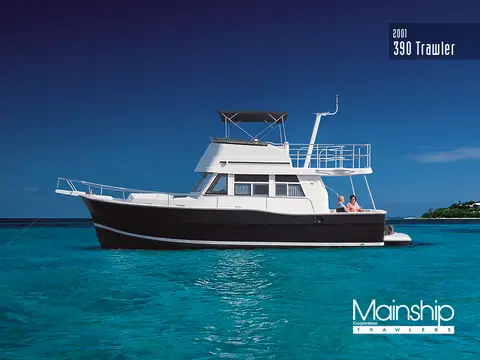
Mainship 390 Trawler
Trawlers & Explorer Yachts, 40 ft
Used $95K to $185K
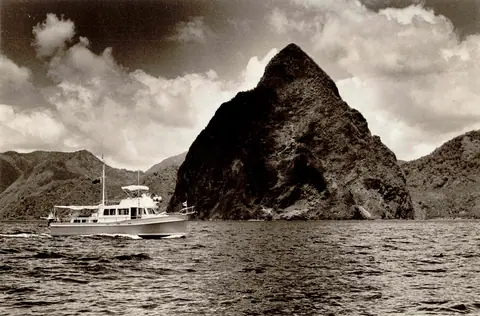
Grand Banks 42 Classic
Trawlers & Explorer Yachts, 43 ft
Used $75K to $360K
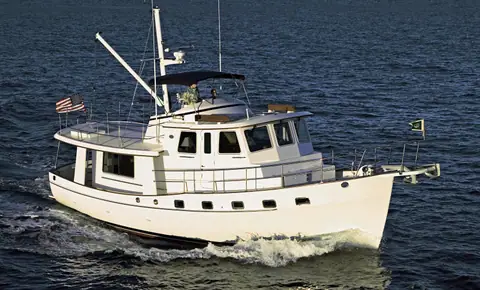
Kadey-Krogen 44 AE
Trawlers & Explorer Yachts, 49 ft
Used $650K to $1.1M
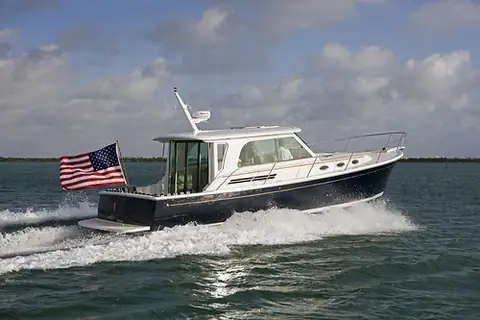
Back Cove 37
Downeast Yachts, 42 ft
Used $300K to $700K
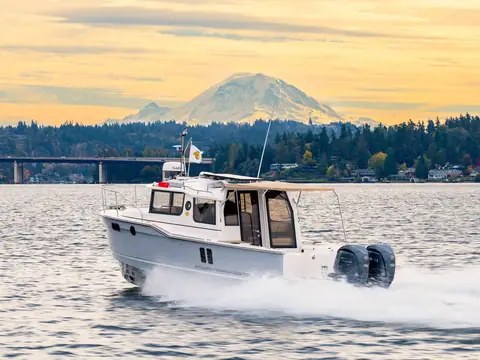
Ranger Tugs R-27
Trawlers & Explorer Yachts, 32 ft
Used $85K to $285K
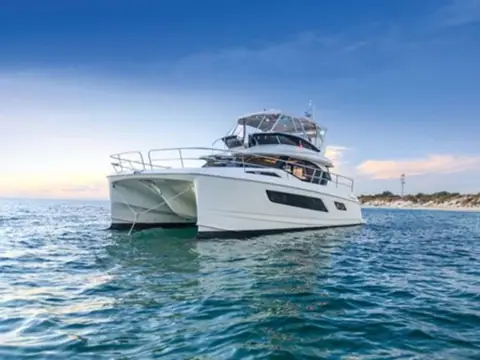
Aquila 44
Power Catamarans, 45 ft
Used $450K to $900K
Frequently asked questions
How long does it take to do the Great Loop?
Traditionally about a year, following the seasons. It has been done in as little as 12 days by record seekers and over many years in sections.
How many miles is the Great Loop?
About 6,000 miles for most boats, with a minimum of about 5,250 statute miles depending on route choices and side trips.
How much does it cost to do the Great Loop?
Boat-related costs for a couple on a 40 foot boat commonly fall roughly between $40,000 and $100,000 or more for a year (estimate), driven mostly by marina use and fuel.
When should you start the Great Loop?
Most counterclockwise Loopers leave Florida in spring, reach the Great Lakes in summer and come down the rivers in fall, arriving on the Gulf Coast late in the year.
Do you need a passport for the Great Loop?
Yes, if you take the Canadian route through the Trent-Severn or cruise Georgian Bay. Everyone aboard needs a passport or approved travel document, and you must report to Canadian and US border authorities.
How many locks are on the Great Loop?
Roughly 100 or more on a typical route, including 44 on the Trent-Severn Waterway alone, though the exact count depends on your route choices.
What is AGLCA?
America's Great Loop Cruisers' Association is a membership organization for people planning and completing the Loop. It provides forums, planning resources, rendezvous and completion burgees.
Keep reading
Best Trawlers and Boats for the Great Loop
How to choose a Great Loop boat, with the hard limits every Looper boat must meet, our picks from budget Mainships to…
CruisingIntracoastal Waterway Guide for Yacht Owners
A practical Intracoastal Waterway guide for owners running the Atlantic or Gulf ICW, covering boat fit, draft and air draft…
OwnershipYacht Insurance Guide, Costs and Coverage
A plain-English yacht insurance guide for US owners covering hull and liability coverage, agreed value versus actual cash value…
OwnershipThe Real Annual Cost of Owning a Yacht
A line-by-line look at annual yacht ownership costs in the US, with worked budgets for four boat sizes and the levers that…
KnowledgeBoating Terminology, 150 Terms Every Owner Should Know
A themed glossary of boating terminology for new and experienced owners, grouped by hull, deck, lines, sails, engines…