Ownership
Yacht Insurance Guide, Costs and Coverage
A plain-English yacht insurance guide for US owners covering hull and liability coverage, agreed value versus actual cash value, named storm deductibles, navigation limits, premiums by boat type and the exclusions that cause most denied claims.
On this page
- What a yacht insurance policy actually covers
- Agreed value versus actual cash value, the decision that matters most
- What yacht insurance costs in practice
- Hurricane and named storm clauses
- Navigation limits, Bahamas runs and how you use the boat
- The exclusions that deny the most claims
- Surveys, age limits and your boating resume
- How to shop for yacht coverage without overpaying
- Practical ways to lower the premium
- FAQ
What a yacht insurance policy actually covers
Yacht insurance in the US is written on marine forms rather than the homeowner or auto forms most people know. A typical recreational yacht policy bundles several coverages that each carry their own limit and deductible, and understanding the split is the first step to comparing quotes honestly.
The hull and machinery section, often shortened to hull or physical damage, pays to repair or replace the boat, its engines, generators and permanently installed equipment after a covered loss such as a grounding, collision, fire, theft, lightning strike or sinking. Protection and indemnity, called P and I, is the liability side. It pays when you injure someone, damage another boat or a dock, or are legally obligated to remove a wreck. Unlike a car, a sunken yacht can generate a wreck removal bill that exceeds the boat's value, which is why wreck removal sits inside or alongside P and I.
Most yacht forms add medical payments for guests, uninsured boater coverage, personal effects, towing and assistance, and pollution liability. Federal law under the Oil Pollution Act of 1990 and the Clean Water Act makes the vessel owner responsible for cleanup of fuel or oil discharged into navigable waters, so a separate fuel spill limit is standard on serious yacht policies.
| Coverage | What it pays for | Typical limit approach |
|---|---|---|
| Hull and machinery | Physical damage or total loss of the boat and installed equipment | Agreed value or actual cash value of the yacht |
| Protection and indemnity (liability) | Bodily injury and property damage you cause, legal defense | Often $300,000 to $1 million, higher with an umbrella |
| Wreck removal | Raising and disposing of a sunken or stranded boat | Inside P and I or a separate limit, check which |
| Fuel spill and pollution | Cleanup and federal or state fines tied to a discharge | Separate limit, ask how it compares with federal liability exposure |
| Medical payments | Guest injuries regardless of fault | Per-person limit, often modest |
| Uninsured boater | Your injuries caused by an uninsured operator | Matches or trails your liability limit |
| Personal effects | Clothing, fishing gear, portable electronics aboard | Fixed sublimit with its own deductible |
| Towing and assistance | Non-emergency tows, fuel delivery, soft ungroundings | Small sublimit, or bought through a towing membership |
Agreed value versus actual cash value, the decision that matters most
An agreed value policy fixes the payout for a total loss on the day the policy is written. If you insure a 2019 Grady-White Canyon 456 for an agreed $1.1 million and it burns to the waterline, the insurer pays $1.1 million less any deductible that applies to total losses. Nobody argues about depreciation after the fact. The insurer normally sets the agreed value from a recent survey, purchase price or market data, and it will not agree to a number that is far above what comparable boats sell for.
An actual cash value policy pays replacement cost minus depreciation. That keeps premiums lower, but it means the check after a total loss reflects what the market says your boat was worth at the moment of the loss, and that number can come in well below what you expected.
The subtler issue is how partial losses are handled. Many agreed value policies still depreciate certain components on a partial claim, most often canvas, sails, upholstery, outboard engines and batteries, using a schedule printed in the policy. A sailor who loses a 10-year-old mainsail in a squall may find that the policy pays only a fraction of a new sail. Ask for the depreciation schedule in writing and compare it between carriers; it varies more than the headline premium.
What yacht insurance costs in practice
Brokers often quote a rough rule of thumb of 1 to 2 percent of hull value per year for a well-maintained recreational boat with an experienced owner outside the hurricane belt. Treat that as a starting point, not a quote. In Florida, the Gulf Coast and the Carolinas, premiums commonly run higher, and named storm deductibles climb, because carriers have paid large hurricane losses in recent seasons and some have reduced how much Florida business they will write.
Smaller boats often pay a higher percentage because there is a minimum premium below which a carrier will not write the policy. Large yachts with professional crew can pay a lower percentage of value because the risk is spread over a big hull number, but crew liability and higher P and I limits push the dollar figure up.
| Boat profile | Main premium drivers | What underwriters will ask for |
|---|---|---|
| 25 to 35 ft sailboat, Great Lakes or New England | Low hull value, seasonal use, lay-up period | Boating history, mooring or slip details |
| 35 to 45 ft express cruiser, Florida year-round | Named storm exposure, theft, high liability | Hurricane plan, marina or lift details, survey if older |
| 50 to 70 ft motor yacht, East Coast migration | Hull value, Bahamas use, operator experience | Resume, captain warranty, navigation plan |
| Offshore center console, 35 to 45 ft | Speed, theft of outboards, tournament use | Operator experience, storage method, engine security |
| Older bluewater sailboat, ocean passages | Age, rigging, crew size, remote cruising grounds | Recent survey, rigging inspection, crew list |
| Ex-charter catamaran, private use | Charter history wear, Caribbean storm exposure | Survey, named storm plan, cruising area |
Hurricane and named storm clauses
Named storm provisions are where US yacht policies differ most from one another. Many policies apply a separate named windstorm deductible, expressed as a percentage of the hull value rather than a flat dollar amount. On a $600,000 boat, a 5 percent named storm deductible is $30,000, which surprises owners who assumed their $5,000 deductible applied.
Carriers writing boats in the Southeast typically require a written hurricane plan that explains where the boat will be, who will move or secure it, and how it will be prepared. Some policies carry a navigation warranty that requires the boat to be north of a stated line, such as a latitude or a named cape, during the hurricane season, or out of the water and tied down. Breaking that warranty can void coverage for a named storm loss entirely.
On the positive side, many policies reimburse part of the cost of hauling the boat or moving it out of a forecast track when a named storm threatens. Find out whether that benefit exists, what triggers it and how much it pays, because the haul-out bill in a crowded yard ahead of a storm is not small.
- Confirm whether the named storm deductible is a percentage or a flat amount.
- Check the exact dates the hurricane warranty applies, usually covering June through November.
- Get the hurricane plan approved before the season, not when a storm is three days out.
- If your boat sits on a lift, ask whether lift-stored boats are treated differently.
The exclusions that deny the most claims
Marine policies cover sudden and accidental losses. They do not pay for the boat wearing out. That principle sits behind most exclusions, and it is why owners with a slow leak, a corroded through-hull or a delaminated deck are often disappointed.
Read the policy for these clauses before you need it.
- Wear, tear, gradual deterioration, corrosion, electrolysis and marine growth.
- Osmotic blistering, delamination and manufacturer defects, though resulting damage may be covered on some forms.
- Mechanical breakdown of engines and generators unless caused by an insured peril such as a grounding or sinking.
- Freeze damage, often covered only if the boat was properly winterized or excluded outright.
- Damage from animals, insects, mold and vermin.
- Losses while an unlisted operator or an operator under the influence is at the helm.
- Losses outside navigation limits or in breach of the named storm warranty.
- Commercial use, charter or carrying passengers for hire without an endorsement.
Surveys, age limits and your boating resume
For used boats, carriers commonly ask for a condition and valuation survey when the boat passes a certain age or value, often somewhere around 10 to 15 years old, and they may ask for updated surveys every few years after that. The surveyor's recommendations become part of the file, and many insurers require that safety-related items be fixed before coverage binds or within a set number of days. See our marine survey guide for what that inspection involves.
Underwriters also rate the operator. A boating resume that lists prior boats by size and type, years of experience, courses such as US Power Squadrons (America's Boating Club) or US Sailing certifications and any Coast Guard license helps. Moving from a 30-foot express to a 60-foot motor yacht often triggers a captain warranty, meaning a licensed captain must be aboard for a period or a set number of hours until the insurer is comfortable.
High-performance powerboats, wooden boats, homebuilt boats and very old steel yachts are harder to place. Some mainstream carriers decline them, and owners end up with specialty markets, higher deductibles or actual cash value terms.
How to shop for yacht coverage without overpaying
There are three broad routes. Direct-writing carriers and boat-owner associations work well for trailer boats and simple coastal cruisers. Agents attached to big personal-lines insurers can bundle the boat with home and auto, which sometimes helps price but can limit marine expertise. Independent marine brokers place yachts with specialist carriers and London market syndicates, and they become the better route once the boat is large, valuable, crewed or cruising internationally.
When comparing quotes, line them up coverage by coverage. A cheaper policy often has a lower P and I limit, a stricter depreciation schedule, a narrower cruising area or a heavier named storm deductible. Ask for sample policy wording, not only a quote summary.
- Prepare a boating resume, the survey, a photo set and an equipment list before requesting quotes.
- Ask for the same agreed value and liability limit from every carrier so premiums are comparable.
- Confirm whether towing is included or whether a separate towing membership makes more sense.
- Ask how the carrier handles claims in your cruising area and whether it has local adjusters.
- If you hire crew, ask about Jones Act and longshore exposure, which needs its own coverage.
Models mentioned in this guide
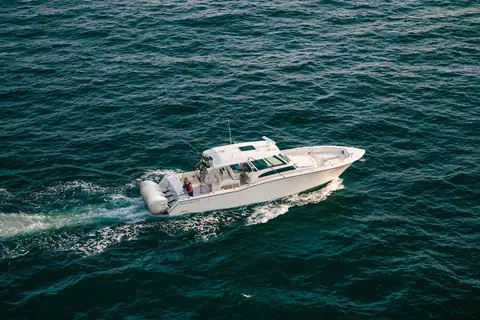
Grady-White Canyon 456
Center Consoles & Offshore Boats, 45 ft
Used $1.05M to $2M
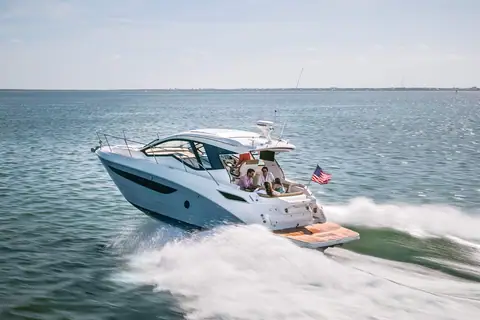
Sea Ray Sundancer 350
Sport Yachts & Express Cruisers, 35 ft
Used $85K to $310K
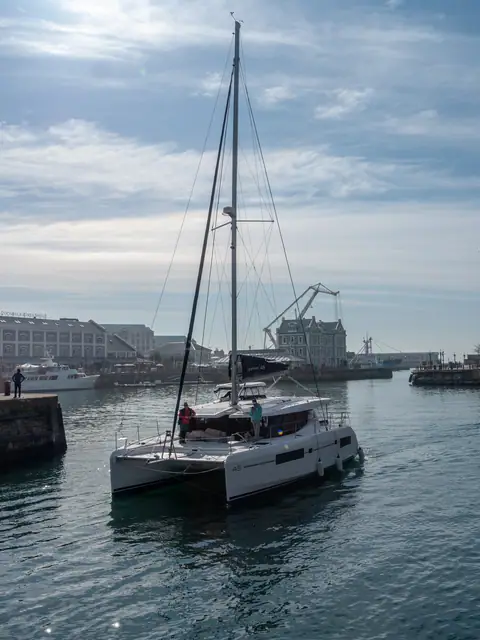
Leopard 45
Sailing Catamarans, 45 ft
Used $380K to $760K
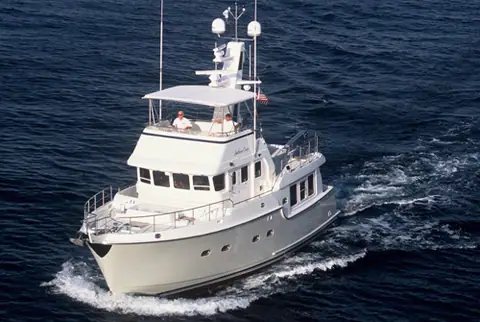
Nordhavn 47
Trawlers & Explorer Yachts, 48 ft
Used $520K to $900K
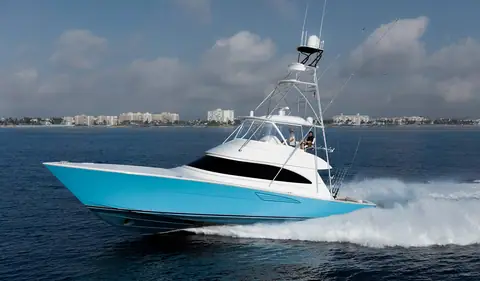
Viking 58 Convertible
Sportfishing Yachts, 59 ft
Used $300K to $4.8M
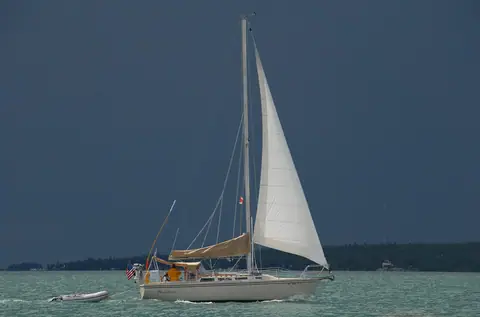
Catalina 30
Cruising Sailboats, 30 ft
Used $8K to $58K
Frequently asked questions
How much does yacht insurance cost per year?
Many well-kept recreational boats pay roughly 1 to 2 percent of hull value per year, but location, use and operator experience move that a lot. Boats kept year-round in Florida or on the Gulf Coast generally pay more because of named storm risk.
Is yacht insurance required by law in the US?
Federal law does not require recreational boat insurance, and most states do not either. In practice, lenders require hull coverage and nearly every marina requires liability coverage, often with the marina named as an additional insured.
What is the difference between agreed value and actual cash value?
Agreed value pays a fixed amount set at the start of the policy for a total loss, while actual cash value pays replacement cost minus depreciation at the time of the loss. Agreed value costs more but removes arguments about what the boat was worth.
Does boat insurance cover hurricane damage?
Most yacht policies do cover named storm damage, but usually with a separate percentage-based deductible and conditions such as an approved hurricane plan or a requirement to keep the boat out of certain areas during the season.
Does yacht insurance cover engine failure?
Usually not on its own, because mechanical breakdown is excluded as wear and tear. Engine damage caused by a covered event such as a sinking, grounding or fire is normally covered.
Can I take my boat to the Bahamas on my US policy?
Often yes, but many policies need a Bahamas endorsement or an expanded cruising area. Confirm in writing before you leave, and check whether the hurricane warranty affects summer cruising there.
Keep reading
The Real Annual Cost of Owning a Yacht
A line-by-line look at annual yacht ownership costs in the US, with worked budgets for four boat sizes and the levers that…
BuyingMarine Surveys Explained, What a Surveyor Checks
What happens during a pre-purchase marine survey, what it costs, how to choose a surveyor, and how to turn the report into a…
BuyingYacht Loans and Boat Financing Guide
A practical guide to yacht loans and boat financing in the US, covering typical 2026 loan structures, what marine lenders check…
OwnershipHow to Winterize a Boat or Yacht
A system-by-system winterizing guide for US boat and yacht owners in freezing climates, covering engines, fuel, plumbing…
BuyingHow to Buy a Used Yacht, Step by Step
A step-by-step walkthrough of buying a used yacht in the US, from setting a real budget to closing, documentation and the first…