Buying
Yacht Loans and Boat Financing Guide
A practical guide to yacht loans and boat financing in the US, covering typical 2026 loan structures, what marine lenders check, how boat age and surveys affect approval, sample payments and the closing process.
On this page
- Why a yacht loan is not just a mortgage on water
- Typical 2026 loan structures by loan size
- What a marine lender actually looks at
- What the payments look like at different terms
- Boat age, the survey and the appraisal problem
- Title, Coast Guard documentation and the preferred mortgage
- From offer to keys, the financing timeline
- Taxes, interest deductions and the cash a loan does not cover
- Alternatives to a traditional marine loan
- Liveaboards, charter boats, LLCs and refinancing
- Five financing mistakes we see repeatedly
- FAQ
Why a yacht loan is not just a mortgage on water
A yacht loan looks like a home mortgage on paper: a fixed or variable rate, a long amortization and a lien on the asset. The difference is the collateral. A house sits still and usually appreciates. A boat moves across state lines, can sink, can be damaged by a hurricane, and loses value almost every year you own it. Marine lenders price and structure loans around those facts, which is why yacht loans and boat financing carry tighter rules on age, condition and use than most buyers expect.
For buyers this means two separate approvals happen at once. The lender approves you (credit, income, liquidity, debt load) and the lender approves the boat (value, age, survey, title, insurance). A strong borrower can still be declined on a 35-year-old trawler with a poor survey, and a modest borrower can get excellent terms on a two-year-old boat with clean paperwork.
Most US boat financing comes from three places: specialist marine lenders and the marine divisions of national banks, credit unions with boat loan programs, and private banks that lend against a client's wider relationship. Dealers and brokers usually have relationships with several marine lenders and will submit your application for you, which is convenient but not the same as shopping the market yourself.
Typical 2026 loan structures by loan size
The table below shows the ranges most US marine lenders work within. These are typical structures, not quotes, and individual programs vary widely. The pattern to remember is simple: bigger loans on newer boats get longer terms, and older or unusual boats get shorter terms and larger down payments.
| Loan amount | Typical term | Typical down payment | Notes |
|---|---|---|---|
| Under $25,000 | 5 to 10 years | 10 to 20 percent | Often an unsecured or personal loan; rates higher than secured marine loans |
| $25,000 to $100,000 | 10 to 15 years | 10 to 20 percent | Standard secured boat loan; state title lien or documented vessel |
| $100,000 to $500,000 | 15 to 20 years | 10 to 20 percent | Most lenders expect a survey on used boats; documentation common |
| $500,000 to $2 million | 15 to 20 years | 15 to 20 percent, sometimes more | Fuller financial review, liquidity requirements, preferred ship mortgage |
| Over $2 million | Custom, often 10 to 20 years | 20 percent or more | Private bank or specialist yacht lender; balloon or interest-only structures possible |
What a marine lender actually looks at
Underwriting a boat loan follows a predictable checklist. Knowing it lets you fix weak spots before you apply rather than after a decline.
- Credit score and history. Strong scores (commonly 700 and up as a rule of thumb) get the best pricing; lower scores can still borrow but at higher rates and with more down.
- Debt-to-income ratio. Lenders add the new boat payment, plus in many cases an estimate of slip and insurance costs, to your existing debts. Many programs want total debt payments below roughly 40 to 45 percent of gross income.
- Liquidity after closing. On larger loans lenders often want to see cash or securities left over after the down payment, a cushion that shows you can carry the boat through a bad year.
- A personal financial statement. Expect to list assets, liabilities and other boats or real estate, and to provide two years of tax returns, especially if you are self-employed.
- The boat itself. Year, make, model, engine hours, purchase price versus market value, and for used boats a recent survey by an accredited marine surveyor.
- Intended use. Private recreational use is the default. Liveaboard, charter and commercial use are often excluded or require a specialist program.
- Where the boat will be kept. Hurricane exposure affects insurance, and the lender will require that insurance be in place before closing.
What the payments look like at different terms
The figures below are illustrative monthly payments for principal and interest only, calculated at three example rates. They are not rate quotes. Use them to see how term length and rate interact, then plug in the actual rate a lender offers you.
The last column is the most important one. On a $250,000 loan at 7.5 percent, stretching from 10 to 20 years drops the payment by roughly $950 a month, but total interest climbs from about $106,000 to about $233,000. On a depreciating asset, a long term also means you can owe more than the boat is worth for several years, which matters if you want to sell or trade up early.
| Amount financed | Term | Payment at 6.5% | Payment at 7.5% | Payment at 8.5% | Total interest at 7.5% |
|---|---|---|---|---|---|
| $100,000 | 10 years | $1,135 | $1,187 | $1,240 | about $42,400 |
| $100,000 | 15 years | $871 | $927 | $985 | about $66,900 |
| $100,000 | 20 years | $746 | $806 | $868 | about $93,300 |
| $250,000 | 10 years | $2,839 | $2,968 | $3,100 | about $106,100 |
| $250,000 | 15 years | $2,178 | $2,318 | $2,462 | about $167,200 |
| $250,000 | 20 years | $1,864 | $2,014 | $2,170 | about $233,400 |
| $500,000 | 15 years | $4,356 | $4,635 | $4,924 | about $334,300 |
| $500,000 | 20 years | $3,728 | $4,028 | $4,339 | about $466,700 |
Boat age, the survey and the appraisal problem
On a used yacht the survey does double duty. It protects you as the buyer, and it gives the lender and the insurer an independent valuation and a list of deficiencies. If the surveyor's fair market value comes in below your contract price, the lender will usually base the loan on the lower number, which means you either renegotiate, bring more cash, or walk away under your survey contingency.
Older boats are financeable, but the box gets smaller. A well-kept 25-year-old Grand Banks or Hallberg-Rassy with a clean survey can still find a lender, often at a shorter term and with 20 percent or more down. A project boat with soft decks, original rigging or tired engines usually cannot, and buyers of those boats tend to pay cash or use other credit. If you are shopping classics, ask your lender for its age cutoff before you fall in love with a hull number.
Surveyor recommendations also come back to haunt you. Lenders and insurers frequently require that safety-related findings (fire suppression, bilge pumps, through-hulls, electrical faults) be corrected within a set period after closing, and they may ask for proof. Budget for that work in addition to the down payment.
Title, Coast Guard documentation and the preferred mortgage
Smaller boats are titled and registered by the state, and the lender's lien is recorded on the state title. Larger boats are often federally documented with the US Coast Guard National Vessel Documentation Center. A vessel must measure at least five net tons to be documented, which in practice covers most cruising boats from the mid-20-foot range upward.
For documented vessels the lender records a preferred ship mortgage with the Coast Guard. This is a powerful federal lien, and it is why many lenders require documentation on larger loans. It also means the title search on a used documented boat matters: an unreleased mortgage from a previous owner, or a maritime lien from unpaid yard work, must be cleared before you close.
Most buyers use a documentation agent or closing company to run the abstract of title, prepare the bill of sale and mortgage, pay off the seller's lender, and file everything. The fee is modest compared with the risk of buying a boat that carries someone else's debt.
From offer to keys, the financing timeline
A typical financed brokerage purchase runs three to six weeks from accepted offer to closing, assuming nothing goes sideways in survey. The order of events matters because each step depends on the last.
- Get pre-qualified before you make offers. It tells you what you can borrow and makes your offer more credible to sellers.
- Sign a purchase and sale agreement with a deposit (commonly 10 percent, held in the broker's escrow account) and contingencies for survey, sea trial and financing.
- Complete the survey and sea trial, then accept the boat, renegotiate or reject it within the contract deadline.
- Submit the survey to your lender and insurer. The insurer issues a binder naming the lender as loss payee.
- The documentation agent runs title, clears liens and prepares closing documents.
- Close, fund and record the lien. Only then does the boat move, and only with insurance active.
Alternatives to a traditional marine loan
A marine loan is not the only way to finance a boat, and for some buyers it is not the cheapest. Each alternative shifts risk somewhere else.
| Option | Works best for | Watch out for |
|---|---|---|
| Home equity loan or line | Older boats lenders will not finance, smaller amounts | Your house becomes the collateral; variable rates on lines |
| Securities-based line of credit | High-net-worth buyers who do not want to sell investments | Margin calls if markets fall; usually variable rate |
| Private bank yacht loan | Loans in the millions, complex ownership | Relationship requirements, assets under management minimums |
| Personal unsecured loan | Small boats and dinghies | Short terms and higher rates |
| Cash purchase | Classic boats, project boats, fast closings | Ties up liquidity; you still need survey and title work |
Liveaboards, charter boats, LLCs and refinancing
If the boat will be your primary residence, say so up front. Many standard programs exclude liveaboard use, and misrepresenting it can void both the loan terms and your insurance. Specialist lenders do finance liveaboards, usually with larger down payments and proof of income that does not depend on the boat.
Charter management boats, common with Caribbean catamarans, are financed under programs that account for charter income and the management contract. Expect the lender to review the charter company as well as you.
Buying through an LLC is common for liability and tax planning, and most yacht lenders accept it, but they almost always require a personal guarantee. The LLC does not shield you from the loan.
Refinancing a boat loan is possible when rates fall, but check the original note for prepayment penalties, which some marine loans carry in the early years. A refinance also typically requires a fresh valuation, and a boat that has depreciated faster than the balance may not qualify.
Five financing mistakes we see repeatedly
Most financing problems are avoidable with a little sequencing and honesty about total cost.
- Choosing the boat by monthly payment instead of total cost of ownership. Annual running costs often equal 10 percent or more of the boat's value, and the lender will not cover them.
- Taking the longest term by default. If you expect to trade up in five years, a 20-year amortization leaves little equity to roll forward.
- Skipping the survey to save time. The lender may require one anyway, and the insurer certainly will on an older boat.
- Letting the dealer arrange financing without comparing. Get at least one independent quote from a marine lender or credit union.
- Forgetting that insurance must be bound before closing. Hurricane zone and boat age can make coverage slow or expensive to obtain.
Models mentioned in this guide
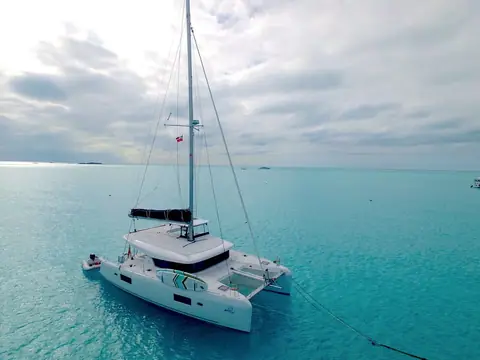
Lagoon 42
Sailing Catamarans, 42 ft
Used $340K to $600K
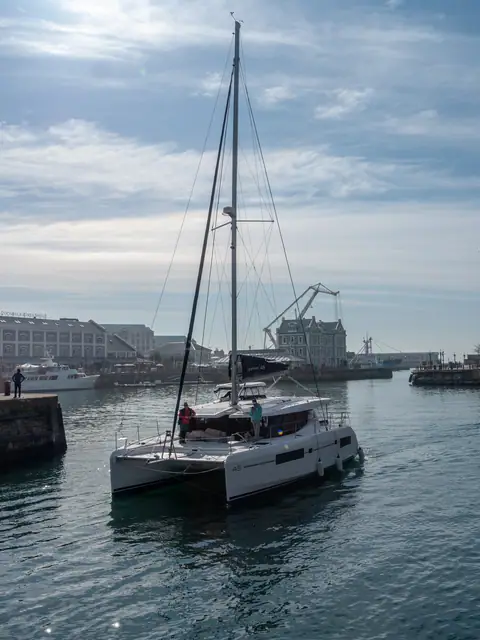
Leopard 45
Sailing Catamarans, 45 ft
Used $380K to $760K
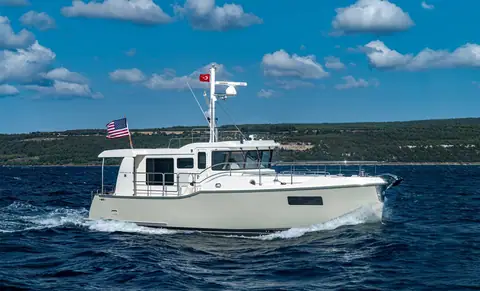
Nordhavn 41
Trawlers & Explorer Yachts, 41 ft
Used $1.15M to $1.75M
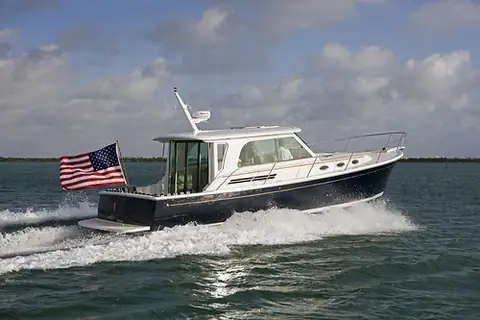
Back Cove 37
Downeast Yachts, 42 ft
Used $300K to $700K
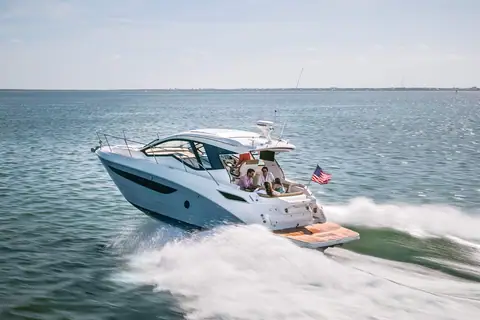
Sea Ray Sundancer 350
Sport Yachts & Express Cruisers, 35 ft
Used $85K to $310K
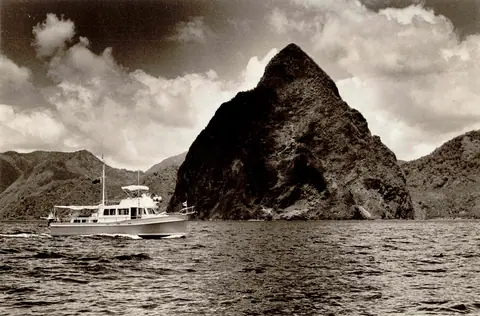
Grand Banks 42 Classic
Trawlers & Explorer Yachts, 43 ft
Used $75K to $360K
Frequently asked questions
How long can you finance a yacht?
Typical marine loan terms run 10 to 20 years in 2026. The longest terms usually go to larger loans on newer boats, while small loans and older boats get shorter terms.
How much down payment do you need for a boat loan?
Most marine lenders ask for 10 to 20 percent down. Older boats, very large loans, liveaboard use and weaker credit can push the requirement to 20 percent or more.
What credit score is needed for a yacht loan?
As a rule of thumb, scores of roughly 700 and up get the best marine loan pricing. Lower scores can still qualify with some lenders, typically at higher rates and with more down.
Can you get a loan on an old boat?
Yes, but options narrow with age. Many lenders shorten terms or require more down on boats older than about 15 to 20 years, and some will not lend past a set age, so a clean survey becomes essential.
Is boat loan interest tax deductible?
It can be if the boat has sleeping, cooking and toilet facilities and qualifies as a second home, and you itemize. Limits apply, so confirm with a tax advisor.
Do I need a survey to finance a used boat?
Most lenders require a recent survey by an accredited surveyor on used boats above modest loan sizes. It also supports the valuation the loan is based on and is usually required for insurance.
Keep reading
How Much Does a Yacht Cost? Prices by Size and Type
Realistic 2026 price ranges for new and used yachts in the US, from 30 ft sailboats to 130 ft superyachts, with the purchase-day…
OwnershipThe Real Annual Cost of Owning a Yacht
A line-by-line look at annual yacht ownership costs in the US, with worked budgets for four boat sizes and the levers that…
BuyingHow to Buy a Used Yacht, Step by Step
A step-by-step walkthrough of buying a used yacht in the US, from setting a real budget to closing, documentation and the first…
BuyingMarine Surveys Explained, What a Surveyor Checks
What happens during a pre-purchase marine survey, what it costs, how to choose a surveyor, and how to turn the report into a…
OwnershipYacht Insurance Guide, Costs and Coverage
A plain-English yacht insurance guide for US owners covering hull and liability coverage, agreed value versus actual cash value…
BuyingNew vs Used Yacht, Which Makes More Sense?
A practical comparison of buying a new versus a used yacht in the US market, with real price gaps from our model pages, the…