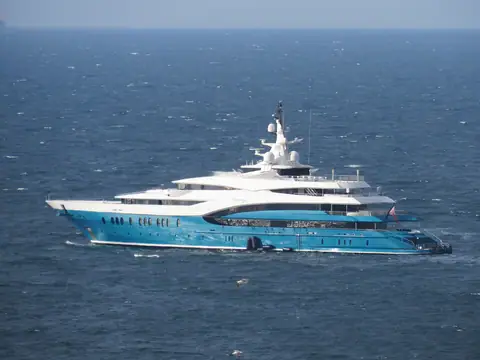
Absolute 47 Fly
Motor Yachts, 48 ft
Used $760K to $1.2M
Motor yachts are the broad middle of the powerboat world: boats of roughly 38 to 90 feet with a full galley, two to five cabins and enough range and comfort to cruise for weeks. In the US the flybridge layout dominates, with an upper helm and lounge above the main saloon, but the category also includes sedans, aft cabin yachts, pilothouse designs and the newer wide-body designs.
Motor Yachts, 48 ft
Used $760K to $1.2M
Motor Yachts, 50 ft
Used $700K to $1.3M
Motor Yachts, 55 ft
Used $650K to $2.4M
Motor Yachts, 58 ft
Used $720K to $2.6M
Motor Yachts, 57 ft
Used $950K to $1.55M
Motor Yachts, 61 ft
Used $1.25M to $3.2M
Motor Yachts, 61 ft
Used $1.45M to $2.1M
Motor Yachts, 49 ft
Used $750K to $1.35M
Motor Yachts, 52 ft
Used $800K to $2.05M
Motor Yachts, 57 ft
Used $1.25M to $2.6M
Motor Yachts, 61 ft
Used $2.4M to $3M
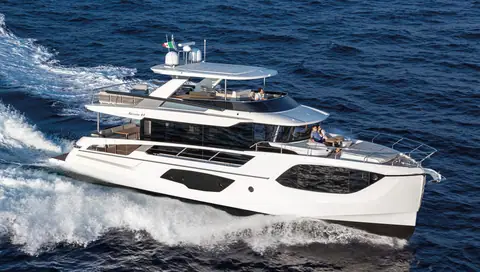
Motor Yachts, 64 ft
Used $2.9M to $3.9M
Motor Yachts, 67 ft
Used $2.5M to $4M
Motor Yachts, 75 ft
Used $3.6M to $5.3M
Motor Yachts, 57 ft
Used $180K to $360K
Motor Yachts, 73 ft
Used $550K to $1.8M
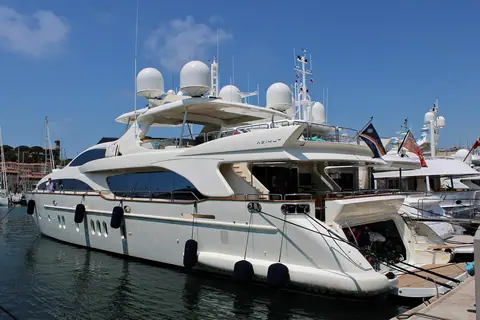
Motor Yachts, 39 ft
Used $280K to $450K
Motor Yachts, 40 ft
Used $140K to $230K
Motor Yachts, 41 ft
Used $180K to $420K
Motor Yachts, 43 ft
Used $130K to $260K
Motor Yachts, 42 ft
Used $230K to $400K
Motor Yachts, 45 ft
Used $340K to $520K
Motor Yachts, 49 ft
Used $170K to $275K
Motor Yachts, 47 ft
Used $330K to $460K
No models match these filters. Clear a filter to see more.
The market splits between European brands such as Princess, Sunseeker, Azimut, Galeon, Prestige and Absolute, and builders with deep US or Pacific roots such as Hatteras, Ocean Alexander, Riviera, Maritimo, Sea Ray and Cruisers Yachts. On the brokerage market, older American boats from Carver, Bayliner, Silverton and Meridian offer an affordable way into a liveaboard-sized yacht.
This page compares layouts, propulsion, running costs and price bands so you can see where each model fits.
Layout determines how you live aboard more than any spec sheet number. The flybridge adds a second helm, a sociable upper deck and better visibility when docking or reading the water. Aft cabin yachts put the master stateroom under a raised aft deck, giving the owner a full-beam suite with privacy. Pilothouse and raised-helm designs prioritize a protected, all-weather helm for serious cruising.
| Layout | Examples we review | Strengths | Compromises |
|---|---|---|---|
| Flybridge | Princess F55, Princess F65, Galeon 500 Fly, Azimut 68, Maritimo M60 | Two helms, big entertaining space, good sightlines | Higher air draft and windage |
| Sedan bridge | Sea Ray 480 Sedan Bridge, Meridian 391 Sedan | Single-level saloon and cockpit, easy boarding | Smaller master suite than an aft cabin |
| Aft cabin | Carver 445 Aft Cabin, Silverton 39 Motor Yacht | Full-beam owner's stateroom, great liveaboard space | Less cockpit space, boxier profile |
| Pilothouse | Bayliner 4788 Pilothouse | Protected helm with good visibility | Steeper stairs between levels |
| Large flybridge yacht | Princess Y85, Sunseeker 76 Yacht, Ocean Alexander 88, Hatteras 70 Motor Yacht | Crew quarters, near-superyacht space | Usually needs professional crew |
| Wide-body planing yacht | Absolute Navetta 64, Sunseeker Manhattan 68 | Full-width saloons and big volume for the length | Heavier for the length, cruising around 20 to 25 knots |
Princess, founded in Plymouth in 1965, and Sunseeker, founded in Poole in 1969, build sharply styled, fast planing yachts with strong engineering and loyal US followings. Azimut and Absolute from Italy lead on interior design and large windows, while Galeon from Poland and Prestige from France offer clever layouts at competitive prices.
Hatteras, based in New Bern, North Carolina, built its reputation on heavily constructed boats that handle the Atlantic, and its older motor yachts remain sought after. Ocean Alexander, with yachts built in Taiwan, focuses on large flybridge motor yachts for the American market. Australia's Riviera and Maritimo design for open-water cruising and have strong dealer networks in Florida. Cruisers Yachts and Sea Ray offer US-built boats with broad service support.
Many motor yachts from about 40 to 65 feet now use pod drives such as Volvo Penta IPS or Cummins Zeus. Pods mount under the hull with forward-facing propellers, improve efficiency at cruising speed, reduce noise and enable joystick docking that transforms maneuvering in tight marinas.
Conventional shafts with inboard engines remain standard on larger yachts and on many owners' preferred older boats. They are simpler, less expensive to service and tolerate a grounding or debris strike better. Pod systems require dealer-level maintenance on a strict schedule, and repairs can be expensive when service intervals are missed.
Most motor yachts in this category are planing designs that cruise in the 20s with top speeds in the high 20s or low 30s. That speed comes at a cost. A twin-diesel 55 to 65 foot flybridge yacht at fast cruise commonly burns several dozen gallons per hour, and running slower than planing speed does not always help, because a planing hull pushing through its own bow wave can be less efficient than when fully on plane.
Owners who plan to cruise long distances at displacement speed should look at semi-displacement designs or trawlers. For weekend trips to the Bahamas or along the Florida coast, a planing yacht's speed lets you pick weather windows and cover more ground in a short trip.
Many experienced owners run boats up to about 60 to 65 feet themselves, especially with joystick docking and good thrusters. Above that, the boat's systems, size and insurance requirements usually point toward a full-time or part-time captain. Insurers often ask for documented experience or a professional for larger yachts.
A captain is a significant cost, but larger yachts such as the Princess Y85, Ocean Alexander 88 and Hatteras 70 are designed with crew quarters for that reason. Factor crew costs into the decision before moving into that size range.
Some of the best values in the US market are older domestic motor yachts. The Bayliner 4788 Pilothouse, Carver 445 Aft Cabin, Silverton 39 Motor Yacht and Meridian 391 Sedan offer large interiors, reasonable fuel burns at modest speeds and plentiful parts support. They are especially popular with liveaboards and Great Loop cruisers.
These boats often need updating, including electronics, upholstery, canvas and sometimes engines, but their purchase prices leave room for that work. A thorough survey with engine oil analysis is essential.
Annual costs for a motor yacht typically include slip fees, insurance, maintenance, fuel, bottom paint and haul-outs. A rough rule of thumb is about 10 percent of the boat's value per year, though older boats and larger yachts can exceed that share. Generators, air conditioning, stabilizers and electronics all need regular service, and gyro stabilizers such as Seakeeper units have their own maintenance schedule.
Budget for the unexpected. Even a well kept yacht can need a major repair, and parts for European brands can take time to arrive.
| Size | New | Used |
|---|---|---|
| 38 to 45 ft | $900,000 to $1,900,000 | $90,000 to $1,300,000 |
| 46 to 55 ft | $1,600,000 to $3,500,000 | $200,000 to $2,800,000 |
| 56 to 70 ft | $3,000,000 to $7,500,000 | $600,000 to $5,500,000 |
| 75 to 90 ft | $7,000,000 to $16,000,000 | $1,800,000 to $11,000,000 |
Typical US asking and sail-away ranges in 2026. Condition, engines and equipment move individual boats well outside these bands.
A flybridge yacht is a motor yacht with an upper helm and deck above the saloon. Motor yacht is the broader term covering flybridge, sedan, aft cabin and pilothouse layouts.
New 50 foot motor yachts from major brands typically cost about $1.8 million to $3 million in 2026. Used 50 footers range from about $250,000 for older domestic boats to well over $2 million for late-model European yachts.
Many experienced owners do, especially with joystick docking and thrusters. Insurers may require documented experience, and above about 65 feet most owners hire a captain.
Pods improve efficiency, reduce noise and make docking easier, but they cost more to maintain and repair. Shafts are simpler and more forgiving of groundings.
Well maintained yachts from strong brands such as Princess, Sunseeker, Riviera, Hatteras and Ocean Alexander tend to hold value better. Documented maintenance matters more than the badge.