Azimut 62 Fly Review, Specs and What the Beach Cockpit Changes
A 63-foot Italian flybridge on Volvo IPS pods whose rear sofa sinks into the deck, turning the cockpit into a sun terrace a step above the sea.
- Length
- 63.1 ft19.22 m
- Beam
- 16.7 ft5.09 m
- Cruise
- 23 kn
- Cabins
- 3 guest cabins plus 1 crew cabin
- Used price
- $3.1M to $3.8M
On this page
- Overview
- The Azimut 62 Fly in one paragraph
- How the Beach Cockpit actually moves
- Mancini lines outside, Fantolino rooms inside
- Three cabins below and a crew berth aft
- IPS1050 or IPS1200, and why the speed claims moved
- Joystick, active trim and a Garmin nerve center
- Azimut Fly 62 price, ownership and resale
- Other Azimut 62s you may find in listings
- Specifications
- Price and value
- Strengths and weaknesses
- Used buyer checklist
- Rivals
- Our verdict
- FAQ
The Azimut Fly 62 (often searched as the Azimut 62 Fly) is a 63-foot IPS flybridge launched in 2024 with a fold-down Beach Cockpit, three en suite cabins, a crew cabin and speeds of up to 30 knots on twin IPS1200s.
- Owner-operators stepping up from a 50-footer
- Families who spend more time at anchor than underway
- Buyers who want pods and joystick docking
- Mediterranean-style stern-to cruising
Azimut Fly 62 by the numbers
- Speed to length ratio at cruise
- 3.10A planing cruise. Fast passages in exchange for much higher fuel burn per mile.
- Horsepower per ton
- 42 hpStrong power to weight for a planing hull.
- Length to beam ratio
- 3.78 : 1A slim, easily driven hull.
The Azimut 62 Fly in one paragraph
Most people type "Azimut 62 Fly", but the builder's own badge reads Fly 62, the eighth model in a Fly Series that now runs from the 53 to the 82. Azimut launched the first hull on July 29, 2024 at its Avigliana plant near Turin and gave it a public debut at the Cannes Yachting Festival that September, followed by a US debut at the Palm Beach International Boat Show in 2025. It is a 63-foot (19.22 meter) flybridge with three guest cabins, a crew cabin aft, and Volvo Penta IPS pods instead of the shaft drives used on the Azimut 60 it effectively replaces.
The headline is not the length or the speed. It is what happens to the aft sofa. Azimut calls it the Beach Cockpit, and it changes how a family uses the boat at anchor more than any spec line does. If you are shopping for an Azimut 62 Fly for sale, that feature is the reason to choose it over a conventional flybridge, and it is also the thing to test hardest on a sea trial.
How the Beach Cockpit actually moves
On most flybridges the cockpit is a box: a dinette faces forward under the flybridge overhang, the transom closes the box off, and the swim platform is a separate room one step down. On the Fly 62 the transom opens outward and, in the same electrically driven movement, the aft sofa's seat base drops into the deck while its backrest folds back. The forward-facing dinette becomes an aft-facing sun pad that sits low, close to the water, with nothing between the saloon and the horizon.
Motor Boat and Yachting pointed out that Azimut gets this result without the hinged hydraulic terraces some yards use, which are heavier, pricier and more things to service. Power and Motoryacht's walk-through put it more simply: it is seating for the table, a sofa and a sunpad, and its editors had not seen anything quite like it. Azimut also offers a Terrace Cockpit general arrangement for buyers who want a more traditional aft deck, so check which version a given hull carries.
Mancini lines outside, Fantolino rooms inside
Alberto Mancini, who styles most of Azimut's current fleet, pushed the superstructure volume forward so the cockpit could grow without the profile losing its sporty rake. He borrowed from automotive SUV design for the forward-leaning masses and drew a new hardtop with hard horizontal lines that echo the long hull windows. Up top, the flybridge splits into a lounge overlooking the stern and a sheltered helm and dining area forward under the hardtop. Forward on the main deck there is a face-to-face lounge with a walkway through the middle, which gives the Fly 62 three distinct outdoor social zones before you count the platform.
Architect Fabio Fantolino, on his second Azimut project, kept the interior deliberately uncluttered: light oak, neutral fabrics, rounded corners for easier movement and big glazing. The main deck is split level, with the galley aft to port, a small coffee and dining spot opposite and the main lounge amidships, so the cook is part of the cockpit conversation.
Three cabins below and a crew berth aft
Below decks Azimut lists three guest cabins and three guest heads, with berths for six, plus one crew cabin with its own head for up to two crew. The layout follows the size class: full-beam owner's suite amidships, VIP in the bow and a twin between them, with the crew quarters in the stern. MarineMax's listing counts four cabins and four heads because it includes the crew space.
That crew cabin matters in the US, where plenty of 60-foot owners run their own boats and use the aft cabin for storage or a day captain. If you plan to hire full-time crew, inspect it on the actual boat rather than a brochure plan.
IPS1050 or IPS1200, and why the speed claims moved
Azimut's current data sheet lists twin Volvo Penta IPS1050 pods at 800 hp each as standard, with twin IPS1200 at 900 hp each as the option. Its published maximum is up to 27 knots on the standard engines and up to 30 knots on the IPS1200s, with cruising speeds up to 23 and 25 knots respectively. Those figures are based on ISO 8666 test conditions.
Launch coverage told a slightly rosier story. Yachting and Motor Boat and Yachting both reported twin 900 hp IPS1200s and a 32-knot top end in 2024, and MBY quoted a claimed 35.3 tonnes, noting that the switch from the Azimut 60's shafts to pods lifted top speed from 31 to 32 knots on the same 900 hp Volvo D13 blocks. Azimut's current sheet instead gives a full-load displacement of 39 tonnes. YachtBuyer lists an IPS1350 option at 1,000 hp each. The safe reading for a buyer is that the Fly 62 is a high-20s to about 30-knot boat at realistic load, and that the exact engine fit varies by hull and market.
Draft is another number that wanders between sources. Yachting quoted 3 feet 5 inches, which matches the hull alone, while Azimut's sheet gives 5 feet 4 inches including the pods at full load. Use the larger figure when planning shallow anchorages in the Bahamas or the Keys.
- Standard: 2 x Volvo Penta IPS1050, 800 hp each, up to 27 knots (builder)
- Option: 2 x Volvo Penta IPS1200, 900 hp each, up to 30 knots (builder)
- Fuel 740 gallons (2,800 liters), water 199 gallons (750 liters)
- Hull deadrise 22 degrees amidships, 17.2 degrees at the stern
Joystick, active trim and a Garmin nerve center
The pods bring Volvo's joystick, which doubles as a heading-hold autopilot: twist briefly for a one-degree course change or hold for ten. Automated interceptors handle trim and also correct the list caused by a crosswind or by everyone gathering on one side of the flybridge. For an owner-operator, that combination is the main reason to prefer this boat over an older shaft-drive 60.
Azimut fits custom Garmin electronics that double as the ship's monitoring system, showing engines, alarms, bilge and discharge pumps, tank levels, engine room ventilation, audio and air conditioning. Both helms see it, and a phone or tablet app gives remote access. That is convenient, but it also means one supplier's software sits between you and most of the boat's systems, so make sure the dealer can support updates.
Azimut Fly 62 price, ownership and resale
Azimut does not publish a US price, and MarineMax, which handles the brand across much of the country, lists the 2026 Fly 62 without one. Based on where comparable Italian and British flybridges in the 62 to 64 foot band sit, expect a realistic sail-away figure of roughly $3.5 million to $4.2 million depending on engines and options. A buyer looking for an Azimut 62 Fly for sale on the brokerage market will find very few so far; YachtBuyer recorded only one listing in the US in its first years.
Running a boat like this typically costs $260,000 to $400,000 a year once you add dockage in South Florida or the Northeast, insurance, IPS service intervals, bottom work, a part-time captain and fuel. Hire full-time crew and the upper figure is the floor rather than the ceiling. Azimut's strong US dealer network and the boat's newness should help resale, but pod-drive service history and documented software updates will matter to the next buyer.
Other Azimut 62s you may find in listings
The name has been used before, which confuses search results. The Azimut 62 flybridge of the early 2000s is a different shaft-drive boat, roughly 64 feet 7 inches overall and tested by Power and Motoryacht in 2003 with twin 900 hp MTU 8V2000 diesels. The Azimut 62S of the mid-2000s is a sport yacht, not a flybridge, tested in 2006 with twin 1,015 hp Caterpillar C18s. Neither shares a hull, a deck or a layout with the Fly 62.
The quickest way to tell them apart in a listing is the year and the drives: anything with shafts and a build year before 2024 is not the current Fly 62, whatever the headline says. The shaft-drive Azimut 60 of the late 2010s is the closest predecessor in concept.
Azimut Fly 62 specifications
| Length overall | 63.1 ft19.22 m |
|---|---|
| Beam | 16.7 ft5.09 m |
| Draft | 5.3 ft1.63 m |
| Displacement | 85,979 lbs39, kg |
| Fuel capacity | 74 gal2,8 L |
| Fresh water | 199 gal75 L |
| Cabins | 3 guest cabins plus 1 crew cabin |
| Berths | 6 guests plus 2 crew |
| Heads | 3 guest heads plus 1 crew head |
| Standard engines | 2 x Volvo Penta IPS1050 (800 hp each) |
| Optional engines | 2 x Volvo Penta IPS1200 (900 hp each) |
| Maximum power | 1,800 hp |
| Cruise speed | 23 knots |
| Top speed | 27 knots |
| Hull type | Planing hull, 22 degrees deadrise amidships and 17.2 degrees at the stern, Volvo Penta IPS pod drives |
| Hull construction | GRP with carbon fiber used in the superstructure and flybridge |
| CE design category | B |
| Builder | Azimut Yachts (Azimut Benetti Group), Italy |
| Naval architect | Azimut R&D Department with MICAD |
| Other design credits | Alberto Mancini (exterior), Fabio Fantolino (interior) |
| Production | 2024 to present |
| Status | In production |
Figures come from builder documentation and independent tests where available. Displacement is usually quoted light, so a loaded cruising boat will weigh more. Compare these specs with another model.
How much does a Azimut Fly 62 cost?
Neither Azimut nor its US dealer MarineMax publishes a list price for the Fly 62, so these are estimates set against comparable 62 to 64 foot Italian and British flybridges. Engine package (IPS1050 versus IPS1200), the Seakeeper, joystick and Garmin upgrades and hardtop specification move the figure most. With only a handful of hulls in the US, a resale market barely exists yet, and early owners selling a 2025 boat will mostly be pricing against a dealer's next delivery slot.
Estimate your yearly cost
A planning estimate using common rules of thumb: insurance near 1.5 percent of value, maintenance near 3 percent, haul out and bottom paint by length. Your marina, region and use will move these numbers. Open the full cost calculator.
Versions and options
- Beach Cockpit arrangement
- The signature layout, with the powered transom and an aft sofa whose base drops into the deck to form a low sun pad facing the sea.
- Terrace Cockpit arrangement
- An alternative main deck plan shown in Azimut's general arrangement drawings, with a more conventional aft deck for owners who prefer fixed seating.
- IPS1050 versus IPS1200
- Standard 800 hp pods for up to 27 knots, or optional 900 hp pods for up to 30 knots according to Azimut's ISO 8666 data.
Azimut Fly 62 timeline
- 2024First hull launched at Avigliana on July 29; world premiere at the Cannes Yachting Festival in September.
- 2024Wins the Best Layout award in the 19.5 to 24 meter class at the World Yachts Trophies, per YachtBuyer.
- 2025American debut at the Palm Beach International Boat Show.
- 2026Shown again at Palm Beach as part of a seven-model Fly Series spanning 53 to 82 feet.
Strengths and weaknesses
What owners like
- Beach Cockpit gives a sea-level lounge without a heavy hydraulic platform
- Three outdoor social zones plus a full flybridge
- IPS pods with joystick and heading hold suit owner-operators
- Separate crew cabin and head aft
- Clean, bright Fantolino interior with galley aft by the cockpit
- Backed by a large US dealer and service network
What to weigh up
- Published speed, weight and draft figures differ between launch and current data
- Only three guest cabins at 63 feet
- No published US price and almost no resale history yet
- Powered cockpit mechanism adds maintenance items
- Pod drives mean dealer-dependent service and software
Used Azimut Fly 62 buyer checklist
Take this list to a viewing. Your ticks are saved in this browser so you can come back to it.
Always commission an independent marine survey and an engine survey before you buy. How a marine survey works.
Rivals to consider
Princess F62
British alternative on shafts with a more conventional cockpit and strong US following.
Absolute 62 Fly
Fellow Italian on Volvo IPS with a strong focus on interior volume and side-deck layout.
Compare side by sideGaleon 640 Fly
Polish-built flybridge with fold-out terraces and a lower price per foot.
Compare side by sideSunseeker Manhattan 64
A British flybridge of similar length, worth comparing on cabin count, crew space and dealer support.
Our verdict on the Azimut Fly 62
The Azimut 62 Fly is the rare new flybridge whose big idea actually changes daily life aboard. The Beach Cockpit turns the stern into a low lounge without the weight and cost of a fold-down terrace, the IPS pods and joystick make a 63-footer manageable for a capable owner, and the crew cabin keeps options open. What holds it back is uncertainty in the published numbers: speeds, weight and draft have shifted between launch coverage and the current data sheet, so judge the boat on your own sea trial with your chosen engines and a realistic load. If the cockpit works for your family, few rivals in this size match it for time spent near the water.
Azimut Fly 62 questions answered
Is the Azimut 62 Fly the same boat as the Fly 62?
Yes. Azimut badges it the Fly 62, but buyers and listings often call it the Azimut 62 Fly. It is the 63-foot IPS flybridge launched in 2024, not the older Azimut 62 of the early 2000s.
How fast is the Azimut Fly 62?
Azimut quotes up to 27 knots with standard IPS1050s and up to 30 knots with optional IPS1200s. Launch reports cited 32 knots, so expect high 20s to about 30 knots at a realistic load.
How much does an Azimut 62 Fly cost?
There is no published US list price. Based on comparable flybridges, a new boat realistically lands between about $3.5 million and $4.2 million depending on engines and options.
How many people can sleep aboard?
Six guests in three en suite cabins, plus up to two crew in a separate aft cabin with its own head.
What is the Beach Cockpit?
A powered arrangement in which the transom opens and the aft sofa folds down into a low sun pad facing the sea, removing the barrier between cockpit and water.
Where is the Fly 62 built?
At Azimut's Avigliana plant in northern Italy, where the first hull was launched in July 2024.
Photos from the Azimut Yachts range
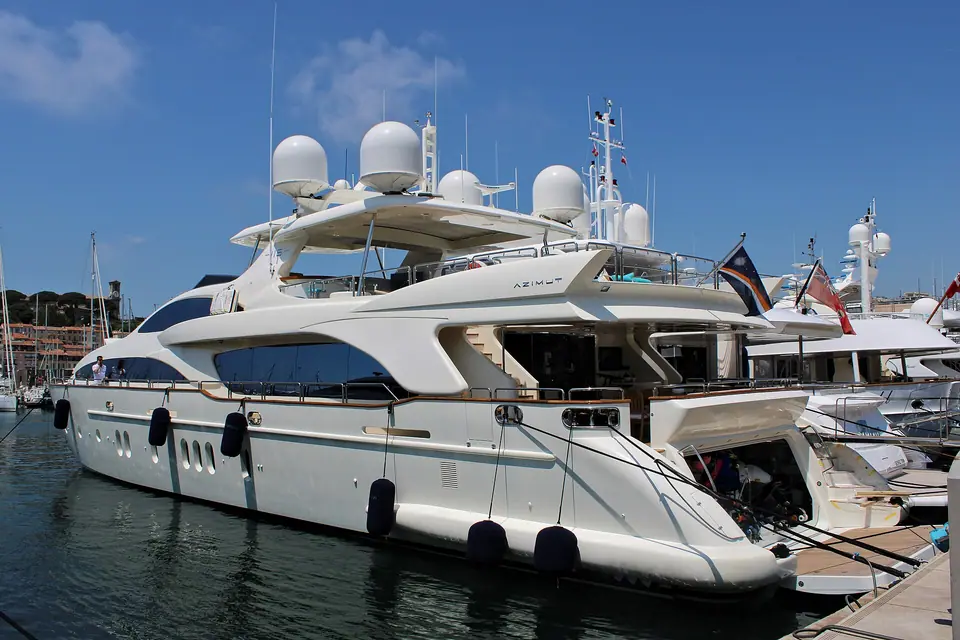
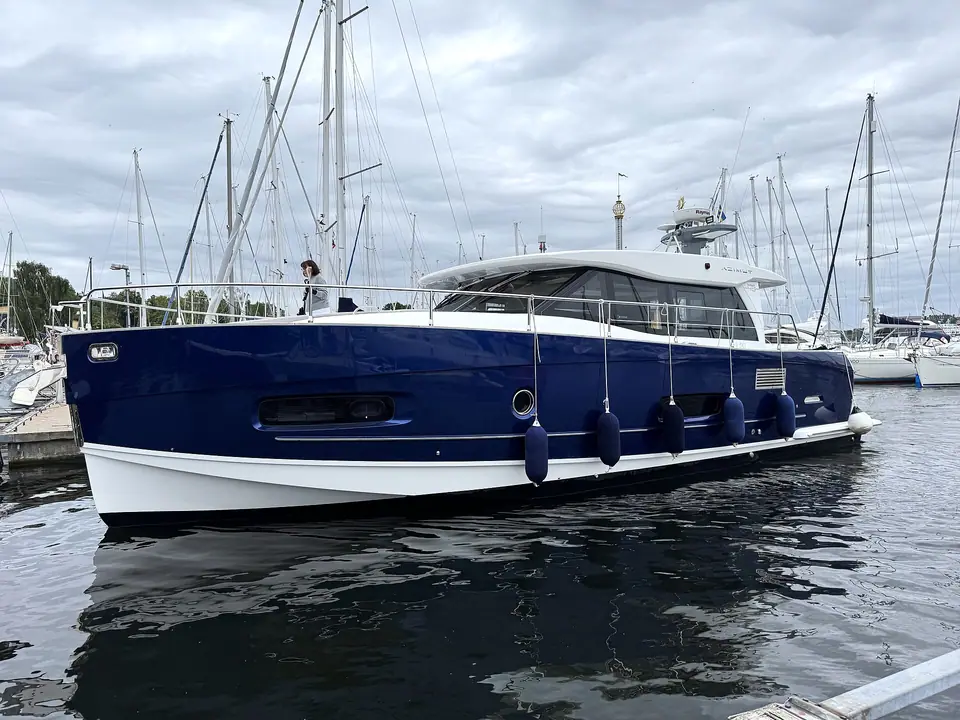
We have not found a freely licensed photo of the Azimut Fly 62 yet, so these show other Azimut Yachts boats, each captioned with the boat pictured.
More motor yachts to explore
Bluegame BGX60
Motor Yachts, 62 ft
Used $2.2M to $3.3M
Maritimo M60
Motor Yachts, 62 ft
Used $2.7M to $3.5M
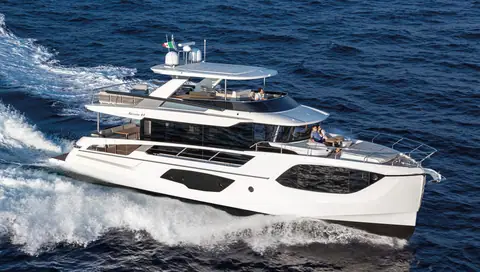
Absolute Navetta 64
Motor Yachts, 64 ft
Used $2.9M to $3.9M
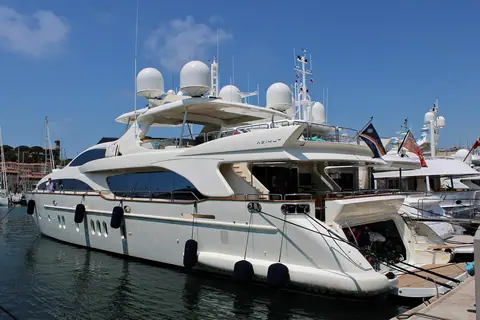
Azimut 62 Flybridge
Motor Yachts, 65 ft
Used $330K to $720K
Other Azimut Yachts models
- Azimut 38
- Azimut 39
- Azimut 40
- Azimut 40S
- Azimut 42
- Azimut 43
- Azimut 43S
- Azimut 45
- Azimut 46
- Azimut 47
- Azimut 48
- Azimut 50 Fly
- Azimut 52 Fly
- Azimut 54
- Azimut 55 Evolution
- Azimut 55 Fly
- Azimut 55S
- Azimut 58 Flybridge
- Azimut 60 Flybridge
- Azimut 62 Flybridge
- Azimut 62S
- Azimut 64 Flybridge
- Azimut 66 Flybridge
- Azimut 68
- Azimut 70 Flybridge
- Azimut 72S
- Azimut 75
- Azimut 77S
- Azimut 80
- Azimut 82
- Azimut 84
- Azimut 85
- Azimut 86S
- Azimut 88
- Azimut 95
- Azimut 98 Leonardo
- Azimut 100 Jumbo
- Azimut 103S
- Azimut 105
- Azimut 116
- Azimut Atlantis 34
- Azimut Atlantis 43
- Azimut Atlantis 44
- Azimut Atlantis 45
- Azimut Atlantis 48
- Azimut Atlantis 50
- Azimut Atlantis 51
- Azimut Atlantis 55
- Azimut Atlantis 58
- Azimut Fly 53
- Azimut Fly 72
- Azimut Fly 78
- Azimut Grande 25 Metri
- Azimut Grande 26M
- Azimut Grande 27 Metri
- Azimut Grande 30 Metri
- Azimut Grande 32 Metri
- Azimut Grande 35 Metri
- Azimut Grande 36M
- Azimut Grande S10
- Azimut Magellano 43
- Azimut Magellano 53
- Azimut Magellano 66
- Azimut Magellano 76
- Azimut S6
- Azimut S7
- Azimut S8
- Azimut Verve 42
- Azimut Verve 47
- All Azimut Yachts models