Azimut 40 Fly Review and Buying Guide
The 2005 Azimut 40 packed a 45-footer's beam and a generous standard spec into a 41-foot flybridge. A narrower 40 followed in the US a few years later.
- Length
- 40.8 ft12.45 m
- Beam
- 13.8 ft4.22 m
- Cruise
- 27 kn
- Cabins
- 2
- Used price
- $180K to $420K
On this page
- Overview
- Azimut 40 or Azimut 40 Fly, two different boats behind one badge
- The 2005 Azimut 40, a 40-footer with a 45-footer's girth
- Standard kit that rival builders put on the options list
- The flaw MBY could not forgive, a fixed lower helm seat
- Resin infusion, a structural liner and a vinylester skin
- 31 knots on 380 hp, and why slower cruising favors the British boats
- The 2011 to 2013 Azimut 40, a narrower boat from a different model list
- Buying an Azimut 40 Fly in 2026
- Specifications
- Price and value
- Strengths and weaknesses
- Used buyer checklist
- Rivals
- Our verdict
- FAQ
The Azimut 40 is a two-cabin flybridge. The 2005 boat has a 13-foot 10-inch beam and twin 380 hp Cummins; a 2011 to 2013 later Azimut 40 is a narrower sister of the Azimut 38.
- Couples wanting maximum space in a 40-foot slip
- Buyers who drive mainly from the flybridge
- Coastal weekend cruising
- Value hunters comparing Italian and British flybridges
Azimut 40 by the numbers
- Speed to length ratio at cruise
- 4.53A planing cruise. Fast passages in exchange for much higher fuel burn per mile.
- Horsepower per ton
- 49 hpStrong power to weight for a planing hull.
- Length to beam ratio
- 2.95 : 1A beamy hull with lots of volume for its length.
Azimut 40 or Azimut 40 Fly, two different boats behind one badge
Type Azimut 40 into a listings site and you will get two boats that share little more than the number. The first is the Azimut 40 flybridge that Motor Boat & Yachting tested as a new boat in its March 2005 issue: 40 feet 10 inches long, an unusually wide 13 feet 10 inches across and powered by twin 380 hp Cummins. The second is a narrower 40-foot 2-inch flybridge that appeared as the Azimut 40 on a separate model list on Azimut's website around 2011, and which YachtBuyer files as the 2011 to 2013 generation. On paper it is the flybridge twin of the Azimut 40S and a close relative of the Azimut 38.
Most of this guide covers the 2005 boat, because it is the one the original Azimut 40 Fly reputation rests on. The later boat gets its own section further down. Before you book a flight, check the beam on the listing: 13 feet 10 inches means the 2005 design, roughly 12 feet 8 inches means the later one.
One more wrinkle: YachtBuyer dates the first generation from 1995 to 2004, which does not square with MBY reviewing the 40 as a brand new model in 2005. Treat any listing's model year with suspicion and confirm it from the hull identification number.
The 2005 Azimut 40, a 40-footer with a 45-footer's girth
MBY's headline for its test was Space Invader, and the reason was obvious from the cockpit. The 4.22-meter beam made the Azimut 40 considerably wider than the 13-foot Fairline Phantom 40 and only 2 inches narrower than the Princess 45. Headroom of 6 feet 4 inches runs through most of the boat, including the owner's cabin, and the tester felt the interior was on a par with longer rivals such as the Princess 42 and Sealine F42/5.
The layout is the familiar twin cabin, twin head arrangement that almost every 40-foot flybridge uses, so Azimut concentrated on details. The galley drawers and lockers are lined with non-slip rubber, there is a three-tier crockery drawer beside the dining table, the cabin doors have rubber seals to stop rattles, and light switches sit at waist height. Azimut also moved away from high-gloss American cherry toward lighter finishes, which keeps the boat feeling less dated than many of its contemporaries.
Standard kit that rival builders put on the options list
The line from MBY's review that owners still quote is that Azimut took their accountants out boating and threw them overboard. The 40 came with power steering, an autopilot, a black water holding tank, a generator and an electrically raised and lowered hi-lo saloon table as standard, plus a fold-out cockpit table that hinges away under the cockpit seats when you get under way.
On deck, oversized mooring bitts in the cockpit corners sit beside multi-directional fairleads, a feature usually reserved for much bigger yachts, and the anchor locker has a chain wash, a separate chain hopper and stainless wear strips beside the cleats. The side decks are 11 inches wide on teak, the flybridge is 30 inches deep around most of its perimeter, and the teak stairs to the bridge have a full-length handrail. Fuel fillers sit inside recessed overflow wells so spills do not stain the teak.
- Power steering and autopilot as standard
- Generator and black water tank included
- Electric hi-lo saloon table and fold-away cockpit table
- Large cockpit bitts with multi-directional fairleads
- Dual Racor filters with changeover valves as an option
The flaw MBY could not forgive, a fixed lower helm seat
For all its generosity, the 40 has one design decision that testers hated: a fixed, non-adjustable lower helm seat. MBY called it baffling on a boat at any price, especially since the Fairline, Sealine and Princess alternatives all offered comfortable adjustable seats. The flybridge seat, by contrast, is large, supportive and on sliders, and the upper dash adds a deep sliding drawer by the helmsman's right leg.
If you mostly drive from the bridge, the issue fades. If you plan to run from the lower station in a Northeast fall, consider budgeting for a replacement seat base. The other notable compromise is that the engine room and lazarette are combined, so there is no separate dry stowage at the stern; Azimut compensated with six cockpit lockers, including dedicated spaces for the fridge, shower and shore power.
Resin infusion, a structural liner and a vinylester skin
Under the gelcoat, the 40 was a step forward for Azimut. MBY reported that the hull was built with vacuum-bagged resin infusion, which promises a more consistent laminate, and that this was the first Azimut to use a fully molded structural hull liner instead of laminated stringers. A vinylester skin coat, more expensive and more resistant to osmosis than standard resin, underpinned a five-year osmosis warranty. The tester rated the build quality as good as it gets.
For a used buyer, that is good news. An infused, vinylester-skinned hull from this period is a better starting point than many hand-laid 40-footers of the same age. It does not remove the need for a survey, but it does mean that hull problems on a 40 are more likely to stem from neglect or poor repairs than from the original lay-up.
31 knots on 380 hp, and why slower cruising favors the British boats
Azimut quoted 31 knots maximum with the pair of 380 hp Cummins, and YachtBuyer lists a 27-knot cruise. MBY could not verify those figures itself, because its test boat had a perspex display floor over the engine room and a malfunctioning trim tab, so its data file used Azimut's numbers. Even so, the magazine judged the hull efficient at high speed, noting that rivals would need bigger engines to match 31 knots.
The flip side is that the 40 cannot escape its bulk at lower speeds. MBY's comparison suggested that if you cruise in the low to mid-20s, the slimmer British boats travel further on each gallon. Handling is comfortable rather than sporty: the tester likened it to a Lexus SUV rather than a sports saloon, with less sharp steering than the Phantom 40 and less of a soft ride than the deeper-V Princess 42. With 291 gallons of fuel, plan for coastal legs.
The 2011 to 2013 Azimut 40, a narrower boat from a different model list
Around 2011 Azimut's website carried a second model list that ran 40, 45, 48, 53 and upward, the same list that showed an Azimut 43 marked for the Brazilian market only, and the Azimut 40 on it was a different boat. Its specification gives 12.24 meters (40 feet 2 inches) overall, a 3.86-meter (12-foot 8-inch) beam, 12.5 tonnes at full load and twin 355 mhp Cummins QSB 5.9 engines on V-drives, for 31 knots maximum and 24 knots cruise at half load. Fuel is 1,100 liters and the hull has 17.9 degrees of deadrise. Those numbers match the Azimut 40S sport yacht almost exactly, and the engines and tankage match the European Azimut 38.
Azimut described this 40 as the boat that opens its flybridge collection, built at the Avigliana yard, with an owner's cabin in the bow, a twin amidships, a private bathroom for each, a dinette that converts to an extra berth and LED lighting throughout. A 2013 example was recently listed on Lake Travis in Texas at $399,000, which is the best current marker for this version.
Buying an Azimut 40 Fly in 2026
For the 2005-era boat, a realistic asking range is about $180,000 to $250,000, with documented Cummins service and a healthy generator worth a premium. The later 2011 to 2013 Azimut 40 typically sits between about $320,000 and $420,000. Annual running costs for either, excluding fuel and depreciation, should land around $30,000 to $55,000 depending on where you keep the boat.
Whichever you choose, run a proper sea trial to full throttle, check that both boats reach their rated rpm, and have a Cummins-trained mechanic review the engines and aftercoolers. On the 2005 boat, spend a few minutes at the lower helm before you buy and decide whether you can live with that seat.
Azimut 40 specifications
| Length overall | 40.8 ft12.45 m |
|---|---|
| Beam | 13.8 ft4.22 m |
| Draft | 3.6 ft1.09 m |
| Displacement | 30,865 lbs14, kg |
| Fuel capacity | 291 gal1,1 L |
| Fresh water | 132 gal5 L |
| Cabins | 2 |
| Berths | 4 plus saloon conversion |
| Heads | 2 |
| Standard engines | 2 x Cummins QSB 5.9, 380 mhp each |
| Maximum power | 760 hp |
| Cruise speed | 27 knots |
| Top speed | 31 knots |
| Hull type | Planing monohull with a wide 13-foot 10-inch beam |
| Hull construction | Resin-infused, vacuum-bagged GRP hull with vinylester skin coat and molded structural liner |
| Builder | Azimut Yachts (Azimut Benetti Group), Italy |
| Naval architect | Azimut in-house, exterior styling and concept by Stefano Righini |
| Other design credits | Carlo Galeazzi (interior) |
| Production | 2005 to present |
| Status | Discontinued |
Figures come from builder documentation and independent tests where available. Displacement is usually quoted light, so a loaded cruising boat will weigh more. Compare these specs with another model.
How much does a Azimut 40 cost?
The range spans two boats. Beamy 2005-era Azimut 40s are estimated at roughly $180,000 to $250,000, while the 2011 to 2013 later Azimut 40, a sister of the Azimut 38, lists higher; a 2013 example on Lake Travis, Texas, was asking $399,000. Engine hours, generator condition and whether the electronics have been updated drive most of the spread within each group.
Estimate your yearly cost
A planning estimate using common rules of thumb: insurance near 1.5 percent of value, maintenance near 3 percent, haul out and bottom paint by length. Your marina, region and use will move these numbers. Open the full cost calculator.
Versions and options
- Azimut 40 (tested 2005)
- 40 feet 10 inches (12.45 m) per MBY, 13-foot 10-inch beam, twin 380 hp Cummins, 31 knots claimed, about 291 gallons of fuel and 132 gallons of water per YachtBuyer, two cabins and two heads.
- Azimut 40, second model list (2011 to 2013)
- 40 feet 2 inches overall, 12-foot 8-inch beam, 12.5 tonnes, twin 355 mhp Cummins QSB 5.9 on V-drives, 31 knots maximum and 24 knots cruise, 1,100 liters of fuel. Flybridge sister of the Azimut 40S and close relative of the Azimut 38.
Azimut 40 timeline
- 2005Motor Boat & Yachting tests the new Azimut 40 in its March issue
- 2007Azimut 43 flybridge enters the range, the next step up in size
- 2009Azimut 38 and 40S introduced on a new, narrower hull
- 2011A second Azimut model list shows a new, narrower Azimut 40 flybridge
- 2013Last model year YachtBuyer lists for the later Azimut 40
Strengths and weaknesses
What owners like
- Huge interior volume for a 40-footer, thanks to a 13-foot 10-inch beam
- Generous standard equipment including generator and autopilot
- Resin-infused hull with vinylester skin coat
- Big-boat mooring hardware and safe side decks
- Efficient at high speed for its power
What to weigh up
- Fixed, non-adjustable lower helm seat
- No separate lazarette
- Less frugal than slimmer rivals in the low 20s
- Two different boats share the name, so listings can mislead
- Handling is comfortable rather than sharp
Used Azimut 40 buyer checklist
Take this list to a viewing. Your ticks are saved in this browser so you can come back to it.
Always commission an independent marine survey and an engine survey before you buy. How a marine survey works.
Rivals to consider
Fairline Phantom 40
Slimmer and lighter, with sharper handling and a separate lazarette.
Compare side by sidePrincess 42
Deeper-V British flybridge with a softer ride and an adjustable helm seat.
Sealine F42/5
Roomy British rival of the same era that MBY rated alongside the Azimut.
Azimut 38
The narrower 2009 successor-era flybridge on the hull shared with the 40S.
Compare side by sideOur verdict on the Azimut 40
The 2005 Azimut 40 is the rare small flybridge that genuinely feels like a bigger boat, and its standard equipment list makes a used example better value than the price suggests. Accept the fixed lower helm seat, the shared engine room and a thirst at moderate speeds, and you get a well-built, spacious, handsome 41-footer for not much more than $200,000. Just be certain which Azimut 40 you are buying: the later later boat is a fine, more modern cruiser, but it is narrower, costs more and belongs to the Azimut 38 family.
Azimut 40 questions answered
How much is an Azimut 40 Fly?
A 2005-era Azimut 40 typically asks about $180,000 to $250,000 in 2026. The 2011 to 2013 later Azimut 40 sits higher, roughly $320,000 to $420,000, and a 2013 boat in Texas was listed at $399,000.
What engines does the Azimut 40 have?
The 2005 boat has twin 380 hp Cummins diesels, listed by YachtBuyer as QSB 5.9 units. The 2011 to 2013 later Azimut 40 uses twin 355 mhp Cummins QSB 5.9 engines on V-drives.
How fast is the Azimut 40?
Azimut quoted 31 knots maximum for both versions. YachtBuyer lists a 27-knot cruise for the 2005 boat, and Azimut gave 24 knots at half load for the later one.
Is a 2012 Azimut 40 Fly the same as the Azimut 38?
They are very close. The 2012 Azimut 40 shares the 38's 355 mhp Cummins engines, 1,100-liter fuel tank and 17.9-degree deadrise, and matches the 40S hull dimensions. Compare the specification sheets of any boat you view.
How big is a 40 foot Azimut inside?
The 2005 Azimut 40 has a 13-foot 10-inch beam and 6 feet 4 inches of headroom in most areas, which MBY felt made it as roomy as some 42-footers.
How many cabins does the Azimut 40 have?
Two cabins, each with its own head, on both versions. The saloon dinette can convert to an extra berth.
Photos from the Azimut Yachts range
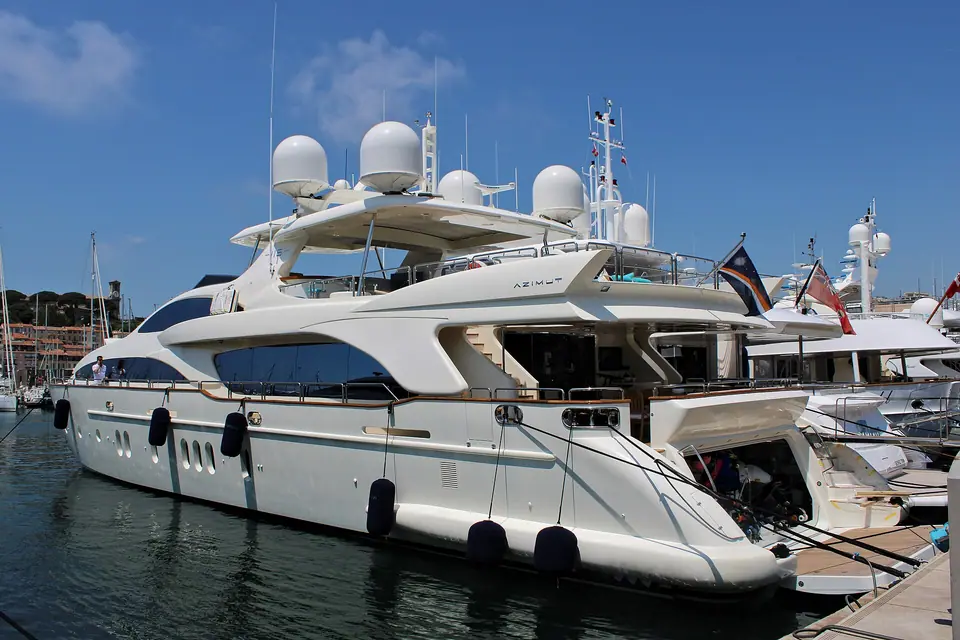
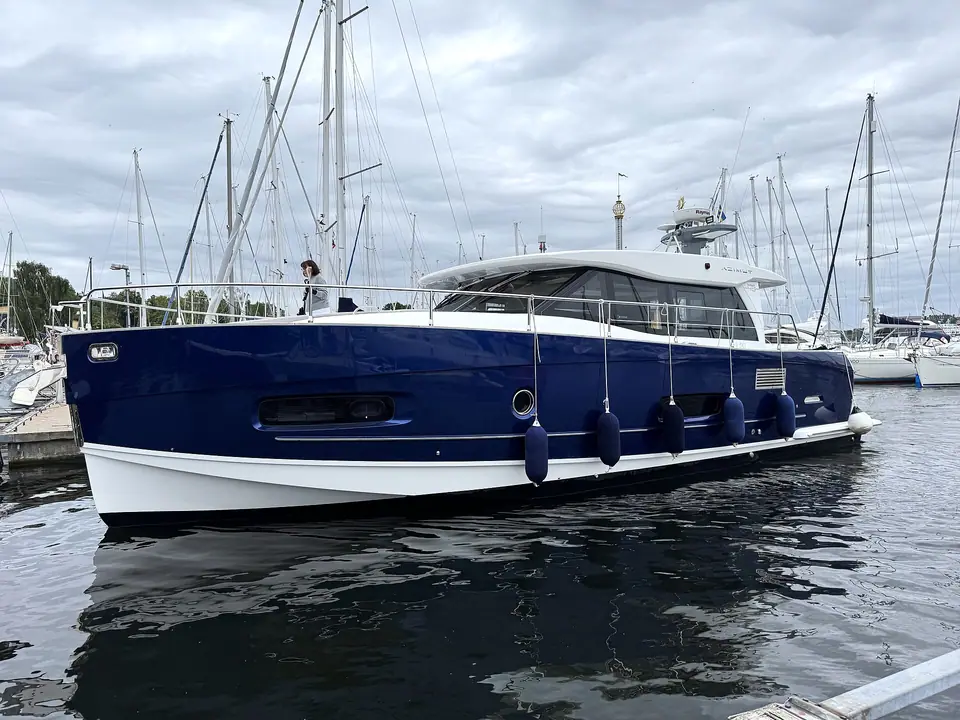
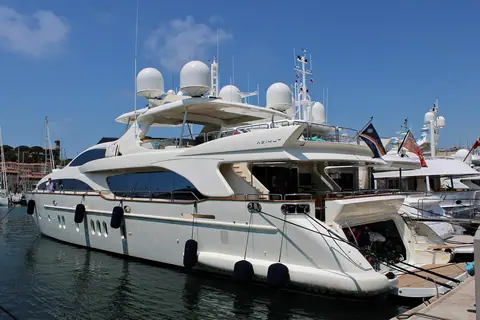
We have not found a freely licensed photo of the Azimut 40 yet, so these show other Azimut Yachts boats, each captioned with the boat pictured.
More motor yachts to explore
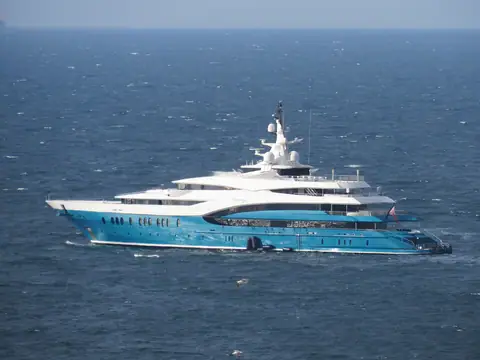
Meridian 391 Sedan
Motor Yachts, 41 ft
Used $165K to $285K
Carver 396 Motor Yacht
Motor Yachts, 41 ft
Used $95K to $155K
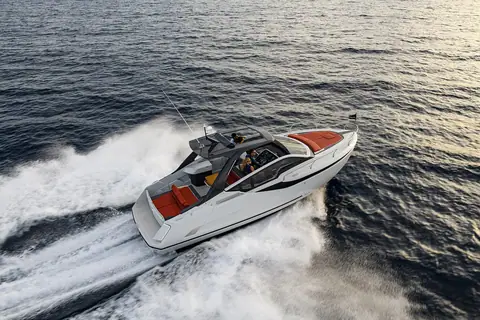
Fairline Phantom 40
Motor Yachts, 41 ft
Used $170K to $320K
Azimut 39
Motor Yachts, 40 ft
Used $140K to $230K
Other Azimut Yachts models
- Azimut 38
- Azimut 39
- Azimut 40S
- Azimut 42
- Azimut 43
- Azimut 43S
- Azimut 45
- Azimut 46
- Azimut 47
- Azimut 48
- Azimut 50 Fly
- Azimut 52 Fly
- Azimut 54
- Azimut 55 Evolution
- Azimut 55 Fly
- Azimut 55S
- Azimut 58 Flybridge
- Azimut 60 Flybridge
- Azimut 62 Flybridge
- Azimut 62S
- Azimut 64 Flybridge
- Azimut 66 Flybridge
- Azimut 68
- Azimut 70 Flybridge
- Azimut 72S
- Azimut 75
- Azimut 77S
- Azimut 80
- Azimut 82
- Azimut 84
- Azimut 85
- Azimut 86S
- Azimut 88
- Azimut 95
- Azimut 98 Leonardo
- Azimut 100 Jumbo
- Azimut 103S
- Azimut 105
- Azimut 116
- Azimut Atlantis 34
- Azimut Atlantis 43
- Azimut Atlantis 44
- Azimut Atlantis 45
- Azimut Atlantis 48
- Azimut Atlantis 50
- Azimut Atlantis 51
- Azimut Atlantis 55
- Azimut Atlantis 58
- Azimut Fly 53
- Azimut Fly 62
- Azimut Fly 72
- Azimut Fly 78
- Azimut Grande 25 Metri
- Azimut Grande 26M
- Azimut Grande 27 Metri
- Azimut Grande 30 Metri
- Azimut Grande 32 Metri
- Azimut Grande 35 Metri
- Azimut Grande 36M
- Azimut Grande S10
- Azimut Magellano 43
- Azimut Magellano 53
- Azimut Magellano 66
- Azimut Magellano 76
- Azimut S6
- Azimut S7
- Azimut S8
- Azimut Verve 42
- Azimut Verve 47
- All Azimut Yachts models