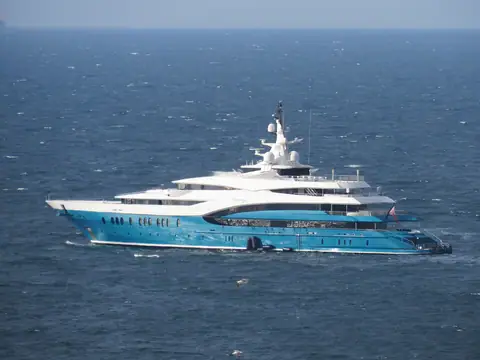
Carver 355 Aft Cabin Motor Yacht
Motor Yachts, 39 ft
Used $35K to $85K
A Midwest builder that made the aft-cabin motor yacht affordable for a generation of Great Lakes and Intracoastal cruisers.
Motor Yachts, 39 ft
Used $35K to $85K
Motor Yachts, 41 ft
Used $95K to $155K
Motor Yachts, 47 ft
Used $130K to $235K
Motor Yachts, 48 ft
Used $120K to $190K
Motor Yachts, 47 ft
Used $165K to $300K
Motor Yachts, 52 ft
Used $200K to $330K
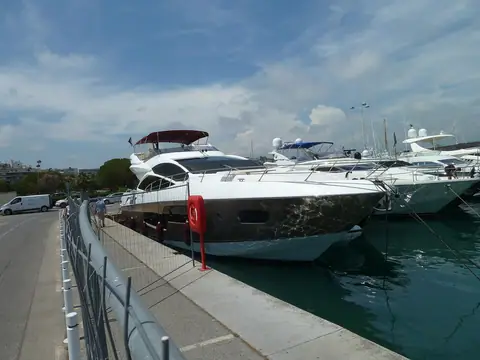
Sport Yachts & Express Cruisers, 38 ft
Used $150K to $265K
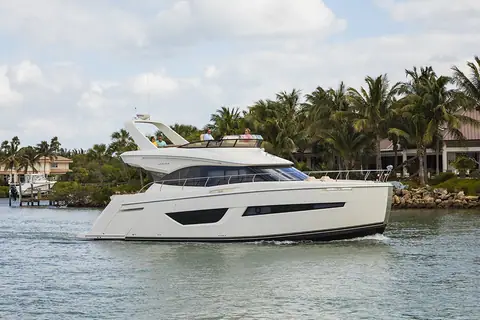
Motor Yachts, 52 ft
Used $800K to $1.25M
Carver built motor yachts and cruisers in Pulaski, Wisconsin from the 1950s until it closed in July 2021. Aft cabins like the 396 and 445 remain affordable, roomy used buys, and the plumb-bowed C52 shows where the brand was heading.
Carver was founded in 1954 in Milwaukee by Charles Carter and George Verhagen, longtime marine industry people who decided to build boats rather than sell them. The name combines the first letters of their surnames. The company began with mahogany runabouts and moved to Pulaski, Wisconsin, where it switched to fiberglass and grew from a regional builder into a national one after Walter Markham and Glen Nordin bought it in 1963.
Genmar acquired Carver in 1991, and Carver launched the Marquis Yachts line in 2004, building more than 100 Marquis 65s between 2005 and 2008. After Genmar's financial troubles the brands became part of the Marquis-Larson Boat Group. Carver closed permanently on July 30, 2021, ending more than 65 years of production in Wisconsin.
Carver's genius was packaging. Its aft-cabin motor yachts put a full-beam master stateroom aft, a raised salon and galley amidships and a guest cabin forward, all under a wide flybridge. Buyers got more living space per foot than almost any rival, at a price well below Hatteras or Ocean Alexander. The trade-off was a tall profile, a lot of windage and a build focused on cost rather than offshore toughness.
We cover three Carvers, two of them classic aft cabins. The Carver 445 Aft Cabin, built from 1996 to 1999, replaced the 440 Aft Cabin, added an integrated swim platform and runs on twin Cummins or Caterpillar diesels on a 15 foot beam. The Carver 396 Motor Yacht, launched for model year 2000, applies the same thinking to a boat of about 40 feet: raised walkdecks free up a full-width great room, and two staterooms each get their own head. It came with big-block gas engines or Cummins and Volvo diesels, and the same hull was later sold as the Carver 39 Motor Yacht. Like most Carvers, both suit lakes, rivers, the Intracoastal and coastal hops better than open-ocean passages, which is exactly how most owners use them.
The third is a very different Carver. The C50 Command Bridge appeared at Yachts Miami Beach in February 2016 and became the C52 within months, which is why our guide is titled Carver C50 / C52 Command Bridge, once a larger swim platform was made standard. Its plumb bow, vacuum-infused hull with a balsa-cored bottom and galley-aft saloon owed nothing to the tall aft cabins, and with optional 600 hp Cummins diesels it topped 30 knots in testing. A bridge-less C52 Coupe followed. These are the newest and most valuable Carvers on the brokerage market, typically asking $800,000 to $1.25 million, while a 396 can be found for around $100,000 to $150,000.
With no factory support since 2021, owners rely on independent yards, used-parts specialists and owner groups. The good news is that Carvers used mainstream engines, generators and hardware, so most mechanical parts remain available. Hull-specific items such as windows, hatches and trim are harder to source, which matters more on a late C52 than on an older aft cabin with a large owner community. Prices reflect all of this: a 445 Aft Cabin typically lists from about $120,000 to $190,000, which buys an enormous amount of boat for the money.
Freshwater Great Lakes boats often present better than saltwater boats of the same age.
No. Carver Yachts closed permanently on July 30, 2021.
Carver built its boats in Pulaski, Wisconsin, after starting in Milwaukee in 1954.
They are roomy, affordable coastal and inland cruisers; they are not built for heavy offshore use, and careful surveys are essential.
Mechanical parts are widely available because Carver used mainstream suppliers, but hull-specific parts can be hard to find.
For the most space per dollar, look at aft cabins such as the 396 Motor Yacht or the 445 Aft Cabin, ideally with diesels. For a modern design, faster cruising and newer construction, the C52 Command Bridge or Coupe costs several times more.