Knowledge
Yacht Sizes Explained, From Small Yachts to Megayachts
Yacht size categories are informal, but the length thresholds behind them are not. This guide explains how yachts are measured, what each size band gets you, and the 26, 40, 65 and 79 foot lines that change equipment rules, crew needs and costs.
On this page
- Three lengths on one boat, LOA, hull length and waterline
- The yacht size ladder at a glance
- The length lines that actually change the rules
- Why a yacht twice as long costs far more than twice as much
- Beam, draft and air draft, the dimensions that decide where you go
- What each size actually buys in comfort and capability
- Meters, feet and why European sizes look odd
- Gross tonnage is volume, not weight
- How to pick the right size without overbuying
- FAQ
Three lengths on one boat, LOA, hull length and waterline
Before comparing yacht sizes, understand that a single boat can honestly be described by three or four different lengths. Length overall (LOA) is the extreme length from the furthest point forward to the furthest point aft. Hull length, defined in the ISO 8666 standard and often written LH, measures the hull itself and excludes removable or bolt-on parts such as bowsprits, pulpits and some swim platforms. Length on the waterline (LWL) is what is actually in the water at rest, and it drives a displacement boat's natural speed and a sailboat's performance.
Builders choose which number goes in the model name, and the name is rarely precise. Our own data shows how far this drifts: the Back Cove 37 is about 42 feet overall, the Kadey-Krogen 44 AE is about 49 feet overall, the Ranger Tugs R-27 is about 31.6 feet, and the Bali Catspace carries no number at all but measures about 40 feet. A sailboat called a 38 can have a 32 foot waterline, while a modern plumb-bowed cruiser of the same name may carry its waterline almost to the ends.
The number that hits your wallet is the one the marina uses, and most marinas bill on overall length including anything that sticks out: bow pulpit, anchor roller, swim platform, outboard brackets and dinghy davits. Measure it yourself with a tape before signing a slip contract.
The yacht size ladder at a glance
The labels in the left column are how brokers and the yacht press commonly use them in the US. They are conventions, not rules, and you will see the boundaries placed a few feet either way.
| Common label | Length | Typical layout | Typical crewing | Example boats we cover |
|---|---|---|---|---|
| Pocket cruiser or small yacht | Under 30 ft (under 9 m) | Single cabin, V-berth, small head | Owner | Ranger Tugs R-23, Catalina 27, Pacific Seacraft Dana 24 |
| Mid-size cruiser | 30 to 40 ft (9 to 12 m) | One or two cabins, one head | Owner | Sea Ray Sundancer 350, Back Cove 34O, Catalina 320 |
| Large cruiser | 40 to 50 ft (12 to 15 m) | Two to four cabins, two heads | Owner and partner | Lagoon 42, Grand Banks 42 Classic, Carver 445 Aft Cabin |
| Large yacht | 50 to 65 ft (15 to 20 m) | Three or four cabins, often a crew cabin | Owner, sometimes a part-time captain | Princess F55, Viking 58, Fleming 55 |
| Very large yacht | 65 to 79 ft (20 to 24 m) | Four cabins plus crew quarters | Captain common, often a mate | Princess F65, Sunseeker Manhattan 68, Viking 72 |
| Superyacht | 79 ft (24 m) and up | Four to six guest cabins, separate crew zone | Full-time professional crew | Princess Y85, Ocean Alexander 88, Westport 112 |
| Megayacht | Roughly 200 ft (60 m) and up | Multiple decks, beach club, often a helipad | 15 or more crew | Custom builds |
| Gigayacht | Roughly 300 ft (90 m) and up | Private ship | 30 or more crew | Custom builds |
The length lines that actually change the rules
Several real thresholds sit inside those informal categories. They come from federal equipment requirements, the navigation rules and international yacht codes, and they are worth knowing before you pick a size.
| Threshold | What changes |
|---|---|
| 8 ft 6 in beam | Maximum width for towing on US highways without an oversize permit in most states; defines trailerable boats |
| 16 ft | US Coast Guard equipment class changes; visual distress signals required on coastal waters from this size up |
| 26 ft | Next Coast Guard equipment bracket, with more fire extinguisher capacity required |
| About 5 net tons | Eligible for federal documentation with the Coast Guard; reached by most cruising boats from the mid-20-foot range up |
| 12 m (39.4 ft) | Navigation rules require a whistle; below this, any efficient sound signal will do |
| 40 ft | Next Coast Guard equipment bracket, up to 65 ft |
| 20 m (65.6 ft) | Navigation rules require both a whistle and a bell; 65 ft is also where many owners first hire a full-time captain |
| 24 m (about 79 ft) | Where large yacht codes for commercial use begin, and the industry's usual superyacht line |
| 500 gross tons | Heavier crew certification and safety management requirements under the main yacht codes |
Why a yacht twice as long costs far more than twice as much
Length is a misleading way to think about cost. A boat's volume and weight grow roughly with the cube of its dimensions, so a yacht that is twice as long, with a proportionally wider beam and deeper hull, can carry several times the displacement, interior volume and systems. Engines, generators, fuel tanks, bottom paint, haul-out fees and insurance all follow weight and value more than length.
A few concrete examples from our own data illustrate the curve. A Catalina 320 sailboat burns well under a gallon an hour under power and sells for $30,000 to $85,000 used. A Back Cove 37 cruises around 23 knots at about 20 gallons per hour. A Princess F65 cruising at 25 knots burns around 72 gallons per hour, and a Hatteras 70 Motor Yacht around 100. None of those boats is even three times the length of the Catalina, yet the fuel bill alone moves by two orders of magnitude.
Dockage is the one cost that does scale closely with length, because marinas price by the foot. Even there, wider boats and catamarans are often charged a premium, and transient rates in popular harbors can be several times what a seasonal slip costs per foot.
Beam, draft and air draft, the dimensions that decide where you go
Length tells you about cost and comfort. The other three dimensions tell you where you can take the boat.
- Beam. Above 8 ft 6 in a boat generally needs an oversize permit to trail. In the water, beam decides which slips fit, and catamarans with beams of 21 to 26 feet often need end ties or double slips.
- Draft. A 4 foot draft opens the Bahamas banks, the Florida Keys backcountry and most of the Intracoastal Waterway. Many bluewater sailboats draw 6 to 7.5 feet, which rules out a lot of cruising ground on the US East and Gulf coasts.
- Air draft. Fixed bridges on the Atlantic Intracoastal Waterway are generally built for 65 feet of vertical clearance, and a few are lower, including the Julia Tuttle Causeway in Miami at 56 feet. On the Great Loop the lowest unavoidable fixed bridge is charted at 19.6 feet. Many cruising sailboats over 45 feet carry masts too tall for the 65 foot standard.
- Displacement. Weight decides which travel lifts can haul you, which matters when you need a yard in a remote harbor.
What each size actually buys in comfort and capability
Under 30 feet you get a weekend boat for two, maybe two plus children. Systems are simple, the boat is often trailerable, and an owner can do much of the maintenance. The compromise is space and motion; small boats are lively in a chop and offer limited storage for long trips.
From 30 to 40 feet, the classic American cruiser range, you gain a second cabin or a proper head with a separate shower, a generator becomes common on powerboats, and coastal cruising for a week or two is comfortable. This is still a size most couples can dock, clean and maintain themselves.
From 40 to 50 feet, couples can live aboard for months. Tankage, refrigeration and battery banks support time away from the dock, and a catamaran in this range has more interior volume than many 55 foot monohulls. Docking takes skill, and many owners add bow and stern thrusters.
From 50 to 65 feet, the boat becomes a small home with guest cabins. Maintenance load rises sharply, and many owners rely on a paid captain for deliveries and a yard for systems work. Above 65 feet, crew stops being optional for most owners, and above 79 feet you are in the superyacht world, with separate crew quarters, professional management and budgets to match.
Meters, feet and why European sizes look odd
European builders increasingly name boats in meters (Azimut Grande 27 Metri, Benetti Oasis 40M) while American builders use feet (Viking 92, Westport 112). One meter is about 3.28 feet, so a quick conversion is to multiply meters by 3.3. A 24 meter yacht is about 79 feet, 30 meters is about 98 feet, 40 meters is about 131 feet and 60 meters is about 197 feet.
Some model names mix systems or use marketing numbers. The Princess Y85 is about 86 feet overall, and the Sunseeker 76 Yacht is a little over 77. When comparing boats, convert everything to overall length in one unit and compare beam and displacement alongside it.
Gross tonnage is volume, not weight
Above roughly 100 feet, yacht people stop talking about length and start talking about gross tonnage (GT). Despite the name, gross tonnage is a measure of enclosed internal volume, not weight. Two 40 meter yachts can differ enormously in GT, one a sleek sport yacht and the other a high-volume explorer with an extra deck.
GT matters because regulatory thresholds use it. The 500 GT line in particular drives crew qualification and safety management requirements, which is why you will see many yachts marketed as just under 500 GT. For buyers comparing large yachts, GT is a better guide to interior space and running cost than length.
How to pick the right size without overbuying
Most owners who move up do so because the boat felt crowded on a few specific trips. Most owners who move down do so because the boat was too much work, cost or stress the rest of the time. Size for the trip you take most often, not the one you dream about once a year.
- Count real overnight guests, not theoretical berths. Two couples need two private cabins and ideally two heads.
- Decide who will dock the boat. If it is you and a partner, a 40 to 50 footer with thrusters is manageable; a 65 footer usually is not without practice.
- Check your home marina for slip availability by length and beam before you shop, especially for catamarans.
- Measure your cruising grounds. Shoal water, bridges and canal locks may cap draft, air draft or beam.
- Price the running costs at the new size, including insurance and haul-out, not just the purchase price.
- Charter a boat of the size you are considering for a week before committing.
Models mentioned in this guide
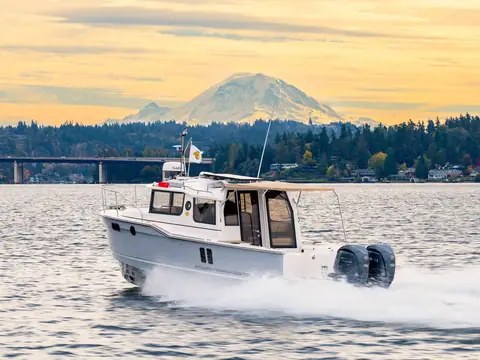
Ranger Tugs R-27
Trawlers & Explorer Yachts, 32 ft
Used $85K to $285K
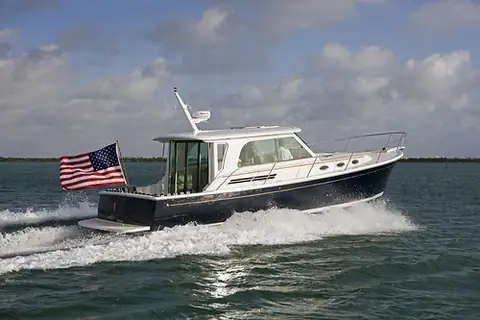
Back Cove 37
Downeast Yachts, 42 ft
Used $300K to $700K
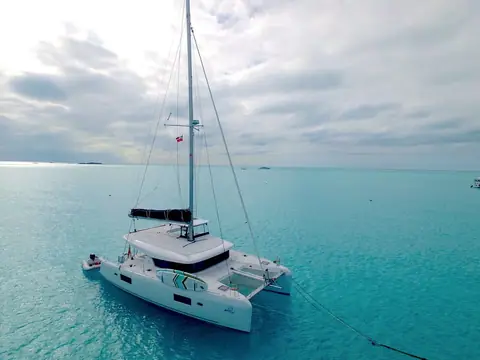
Lagoon 42
Sailing Catamarans, 42 ft
Used $340K to $600K
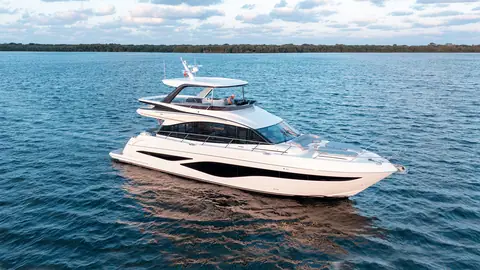
Princess F65
Motor Yachts, 67 ft
Used $2.6M to $3.9M
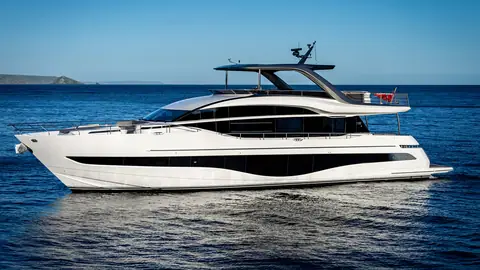
Princess Y85
Motor Yachts, 86 ft
Used $4.8M to $7M
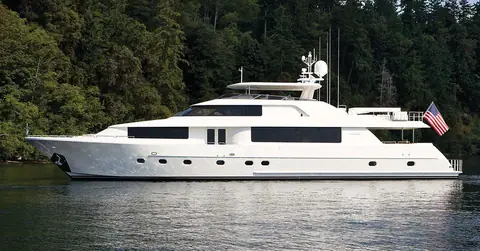
Westport 112
Superyachts, 112 ft
Used $3.2M to $9.5M
Frequently asked questions
What size boat is considered a yacht?
There is no legal cutoff. In US usage most people start calling a boat a yacht at around 40 feet with overnight accommodation, and the industry's superyacht line sits at 24 meters, about 79 feet.
What is the difference between a superyacht and a megayacht?
Superyacht generally means a professionally crewed yacht of 24 meters (79 feet) or more. Megayacht is an informal term for the largest of them, usually around 60 meters (200 feet) and up.
How is yacht length measured?
Length overall (LOA) is the extreme length including fixed parts. Hull length under ISO 8666 excludes bolt-on items, and waterline length is what sits in the water. Marinas usually bill on overall length including pulpits and platforms.
What size yacht needs a crew?
Many owners run boats up to 50 or 60 feet themselves. From about 65 feet a captain becomes common, and above 79 feet a full-time professional crew is the norm.
How big is a 24 meter yacht in feet?
A 24 meter yacht is about 79 feet long. Multiply meters by roughly 3.28 to convert to feet.
What is the best yacht size for a couple?
For most couples, 38 to 48 feet is the practical sweet spot. That range gives a private cabin, good tankage for extended cruising and a boat two people can still dock and maintain.
Keep reading
What Is a Superyacht? Size, Cost and Crew
A superyacht is a large, professionally crewed private yacht, generally 24 meters (79 feet) and up in industry usage, though…
KnowledgeTypes of Yachts Explained
A plain-English map of the main types of yachts sold in the US, from sailboats and catamarans to trawlers, sportfish…
KnowledgeYacht vs Boat, What Is the Difference?
There is no single legal line between a boat and a yacht. This guide explains how the industry, insurers, lenders, regulators…
BuyingHow Much Does a Yacht Cost? Prices by Size and Type
Realistic 2026 price ranges for new and used yachts in the US, from 30 ft sailboats to 130 ft superyachts, with the purchase-day…
KnowledgeThe Largest Yachts in the World
A ranked look at the largest private motor and sailing yachts in the world by overall length, who built them, how length and…
KnowledgeBoating Terminology, 150 Terms Every Owner Should Know
A themed glossary of boating terminology for new and experienced owners, grouped by hull, deck, lines, sails, engines…