Cape Dory Yachts Bluewater Sailboats
Cape Dory 36 Review, Specs and Ownership Guide
Carl Alberg's classic full-keel cutter, built in Massachusetts from 1978 to 1990 and later reborn in Maine as the Robinhood 36.
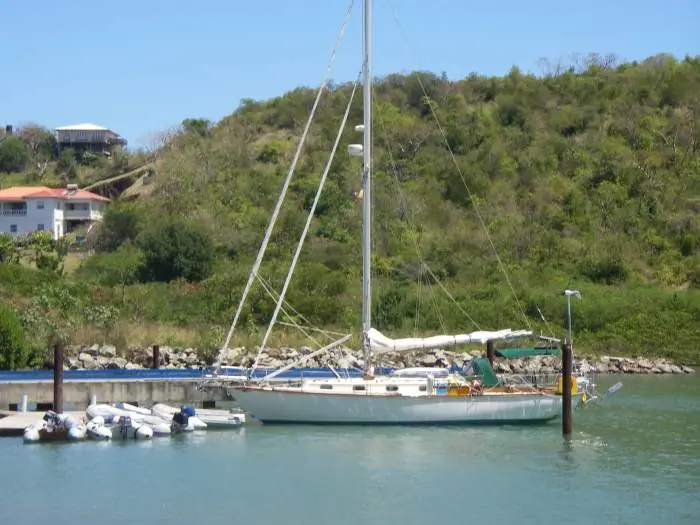
- Length
- 36.1 ft11.01 m
- Beam
- 10.7 ft3.25 m
- Draft
- 5 ft1.52 m
- Cabins
- 1 plus quarter berth
- Used price
- $35K to $95K
On this page
- Overview
- Carl Alberg's big Cape Dory and how it outlived its builder
- Nine feet of overhang on a 36 foot hull
- A club-footed staysail and a heavily stayed mast
- What it does well at sea, and where it struggles
- The hull 71 dividing line
- A cabin for two, with room for guests
- Living with the Perkins 4-108
- Turning a coastal Cape Dory 36 into an ocean boat
- Deck, rudder and the rest of the survey
- Specifications
- Price and value
- Strengths and weaknesses
- Used buyer checklist
- Rivals
- Our verdict
- FAQ
A 36-foot Alberg-designed full-keel cutter, 165 built by Cape Dory Yachts from 1978 to 1990. Handsome, steady and well finished, slow to windward, with a known chainplate detail on early hulls.
- Couples cruising the East Coast and Bahamas
- Traditionalists who value looks and joinery
- First bluewater boat on a moderate budget
Carl Alberg's big Cape Dory and how it outlived its builder
Andrew Vavolotis founded Cape Dory Yachts in 1963 to build small dories, and through the 1970s the company grew into New England's best-known builder of traditional fiberglass cruisers, most of them drawn by Carl Alberg. The Cape Dory 36 arrived in 1978 as the flagship of that family, and Cape Dory built about 165 of them over the next 12 years.
When Cape Dory closed in 1991, the molds went to Robinhood Marine in Georgetown, Maine, which continued the boat as the Robinhood 36 in small numbers. Those later hulls are rare and priced at a premium. The Cape Dory 36 itself has a quiet but serious offshore record, with countless ocean miles and at least a couple of circumnavigations to its name.
Cape Dory 36 by the numbers
- Sail area to displacement
- 15.6A cruising rig sized for comfort, so expect to motor in very light air.
- Displacement to length
- 365Heavy displacement. Slow to accelerate but steady and sea kindly with a full load.
- Theoretical hull speed
- 7.0 knThe practical top speed of a displacement monohull under normal sailing, based on waterline length.
- Ballast ratio
- 38%A typical ballast ratio for a cruising monohull.
- Capsize screening
- 1.69Below 2.0, the traditional threshold for offshore suitability.
- Motion comfort ratio
- 35.7A slow, easy motion in a seaway, kind to crews on long passages.
- Length to beam ratio
- 3.39 : 1Moderate proportions.
Nine feet of overhang on a 36 foot hull
Alberg drew the boat with a 27 foot waterline on 36 feet overall, about 75 percent, leaving roughly 9 feet in overhangs. At rest that looks elegant. Heeled, the overhangs immerse and add sailing length, which is how these older designs get more speed than the static waterline suggests. Hull speed is still only about 7 knots.
Displacement is 16,100 pounds with 6,050 pounds of ballast, a ballast ratio near 38 percent. The displacement to length ratio is about 356 to 365 depending on the waterline used, the sail area to displacement ratio about 15.6, the comfort ratio about 36 and the capsize screening number about 1.69. The keel is a full keel with a cutaway forefoot, the rudder hangs on the keel and the propeller turns in an aperture, well protected from lobster pots and lines.
- Ballast cast in two pieces, set inside the keel cavity and glassed over
- Hull laid up by hand in a rotating one-piece mold
- Hull-to-deck joint on a 3 inch inward flange, through-bolted on 12 inch centers
A club-footed staysail and a heavily stayed mast
Most Cape Dory 36s are cutters with a club-footed staysail, though some sloops were built. The keel-stepped, single-spreader mast is heavily stayed, with a foretriangle of about 42 by 15.5 feet and a main of about 37 by 16 feet. Total working area is around 622 square feet.
The club-footed staysail is self-tending, so short tacking up a channel means only steering and handling the main. The downside is a heavy boom swinging across the foredeck. Many owners have added a roller-furling genoa and a furling staysail, which is the most practical setup for a couple.
What it does well at sea, and where it struggles
The Cape Dory 36 tracks beautifully, resists pounding and heaves to well, three qualities that matter more on an ocean crossing than a few tenths of a knot. Its motion in a seaway is slow and easy.
It is not a close-winded boat. Wide sheeting angles and the long keel keep it from pointing as high as a fin keel cruiser, and in a breeze it can develop considerable weather helm, which reefing the main early largely cures. In light air it is slow, and in reverse it goes where it wants. Pay attention in tight marinas.
The hull 71 dividing line
On early boats the chainplates were attached to a mild steel web glassed to the hull. Mild steel rusts, and over decades that web can corrode badly inside the glass where you cannot see it. From about hull 71 Cape Dory switched to an aluminum angle bar glassed to the hull below the deck flange.
If you are looking at an early hull, ask whether the chainplate structure has been opened up and repaired, and budget for it if not. This single detail is worth more on survey than the varnish or the cushions.
A cabin for two, with room for guests
Below decks the layout is classic Cape Dory: a V-berth forward with a big overhead hatch and opening ports, a head to port with a hanging locker, an L-shaped settee to port and a straight settee to starboard in the saloon, and a galley aft with two large sinks, a three-burner stove and a small refrigerator. The nav station and quarter berth are to starboard.
Headroom is about 6 feet 4 inches. The joinery is solid teak, finished to the standard that made Cape Dory famous, and on deck you get wide side decks, long teak handrails on the cabin house and a stout teak toerail. Water capacity is generous for the size.
Living with the Perkins 4-108
The standard engine on the Cape Dory 36 was the Perkins 4-108, a 50 hp four-cylinder diesel tucked behind the companionway with just enough room to work. It is a famously durable engine with a famous flaw: it leaks oil from numerous places, the timing cover being a common offender. Parts are still available, and a good rebuild is often cheaper than a repower.
When it is time to replace it, many owners fit a modern 40 hp class diesel. One Practical Sailor contributor rebuilding his 36 sold the Perkins on Craigslist for $2,000, filled in the prop aperture and sailed without an inboard for five years, logging about 8,000 offshore miles. The fuel tank is fiberglass, which avoids the corroded-tank headache of many rivals, though some owners have swapped in aluminum.
Turning a coastal Cape Dory 36 into an ocean boat
Most Cape Dory 36s spent their lives cruising Maine, Long Island Sound and the Chesapeake, so a typical listing is set up for weekends rather than oceans. The hull needs little; the equipment list is where the money goes. Expect to spend $25,000 to $50,000 on a boat that has never been offshore, and more if the rig and engine are original.
Start with the rig, because a 35 to 45 year old mast step, chainplates and standing rigging are the items most likely to end a passage early. Then add steering, power and water management, in that order. The long keel and steady tracking make the 36 an easy boat for a wind vane, which is the best single upgrade for a couple on watch.
- New standing rigging, chainplates inspected or replaced, and a furling genoa and staysail
- A wind vane plus a below-decks or wheel autopilot for motoring
- Lithium or AGM house bank, larger alternator and solar
- A second high-capacity bilge pump and a manual pump operable from the helm
- Lee cloths for the settees, which make excellent sea berths
Deck, rudder and the rest of the survey
The balsa-cored deck is the most common problem. Hardware was mounted on solid or plywood reinforcement in high-load areas, but water finds its way into the balsa around poorly sealed fittings. Rudder delamination is the second known issue; the rudder is fiberglass on a 1.5 inch stock.
Asking prices typically run $35,000 to $95,000 on the US market, and annual costs of $6,500 to $14,000 cover insurance, a 36 to 38 foot slip and routine maintenance. Because the boat sits on a full keel with an aperture prop, haul-out and blocking are straightforward at any yard.
Cape Dory 36 specifications
| Length overall | 36.1 ft11.01 m |
|---|---|
| Waterline length | 27 ft8.23 m |
| Beam | 10.7 ft3.25 m |
| Draft | 5 ft1.52 m |
| Displacement | 16,1 lbs7,303 kg |
| Ballast | 6,05 lbs2,744 kg |
| Sail area | 622 sq ft57.8 m² |
| Fuel capacity | 43 gal163 L |
| Fresh water | 132 gal5 L |
| Cabins | 1 plus quarter berth |
| Berths | 5 to 6 |
| Heads | 1 |
| Standard engines | Perkins 4-108 four-cylinder diesel, 50 hp |
| Maximum power | 50 hp |
| Hull type | Traditional full-keel monohull with long overhangs |
| Keel | Full keel with cutaway forefoot, internal encapsulated ballast, attached rudder and propeller aperture |
| Rig | Masthead cutter with club-footed staysail (some sloops), keel-stepped single-spreader mast |
| Hull construction | Solid hand-laid fiberglass hull; balsa-cored deck with solid or plywood reinforcement under hardware |
| Builder | Cape Dory Yachts (later Robinhood Marine as the Robinhood 36), United States |
| Naval architect | Carl Alberg |
| Production | 1978 to 1990 |
| Status | Discontinued |
Figures come from builder documentation and independent tests where available. Displacement is usually quoted light, so a loaded cruising boat will weigh more. Compare these specs with another model.
How much does a Cape Dory 36 cost?
Recent asks have ranged from $39,500 for a 1983 boat in Maryland to $80,000 for a 1990 boat in Maine. A later Robinhood 36 from the Maine yard asked $112,000, showing the premium for the post-Cape Dory boats. Within the Cape Dory run, hull number above 71, a repower or rebuilt Perkins, and a dry deck matter more than model year.
Estimate your yearly cost
A planning estimate using common rules of thumb: insurance near 1.5 percent of value, maintenance near 3 percent, haul out and bottom paint by length. Your marina, region and use will move these numbers. Open the full cost calculator.
Versions and options
- Cutter
- The standard rig with club-footed staysail, the configuration most buyers want.
- Sloop
- A smaller number were built as sloops, simpler but with fewer heavy weather options.
- Robinhood 36
- Built from the same molds by Robinhood Marine in Maine after 1991, in small numbers, with updated systems and a higher price.
Cape Dory 36 timeline
- 1963Andrew Vavolotis founds Cape Dory Yachts
- 1978Cape Dory 36 introduced as the company's flagship cruiser
- 1990Production ends after about 165 hulls
- 1991Cape Dory closes and the molds move to Robinhood Marine in Maine
Strengths and weaknesses
What owners like
- Classic Alberg looks and quality teak joinery
- Excellent tracking, easy motion and good heaving-to manners
- Protected propeller and attached rudder for cruising in lobster country
- Fiberglass fuel tank avoids corrosion problems
- Strong owner community and good parts knowledge
- Reasonable prices for a proven bluewater design
What to weigh up
- Slow in light air and not close-winded
- Weather helm in a breeze
- Mild steel chainplate web on hulls before about 71
- Balsa-cored deck prone to wet spots
- Poor handling in reverse
Used Cape Dory 36 buyer checklist
Take this list to a viewing. Your ticks are saved in this browser so you can come back to it.
Always commission an independent marine survey and an engine survey before you buy. How a marine survey works.
Rivals to consider
Pacific Seacraft 37
Faster and higher stability with a fin keel, but more expensive and smaller below.
Compare side by sideWestsail 32
Heavier and cheaper, with a bigger interior for its length but slower and less refined.
Compare side by sideTartan 37
A Sparkman and Stephens performance cruiser that is much faster to windward but less traditional.
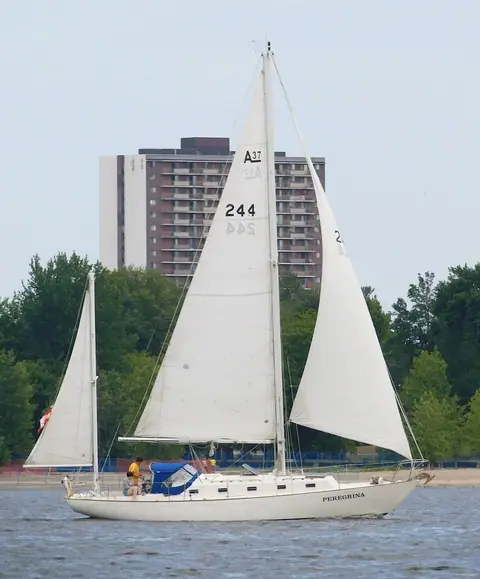
Compare side by sideAlberg 37
Alberg's Canadian-built yawl and sloop design, with similar proportions and lower prices.
Compare side by sideOur verdict on the Cape Dory 36
The Cape Dory 36 is a handsome, honest offshore cruiser for people who prize motion comfort and good joinery over speed. It will not win races or point with modern boats, but it tracks, heaves to and looks after its crew. Buy a later hull with the aluminum chainplate detail, a dry deck and a healthy or replaced Perkins, and you have a capable bluewater boat at a sensible price.
Cape Dory 36 questions answered
How much is a Cape Dory 36 for sale?
Most Cape Dory 36s ask between $35,000 and $95,000. Later Robinhood 36 versions have asked over $110,000.
Who designed the Cape Dory 36?
Carl Alberg designed it, and Cape Dory Yachts built about 165 from 1978 to 1990.
What engine is in a Cape Dory 36?
The standard engine is a 50 hp Perkins 4-108 diesel. Many boats have since been repowered.
Is the Cape Dory 36 a bluewater boat?
Yes. It has crossed oceans and completed circumnavigations, and its full keel and easy motion suit offshore work.
What is the Cape Dory 36 chainplate issue?
Hulls before about 71 used a mild steel web for chainplate attachment that can rust inside the glass. Later hulls used aluminum angle.
Cape Dory 36 photos
More bluewater sailboats to explore
Tayana 37
Bluewater Sailboats, 37 ft
Used $30K to $110K
Pacific Seacraft 37
Bluewater Sailboats, 37 ft
Used $70K to $260K
Hallberg-Rassy 36
Bluewater Sailboats, 37 ft
Used $75K to $165K
Alberg 37
Bluewater Sailboats, 37 ft
Used $20K to $65K