Contessa (Jeremy Rogers) Bluewater Sailboats
Contessa 32, the Small Boat That Finished the 1979 Fastnet
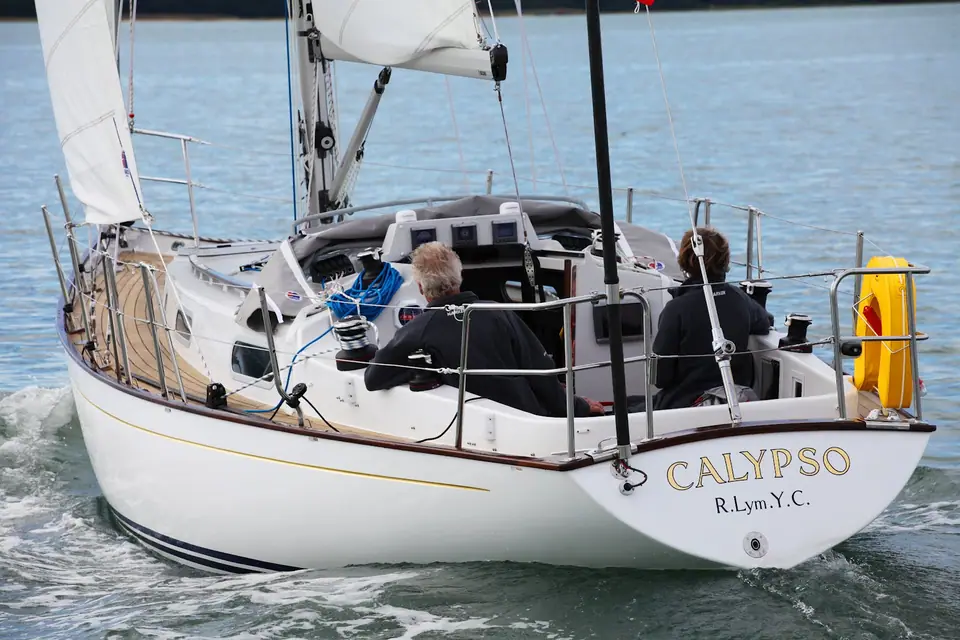
David Sadler's narrow, deep-keeled 32 footer, the only boat in its class to finish the 1979 Fastnet and still built to order in Lymington.
- Length
- 32 ft9.75 m
- Beam
- 9.5 ft2.9 m
- Draft
- 5.5 ft1.68 m
- Cabins
- 1 plus saloon
- Used price
- $25K to $85K
On this page
- Overview
- Assent and the 1979 Fastnet, the race that defined a boat
- David Sadler's refusal to design to a rule
- Close to fifty percent ballast in a narrow hull
- Tight, wet and quick to windward
- Living inside nine and a half feet of beam
- Rogers boats from Lymington versus Taylor boats from Ontario
- Small tanks, small engines and simple systems
- The corrosion points that sink a survey
- Voyages that keep the legend current
- Specifications
- Price and value
- Strengths and weaknesses
- Used buyer checklist
- Rivals
- Our verdict
- FAQ
A 32-foot fin keel cruiser-racer designed by David Sadler in 1970, over 700 built by Jeremy Rogers plus 87 by J.J. Taylor in Canada. Exceptional stability and sea manners in a tight, wet, simple package.
- Singlehanded and short-handed offshore sailors
- Club racers who also cruise
- Sailors who value seaworthiness over space
- Budget ocean voyagers
Contessa 32 by the numbers
- Sail area to displacement
- 20.0Plenty of sail for the weight, the boat should feel lively in light air.
- Displacement to length
- 307Heavy displacement. Slow to accelerate but steady and sea kindly with a full load.
- Theoretical hull speed
- 6.6 knThe practical top speed of a displacement monohull under normal sailing, based on waterline length.
- Ballast ratio
- 47%A high ballast ratio, so the boat stands up well to a breeze.
- Capsize screening
- 1.79Below 2.0, the traditional threshold for offshore suitability.
- Motion comfort ratio
- 27.8Moderate motion comfort, typical of modern cruisers.
- Length to beam ratio
- 3.37 : 1Moderate proportions.
Assent and the 1979 Fastnet, the race that defined a boat
The Contessa 32's reputation was made in a single night. In the 1979 Fastnet, a storm capsized about a quarter of the 303 starters and 15 people died. Of 58 boats in the smallest class, only one finished: the Contessa 32 Assent, owned by Willy Ker and sailed by his son Alan. She was knocked down past horizontal and righted herself in about ten seconds.
Willy Ker went on to sail Assent more than 100,000 miles, often singlehanded, through the Arctic, Antarctica, Easter Island and Hawaii. The Fastnet inquiry that followed reshaped thinking about stability in offshore yachts, and the Contessa 32 became the reference boat for what a small, seaworthy yacht looks like.
David Sadler's refusal to design to a rule
Sadler drew the 32 in 1969 and 1970 as a bigger sister to his successful Contessa 26. Hull number one, Contessa Catherine, was built for Sadler himself in 1970, and a new boat sold for 5,950 pounds in 1971. The racing world was moving from the RORC rule to the IOR, and Sadler and builder Jeremy Rogers deliberately chose not to shape the boat to either.
That decision aged well. IOR boats of the era, pinched and tender, became obsolete as soon as the rule changed. The Contessa 32 kept racing under IMS, IRC and ORC, still has its own class at Cowes Week, and has been called the most successful one-design cruiser-racer of all time.
Close to fifty percent ballast in a narrow hull
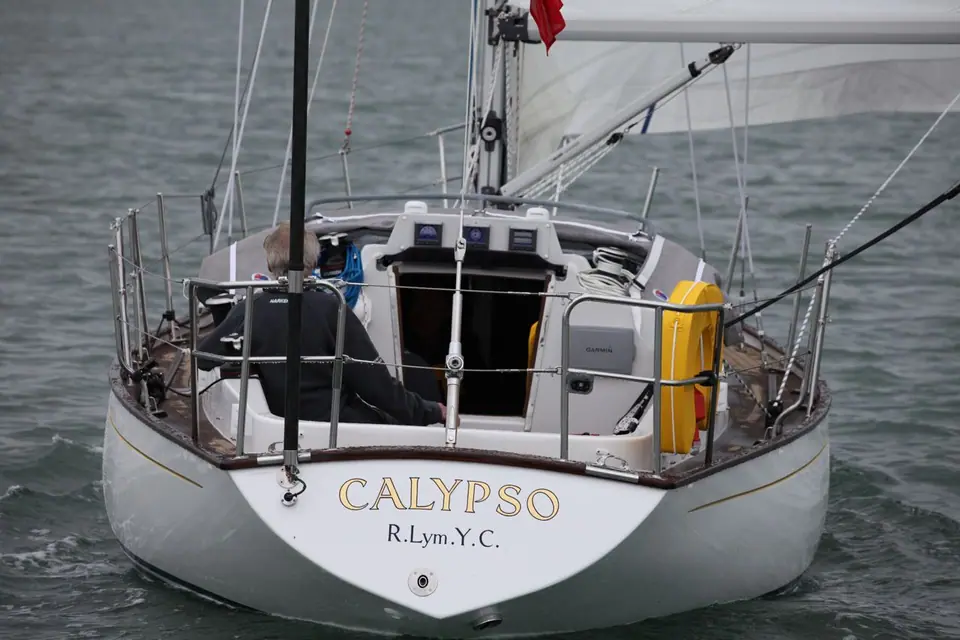
On a 32 foot hull with a 24 foot waterline and only 9 feet 6 inches of beam, the Contessa carries about 2 tons of lead, close to half of its roughly 9,500 pound displacement. The ballast is encapsulated in the molded keel, so there are no keel bolts to fail. The angle of vanishing stability is about 155 to 157 degrees, against about 117 for a typical Half Tonner of the same period. The STIX number is about 33.
Several Contessas sailing in rough conditions have dipped their mast tips in the water and come back up with the rig standing. John Kretschmer and Ty Techera survived a 130 degree knockdown while rounding Cape Horn in Gigi in 1984. The hull shape, a long fin keel with a deep forefoot and a fine entry, shrugs off a head sea without slamming.
- Angle of vanishing stability about 155 to 157 degrees
- Ballast about 2 tons of encapsulated lead, close to 50 percent ratio
- Displacement to length ratio about 310
- Theoretical hull speed about 6.6 knots
Tight, wet and quick to windward
Upwind is where the Contessa feels special. Owners report tacking through just under 70 degrees with the original genoa, and the boat has a light, responsive helm that makes ordinary sailors feel like Olympians. Weather helm appears at around 15 knots of true wind and disappears with a reef. One recorded day's run between the Canaries and Barbados was 186 miles.
The price is wetness. With low freeboard and a narrow hull, the boat goes through waves rather than over them, and one long-time owner called it a bit of a submarine. Downwind in a breeze it can roll and become a handful under spinnaker. It also sails remarkably well under headsail alone, which is useful when you are tired.
Living inside nine and a half feet of beam
Below decks the Contessa is snug. Forward is a V-berth and chain locker, then the head and a hanging locker, a saloon with a double to port that is really a wide single and a single to starboard, a U-shaped galley to port and a chart table opposite, with a quarter berth aft. Headroom runs from about 5 feet 10 inches to 6 feet 1 inch.
Rogers-built boats have full wooden interiors. J.J. Taylor boats from Ontario use white fiberglass moldings trimmed in wood, brighter and easier to maintain. Either way the galley and head are small, the forepeak berths short, and it is not a marina liveaboard. The cockpit, though, is long and comfortable, with high coamings and a strong bridgedeck.
Rogers boats from Lymington versus Taylor boats from Ontario
Jeremy Rogers built over 500 boats in the first run between 1970 and 1982, and the total passed 700 by 1983. J.J. Taylor and Sons in Ontario built 87 under license between 1973 and 1990, with a wheel instead of a tiller, a rig about 3 feet taller and a Coremat-cored deck, and many of them have drifted south into the United States. Small numbers also came from MacBar Marine and Mike Slack in the late 1980s and 1990s. Rogers restarted production in 1996 and builds roughly one new boat a year alongside several full refits.
For a US buyer, a Taylor boat is usually the practical choice: closer, cheaper to survey and transport, and with a lighter interior. Rogers boats are the purist choice, and a Rogers refit, which can run 100,000 to 200,000 pounds, produces a nearly new boat.
Small tanks, small engines and simple systems
Water is the main limitation. The original tank, built into the keel, holds just 15 imperial gallons, about 18 US gallons. Fuel is around 12 gallons. Ocean sailors add flexible tanks, jerry cans or a small watermaker.
Engines changed over the years: a 24 hp Farymann, then a 20 hp Bukh, a 28 hp Volvo and a 27 hp Yanmar, and one experienced owner rates the 18 hp Bukh as the best of the factory fits. Boats with single-cylinder engines of 12 hp or less are underpowered against wind and tide. New boats get Beta Marine diesels of 20 to 25 hp, a sensible repower target for an old one.
The corrosion points that sink a survey
The Contessa 32 is simple, but a few fittings need a hard look. Chainplate failures have been reported. The forestay tack fitting on many boats is a 3/8 inch stainless U-bolt that can crack from corrosion. Masts can corrode under deck-level fittings after a dozen or more years. Some side decks use plywood coring, and leaks at the chainplates can soften it.
Rudder work can mean cutting the skeg tip to drop the blade, so check bearings carefully. With all that said, US running costs are modest, around $4,500 to $10,000 a year, because the boat is small, the systems simple and the hull solid.
Voyages that keep the legend current
The Contessa 32's record did not stop in 1979. In 2003, 15-year-old Seb Clover became the youngest person to sail across the Atlantic alone, in the Contessa 32 Reflection. Jo Hunter sailed Chanson de Lecq from South Georgia toward Australia and covered 1,700 miles under jury rig after a dismasting. In the 2018 to 2019 Longue Route, Pierre-Andre Huglo sailed Fresh Herring non-stop around the world singlehanded.
Contessa 32 specifications
| Length overall | 32 ft9.75 m |
|---|---|
| Waterline length | 24 ft7.32 m |
| Beam | 9.5 ft2.9 m |
| Draft | 5.5 ft1.68 m |
| Displacement | 9,52 lbs4,318 kg |
| Ballast | 4,5 lbs2,041 kg |
| Sail area | 562 sq ft52.2 m² |
| Fuel capacity | 12 gal45 L |
| Fresh water | 18 gal68 L |
| Cabins | 1 plus saloon |
| Berths | 5 to 6 |
| Heads | 1 |
| Standard engines | Inboard diesel of 15 to 28 hp depending on year (Farymann, Bukh, Volvo, Yanmar) |
| Optional engines | New boats fitted with Beta Marine 20 to 25 hp |
| Hull type | Narrow, moderately heavy monohull with overhanging counter stern |
| Keel | Long fin keel with deep forefoot, encapsulated lead ballast (no keel bolts), skeg-hung rudder |
| Rig | Masthead sloop, keel-stepped single-spreader mast, convertible to cutter |
| Hull construction | Solid fiberglass hull with encapsulated lead ballast; solid fiberglass deck on Rogers boats, Coremat-cored deck on J.J. Taylor boats |
| Builder | Jeremy Rogers Ltd (UK); J.J. Taylor and Sons under license (Canada), United Kingdom |
| Naval architect | David Sadler |
| Other design credits | Jeremy Rogers (builder and development) |
| Production | 1970 to present |
| Status | Limited production |
Figures come from builder documentation and independent tests where available. Displacement is usually quoted light, so a loaded cruising boat will weigh more. Compare these specs with another model.
How much does a Contessa 32 cost?
New boats are built to order by Jeremy Rogers in Lymington, quoted from about 275,000 pounds before VAT, so a US buyer pays roughly $360,000 or more before shipping. In North America supply is thin, and asks have run from about $33,000 for a 1980 boat in Newfoundland to $59,000 for a 1990 J.J. Taylor boat in San Francisco. Rogers-built boats with full refits and new rigging command the most.
Estimate your yearly cost
A planning estimate using common rules of thumb: insurance near 1.5 percent of value, maintenance near 3 percent, haul out and bottom paint by length. Your marina, region and use will move these numbers. Open the full cost calculator.
Contessa 32 timeline
- 1970First Contessa 32, Contessa Catherine, built for David Sadler
- 1973J.J. Taylor begins licensed production in Ontario
- 1979Assent is the only small-class finisher in the storm-hit Fastnet
- 1983Production passes 700 hulls
- 1984Gigi rounds Cape Horn with John Kretschmer aboard
- 1996Jeremy Rogers restarts building new Contessa 32s
- 2003Seb Clover, 15, crosses the Atlantic alone in Reflection
Strengths and weaknesses
What owners like
- Angle of vanishing stability around 155 degrees
- Encapsulated lead ballast with no keel bolts
- Excellent windward ability and light, balanced helm
- Proven survivor in extreme offshore conditions
- Active class racing and strong following
- Still built new, with factory refit support
What to weigh up
- Small, dark interior with limited headroom
- Wet ride in a seaway
- Tiny water and fuel tankage
- Can be a handful downwind in a breeze
- Few boats available in the United States
Used Contessa 32 buyer checklist
Take this list to a viewing. Your ticks are saved in this browser so you can come back to it.
Always commission an independent marine survey and an engine survey before you buy. How a marine survey works.
Rivals to consider
Contessa 26
Smaller and cheaper sister with a long keel, even simpler and more spartan inside.
Compare side by sidePacific Seacraft 34
A canoe-stern offshore cruiser with far more interior and tankage, at a higher price.
Compare side by sideWestsail 32
Twice the displacement and much more room, but slower and far worse to windward.
Compare side by sideNicholson 32
Another British long-keel classic, heavier and roomier, with a similar ocean-going record.
Our verdict on the Contessa 32
The Contessa 32 is one of the very few small boats whose reputation is fully deserved. It is wet, cramped and short on tankage, and it will never be a comfortable marina home. But it sails to windward beautifully, has stability numbers that larger boats envy, and has proven itself in the worst conditions offshore sailing can produce. For a solo or two-person ocean sailor who values seaworthiness over space, it remains one of the best buys at any price.
Contessa 32 questions answered
How much is a Contessa 32 for sale?
In North America most used Contessa 32s ask between $25,000 and $85,000. A new boat from Jeremy Rogers costs roughly $360,000 or more.
Why is the Contessa 32 famous?
The Contessa 32 Assent was the only boat in its class to finish the 1979 Fastnet Race, in which a storm killed 15 sailors.
Is the Contessa 32 a bluewater boat?
Yes. It has an angle of vanishing stability around 155 degrees and has completed circumnavigations and Cape Horn passages.
Is the Contessa 32 still built?
Yes. Jeremy Rogers in Lymington still builds new boats to order, usually about one a year.
What is the difference between a Rogers and a J.J. Taylor Contessa 32?
Rogers boats are British-built with full wooden interiors; J.J. Taylor boats were built in Ontario under license with white fiberglass interiors trimmed in wood.
Contessa 32 photos
More bluewater sailboats to explore
Westsail 32
Bluewater Sailboats, 32 ft
Used $15K to $75K
Pacific Seacraft 31
Bluewater Sailboats, 32 ft
Used $50K to $145K
Pacific Seacraft 34
Bluewater Sailboats, 34 ft
Used $65K to $220K
Baba 30
Bluewater Sailboats, 30 ft
Used $30K to $75K