Hallberg-Rassy Bluewater Sailboats
Hallberg-Rassy 352 for Sale, A Used Buyer's Guide to the 802-Hull Classic
Thirty-five feet, a walk-through to a private aft cabin and a fixed windscreen. The 352 put big-boat living into a small Swedish cruiser and sold 802 times.
- Length
- 34.8 ft10.54 m
- Beam
- 11.1 ft3.38 m
- Draft
- 5.5 ft1.67 m
- Cabins
- 2 (V-berth forward, private aft cabin reached by a walk-through)
- Used price
- $38K to $85K
On this page
- Overview
- Shopping for a Hallberg Rassy 352 for sale
- Enderlein's trick, an aft cabin you can walk to
- Fourteen years of running changes, and how to date a boat
- Standard rig or tall rig, the spreader count tells you
- Small, old and still crossing oceans
- What forty years does to a Rassy
- Running a 352 on a US budget
- The rare hardtop 352 and other variants
- Specifications
- Price and value
- Strengths and weaknesses
- Used buyer checklist
- Rivals
- Our verdict
- FAQ
The Hallberg-Rassy 352 is a 34 ft 9 in center cockpit cruiser by Olle Enderlein and Christoph Rassy, built in Ellös, Sweden, from 1978 to 1991. 802 were built, with an encapsulated keel and a walk-through aft cabin.
- Couples who want a small, seaworthy coastal or offshore cruiser
- First-time Hallberg-Rassy owners on a budget
- Cold-water and northern cruising
- Buyers willing to refit a solid older hull
Shopping for a Hallberg Rassy 352 for sale
If you are hunting for a Hallberg Rassy 352 for sale, you are looking at one of the most numerous small ocean cruisers ever built in Sweden. The yard in Ellös produced 802 hulls between 1978 and 1991, which means there is almost always a choice of boats somewhere, although the bulk of them sit in Scandinavian, German and British marinas rather than on the US East Coast. Expect to widen the search to Europe and to treat shipping or a delivery passage as part of the purchase.
That volume is good news. Hallberg-Rassy still publishes the original manual, the standard specification, wiring diagrams, rudder construction sketches and cutless bearing instructions for the 352 on its own website, and owners' associations are active. Few 40-year-old 35-footers are this well documented, and that alone makes a 352 easier to survey, repair and insure than an orphan design of similar age.
Hallberg-Rassy 352 by the numbers
- Sail area to displacement
- 15.9A cruising rig sized for comfort, so expect to motor in very light air.
- Displacement to length
- 282Moderate displacement, a classic cruising balance between load carrying and speed.
- Theoretical hull speed
- 7.2 knThe practical top speed of a displacement monohull under normal sailing, based on waterline length.
- Ballast ratio
- 45%A high ballast ratio, so the boat stands up well to a breeze.
- Capsize screening
- 1.81Below 2.0, the traditional threshold for offshore suitability.
- Motion comfort ratio
- 30.5Moderate motion comfort, typical of modern cruisers.
- Length to beam ratio
- 3.14 : 1Moderate proportions.
Enderlein's trick, an aft cabin you can walk to
Olle Enderlein drew the 352 with Christoph Rassy, and the yard still describes it as the first time a designer combined a walk-through to the aft cabin with genuinely elegant lines on a 35-foot hull. That passage, which runs beside the engine compartment under the center cockpit and doubles as the engine access, is what sold the boat. A couple gets a private double cabin aft with its own hanging locker and an escape hatch to deck, while guests or children use the V-berth forward, and nobody has to climb through the cockpit at night.
The rest of the arrangement is conventional and seamanlike. From forward there is a gas locker over the chain, the forecabin with two 6 ft 8 in berths, a pair of hanging lockers to starboard, and a surprisingly roomy head to port with a teak grating shower floor. The saloon has an L-shaped settee to port and a straight settee to starboard, both about 6 ft 6 in long, around a table with folding leaves. Aft of the saloon sit a U-shaped galley and the navigation table, then the walk-through with a small workbench.
Headroom is about 6 ft in the saloon and head, which is honest rather than generous. Taller buyers should stand in the passage aft before getting attached, because that is where the 352 feels its age.
Fourteen years of running changes, and how to date a boat
The 352 was never formally split into Mk I and Mk II versions, but the yard kept refining it, and those changes matter when you compare listings. Hallberg-Rassy's own history lists them:
- 1980: the hull was raised a couple of centimeters, adding headroom in the walk-through and aft cabin.
- Late 1984: the Volvo Penta MD21 went out of production and the 43 hp Volvo Penta 2003 Turbo replaced it. A few boats near the end of the run got the larger MD22.
- 1984 to 1985: a better galley work area, a separate companionway ladder, an improved cockpit locker drain and spring cleats moved up onto the teak toe rail.
- Around 1986: a larger saloon skylight, louvered saloon locker doors like the bigger Rassys, and another small increase in hull height for volume below.
Standard rig or tall rig, the spreader count tells you
Two masthead rigs were offered. The standard rig has a single set of spreaders and an air draft of 47 ft 8 in above the waterline; the tall rig has double spreaders and stands 51 ft 3 in. Early buyers mostly took the standard rig, while by the end of production nearly every boat left Ellös with the tall one, and any 352 ordered with in-mast furling automatically got the tall mast. Sail area with the working jib on the standard rig is about 52.5 square meters, rising to 64 square meters with a genoa.
On paper the boat is not quick. Sailboatdata gives a sail area to displacement ratio of 16, a displacement to length ratio of about 282 and a ballast ratio near 45 percent. Translated, that is a stiff, steady boat that needs a decent breeze to wake up and rewards a big genoa or a tall rig in light-air areas like the Chesapeake or Long Island Sound. Its theoretical hull speed is a little over 7 knots, and in practice the boat is about steady progress and an easy motion rather than short-tacking past newer designs. If most of your sailing is in light summer air, the tall rig is worth paying for.
Small, old and still crossing oceans
The best evidence that a 352 can go offshore comes from owners rather than brochures. In the 2018 ARC+, hull No. 125, Concubine, sailed double-handed by Mats Jones and Ragnar Sandberg, took second place in category C while being the smallest and oldest boat in the fleet. Its comfort ratio of about 30 and capsize screening value of 1.81 put it in moderate bluewater territory, and the encapsulated keel removes the keel bolt question entirely.
What limits offshore use is volume, not strength. Tankage is 240 liters (about 63 gallons) of diesel in two tanks and 300 liters (79 gallons) of water, stowage is that of a mid-1980s 35-footer, and the single head is shared. Couples doing trade wind passages manage well; a crew of four on a long passage will find it tight.
What forty years does to a Rassy
Hallberg-Rassy built the 352 with a hand-laid hull, a 25 mm foam-cored deck, a hull to deck joint laminated over and capped by a teak bulwark, and a fixed windscreen of hardened glass in alloy frames. The structure has aged well across the fleet. The weak points are the bolt-on and glued-on parts that any 1980s cruiser has.
Start with the laid teak deck, which was half-inch teak over fiberglass. Many are now thin, with proud fastenings and failed seams, and a replacement is a five-figure job. Then look at the engine: an original MD21 is a museum piece, and parts are getting harder to source, so a repowered boat or a well-maintained 2003T is worth paying more for. Ask about the rudder and its bronze stock and fittings, the cutless bearing and shaft seal, and the standing rig age, because many 352s still carry the original chainplates. The encapsulated ballast is cast iron sealed inside the hull; any grounding damage that broke the laminate can let water reach it and should be repaired properly.
Running a 352 on a US budget
Because the boat is small and simple, annual costs are modest: roughly $7,000 to $16,000 a year in the US covering a 35-foot slip or mooring, insurance, haul-out and bottom paint, engine service and a sinking fund for sails and rigging. A mooring in New England or the Great Lakes keeps the lower figure realistic; a Florida marina slip pushes toward the top.
Fuel is a minor line. The 43 hp 2003T is a three-cylinder turbo diesel and a 352 motoring at a sensible 5.5 to 6 knots burns very little, though no published test figures exist. Bigger bills come from catch-up maintenance on a neglected boat, so pay for a thorough survey and price the deck, engine and rig before agreeing a number.
The rare hardtop 352 and other variants
A handful of 352s were built with a hardtop. To fit headroom under it the yard used a deeper cockpit, which removed the walk-through, so on those boats the aft cabin is reached only from the cockpit. They are rare and appeal to cold-climate sailors, but the loss of the interior passage changes how the boat lives and they are harder to resell.
You will also see boats with in-mast furling (always tall rig), retrofitted roller furling genoas, added solar arches and davits. Davits on a 35-foot center cockpit boat can overload the stern; check the mounting and the boat's trim. Some owners have replaced the original engine with a Beta Marine or newer Volvo, which is usually a plus if the installation and paperwork are tidy.
Hallberg-Rassy 352 specifications
| Length overall | 34.8 ft10.54 m |
|---|---|
| Waterline length | 28.6 ft8.7 m |
| Beam | 11.1 ft3.38 m |
| Draft | 5.5 ft1.67 m |
| Air draft | 47.7 ft14.54 m |
| Displacement | 14,77 lbs6,7 kg |
| Ballast | 6,614 lbs3, kg |
| Sail area | 6 sq ft55.7 m² |
| Fuel capacity | 63 gal24 L |
| Fresh water | 79 gal3 L |
| Cabins | 2 (V-berth forward, private aft cabin reached by a walk-through) |
| Berths | 5 to 6 including saloon settees |
| Heads | 1 |
| Standard engines | Volvo Penta MD21 (to late 1984), then Volvo Penta 2003 Turbo, 43 hp |
| Optional engines | Volvo Penta MD22 on a few late boats |
| Maximum power | 43 hp |
| Hull type | Moderate to heavy displacement monohull, center cockpit |
| Keel | Long fin with ballast encapsulated in the hull, 3 tonnes, rudder on a skeg |
| Rig | Masthead sloop, single-spreader standard rig or double-spreader tall rig |
| Hull construction | Hand-laid fiberglass hull with encapsulated keel ballast, foam-cored deck |
| Builder | Hallberg-Rassy Varvs AB, Sweden |
| Naval architect | Olle Enderlein |
| Other design credits | Christoph Rassy (co-designer) |
| Production | 1978 to 1991 |
| Status | Discontinued |
Figures come from builder documentation and independent tests where available. Displacement is usually quoted light, so a loaded cruising boat will weigh more. Compare these specs with another model.
How much does a Hallberg-Rassy 352 cost?
Condition and equipment matter far more than model year on a 352. A boat with a recent engine, newer standing rigging and a sound teak deck can be worth twice a tired example of the same vintage. Most of the fleet lives in Scandinavia, Germany and the UK, so US asking prices are thin and a European purchase plus shipping or delivery is common. Late, tall-rig boats with the enlarged skylight and a 2003T or repowered engine sit at the top of the range.
Estimate your yearly cost
A planning estimate using common rules of thumb: insurance near 1.5 percent of value, maintenance near 3 percent, haul out and bottom paint by length. Your marina, region and use will move these numbers. Open the full cost calculator.
Versions and options
- Standard rig
- Single-spreader masthead rig, air draft 47 ft 8 in. Common on early boats.
- Tall rig
- Double-spreader masthead rig, air draft 51 ft 3 in. Standard on in-mast furling boats and on most late hulls.
- Hardtop version
- Very few built. Deeper cockpit under a hardtop, no walk-through; the aft cabin is entered from the cockpit.
- Engine generations
- Volvo Penta MD21 until late 1984, then the 43 hp 2003 Turbo, with the MD22 on a few late boats.
Hallberg-Rassy 352 timeline
- 1978Hallberg-Rassy 352 introduced, designed by Olle Enderlein and Christoph Rassy
- 1980Hull raised slightly for more headroom in the walk-through and aft cabin
- 1984Volvo Penta 2003 Turbo replaces the discontinued MD21
- 1986Larger saloon skylight, louvered locker doors and a further increase in hull height
- 1991Production ends after 802 hulls in fourteen years
- 2018Hull No. 125 Concubine takes second in ARC+ category C, sailed double-handed
Strengths and weaknesses
What owners like
- Private aft cabin reached by an interior walk-through, rare at 35 feet
- Encapsulated ballast, so no keel bolts to worry about
- Fixed windscreen and protected center cockpit
- Large fleet of 802 boats and excellent factory documentation
- Stiff, steady motion with a 45 percent ballast ratio
- Affordable entry ticket to Hallberg-Rassy quality
What to weigh up
- Sluggish in light air, especially with the standard rig
- Headroom of about 6 ft limits tall owners
- Original teak decks and early engines are often due for replacement
- Most boats are in Europe, so US buyers face shipping or delivery costs
- One head and modest tankage for a crew of more than two
Used Hallberg-Rassy 352 buyer checklist
Take this list to a viewing. Your ticks are saved in this browser so you can come back to it.
Always commission an independent marine survey and an engine survey before you buy. How a marine survey works.
Rivals to consider
Hallberg-Rassy 36
Its Frers-designed successor with a bolted lead keel, more volume and better pace, at a higher price.
Compare side by sidePacific Seacraft 34
An American aft cockpit ocean cruiser of similar size and toughness, without the walk-through aft cabin.
Compare side by sideCape Dory 36
A full-keel US classic, heavier and slower but very forgiving offshore.
Compare side by sideNajad 343
Another Swedish center cockpit cruiser of the same era with comparable build quality and a similar buyer.
Our verdict on the Hallberg-Rassy 352
The Hallberg-Rassy 352 earns its reputation the honest way: it is strong, sensible and comfortable for two, and 802 hulls plus the yard's archive mean almost every question about it has already been answered. It is not fast and it is not roomy by modern standards, so buy it for the motion, the private aft cabin and the fixed windscreen rather than for speed or volume. The smart purchase is a late, tall-rig boat with a repowered or well-kept 2003T and a recently renewed deck or rig, because the price gap between a tired 352 and a sorted one is smaller than the cost of sorting it yourself.
Hallberg-Rassy 352 questions answered
How much does a Hallberg-Rassy 352 cost?
Most change hands for roughly $38,000 to $85,000, depending far more on engine, deck and rig condition than on year. Late tall-rig boats in refitted condition sit at the top.
How many Hallberg-Rassy 352s were built?
The yard built 802 between 1978 and 1991, making it one of the most numerous Hallberg-Rassy models.
Who designed the Hallberg-Rassy 352?
Olle Enderlein with Christoph Rassy. Germán Frers did not design Hallberg-Rassys until 1989.
What engine does the Hallberg-Rassy 352 have?
Early boats have the Volvo Penta MD21; from late 1984 the 43 hp Volvo Penta 2003 Turbo was fitted, and a few late boats got the MD22. Many have since been repowered.
Is the Hallberg-Rassy 352 a bluewater boat?
Yes, within the limits of its size. Its ballast ratio near 45 percent and encapsulated keel suit offshore work, and a 352 placed second in its ARC+ category in 2018.
How do I tell a standard rig from a tall rig?
Count the spreaders. The standard rig has one set and the tall rig has two.
Photos from the Hallberg-Rassy range
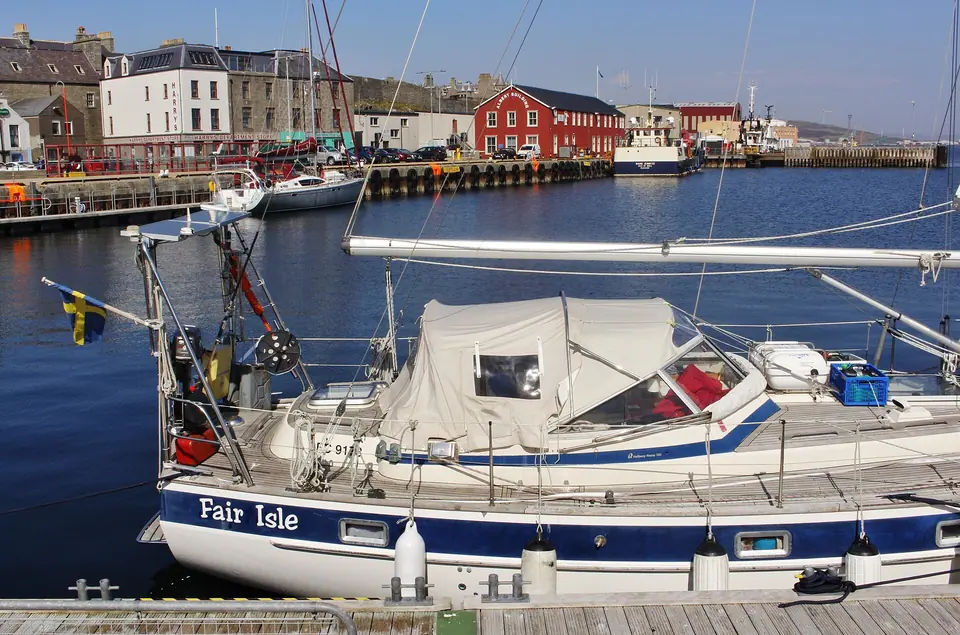
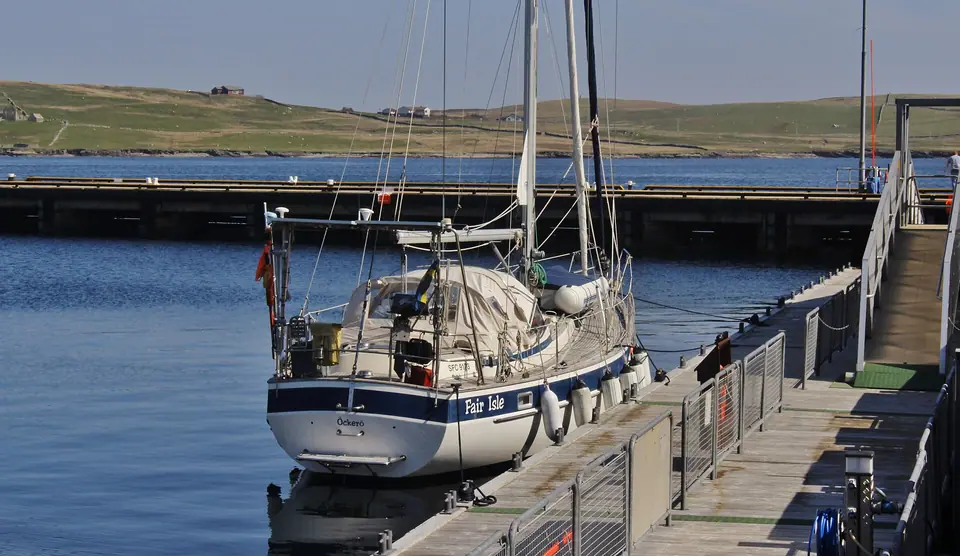
We have not found a freely licensed photo of the Hallberg-Rassy 352 yet, so these show other Hallberg-Rassy boats, each captioned with the boat pictured.
More bluewater sailboats to explore

Island Packet 31
Bluewater Sailboats, 34 ft
Used $35K to $60K
Pacific Seacraft 34
Bluewater Sailboats, 34 ft
Used $65K to $220K
Cape Dory 36
Bluewater Sailboats, 36 ft
Used $35K to $95K

Tayana 37
Bluewater Sailboats, 37 ft
Used $30K to $110K