Hallberg-Rassy Bluewater Sailboats
Hallberg-Rassy 36 for Sale, Mk I or Mk II and What Each Is Worth
Germán Frers' first small Hallberg-Rassy, built 602 times, with a bolted lead keel, a walk-through aft cabin and a transom that changed in 1994.
- Length
- 37.1 ft11.31 m
- Beam
- 11.7 ft3.55 m
- Draft
- 5.6 ft1.7 m
- Cabins
- 2 (forward V-berth cabin and aft cabin via a walk-through)
- Used price
- $75K to $165K
On this page
- Overview
- The first question with any Hallberg Rassy 36 for sale, Mk I or Mk II
- Frers arrives in Ellös
- Below decks, nothing fights the mast
- Deck, cockpit and that one-piece windscreen
- MD22 or D2-55, and the tanks behind them
- Where a 1990s Hallberg-Rassy shows its years
- What owning an HR36 costs in the US
- Where the 36 sits among other Rassys
- Specifications
- Price and value
- Strengths and weaknesses
- Used buyer checklist
- Rivals
- Our verdict
- FAQ
The Hallberg-Rassy 36 is a Germán Frers designed center cockpit cruiser built in Ellös, Sweden, from 1989 to 2003. 602 were built: hulls 1 to 256 are the Mk I and hulls 257 to 602 the longer-sterned Mk II.
- Couples planning coastal and offshore cruising
- Owners stepping up from a 30 to 32 footer
- Buyers who value build quality and resale over interior volume
- Northern and cold-water cruising grounds
Hallberg-Rassy 36 by the numbers
- Sail area to displacement
- 17.3Balanced power for coastal and offshore cruising.
- Displacement to length
- 255Moderate displacement, a classic cruising balance between load carrying and speed.
- Theoretical hull speed
- 7.4 knThe practical top speed of a displacement monohull under normal sailing, based on waterline length.
- Ballast ratio
- 45%A high ballast ratio, so the boat stands up well to a breeze.
- Capsize screening
- 1.83Below 2.0, the traditional threshold for offshore suitability.
- Motion comfort ratio
- 29.7Moderate motion comfort, typical of modern cruisers.
- Length to beam ratio
- 3.18 : 1Moderate proportions.
The first question with any Hallberg Rassy 36 for sale, Mk I or Mk II
Every Hallberg Rassy 36 for sale falls into one of two camps, and the hull number tells you which. Hallberg-Rassy built 602 boats between 1989 and 2003: numbers 1 to 256 (1989 to 1994) are the Mk I, and 257 to 602 (1994 to 2003) are the Mk II. Search terms like 'hallberg rassy 36 mk ii for sale' exist for a reason, because the later boat is the one most buyers want and the one that costs more.
The important point is what did not change. According to the yard, the mast, keel, rudder, underwater hull shape and engine installation are identical on both versions, and so is the waterline at rest. Everything that differs is above the water and aft of the cockpit.
- Mk II hull length is 37 ft 1 in versus 35 ft 8 in, an extra 44 cm, all of it in a new retroussé stern with an integrated bathing platform.
- The Mk II is 30 cm wider at the transom, with wider side decks and a wider aft cabin superstructure.
- Inside, that gives the Mk II more lockers and wider berths in the aft cabin.
- The Mk I's aft deck locker sits above deck level; on the Mk II it is flush.
- Maximum sailing waterline grew by 67 cm on the Mk II thanks to the longer stern.
- Small tells: the blue hull band is 5 cm wider on the Mk I, and about 23 of the earliest Mk Is have no integrated rubbing strake.
Frers arrives in Ellös
The 36 belongs to the first generation of Germán Frers designs for Hallberg-Rassy, launched in 1989 when the Argentine designer took over from Olle Enderlein. Frers kept the house formula of center cockpit, fixed windscreen and aft cabin, but gave the 36 moderate V sections, a bolted lead keel with a bulb and a rudder hung on a skeg. The yard credits that hull work for 'surprising performance for her type' and a motion normally found on larger yachts, and an HR36 won its class in the ARC transatlantic rally.
The numbers support the claim of a sea boat rather than a racer. Displacement is 7.5 tonnes (16,500 lb) with 3.4 tonnes of lead, a ballast ratio around 45 percent. Sailboatdata calculates a sail area to displacement ratio of about 16.8 and a comfort ratio near 32, well into moderate bluewater territory. Working sail area is 65 square meters with the standard jib and 70.2 with the furling genoa, on a double-spreader masthead rig with an air draft of 51 ft 10 in.
Below decks, nothing fights the mast
A detail Hallberg-Rassy still points out is that the mast support is built into the main bulkhead rather than running through the saloon table or a settee. It sounds small, but it keeps the saloon open and the table usable. The navigation table faces forward, so the navigator can sit comfortably on passage, and the navigation area, engine room and switch panel sit together near the companionway.
Forward is a V-berth cabin, then a single head with a shower stall that pumps directly overboard rather than into the bilge. The saloon is finished in silk-matt mahogany with a teak and holly sole, headroom of 1.91 meters (about 6 ft 3 in) and louvered locker doors for ventilation. The galley has a top-loading 110 liter icebox, a gimballed two-burner stove with oven and a deep sink with a foot-pump reserve tap. Aft, a walk-through with an oilskin locker leads to the aft cabin, which the yard designed to stay private even with doors open. The Mk II's extra stern width shows up here in wider berths and more stowage.
Deck, cockpit and that one-piece windscreen
The HR36 cockpit sits behind a one-piece tempered glass windscreen whose middle section opens for air in the tropics, with handholds built into the side panels and a sprayhood that folds forward under a canvas cover. Teak covered chart tables flank the sliding hatch. The engine panel is built into the steering pedestal, and a hide-covered wheel drives a 50 mm rudder stock running in roller bearings.
Original boats had 12 mm teak laid in rubber on deck and cockpit seats, a Seldén double-spreader rig, a Furlex 300 S headsail furler, Lewmar 48 self-tailing sheet winches and Elvström sails. Stowage is good for a 36: a full-width lazarette and a deep starboard cockpit locker big enough for bikes, plus a self-draining gas locker for two bottles.
MD22 or D2-55, and the tanks behind them
Most HR36s carry the four-cylinder Volvo Penta MD22, rated at 42 kW (57 hp); the yard's last specification lists the 2.2 liter D2-55 at 41 kW (55 hp). Either is a generous engine for a 16,500 lb boat. Diesel capacity is 345 liters (92 gallons) and fresh water 310 liters (82 gallons). Note that some listings and databases quote a larger water figure; the builder's data sheet gives 310 liters, so confirm what is actually installed.
Hallberg-Rassy published a speed prediction diagram and stability curves for both keels but no motoring fuel table we could find for this model, so treat broker claims of exact range with caution. With 92 gallons and a modest four-cylinder diesel, an HR36 has a long motoring range by 36-foot standards, which is exactly what you want on a calm passage leg.
Where a 1990s Hallberg-Rassy shows its years
The hull and bulkheads, laminated in on both sides, are rarely the problem. Time catches up with the bits that wear: the rubber-bedded teak deck, original MD22 engines now 25 to 35 years old, the 17 keel bolts and the keel to hull joint after any grounding, chainplate cover plates that were welded on for watertightness, and windscreen seals. Electrics on early boats are basic by current standards, and many have had piecemeal additions behind the switch panel.
None of this is unusual for the era. The advantage with a Rassy is that the yard keeps wiring diagrams, through-hull drawings, winter cradle sketches and cutless bearing instructions online, so a surveyor and a yard can work from original information rather than guesswork.
What owning an HR36 costs in the US
Plan on roughly $9,000 to $20,000 a year once the boat is sorted, depending heavily on whether you keep it on a New England mooring or in a Florida or California marina slip. Insurance for offshore cruising, haul-out and antifouling, Volvo service and regular replacement of sails and running rigging are the main items.
The bigger number is the first year. A good survey will usually find a deck, engine or rig item that needs money, so negotiate with a refit allowance in mind. Because the HR36 holds value well, money put into a proper deck or a repower is largely recovered at resale, which is not true of most production boats of the same age.
Where the 36 sits among other Rassys
The 36 replaced Enderlein's long-running 352 at the small end of the center cockpit range, and buyers often compare the two. The older 352 has encapsulated iron ballast and a lower price, while the 36 brings the Frers hull, a bolted lead keel and more volume. Above it sat the HR 39 and later the HR 37 and 372, each a little larger and more modern. If an HR36 Mk II stretches the budget, a late 352 is the obvious fallback; if you can stretch further, an HR 37 or 40 gives more space but at a big jump in price.
Hallberg-Rassy 36 specifications
| Length overall | 37.1 ft11.31 m |
|---|---|
| Waterline length | 30.7 ft9.35 m |
| Beam | 11.7 ft3.55 m |
| Draft | 5.6 ft1.7 m |
| Air draft | 51.8 ft15.79 m |
| Displacement | 16,5 lbs7,5 kg |
| Ballast | 7,495 lbs3,4 kg |
| Sail area | 7 sq ft65 m² |
| Fuel capacity | 92 gal345 L |
| Fresh water | 82 gal31 L |
| Cabins | 2 (forward V-berth cabin and aft cabin via a walk-through) |
| Berths | 5 to 6 including saloon settees |
| Heads | 1, with shower |
| Standard engines | Volvo Penta MD22P, 57 hp (later boats Volvo Penta D2-55, 55 hp) |
| Maximum power | 57 hp |
| Hull type | Moderate displacement monohull with moderate V sections, center cockpit |
| Keel | Bolted lead fin with bulb, 3.4 tonnes on 17 stainless bolts; draft 5 ft 7 in, shoal version about 10 in shallower |
| Rig | Masthead sloop, double spreaders, deck-stepped mast, Furlex roller furling headsail |
| Hull construction | Hand-laid fiberglass, insulated above the waterline, bolted lead keel |
| CE design category | A |
| Builder | Hallberg-Rassy Varvs AB, Sweden |
| Naval architect | Germán Frers |
| Production | 1989 to 2003 |
| Status | Discontinued |
Figures come from builder documentation and independent tests where available. Displacement is usually quoted light, so a loaded cruising boat will weigh more. Compare these specs with another model.
How much does a Hallberg-Rassy 36 cost?
The Mk II commands a clear premium for its wider transom, bathing platform and roomier aft cabin, and late Mk IIs from 2000 to 2003 bring the most. Engine hours, the state of the laid teak deck and the age of the standing rigging swing values by tens of thousands. Most HR36s are listed in Northern Europe, so a US buyer should compare landed cost, not just asking price.
Estimate your yearly cost
A planning estimate using common rules of thumb: insurance near 1.5 percent of value, maintenance near 3 percent, haul out and bottom paint by length. Your marina, region and use will move these numbers. Open the full cost calculator.
Versions and options
- Hallberg-Rassy 36 Mk I (1989 to 1994)
- Hulls 1 to 256. 35 ft 8 in hull, narrower transom, raised aft deck locker, wider blue hull band.
- Hallberg-Rassy 36 Mk II (1994 to 2003)
- Hulls 257 to 602. 37 ft 1 in hull with retroussé stern and bathing platform, 30 cm wider transom, flush aft locker, roomier aft cabin.
- Standard keel
- Lead bulb keel, 5 ft 7 in draft.
- Shallow draft keel
- About 25 cm (10 in) shallower, with its own published stability curve.
Hallberg-Rassy 36 timeline
- 1989Hallberg-Rassy 36 launched, one of Germán Frers' first Rassy designs
- 1994Mk II introduced from hull 257 with a new stern and bathing platform
- 2003Production ends after 602 boats
Strengths and weaknesses
What owners like
- Proven Frers hull with an easy motion and a class win in the ARC
- Walk-through to a private aft cabin
- Mast support in the bulkhead keeps the saloon open
- Generous 92 gallons of diesel and a strong four-cylinder engine
- Bolted lead keel with a 45 percent ballast ratio
- Excellent resale and factory documentation
What to weigh up
- Single head
- Light-air performance is only moderate
- Original teak decks and MD22 engines are often due for renewal
- Mk II premium is substantial
- Few boats on the US market
Used Hallberg-Rassy 36 buyer checklist
Take this list to a viewing. Your ticks are saved in this browser so you can come back to it.
Always commission an independent marine survey and an engine survey before you buy. How a marine survey works.
Rivals to consider
Hallberg-Rassy 352
The older Enderlein model it replaced, cheaper, with encapsulated ballast and less volume.
Compare side by sideIsland Packet 38
An American full-keel alternative with more interior space and a very different motion.
Compare side by sideNajad 390
A larger Swedish center cockpit cruiser with similar joinery quality at a higher price.
Pacific Seacraft 37
An aft cockpit US bluewater classic, narrower and canoe-sterned, with a strong following.
Compare side by sideOur verdict on the Hallberg-Rassy 36
The Hallberg-Rassy 36 is the sweet spot of the older Rassy range: a real Frers hull, a sensible two-cabin layout and the build quality that keeps these boats in demand thirty years on. Pay up for a Mk II if the aft cabin and swim platform matter to you, because that is where the money goes and where it comes back at resale. Choose the Mk I if you want the same keel, rig and sailing manners for less. Either way, buy on condition, especially deck and engine, not on year.
Hallberg-Rassy 36 questions answered
What is the difference between the Hallberg-Rassy 36 Mk I and Mk II?
The Mk II (hulls 257 to 602, 1994 to 2003) has a longer, 30 cm wider stern with a bathing platform, a flush aft locker and a roomier aft cabin. Keel, rig, rudder and underwater shape are unchanged.
How much is a Hallberg-Rassy 36 worth?
Expect roughly $75,000 to $165,000, with late Mk II boats at the top and early Mk Is needing work at the bottom.
How many Hallberg-Rassy 36s were built?
602 in total, 256 Mk I and 346 Mk II.
Who designed the Hallberg-Rassy 36?
Germán Frers, in one of his first designs for the yard.
Does the Hallberg-Rassy 36 have a center cockpit?
Yes. It has a center cockpit behind a fixed windscreen, with an interior walk-through to the aft cabin.
What engine is in a Hallberg-Rassy 36?
Most have the 57 hp Volvo Penta MD22; the final specification lists the 55 hp Volvo Penta D2-55.
Photos from the Hallberg-Rassy range
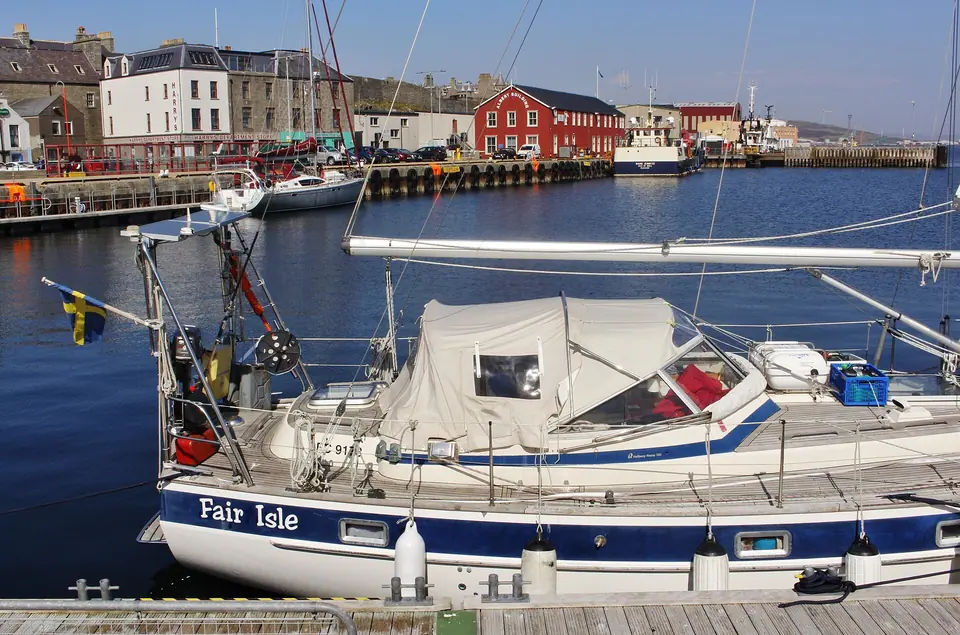
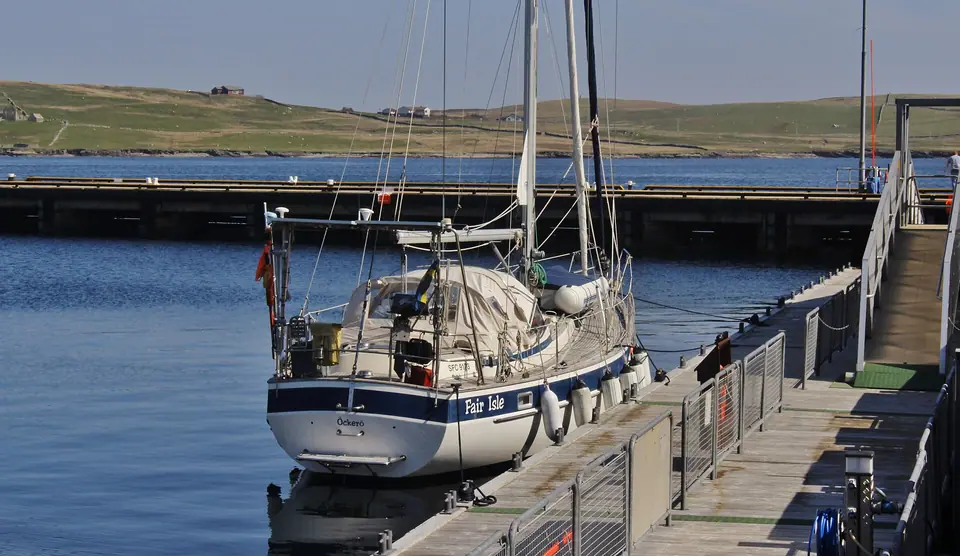
We have not found a freely licensed photo of the Hallberg-Rassy 36 yet, so these show other Hallberg-Rassy boats, each captioned with the boat pictured.
More bluewater sailboats to explore
Alberg 37
Bluewater Sailboats, 37 ft
Used $20K to $65K
Pacific Seacraft 37
Bluewater Sailboats, 37 ft
Used $70K to $260K
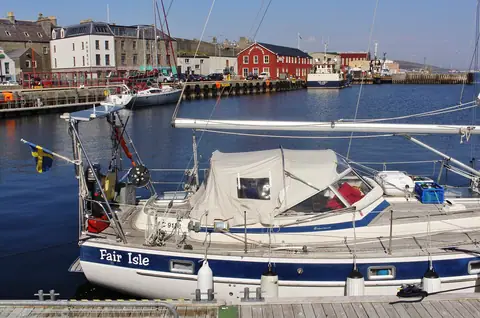
Hallberg-Rassy 372
Bluewater Sailboats, 37 ft
Used $200K to $430K
Tartan 37
Bluewater Sailboats, 37 ft
Used $25K to $85K