Hallberg-Rassy Bluewater Sailboats
Hallberg-Rassy 372 for Sale, The Aft Cockpit Rassy Reviewed
An aft cockpit Hallberg-Rassy that won European Yacht of the Year, beat seven rivals in a Norwegian group test and still has a windscreen.
- Length
- 37.3 ft11.35 m
- Beam
- 11.8 ft3.6 m
- Draft
- 6.6 ft1.99 m
- Cabins
- 2 (large forward V-berth cabin and aft double cabin)
- Used price
- $200K to $430K
On this page
- Overview
- Why the Hallberg Rassy 372 for sale list is short
- Same length as the HR 37, very different underneath
- On the water, from Swedish chop to a 35-knot blow
- An aft cockpit that still feels like a Rassy
- Two cabins, done properly
- A saildrive Rassy, plus tanks and power
- How it is built
- Buying one in the US, and what it costs to keep
- Specifications
- Price and value
- Strengths and weaknesses
- Used buyer checklist
- Rivals
- Our verdict
- FAQ
The Hallberg-Rassy 372 is an aft cockpit Germán Frers design built in Ellös, Sweden. The yard lists 120 built from 2008 to 2024. It won the 2010 European Yacht of the Year Luxury Cruiser title.
- Couples who want performance and Rassy build quality
- Coastal cruisers who also want ocean capability
- Owners who prefer an aft cockpit and helm feel
- Club racing alongside cruising
Hallberg-Rassy 372 by the numbers
- Sail area to displacement
- 19.3Balanced power for coastal and offshore cruising.
- Displacement to length
- 193Light displacement for its length, quick but sensitive to added cruising weight.
- Theoretical hull speed
- 7.8 knThe practical top speed of a displacement monohull under normal sailing, based on waterline length.
- Ballast ratio
- 39%A typical ballast ratio for a cruising monohull.
- Capsize screening
- 1.86Below 2.0, the traditional threshold for offshore suitability.
- Motion comfort ratio
- 27.3Moderate motion comfort, typical of modern cruisers.
- Length to beam ratio
- 3.15 : 1Moderate proportions.
Why the Hallberg Rassy 372 for sale list is short
Anyone searching for a Hallberg Rassy 372 for sale quickly learns that the supply is small. The yard lists 120 hulls built from 2008 to 2024, a modest number spread over 16 years and across buyers in Scandinavia, Germany, the UK, the Netherlands, Japan, the USA and elsewhere. Owners tend to keep them, so in any given season there may be only a handful on the market worldwide.
It is also a Hallberg-Rassy that some people do not expect. The yard is famous for center cockpits, yet it points out that more than 5,900 of its first 9,700 boats actually had aft cockpits. The 372 belongs to that quieter line, and Hallberg-Rassy stresses that it was an all-new Frers design, not a reworking of the center cockpit HR 37 it sold alongside.
Same length as the HR 37, very different underneath
Put the 372 next to the center cockpit HR 37 and the dimensions barely differ: a few centimeters longer, 5 cm wider. The hull, however, is a different animal. The yard lists a fuller transom, a slightly shallower canoe body, a longer waterline, flatter aft and midship sections, a sharper bow and a more pronounced sheer, plus a keel that is a little deeper and lighter. The mast is 1.05 m taller than the 37's.
Those choices show in the ratios. Sailboatdata gives a displacement to length ratio of about 194 and a sail area to displacement figure around 17.5, numbers that put the 372 closer to a performance cruiser than a traditional Rassy. Frers' own velocity prediction, according to the builder, shows it faster than the HR 40, a boat the yard already regarded as quick.
On the water, from Swedish chop to a 35-knot blow
Press tests are consistent. Norway's Seilas ran a comparison of eight modern 37-footers and named the 372 the winner, reporting 7 knots to windward in choppy seas with a dry cockpit, 8 to 9 knots surfing on a broad reach and a peak of 11.5 knots after shaking out a reef. Germany's Yacht recorded an impressive 11 knots over the ground at about 60 degrees to a 35-knot true wind. A 372 won its class in the 2010 Tjörn Runt, one of Scandinavia's biggest inshore races, and the same year the boat took the European Yacht of the Year Luxury Cruiser title.
The American view was calmer but positive. SAIL's Adam Cort sailed a boat with in-mast furling and a self-tacking blade jib rather than the standard slab-reefed main and 130 percent genoa, and still made around 6 knots in 10 knots of breeze. He found the helm responsive, the boat quick and clean through tacks and steady enough to steer with a knee while taking notes. His one deck criticism was that the forward cockpit winches sit close to the dodger, making hard grinding awkward.
An aft cockpit that still feels like a Rassy
Moving the cockpit aft did not mean losing the windscreen. The 372 has a fixed screen with a hinged center panel for ventilation and integral handrails, blended into the coachroof. The cockpit is deep, with high coamings you climb over rather than step across, and a 122 cm leather-covered wheel with direct linkage. Halyards run under the coachroof to a pair of winches on the cockpit coaming, which lets an owner add electric halyard winches without cluttering the interior.
The mainsheet traveler sits just forward of the pedestal, ideal for sail trim and less ideal for lounging, and SAIL noted the lack of a big drop-down swim platform. On deck, five flush hatches sit level with the coachroof, the genoa furler drum is mounted below deck, and the optional windlass is also under deck, positioned so the chain self-stows. Teak side decks, long cabin-top handrails and a bulwark with a teak cap make going forward secure.
Two cabins, done properly
Hallberg-Rassy kept the 372 to two cabins and one head, which is why each feels generous. The forward cabin is unusually large for a 37-footer, with a V-berth 210 cm long, a seat, two hanging lockers and two vanities. The aft cabin has a wide double berth. The head has a separate shower behind acrylic doors and a wet locker for oilskins.
The saloon settees are a full 2 meters, which matters because they double as sea berths, and the U-shaped galley has a stone composite worktop with deep fiddles. Every hull portlight opens and is the same size as those on the HR 54, while two saloon hatches add light. Headroom in the saloon is 1.93 m (6 ft 4 in). Joinery is light mahogany, and SAIL praised the deep bilge, good engine access and well-placed overhead handholds.
A saildrive Rassy, plus tanks and power
The 372 uses a Volvo Penta saildrive rather than the shaft drive common on bigger Rassys. Later boats have the 2.2 liter four-cylinder D2-60 with the 130S leg, rated at 44 kW (60 hp); early boats have the D2-55 at 41 kW (55 hp). A 115 amp alternator is standard. SAIL's test boat with the 55 hp engine and a Gori folding prop made 6.7 knots at 2,000 rpm and 7.6 knots at 2,500, and Seilas reported the lowest noise levels it had ever measured, both in the cockpit and below.
Tankage is 270 liters (72 gallons) of diesel and, according to the builder, 471 liters (124 gallons) of water; some reviews quote a lower water figure, so confirm what a given boat carries. Hallberg-Rassy claims about 845 nautical miles of range at 6 knots with the optional Gori overdrive propeller. Because it is a saildrive, budget for the diaphragm replacement Volvo specifies at regular intervals, and inspect the leg for corrosion at every haul-out.
How it is built
SAIL described a hand-laid hull that is solid below the waterline with Divinycell foam in the topsides for insulation and a lower center of gravity, a hull and deck laminated together, stanchions on recessed stainless studs, and a stainless compression post under the deck-stepped, triple-spreader Seldén mast resting on a steel beam cast into the structural grid. The balanced spade rudder runs on a solid stainless stock in self-aligning bearings. It is the kind of build that ages well, which is reflected in used prices.
Buying one in the US, and what it costs to keep
Expect most candidates to be in Europe. Factor in transatlantic shipping or a delivery, survey travel and import formalities, and give a premium to a boat already lying in North America. Annual ownership in the US typically runs $14,000 to $30,000 for slip or mooring, insurance, haul-out, saildrive and engine service and a reserve for sails and rigging, with Northeast and Florida marinas at the top of the range.
Production ended in 2024, and the yard's current range now lists the Hallberg-Rassy 370 at this size. For a used buyer that means the 372 is now a finished, well-understood model with no further running changes, and good late boats should keep their value well.
Hallberg-Rassy 372 specifications
| Length overall | 37.3 ft11.35 m |
|---|---|
| Waterline length | 33.7 ft10.25 m |
| Beam | 11.8 ft3.6 m |
| Draft | 6.6 ft1.99 m |
| Air draft | 58.4 ft17.8 m |
| Displacement | 16,5 lbs7,5 kg |
| Ballast | 6,4 lbs2,903 kg |
| Sail area | 78 sq ft72.5 m² |
| Fuel capacity | 72 gal27 L |
| Fresh water | 124 gal471 L |
| Cabins | 2 (large forward V-berth cabin and aft double cabin) |
| Berths | 4 in cabins plus two 2 m saloon settees |
| Heads | 1, with separate shower stall and wet locker |
| Standard engines | Volvo Penta D2-60 with 130S saildrive, 60 hp (early boats D2-55, 55 hp) |
| Maximum power | 60 hp |
| Cruise speed | 6 knots |
| Range | 845 nm |
| Hull type | Moderate displacement monohull, aft cockpit |
| Keel | Lead keel with bulb, 2.9 tonnes, draft 6 ft 7 in; shoal version 35 cm (14 in) shallower |
| Rig | Fractional sloop with triple swept-back spreaders, self-tacking jib optional, removable bowsprit for Code Zero or gennaker |
| Hull construction | Hand-laid fiberglass, solid below the waterline with Divinycell foam-cored topsides, bolted lead bulb keel |
| CE design category | A |
| Builder | Hallberg-Rassy Varvs AB, Sweden |
| Naval architect | Germán Frers |
| Production | 2008 to 2024 |
| Status | Discontinued |
Figures come from builder documentation and independent tests where available. Displacement is usually quoted light, so a loaded cruising boat will weigh more. Compare these specs with another model.
Performance data
| RPM | Speed (kn) |
|---|---|
| 1000 | 5.5 |
| 2000 | 6.7 |
| 2500 | 7.6 |
SAIL magazine test (2012) with the 55 hp Volvo Penta saildrive and Gori folding propeller. No fuel flow was published; Hallberg-Rassy quotes a range of about 845 nm at 6 knots and two-thirds throttle with the optional Gori overdrive propeller.
How much does a Hallberg-Rassy 372 cost?
SAIL magazine quoted a sailaway price of $382,000 in 2012, and late 372s built after years of euro inflation cost considerably more new. That pricing floor holds up the used market: early hulls rarely trade cheaply, and the last boats from the early 2020s ask close to what an equivalent new mid-size cruiser costs. Specification spreads values widely, with in-mast furling, electric winches, bow thruster, heating and a Code Zero package adding real money.
Estimate your yearly cost
A planning estimate using common rules of thumb: insurance near 1.5 percent of value, maintenance near 3 percent, haul out and bottom paint by length. Your marina, region and use will move these numbers. Open the full cost calculator.
Versions and options
- Standard keel
- Lead bulb keel, 1.99 m (6 ft 7 in) draft.
- Shoal keel
- 35 cm (about 14 in) shallower for the Baltic, Bahamas and thin US waters.
- Rig options
- Standard slab-reefed main with genoajib, or in-mast furling; self-tacking jib optional; Code Zero or gennaker from a removable bowsprit (113.3 m2 total with Code Zero).
- Engine generations
- Volvo Penta D2-55 saildrive on early boats, D2-60 with 130S saildrive later.
Hallberg-Rassy 372 timeline
- 2008Start of production according to Hallberg-Rassy's model list
- 2010Wins the European Yacht of the Year Luxury Cruiser title and its class in Tjörn Runt
- 2012SAIL magazine tests the 372, quoting $382,000 sailaway
- 2024Production ends after 120 boats; the Hallberg-Rassy 370 now fills this size in the range
Strengths and weaknesses
What owners like
- Quick, stiff and light on the helm for a cruising Rassy
- Fixed windscreen on an aft cockpit boat
- Huge forward cabin and a proper two-cabin layout
- Very quiet saildrive installation
- Generous 124 gallons of water by the builder's figure
- Strong resale, award-winning design
What to weigh up
- Only one head
- No large drop-down swim platform
- Saildrive needs periodic diaphragm and corrosion care
- Mainsheet traveler forward of the wheel intrudes on cockpit lounging
- Few boats for sale, most of them in Europe
Used Hallberg-Rassy 372 buyer checklist
Take this list to a viewing. Your ticks are saved in this browser so you can come back to it.
Always commission an independent marine survey and an engine survey before you buy. How a marine survey works.
Rivals to consider
Najad 390
A center cockpit Swedish alternative with more volume aft, slower and heavier.
Sirius 35 DS
A German deck saloon with an inside view and shoal options, more comfort-led and less sporty.
Island Packet 380
A US full-keel cruiser with more interior space but a very different, slower sailing style.
Compare side by sideX-Yachts Xc 38
A Danish performance cruiser of similar size and price with a racier hull and finish.
Our verdict on the Hallberg-Rassy 372
The Hallberg-Rassy 372 is the yard's case that a cruising boat can be genuinely fun to sail, and the testers agreed. It combines a lively Frers hull with the windscreen, joinery and systems quality Rassy owners pay for, and it keeps the interior simple with two excellent cabins instead of three cramped ones. Its limits are one head, a modest swim platform and the care a saildrive needs. For a couple who want to sail well and still go offshore, a well-kept 372 with the standard sail plan is one of the best 37-footers you can buy used.
Hallberg-Rassy 372 questions answered
How many Hallberg-Rassy 372s were built?
Hallberg-Rassy lists 120 built between 2008 and 2024.
Is the Hallberg-Rassy 372 a center cockpit boat?
No. It is an aft cockpit design, though it keeps a fixed windscreen. It was an all-new Frers design, not based on the center cockpit HR 37.
How much does a used Hallberg-Rassy 372 cost?
Roughly $200,000 to $430,000 depending on year and equipment. SAIL quoted $382,000 sailaway when it tested one in 2012.
What engine does the Hallberg-Rassy 372 have?
A Volvo Penta saildrive, the 55 hp D2-55 on early boats and the 60 hp D2-60 with 130S leg later.
What replaced the Hallberg-Rassy 372?
Production ended in 2024, and the Hallberg-Rassy 370 is the yard's current model at this size.
Is the Hallberg-Rassy 372 fast?
For a cruiser, yes. Seilas recorded 7 knots upwind in chop and 11.5 knots on a broad reach, and a 372 won its class in the 2010 Tjörn Runt.
Photos from the Hallberg-Rassy range
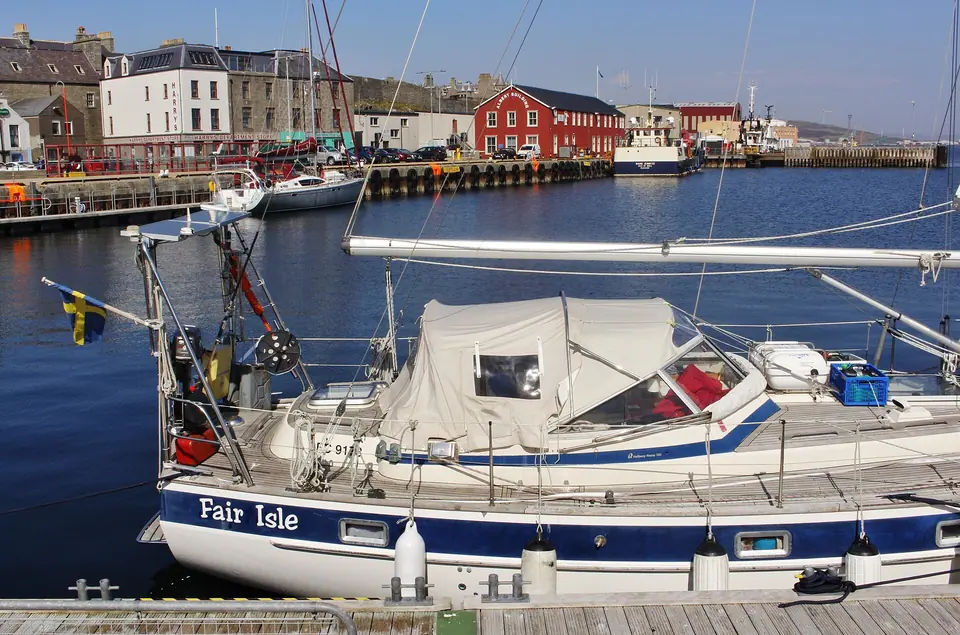
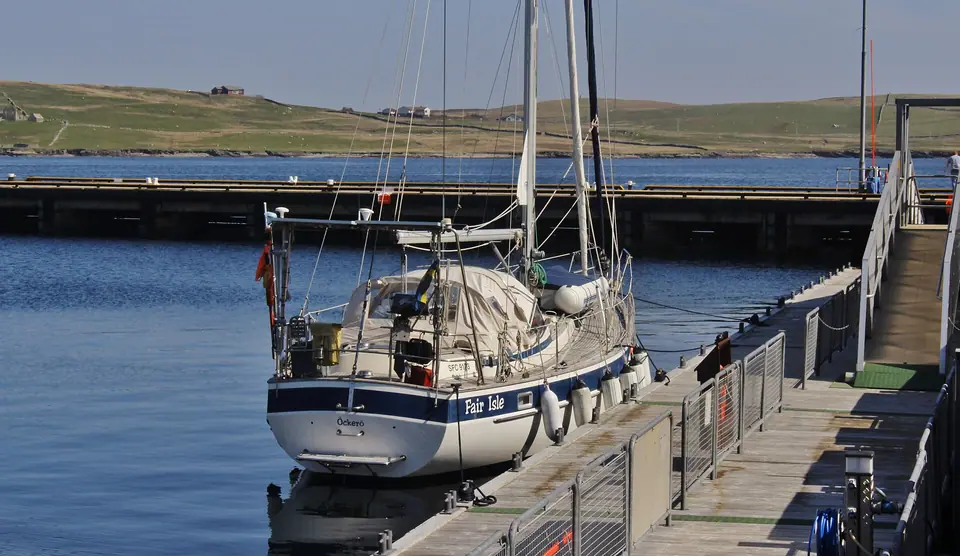
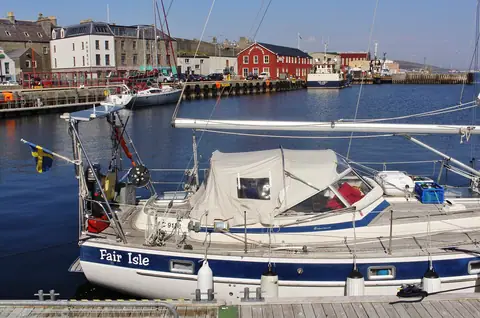
We have not found a freely licensed photo of the Hallberg-Rassy 372 yet, so these show other Hallberg-Rassy boats, each captioned with the boat pictured.
More bluewater sailboats to explore
Tartan 37
Bluewater Sailboats, 37 ft
Used $25K to $85K
Alberg 37
Bluewater Sailboats, 37 ft
Used $20K to $65K
Hallberg-Rassy 36
Bluewater Sailboats, 37 ft
Used $75K to $165K
Pacific Seacraft 37
Bluewater Sailboats, 37 ft
Used $70K to $260K