Pacific Seacraft Bluewater Sailboats
Flicka 20 for Sale, a Buyer's Guide to the Pacific Seacraft Flicka
A 20-foot cutter with standing headroom and an ocean resume, and the pocket cruiser that still has a waiting list of admirers.

- Length
- 24 ft7.32 m
- Beam
- 8 ft2.44 m
- Draft
- 3.3 ft0.99 m
- Cabins
- 1 (open plan)
- Used price
- $18K to $70K
On this page
- Overview
- Flicka 20 for sale, what the market looks like in 2026
- A Block Island lobster boat reborn in fiberglass
- Nor'Star kit, home-built or Pacific Seacraft: why provenance matters
- The Flicka 20 interior and cabin, bigger than it has any right to be
- Inboard Yanmar or outboard: choosing the right engine setup
- How a 5,500 lb 20-footer actually sails
- Survey priorities and ownership costs
- Specifications
- Price and value
- Strengths and weaknesses
- Used buyer checklist
- Rivals
- Our verdict
- FAQ
The Flicka 20 is Bruce Bingham's 20-foot, 5,500 lb pocket cruiser, built in fiberglass from 1975 and by Pacific Seacraft until 1998. About 400 Pacific Seacraft boats exist, and they hold value remarkably well.
- Single-handers
- Couples who cruise small and simple
- Trailer sailors
- First boat buyers who want a real offshore pedigree
Pacific Seacraft Flicka 20 by the numbers
- Sail area to displacement
- 12.8A cruising rig sized for comfort, so expect to motor in very light air.
- Displacement to length
- 409Heavy displacement. Slow to accelerate but steady and sea kindly with a full load.
- Theoretical hull speed
- 5.7 knThe practical top speed of a displacement monohull under normal sailing, based on waterline length.
- Ballast ratio
- 33%A typical ballast ratio for a cruising monohull.
- Capsize screening
- 1.81Below 2.0, the traditional threshold for offshore suitability.
- Motion comfort ratio
- 26.7Moderate motion comfort, typical of modern cruisers.
- Length to beam ratio
- 3.00 : 1Moderate proportions.
Flicka 20 for sale, what the market looks like in 2026
A Flicka 20 for sale rarely sits on the market long if it is a genuine Pacific Seacraft boat in good order. This is a cult boat, and the buyers know exactly what they want: a tiny, overbuilt cutter with standing headroom, a real enclosed head and a reputation for crossing oceans. Expect most listings between about $25,000 and $55,000, with outstanding late boats pushing $60,000 to $70,000 and rough or owner-finished examples dipping below $20,000.
Inventory is thin and scattered. California, the Pacific Northwest, Florida and the Chesapeake have the most boats, and many sell privately through owner networks, classified sites and the occasional Craigslist or Facebook Marketplace ad. A cheap Flicka on Craigslist can be a real find, but it is just as often a Nor'Star kit boat finished in a garage or a Pacific Seacraft hull that has had decades of creative modification. The rest of this guide is about telling the difference.
A Block Island lobster boat reborn in fiberglass
Bruce Bingham based the Flicka on the small sailing lobster boats that worked Block Island Sound out of Newport, Rhode Island, in the 1800s. He had sketched surviving examples near Wickford, Rhode Island, in the 1950s, and the design appeared as a six-part series in Rudder magazine starting in September 1972, originally intended for ferro-cement construction. More than 200 sets of plans were sold to amateur builders, which is why you will still find Flickas in wood and other materials.
Bingham began building a fiberglass plug for his own boat but had to sell it before completion to Nor'Star in California, which put the boat into production in 1975, selling kits for owner completion and finished boats built under contract by Westerly Marine. Nor'Star stopped in 1977, and Pacific Seacraft bought the tooling. Pacific Seacraft built the Flicka until 1998, finishing at hull number 434, and Steve Henkel credits it with over 400 boats. Bingham and Katy Burke later cruised about 6,000 miles in a Flicka called Sabrina.
Nor'Star kit, home-built or Pacific Seacraft: why provenance matters
The single biggest price driver on a Flicka is who built it. Pacific Seacraft boats are uniformly well built: solid fiberglass hulls, later laid up with vinylester resin that resists osmotic blistering, balsa-cored decks with plywood under hardware, an inward hull-to-deck flange capped by a teak rail, and a structural liner tying the hull together. Cabinetry and detailing are yacht quality. John Vigor wrote in Good Old Boat that no other production boat of her size in the US rivals her interior space and ocean-going ability.
Nor'Star boats and owner-finished kits vary enormously. Some are beautifully completed, others have weak bulkhead bonding, improvised wiring and non-standard rigs. Ask for the builder's certificate and decode the hull identification number. Pacific Seacraft used one HIN format before 1984 and the standard US Coast Guard format afterward, and the Flicka owner community keeps a hull database that can confirm a boat's history.
- Pre-1984 boats lack a cockpit bridgedeck, a real concern offshore
- Some early boats have aluminum toerails rather than the later teak caprail
- Model A boats were heavier, reported by Pacific Seacraft at about 6,000 lbs with 1,750 lbs of ballast
- Gaff, yawl and other unusual rigs exist and narrow the resale audience
The Flicka 20 interior and cabin, bigger than it has any right to be
Step below and the trick is obvious: 8 ft of beam carried far forward and aft, a high cabin top and no forward bulkhead give about 5 ft 11 in of standing headroom and the feel of a boat six to eight feet longer. Teak joinery, a holly sole and six opening bronze portlights make it feel like a yacht rather than a camper.
Layouts changed over the years, offering two, three or four berths, but a typical Pacific Seacraft boat has a large V-berth forward, a galley on one side with a two-burner stove, sink and icebox, a compact enclosed head opposite, a short settee and a quarter berth. Tankage on most boats is about 20 gallons of water and 12 gallons of diesel in a tank under the V-berth (Sailing Magazine lists 8 gallons on the boats it saw), with an 8 gallon holding tank. It is snug for a cruising couple and comfortable for a single-hander.
Inboard Yanmar or outboard: choosing the right engine setup
Most Pacific Seacraft Flickas left the factory with a Yanmar 1GM10, a single cylinder diesel of about 9 hp with a 35 amp alternator. It pushes the boat to around 5 knots and burns very little, but many of these engines are now 30 to 45 years old. A boat repowered with a new Beta or Yanmar diesel is worth several thousand dollars more, and a tired original 1GM is a negotiating point.
Some boats use a long-shaft 9.9 hp outboard instead. That saves weight, money and maintenance, but there is no charging alternator unless you add one, and in a steep chop the prop can ventilate. For coastal cruising and trailer sailing an outboard Flicka is a sensible, cheaper buy. For offshore plans, a healthy diesel is worth paying for.
How a 5,500 lb 20-footer actually sails
Numbers tell you what to expect. Displacement of 5,500 lbs on an 18 ft 2 in waterline gives a displacement to length ratio near 409, very heavy, and sail area to displacement is only about 12.9. Hull speed is 5.7 knots and the PHRF average is around 288. In light air a Flicka plods, and upwind in a short chop it tends to pitch.
What it does well is carry sail in a breeze and look after its crew. The long keel tracks, the motion is easy for the size and the ballast ratio of about 33 percent keeps it stiff. Owners report trade wind crossings averaging around 120 miles a day, and Flickas have sailed from California to Hawaii and Tahiti and back. A slight weather helm is normal. Add a light-air drifter or asymmetric if you sail in summer conditions on protected waters.
Survey priorities and ownership costs
Most problems on a Flicka come from age and owner modifications rather than original construction. Moisture in the balsa-cored deck around stanchions, chainplates and the mast step is the most common expensive finding. Check the bowsprit and its fittings, the bronze portlight seals, the chainplates and the rudder hardware on the transom. Inspect the condition of the internal ballast area and look for signs of hard groundings on the keel.
Ownership is cheap by any standard. Budget about $3,500 to $8,000 a year for a slip or mooring, insurance, bottom paint and engine service. The Flicka is trailerable with a suitable trailer and tow vehicle (it weighs about 5,500 lbs before gear), which can cut storage costs dramatically. Finding a place to stow the dinghy is the eternal Flicka puzzle: most owners use a small inflatable stowed below or on the foredeck.
Pacific Seacraft Flicka 20 specifications
| Length overall | 24 ft7.32 m |
|---|---|
| Waterline length | 18.2 ft5.54 m |
| Beam | 8 ft2.44 m |
| Draft | 3.3 ft0.99 m |
| Air draft | 30.9 ft9.42 m |
| Displacement | 5,5 lbs2,495 kg |
| Ballast | 1,8 lbs816 kg |
| Sail area | 25 sq ft23.2 m² |
| Fuel capacity | 12 gal45 L |
| Fresh water | 2 gal76 L |
| Cabins | 1 (open plan) |
| Berths | 2 to 4 depending on layout |
| Heads | 1 enclosed |
| Standard engines | Yanmar 1GM10 single cylinder diesel (about 9 hp) |
| Optional engines | Long-shaft 9.9 hp outboard on some boats; repowers with Beta, Vetus or other small diesels |
| Maximum power | 10 hp |
| Cruise speed | 5 knots |
| Hull type | Heavy displacement long keel monohull, 20 ft on deck |
| Keel | Full long keel with internal lead ballast, transom-hung rudder |
| Rig | Bermuda (Marconi) masthead sloop with bowsprit and optional staysail stay (cutter); gaff, yawl and other rigs on some boats |
| Hull construction | Solid fiberglass hull, balsa-cored deck with plywood reinforcement |
| Builder | Pacific Seacraft (earlier Nor'Star Fiberglass Yachts, finished by Westerly Marine), United States |
| Naval architect | Bruce Bingham |
| Production | 1975 to 1998 |
| Status | Discontinued |
Figures come from builder documentation and independent tests where available. Displacement is usually quoted light, so a loaded cruising boat will weigh more. Compare these specs with another model.
How much does a Pacific Seacraft Flicka 20 cost?
When production ended in the late 1990s a new Flicka cost about $60,000 to $70,000, a startling sum for a 20-footer. Used prices fell after 2008 (Sailing Magazine's used-boat review gave a typical range of $23,500 to $39,500) but late Pacific Seacraft boats in refit condition still reach $60,000 or more. Kit-finished and amateur-built boats sell at a steep discount, and a recent diesel, new sails and a clean deck core are the biggest value adders.
Estimate your yearly cost
A planning estimate using common rules of thumb: insurance near 1.5 percent of value, maintenance near 3 percent, haul out and bottom paint by length. Your marina, region and use will move these numbers. Open the full cost calculator.
Versions and options
- Nor'Star (1975 to 1977)
- Kits and boats finished by Westerly Marine. Build quality varies and prices are lower.
- Pacific Seacraft Model A
- Pacific Seacraft's own figures for this version are about 6,000 lbs with 1,750 lbs of ballast.
- Pacific Seacraft later boats
- Marconi cutter or sloop, cockpit bridgedeck from 1984, vinylester laminate on later hulls. The most desirable Flickas.
Pacific Seacraft Flicka 20 timeline
- 1972Bruce Bingham publishes the design as a six-part series in Rudder magazine
- 1975Nor'Star begins fiberglass production in California
- 1977Nor'Star stops building and Pacific Seacraft acquires the tooling
- 1984Pacific Seacraft adopts the Coast Guard HIN format; later boats gain a cockpit bridgedeck
- 1998Production ends with hull number 434
Strengths and weaknesses
What owners like
- Standing headroom and an enclosed head in a 20-footer
- Heavy, stiff and genuinely seaworthy
- Pacific Seacraft build quality and joinery
- Holds value better than almost any small cruiser
- Cheap to keep and trailerable
- Strong owner community and hull database
What to weigh up
- Slow in light air and a hull speed of 5.7 knots
- Limited deck space and nowhere easy to stow a dinghy
- Pitches in short chop
- Kit-built and modified boats vary widely in quality
Used Pacific Seacraft Flicka 20 buyer checklist
Take this list to a viewing. Your ticks are saved in this browser so you can come back to it.
Always commission an independent marine survey and an engine survey before you buy. How a marine survey works.
Rivals to consider
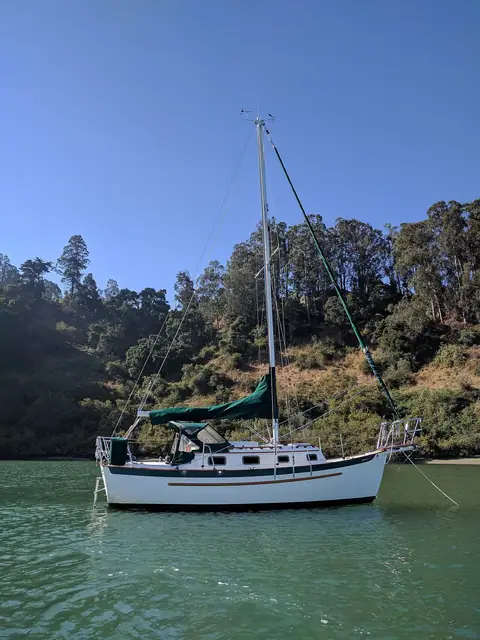
Pacific Seacraft Dana 24
The bigger sister: faster, roomier and better upwind, for roughly twice the money.
Compare side by sideContessa 26
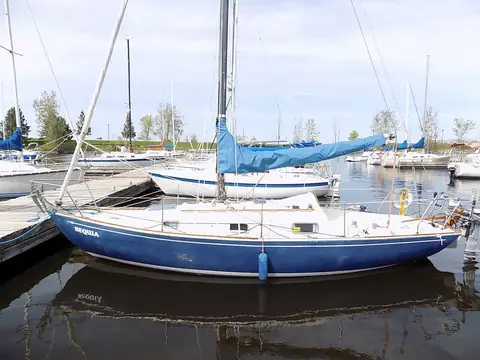
A proven British offshore boat with more speed and less interior volume, often cheaper.
Compare side by sideBristol Channel Cutter
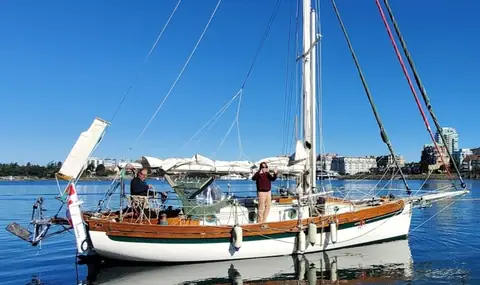
Lyle Hess's 28-foot classic offers far more boat and far higher prices for the same traditional look.
Compare side by sideCape Dory 25D
A more conventional small cruiser with a diesel, a full keel and lower prices.
Our verdict on the Pacific Seacraft Flicka 20
The Flicka 20 is the rare small boat that justifies its cult following. It is slow and short on deck space, but it is built like a much larger yacht, offers standing headroom and an enclosed head on 20 feet and has a resume of ocean crossings that many 35-footers cannot match. Pay for a genuine Pacific Seacraft boat with a dry deck and a healthy engine, and you will own a pocket cruiser that is cheap to keep, easy to sell and impossible not to love.
Pacific Seacraft Flicka 20 questions answered
How much is a Flicka 20 worth?
Most Flicka 20s for sale list between about $25,000 and $55,000. The best late Pacific Seacraft boats reach $60,000 to $70,000, while kit and home-built boats can sell below $20,000.
How many Flicka 20s were built?
Pacific Seacraft built roughly 400, ending at hull number 434 in 1998. Nor'Star kits and many home-built boats from plans add to the total.
Does the Flicka 20 have standing headroom?
Yes, about 5 ft 11 in, which is exceptional for a 20-foot boat.
Can a Flicka 20 cross an ocean?
Yes. Flickas have sailed from California to Hawaii and Tahiti and on trade wind passages averaging around 120 miles a day, though careful preparation is essential.
What engine does a Flicka 20 have?
Most have a Yanmar 1GM10 single cylinder diesel of about 9 hp, while some use a long-shaft 9.9 hp outboard.
Is the Flicka 20 trailerable?
Yes, with a suitable trailer and tow vehicle. The boat displaces about 5,500 lbs before gear and stores and has a 3 ft 3 in draft.
More bluewater sailboats to explore
Contessa 26
Bluewater Sailboats, 26 ft
Used $8K to $40K

Nor'Sea 27
Bluewater Sailboats, 27 ft
Used $35K to $85K
Pacific Seacraft Dana 24
Bluewater Sailboats, 27 ft
Used $35K to $120K
Bristol Channel Cutter 28
Bluewater Sailboats, 28 ft
Used $60K to $175K