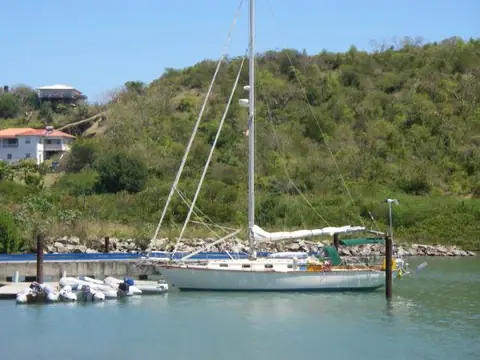
Cape Dory 25
Cruising Sailboats, 25 ft
Used $5K to $32K
A Massachusetts builder that turned Carl Alberg's narrow, full-keel lines into some of the most loved small cruisers in America.
Cruising Sailboats, 25 ft
Used $5K to $32K
Bluewater Sailboats, 28 ft
Used $12K to $40K
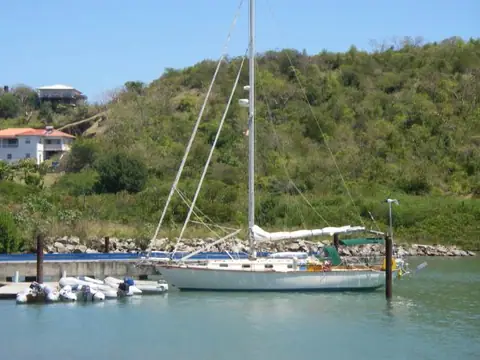
Bluewater Sailboats, 36 ft
Used $35K to $95K
Cape Dory built fiberglass sailboats, powerboats and trawlers in Massachusetts from 1963 until the early 1990s. Its Alberg-designed cruisers remain affordable, seaworthy and well supported by owners.
Andrew Vavolotis founded Cape Dory Yachts in 1963 in Bridgewater, Massachusetts, starting with a 10-foot dinghy. The company later moved to Taunton and grew steadily through the 1970s. The Typhoon, a small full-keel weekender, became an early success, and Cape Dory then turned to Carl Alberg, the Swedish-born designer behind the Pearson Triton, for a whole line of cruising sailboats from 22 to 45 feet.
Alberg's approach suited Cape Dory perfectly: narrow beam, long overhangs, full keels with attached rudders and a sweet sheer. The boats were not fast or roomy by modern standards, but they were seaworthy, balanced and handsome. Cape Dory also built powerboats and trawlers and ran Intrepid Yachts as a division from 1979. The company closed in the early 1990s. Newport Shipyards took several designs until 1996, and Robinhood Marine in Maine, headed by Vavolotis, later acquired molds and continued some boats in small numbers.
We cover three Cape Dory sizes, and they show how the range grew from weekenders to offshore cruisers. The Cape Dory 25 is the odd one out, because it was not an Alberg boat at all. George Stadel drew it from Allied's Greenwich 24 hull, reworked by Vavolotis, and 845 were built between 1973 and 1982 with an outboard in a cockpit well and a simple cabin. The similarly named Cape Dory 25D, an Alberg design built from 1981 to 1985, is wider and heavier, carries a small Yanmar diesel and a proper enclosed head, and 189 were built. Listings often confuse the two, and the 25D is worth much more.
The Cape Dory 28 is the Alberg formula in its most popular small size. Built in East Taunton from 1974 to 1987, about 388 masthead sloops left the plant, each with a teak bowsprit, a full keel and a small diesel. It sails better than its numbers suggest and is a favorite of singlehanders and budget cruisers. Do not confuse it with the unrelated Cape Dory 28 powerboat line of 1984 to 1990.
The Cape Dory 36 was the flagship. Introduced in 1978, it was built until 1990, with about 165 hulls. It carries roughly 16,100 pounds of displacement on a 27-foot waterline, usually with a cutter rig and a self-tending, club-footed staysail. The design has crossed oceans and completed circumnavigations, and later hulls built from the same molds as the Robinhood 36 command a premium.
Small Cape Dorys made big voyages possible on tiny budgets. A Cape Dory 25D made singlehanded Atlantic and Pacific crossings, and a Cape Dory 28 completed a solo circumnavigation. For many US sailors the Typhoon, 25D, 28 and 30 are the most affordable credible offshore boats available, while the original 25 is better kept to coastal weekends.
Cape Dory owners are unusually well organized, and the Cape Dory Sailboat Owners Association keeps specifications, manuals and repair knowledge available, which compensates for the missing factory. Prices are low: a Cape Dory 36 typically lists from about $35,000 to $95,000, a Cape Dory 28 from about $12,000 to $40,000, and a Cape Dory 25 or 25D from about $5,000 to $32,000, with the 25D at the top of that band. Demand is strongest in New England, the Chesapeake and the Great Lakes.
These boats are 35 to 60 years old, so the survey matters more than the brand.
Carl Alberg designed most Cape Dory sailboats, including the 25D, 28 and 36, giving them narrow beams, long overhangs and full keels. The original Cape Dory 25 was a George Stadel design.
No. Cape Dory closed in the early 1990s, though Robinhood Marine later built some models from the original molds.
Yes. Models from the 25D to the 36 have completed ocean crossings and circumnavigations, though they are small and slow by modern standards. The outboard-powered original 25 is better suited to coastal sailing.
They are separate designs. The 25 is a Stadel outboard weekender, while the 25D is a wider, heavier Alberg boat with a diesel, more headroom and an enclosed head.
The Cape Dory 28 is the usual pick, combining Alberg's seakeeping with low purchase and running costs. The 36 adds room for longer cruises, and a 25D suits singlehanders.
Most list between about $35,000 and $95,000 in the US, depending on condition and upgrades.