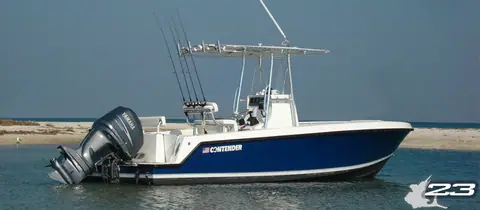
Contender 23 Open
Center Consoles & Offshore Boats, 23 ft
Used $20K to $50K
A South Florida builder that made its name with sharp-entry, wet-weather center consoles for serious fishermen.
Center Consoles & Offshore Boats, 23 ft
Used $20K to $50K
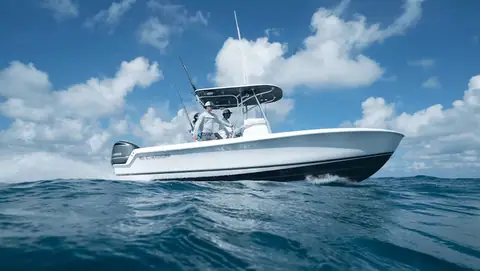
Center Consoles & Offshore Boats, 25 ft
Used $55K to $145K
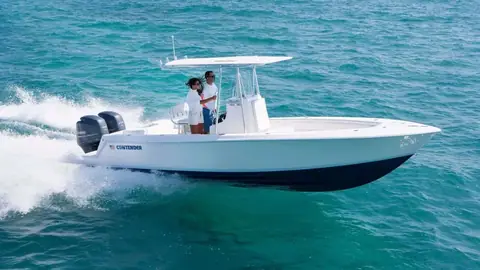
Center Consoles & Offshore Boats, 25 ft
Used $35K to $175K
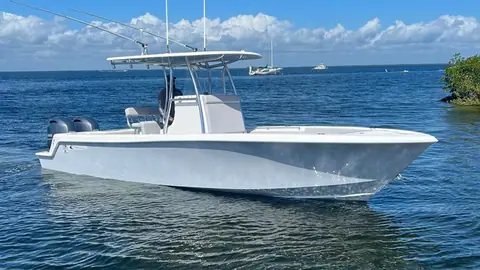
Center Consoles & Offshore Boats, 28 ft
Used $40K to $260K
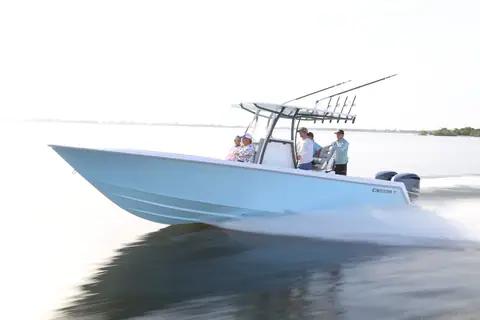
Center Consoles & Offshore Boats, 30 ft
Used $90K to $380K
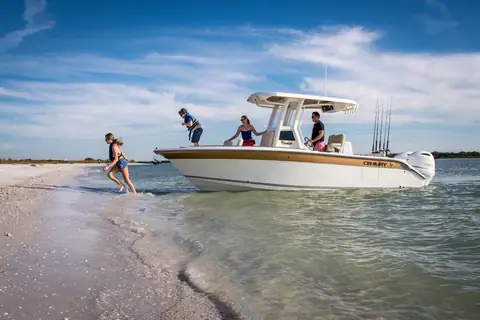
Center Consoles & Offshore Boats, 33 ft
Used $45K to $125K
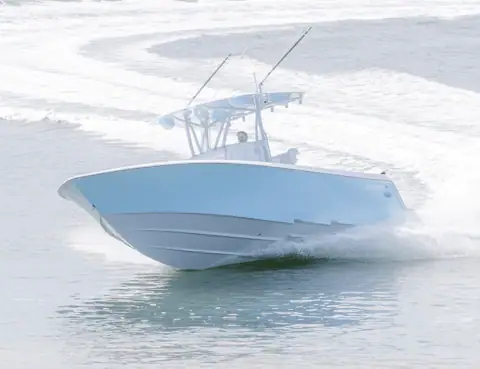
Center Consoles & Offshore Boats, 33 ft
Used $115K to $430K
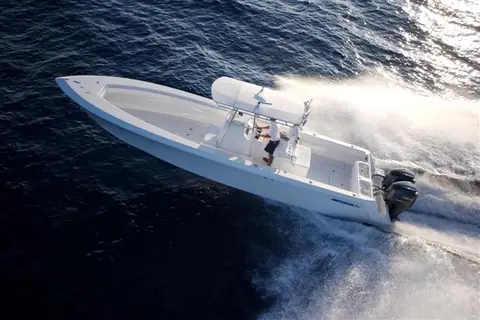
Center Consoles & Offshore Boats, 34 ft
Used $70K to $165K
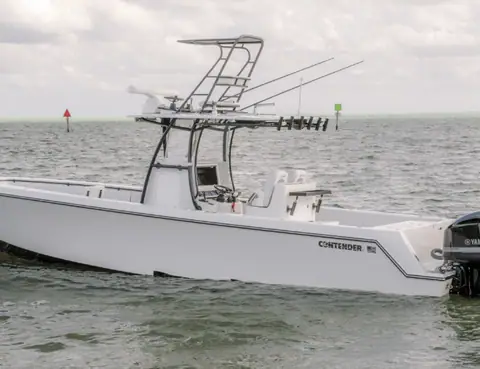
Center Consoles & Offshore Boats, 35 ft
Used $130K to $600K
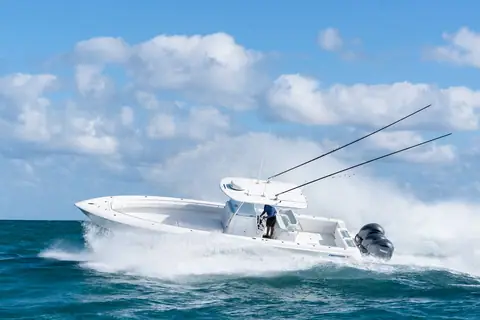
Center Consoles & Offshore Boats, 39 ft
Used $180K to $850K
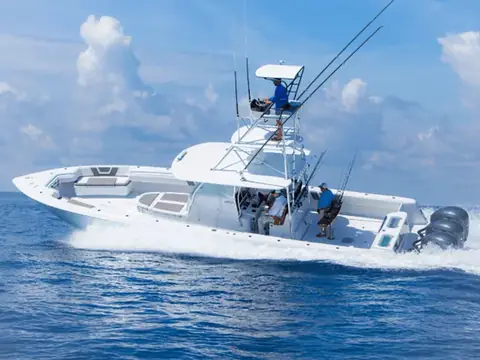
Center Consoles & Offshore Boats, 44 ft
Used $550K to $1.15M
Contender builds semi-custom fishing center consoles from 24 to 44 feet in Homestead, Florida. We cover 11 models, from deep-V classics like the 31 Tournament to the twin-step ST family topped by the 44 ST.
Joe Neber founded Contender in 1984 in Homestead, Florida, at the edge of the Florida Keys and the Gulf Stream, and for more than 40 years the company has built boats aimed squarely at people who fish hard. Where many center console builders have moved toward family features, Contender has kept its focus on open decks, big livewells, rod storage and hulls that can run into a sea. Demand was strong enough that it opened a new production plant in 1997.
The company describes its approach as semi-custom. Buyers choose from hundreds of options and rigging details, which is why two Contenders of the same model can look quite different. Contender also supports conservation groups such as the International Game Fish Association, the Coastal Conservation Association and the Theodore Roosevelt Conservation Partnership.
Before stepped bottoms, Contender's reputation rested on conventional deep-V hulls with a 24.5-degree bottom, and three of those boats now trade only on the used market. The Contender 23 Open is the small one, a 23-footer with an outboard bracket and 150 gallons, rigged with one or two Yamahas for bottom fishing and trolling.
The Contender 31 Tournament is the boat that made the brand famous on the kingfish circuit. It came in several deck versions, including the Open, Cuddy and Fish Around, and used examples now rank among the smartest offshore bargains along the Atlantic seaboard. The Contender 33 Tournament, current around 2009 to 2011, was the larger non-stepped model with 400 gallons, and its deck plan lived on in the stepped boats that followed.
Two classic deep-V tournament hulls survive in today's lineup. The Contender 25T traces back through the 25 Tournament to a 25-foot hull once badged as the 23 Tournament, and now comes with Seakeeper Ride as standard. The Contender 28T descends from the old 25 Open, was sold as the 28 Tournament and 28 Sport in the 2010s, and was relaunched in 2019 with a 600 hp rating. Both keep the integrated transom and big forward fish box that tournament anglers expect.
The Contender 24S (24 Sport) is the softer side of the brand. Launched in 2014 to take over the small offshore role of the 23 Open, it uses a slightly flatter 22.5-degree hull, bow seating and a single outboard, which makes it the Contender most likely to double as a family boat.
Contender's move to twin-step bottoms began in 2009, when a stepped 33 ST reused the deck of the 33 Tournament. That boat evolved into today's Contender 35 ST, a 400-gallon console that runs around 70 mph on triple outboards. The Contender 32 ST followed in 2010 and became the core of the brand for offshore anglers: big enough for the canyons or the Bahamas, yet manageable for a small crew and a favorite of kite fishermen.
The Contender 30 ST, which appeared in the early 2010s, is the smallest stepped model and a quick kingfish and sailfish boat on twin outboards. The Contender 39 ST, launched in 2014, adds range and deck space on a narrow 10-foot-10 beam and has a cabin-equipped 39 FA sister. At the top, the Contender 44 ST arrived in 2019 as the flagship, carrying 600 gallons and up to 2,000 hp, later joined on the same hull by the 44 FA and 44 CB.
Contender hulls are known for a sharp entry and deep deadrise aft, which delivers a dry, soft ride in head seas. The trade-off is that they can feel less stable at rest than wider, flatter competitors, something to weigh if you mostly drift or anchor.
Contenders hold value well in Florida, the Gulf and the mid-Atlantic, where tournament crews know the brand. Many used boats have been fished hard, so condition varies widely and a careful survey is worth every dollar. Boats rigged by well-known tournament teams often come with excellent maintenance records and premium electronics, but also with high engine hours. Budget buyers usually start with a 31 Tournament or 23 Open, while late 39 ST and 44 ST boats command most of their new price.
Older Contenders often used outboard brackets rather than integrated transoms, which affects handling, repairs and repower options.
Contender builds its boats in South Florida, with its home base in Homestead.
Yes. Their sharp-entry deep-V hulls are known for a soft, dry ride in head seas, though they can feel tender at rest.
The 39 ST offers more range, deck space and power for serious offshore tournaments, while the 32 ST is easier to handle and run.
ST models, from the 30 ST to the 44 ST, use Contender's twin-step hull. The T models such as the 25T and 28T, and older Tournament boats like the 31 Tournament, ride on conventional deep-V bottoms.
The 24S (24 Sport) is the most family-friendly, with bow seating and a slightly flatter hull. Most other Contenders put fishing space ahead of lounges.
Yes, especially well-maintained boats with modern outboards and documented service.
Official website: contenderboats.com. Yatch US is independent and not affiliated with Contender Boats.