Beneteau Performance Sailboats
Beneteau 47.7 Buyer's Guide, the Farr First That Crosses Oceans
Bruce Farr's big First from 2000 won IRC trophies on the Solent and still turns up in ARC fleets, for the price of a mid-size production cruiser.
- Length
- 48.9 ft14.9 m
- Beam
- 14.8 ft4.5 m
- Draft
- 7.6 ft2.3 m
- Cabins
- 3 or 4 depending on layout
- Used price
- $125K to $190K
On this page
- Overview
- A Beneteau 47.7 where the word racer comes first
- Rigs, keels and a Commodore cruising spec
- The single wheel cockpit and the traveler in the middle
- Three factory layouts and the pullman owner's cabin
- How the 47.7 sails and why it is noisy under engine
- Latticework liner, teak decks and twenty-five years of wear
- Shopping a Beneteau 47.7 for sale in 2026
- Specifications
- Price and value
- Strengths and weaknesses
- Used buyer checklist
- Rivals
- Our verdict
- FAQ
The Beneteau First 47.7 is a Bruce Farr designed racer-cruiser built from 2000, with a single wheel, fractional rig, lead keel, three or four cabins and a Yanmar diesel. Used boats now trade around $130,000 to $190,000.
- Coastal and island cruising at speed
- ARC and ocean rally participants
- Club racers on a budget
- Crews who want four cabins
Beneteau First 47.7 by the numbers
- Sail area to displacement
- 18.6Balanced power for coastal and offshore cruising.
- Displacement to length
- 168Light displacement for its length, quick but sensitive to added cruising weight.
- Theoretical hull speed
- 8.6 knThe practical top speed of a displacement monohull under normal sailing, based on waterline length.
- Ballast ratio
- 33%A typical ballast ratio for a cruising monohull.
- Capsize screening
- 1.98Below 2.0, the traditional threshold for offshore suitability.
- Motion comfort ratio
- 26.1Moderate motion comfort, typical of modern cruisers.
- Length to beam ratio
- 3.31 : 1Moderate proportions.
A Beneteau 47.7 where the word racer comes first
The Beneteau 47.7, properly the First 47.7, followed the enormous success of the First 40.7. Yachting World's Matthew Sheahan noted in early 2001 that more than 300 of the 40.7 were already afloat, and Beneteau clearly expected the big sister to repeat the trick. Bruce Farr drew the hull and rig, Beneteau spent a full year just tooling the molds, and the boat went into production in 2000 with a menu of rigs, keels, engines and interiors that let one hull serve club racers and charter-minded cruisers alike.
It worked on the racecourse. Three First 47.7s placed second, third and fourth overall in IRC Class 1 at the Hamble Series, and Practical Sailor found the model among the most common boats in recent ARC rally fleets. Beneteau later filed it under its 1992 to 2004 First generation, and the Farr-designed First 50 took over as the brand's big performance cruiser in 2006. Today the 47.7 lives entirely on the used market, which is where its value story begins.
Rigs, keels and a Commodore cruising spec
No two 47.7s are quite the same. Sailboatdata lists the standard rig at about 1,033 sq ft of sail area across main and foretriangle, while the race version carries a slightly taller mast and roughly 1,093 sq ft. Keels are both lead: a shallow version drawing 2.30 m (7 ft 7 in) and a deep option at 2.80 m (9 ft 2 in). Beneteau's own figures give a light displacement around 12,045 kg (26,555 lb) and a ballast weight of 3,976 kg for the shallow keel.
The Commodore specification from 2004 shows how far Beneteau pushed the cruising side: a 100 hp shaft-drive engine with a three-blade Max Prop, a retractable bow thruster, teak cockpit and decks, a 1.7 m leather-wrapped wheel, Raymarine instruments and autopilot, and a carbon spinnaker pole. The race boats went the other way, with taller rigs, deep keels and stripped interiors. When you read a listing, the rig and keel line tells you more about the boat than the year.
The single wheel cockpit and the traveler in the middle
Unlike most modern 47-footers, the 47.7 steers with one big wheel on a low pedestal. Practical Sailor's reviewer liked the simplicity of one steering system, but the wheel blocks the walk aft to the stern gate and the small fold-down boarding platform. The mainsheet traveler runs across the cockpit where a racing skipper wants it and where guests trip over it. Four Lewmar self-tailers on the coamings handle headsails and two more on the coachroof take halyards, with control lines led openly down the cabin top rather than under panels.
Yachting World marked the boat down for the lack of foot braces, especially for the helmsman, since the single wheel makes it hard to sit far out to weather. Owners commonly add a raised teak block or chocks. The cockpit is narrower at the transom than modern twin-wheel boats because the maximum beam draws in toward the stern, which also makes the boat easier to handle off the wind.
Three factory layouts and the pullman owner's cabin
Beneteau offered three layouts. The D9 version has three cabins and an L-shaped galley to starboard; the IF5 version keeps three cabins but moves to a fore and aft galley along the port side; the DQ version swaps the forward owner's cabin for two forward cabins with over and under bunks, creating four cabins for charter or a large race crew. All share symmetrical aft doubles of 2.00 m by 1.50 m and two heads.
In the three-cabin boats the owner's cabin forward has a double berth offset to starboard, a small settee to port, a hanging locker and its own head with shower. The saloon has a curved settee and an oval table for six, and the nav station is notably large, with the table extending along the back of the settee. Headroom is about 2.02 to 2.10 m. Light comes through opening ports and narrow hull windows rather than big glazing, which makes the cabin a little dimmer than newer boats but is much easier to keep watertight. Woodwork on the Commodore spec is pear-colored mukali.
How the 47.7 sails and why it is noisy under engine
Under sail the 47.7 earns its reputation. Yachting World found it slippery even in light air, well balanced and forgiving, the kind of helm that lets you push hard without frightening anyone. The swept triple-spreader rig keeps the foredeck relatively uncluttered, and the secondary winch positions make shorthanded sailing realistic. Practical Sailor's reviewer summed it up as feeling like a big Laser while still being a comfortable place to live at anchor.
Motoring is the weak point. There is no engine room; the diesel sits under the cockpit and companionway, and Yachting World measured noise and vibration over 6 knots that bordered on excessive, partly blamed on an over-pitched two-blade Max Prop. Sound insulation upgrades, a correctly pitched three-blade feathering prop and fresh engine mounts transform it. Access is reasonable from behind the companionway steps and through panels in the aft cabins.
Latticework liner, teak decks and twenty-five years of wear
Beneteau built the 47.7 with a single-skin GRP hull and a bonded latticework inner molding that has no floor pan between the longitudinal and transverse members, so each element can be glassed into the hull. That was a response to criticism of earlier tray liners in performance boats, and it has held up well on most hulls. The deck is a balsa sandwich, and the hull to deck joint sits under a bonded and screwed teak toerail.
Teak is the issue now. Most boats came with teak decks and the substantial teak toerails, and at 20 to 25 years old many decks are thin, leaking at fasteners or already replaced with synthetic teak. A boat with a recently redone deck is worth a real premium. Opening ports and hatches are another routine resealing job.
Shopping a Beneteau 47.7 for sale in 2026
The Beneteau 47.7 for sale market is international, with boats in the Caribbean, both US coasts, the Great Lakes, Europe and New Zealand. Practical Sailor compared it directly with the Jeanneau Sun Odyssey 42 and 43 DS, which sit in a similar price bracket: the Jeanneau wins on comfort and light, the First on speed and handling. If you plan to island hop and occasionally join a rally, the First is the more rewarding boat.
Budget beyond the purchase. A typical cruising upgrade list includes an arch with davits and solar, a dodger, new running rigging and possibly a repowered engine. Racers will spend on sails and on bottom fairing. Either way, the starting price leaves room for that work compared with a newer 45 to 48 ft boat.
- Ask which layout code (D9, IF5 or DQ) the boat was built to
- Ask for keel draft and rig height, then confirm with a survey
- Check engine hours and whether the original Yanmar has been repowered
Beneteau First 47.7 specifications
| Length overall | 48.9 ft14.9 m |
|---|---|
| Waterline length | 41.3 ft12.6 m |
| Beam | 14.8 ft4.5 m |
| Draft | 7.6 ft2.3 m |
| Air draft | 69.1 ft21.06 m |
| Displacement | 26,555 lbs12,045 kg |
| Ballast | 8,766 lbs3,976 kg |
| Sail area | 1,033 sq ft96 m² |
| Fuel capacity | 62 gal235 L |
| Fresh water | 164 gal62 L |
| Cabins | 3 or 4 depending on layout |
| Berths | 6 to 8 |
| Heads | 2 |
| Maximum persons | 12 |
| Standard engines | Yanmar 4JH3TE diesel, 75 hp, shaft drive |
| Optional engines | Up to 100 hp (the Commodore cruising spec lists a 100 hp shaft drive engine) |
| Maximum power | 100 hp |
| Hull type | Fin keel performance monohull with spade rudder and moderate beam aft |
| Keel | Lead fin and bulb, 7 ft 7 in standard shallow version or 9 ft 2 in deep draft |
| Rig | 9/10 fractional sloop, tapered keel-stepped aluminum mast with three sets of swept spreaders; taller race rig available |
| Hull construction | Solid fiberglass hull with bonded latticework inner molding; balsa-cored deck with teak |
| CE design category | A |
| Builder | Beneteau, France |
| Naval architect | Bruce Farr (Farr Yacht Design) |
| Production | 2000 to present |
| Status | Discontinued |
Figures come from builder documentation and independent tests where available. Displacement is usually quoted light, so a loaded cruising boat will weigh more. Compare these specs with another model.
How much does a Beneteau First 47.7 cost?
Practical Sailor's market scan found First 47.7s asking $129,900 for a 2003 boat in Virginia, $142,890 for a 2005 boat in Toronto and $174,900 for a 2001 boat in San Diego, which shows how little year matters next to condition and inventory. Race-rigged deep-keel boats with recent sails fetch more from racers; cruising boats with arch, solar and a newer engine service history sell to the island-hopping crowd. Teak deck condition is the single biggest swing factor.
Estimate your yearly cost
A planning estimate using common rules of thumb: insurance near 1.5 percent of value, maintenance near 3 percent, haul out and bottom paint by length. Your marina, region and use will move these numbers. Open the full cost calculator.
Versions and options
- Standard rig
- About 1,033 sq ft of sail in main and foretriangle with a 7 ft 7 in shallow lead keel; the common cruising choice.
- Race rig and deep keel
- Taller mast with about 1,093 sq ft and a 9 ft 2 in lead keel; the version that placed in IRC Class 1 at the Hamble Series.
- Commodore
- 2004 cruising specification with a 100 hp shaft-drive engine, bow thruster, teak decks, leather wheel and Raymarine package.
- Layouts D9, IF5 and DQ
- Three cabins with L galley, three cabins with fore and aft galley, or four cabins with bunks forward.
Beneteau First 47.7 timeline
- 2000First 47.7 enters production after a year of tooling
- 2001Yachting World tests it against the Starlight 46 in its February issue
- 2004Commodore cruising specification documented by Beneteau
- 2006Beneteau launches the First 50 as its big performance cruiser
- 2026Practical Sailor names the 47.7 a favorite used racer-cruiser and notes it is common in ARC fleets
Strengths and weaknesses
What owners like
- Farr hull that is fast, balanced and forgiving
- Proven IRC results and ocean rally track record
- Large nav station and a genuinely private owner's cabin
- Four-cabin layout available for large crews
- Strong value against newer 45 to 48 ft boats
- Opening ports instead of large windows are easy to maintain
What to weigh up
- Noisy under engine without sound upgrades
- Traveler and big single wheel crowd the cockpit
- Aging teak decks and toerails on most boats
- Low ballast ratio means early reefing
- Deep draft versions limit cruising grounds
Used Beneteau First 47.7 buyer checklist
Take this list to a viewing. Your ticks are saved in this browser so you can come back to it.
Always commission an independent marine survey and an engine survey before you buy. How a marine survey works.
Rivals to consider
Jeanneau Sun Odyssey 43 DS
Practical Sailor's comparison: more comfort, twin wheels and big windows, but slower.
Beneteau First 45
Newer Briand design with twin wheels and a German mainsheet, usually more expensive.
Compare side by sideOur verdict on the Beneteau First 47.7
The Beneteau 47.7 is a racer-cruiser that still delivers on both halves of the label a quarter century after launch. It sails with a balanced, confidence-building helm, it has the results to prove its speed, and its layouts work for a family, a charter party or a race crew. What you are really buying is the individual boat: its rig, its keel, its deck and how the last owner cared for the engine and steering. Find one with a sound deck and a sensible spec and it offers more performance per dollar than almost any comparable 47 to 49 ft production boat.
Beneteau First 47.7 questions answered
When was the Beneteau First 47.7 built?
Production began in 2000 and boats from 2000 to 2005 are common on the market. Beneteau's larger First 50 took over the role in 2006.
Who designed the Beneteau 47.7?
Bruce Farr designed the hull, appendages and rig, working with Beneteau's in-house team on the structure and interior.
How much does a Beneteau 47.7 for sale cost?
Recent asking prices range from about $130,000 to $175,000, and most good boats sell between roughly $125,000 and $190,000 depending on condition and spec.
What is the draft of the First 47.7?
The standard lead keel draws 7 ft 7 in (2.30 m) and the deep keel draws 9 ft 2 in (2.80 m).
Is the First 47.7 good for ocean sailing?
Yes for trade wind passages and rallies, where it appears regularly in ARC fleets. Its capsize screening value of 2.01 and light build make it better suited to fair-weather crossings than to high latitudes.
Photos from the Beneteau range
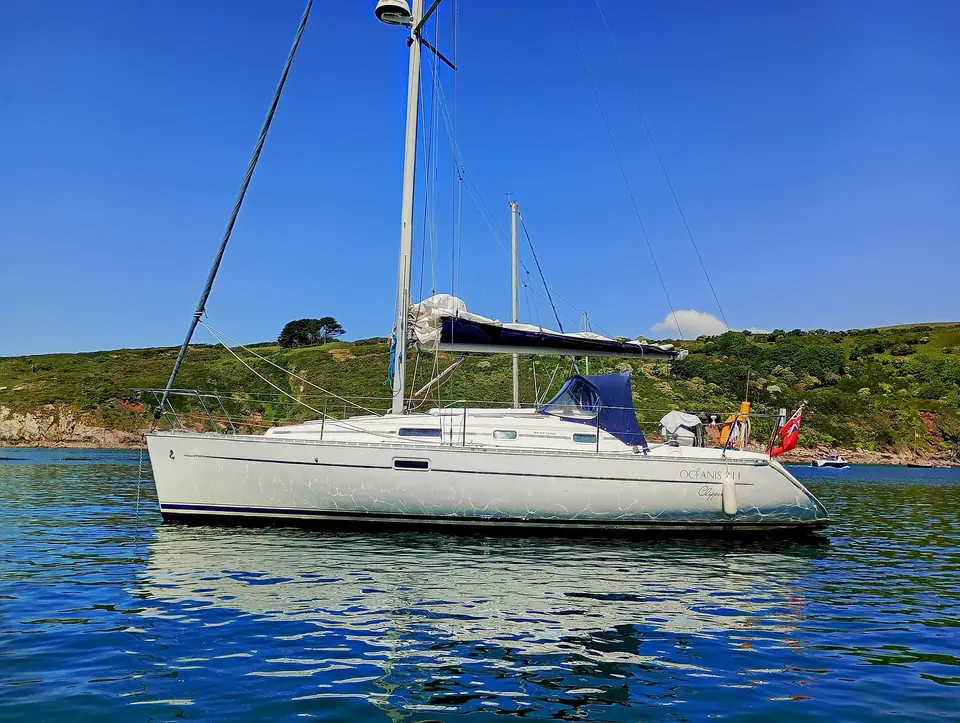
We have not found a freely licensed photo of the Beneteau First 47.7 yet, so these show other Beneteau boats, each captioned with the boat pictured.
More performance sailboats to explore
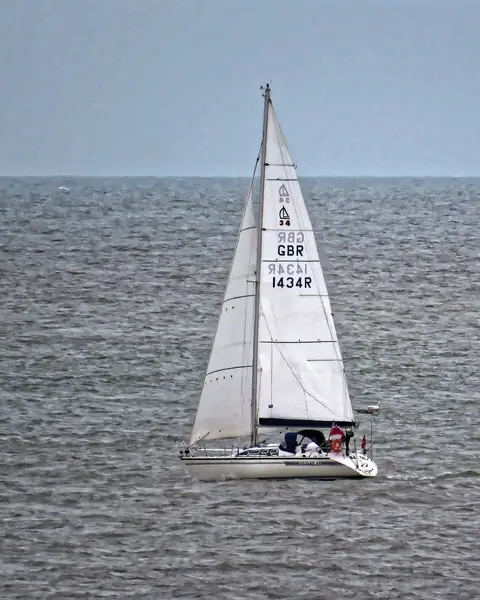
Dehler 46
Performance Sailboats, 48 ft
Used $330K to $520K

Elan E6
Performance Sailboats, 50 ft
Used $380K to $560K
Beneteau First 44
Performance Sailboats, 46 ft
Used $400K to $630K
Beneteau First 45
Performance Sailboats, 46 ft
Used $185K to $290K
Other Beneteau models
- Beneteau 49
- Beneteau 50
- Beneteau 57
- Beneteau 343
- Beneteau Antares 5.80
- Beneteau Antares 6
- Beneteau Antares 6.80
- Beneteau Antares 7
- Beneteau Antares 7.30
- Beneteau Antares 7.60
- Beneteau Antares 7.80
- Beneteau Antares 8
- Beneteau Antares 8.00
- Beneteau Antares 8.05
- Beneteau Antares 8.60
- Beneteau Antares 8.80
- Beneteau Antares 9
- Beneteau Antares 9.80
- Beneteau Antares 10.80
- Beneteau Antares 11
- Beneteau Antares 12
- Beneteau Antares 13.80
- Beneteau Antares 30
- Beneteau Antares 32
- Beneteau Antares 36
- Beneteau Antares 42
- Beneteau Antares 620 HB
- Beneteau Antares 650 HB
- Beneteau Antares 750 HB
- Beneteau Cyclades 39.3
- Beneteau Cyclades 43.3 and 43.4
- Beneteau Cyclades 50.5
- Beneteau First 18 SE
- Beneteau First 20
- Beneteau First 21.7
- Beneteau First 24
- Beneteau First 25
- Beneteau First 25.7
- Beneteau First 27
- Beneteau First 27.7
- Beneteau First 30
- Beneteau First 31.7
- Beneteau First 35
- Beneteau First 36
- Beneteau First 36.7
- Beneteau First 38
- Beneteau First 40
- Beneteau First 40.7
- Beneteau First 44
- Beneteau First 45
- Beneteau First 53
- Beneteau First 211
- Beneteau First 235
- Beneteau First 285
- Beneteau First 305
- Beneteau First 310
- Beneteau First 345
- Beneteau Flyer 6
- Beneteau Flyer 7
- Beneteau Flyer 8
- Beneteau Flyer 9
- Beneteau Flyer 10
- Beneteau Flyer 12
- Beneteau Flyer 500
- Beneteau Flyer 550
- Beneteau Flyer 650
- Beneteau Flyer 701
- Beneteau Flyer 750
- Beneteau Grand Trawler 62
- Beneteau Gran Turismo 32
- Beneteau Gran Turismo 36
- Beneteau Gran Turismo 40
- Beneteau Gran Turismo 41
- Beneteau Gran Turismo 44
- Beneteau Gran Turismo 45
- Beneteau Monte Carlo 6
- Beneteau Oceanis 30.1
- Beneteau Oceanis 31
- Beneteau Oceanis 34
- Beneteau Oceanis 34.1
- Beneteau Oceanis 35
- Beneteau Oceanis 35.1
- Beneteau Oceanis 36 CC
- Beneteau Oceanis 37
- Beneteau Oceanis 38
- Beneteau Oceanis 38.1
- Beneteau Oceanis 40
- Beneteau Oceanis 40 CC
- Beneteau Oceanis 41
- Beneteau Oceanis 41.1
- Beneteau Oceanis 42
- Beneteau Oceanis 42 CC
- Beneteau Oceanis 43
- Beneteau Oceanis 44 CC
- Beneteau Oceanis 45
- Beneteau Oceanis 46
- Beneteau Oceanis 46.1
- Beneteau Oceanis 48
- Beneteau Oceanis 50
- Beneteau Oceanis 51.1
- Beneteau Oceanis 54
- Beneteau Oceanis 55
- Beneteau Oceanis 58
- Beneteau Oceanis 311
- Beneteau Oceanis 320
- Beneteau Oceanis 321
- Beneteau Oceanis 323
- Beneteau Oceanis 331
- Beneteau Oceanis 350
- Beneteau Oceanis 351
- Beneteau Oceanis 370
- Beneteau Oceanis 390
- Beneteau Oceanis 400
- Beneteau Oceanis 411
- Beneteau Oceanis 423
- Beneteau Oceanis 430
- Beneteau Oceanis 440
- Beneteau Oceanis 461
- Beneteau Oceanis 473
- Beneteau Oceanis 500
- Beneteau Oceanis 510
- Beneteau Oceanis Clipper 361
- Beneteau Oceanis Clipper 373
- Beneteau Oceanis Clipper 381
- Beneteau Oceanis Clipper 393
- Beneteau Oceanis Yacht 54
- Beneteau Oceanis Yacht 60
- Beneteau Oceanis Yacht 62
- Beneteau Sense 43
- Beneteau Sense 46
- Beneteau Sense 50
- Beneteau Sense 55
- Beneteau Swift Trawler 30
- Beneteau Swift Trawler 34
- Beneteau Swift Trawler 35
- Beneteau Swift Trawler 41
- Beneteau Swift Trawler 44
- Beneteau Swift Trawler 48
- All Beneteau models