Beneteau Performance Sailboats
Beneteau First 40.7, the Farr Racer-Cruiser That Became a Class
More than 800 boats, a one-design fleet in Chicago and a cabin a family can live with. The 40.7 is still the default 40-foot club racer.
- Length
- 39.9 ft12.17 m
- Beam
- 12.4 ft3.78 m
- Draft
- 7.9 ft2.4 m
- Cabins
- 3 (two aft doubles, forward cabin)
- Used price
- $65K to $130K
On this page
- Overview
- Why the First 40.7 is still on every short list
- A CHS-era hull that went on to win under IMS
- Upwind targets, surfing speeds and the 20-knot threshold
- Racing a 40.7 today
- Removable lockers, three doubles and one head
- The keel question every buyer must ask
- Running a 40.7 in the US
- The 1994 IMS 40.7 and later First 40 are different boats
- Specifications
- Price and value
- Strengths and weaknesses
- Used buyer checklist
- Rivals
- Our verdict
- FAQ
The First 40.7 is a Bruce Farr designed 40 ft racer-cruiser Beneteau built from 1997 into 2008. Over 800 were sold. It races one-design in Chicago, cruises with three cabins and needs a careful keel survey.
- Club racers who want one-design competition
- Families who race on weeknights and cruise on vacations
- Buyers stepping up from a 30 to 35 ft racer-cruiser
- Coastal and lake sailing with occasional overnight races
Beneteau First 40.7 by the numbers
- Sail area to displacement
- 27.3Racing level power, needs active reefing as the breeze builds.
- Displacement to length
- 162Light displacement for its length, quick but sensitive to added cruising weight.
- Theoretical hull speed
- 7.9 knThe practical top speed of a displacement monohull under normal sailing, based on waterline length.
- Ballast ratio
- 39%A typical ballast ratio for a cruising monohull.
- Capsize screening
- 2.00Below 2.0, the traditional threshold for offshore suitability.
- Motion comfort ratio
- 22.8A quicker motion in waves, typical of light, beamy hulls.
- Length to beam ratio
- 3.22 : 1Moderate proportions.
Why the First 40.7 is still on every short list
Ask a Chicago racer, a Solent club sailor or an Australian offshore crew which production 40-footer they would buy on a budget and the First 40.7 comes up fast. Beneteau gave Farr Yacht Design a brief to draw a cruiser that could win at club level and sell in the hundreds every year. Farr's office spent three years getting it from drawing board to production line, according to Russ Bowler, and the result did exactly what was asked: SAIL reported that Beneteau sold more than 800 First 40.7s over an 11-year life.
Cruising World named it the best cruiser-racer of its 1999 Boat of the Year contest, and in 2001 Sailing World noted that two of the three boats on Australia's Kenwood Cup team were 40.7s. That mix of handicap pedigree and a proper three-cabin interior is why the boat still trades well a quarter century later, and why anyone shopping the brokerage market under the name Beneteau 40.7 should study it as a racing platform first and a cruiser second.
A CHS-era hull that went on to win under IMS
Bruce Farr said the hull grew out of his office's IMS work, with a relatively fine entry for upwind work and straight runs aft for speed off the wind, but with more volume and displacement than a pure racer to carry a cruising interior. He also told Practical Sailor that it was originally optimized for CHS, the British rule that favored heavier boats with full interiors, so its later success in top-level IMS racing was something of a bonus. The aluminum rig scored well under the IMS dynamic allowance introduced in 1996 for cruiser-racers.
The numbers are moderate rather than extreme. Practical Sailor calculated a sail area to displacement ratio of 21.0, a displacement to length ratio of 160.6 and a ballast ratio of about 36 percent. Beneteau's 2008 specification gives 6,970 kg light displacement, a 10.62 m waterline and 98 square meters of upwind sail. The target PHRF was 54 seconds per mile, which puts the boat against designs from 38 to 44 feet.
- Deep lead keel (2.40 m, 2,707 kg) or shoal cast iron keel (1.90 m, 2,764 kg)
- Sparcraft fractional rig with triple spreaders and rod standing rigging
- Optional Navtec hydraulic backstay, standard on the First Series race package
- Updated rudders with carbon stocks built by Tides Marine on later boats
Upwind targets, surfing speeds and the 20-knot threshold
Sailing World's test off Falmouth, Massachusetts saw 7.3 knots upwind in a building 15-knot breeze, more than 8 knots under a 105 percent jib in 18 knots true and 10 knots with the spinnaker set and the wind on the quarter. Practical Sailor sailed one on Lake Michigan in 8 to 12 knots and logged 5.8 to 6.2 knots with a 150 percent genoa, then 6.75 knots hardened up to about 36 degrees apparent. Owners reported 8 to 10 knots downwind in 12 to 15 knots of breeze at high jibe angles.
David Hardy, who races Turning Point in the Chicago fleet, told Sailing World that upwind targets hover around 7 knots, that one or two inches of traveler can be worth two tenths of a knot, and that his best surf was 16.8 knots. He also said the boat gets to be a handful beyond 20 knots of wind, when mistakes compound instantly. That matches the general reputation: easily balanced and stiff in moderate air, demanding when it blows hard with a symmetric kite up.
Racing a 40.7 today
A one-design class formed in Chicago soon after launch and has been a fixture of the Helly Hansen NOOD regatta ever since. Class rules keep cushions and the head door aboard, so boats stay habitable, and Hardy's team races with 10 or 11 people using a symmetric spinnaker. The calendar there runs from the Colors Regatta through the NOOD, the Chicago to Mackinac race and the Verve Cup, and points between the top three boats can come down to a single race.
Elsewhere the boat races under PHRF, ORC or IRC. A buyer who wants to join a fleet should check the class rules for sail measurement and equipment before buying, because a cruising-spec boat with a furling genoa and fixed prop will need money spent to be competitive.
Removable lockers, three doubles and one head
The cockpit trick that everyone remembers is the set of removable lockers aft of the slatted teak seats. Bolted in, they are seating and stowage for fenders, lines and spare headsails; lifted out, they give the trimmers stand-up access to the primaries and expose foot braces for the mainsheet trimmer. The double-ended mainsheet runs forward along the boom and back to clutches on both sides, so the main can be trimmed from the rail. Primaries are Lewmar 50 self-tailers, with Lewmar 44s on the coachroof, and the wheel is a 63 inch destroyer type that lets the driver sit well outboard.
Below, there is one layout: two mirror-image aft cabins with roughly 78 by 60 inch berths and about 6 ft 3 in of headroom, a forward cabin with a 7 ft 3 in V-berth, and a single head forward that the forward cabin can reach privately. The saloon has a 44 inch drop-leaf table on the centerline, which racers dislike because it eats space for sail bags. The galley is L-shaped with a double sink and Force 10 two-burner stove, but the top-opening icebox lid forms most of the counter. A large forward-facing nav station has a 41 by 24 inch chart table, and a central manifold routes several hoses to one through-hull.
The keel question every buyer must ask
In May 2014 the 2006-built First 40.7 Cheeki Rafiki lost her keel about 720 nautical miles southeast of Nova Scotia on a delivery from Antigua to Southampton and capsized; her four crew were never found. The keel was held by ten bolts through the outer hull and a bonded inner structural molding, and the UK Marine Accident Investigation Branch found that the design met the construction standards in force when she was built. The investigation focused on the bond between the hull and that inner molding, and the boat had a history of groundings and repairs. Practical Sailor also recalled that another 40.7, Barracuda, lost its keel in 2007 after pounding on the bottom in heavy seas.
None of this means the type is unsafe, but it does mean the hull to keel interface is the single most important item on a survey. Practical Sailor noted that some buyers of early 2000s Beneteaus have the keel dropped to inspect the bolts, the bonding and the matrix, and called that caution cheaper in the long run. On a boat with a racing or charter history, budget for it.
Running a 40.7 in the US
Running costs are typical of a 40 ft fin-keel sailboat. Slip, haul-out and bottom paint, insurance and routine engine and rigging service put annual costs at roughly $9,000 to $22,000 excluding depreciation, with the top of that band reserved for boats that race seriously and replace sails every few seasons. Racing sails are the swing factor: a competitive one-design inventory costs far more than the engine ever will.
Original boats used a Volvo saildrive of about 30 hp, which owners told Practical Sailor pushed the boat at 5 to 7 knots; Beneteau's 2008 sheet lists 40 hp. Saildrive diaphragm replacement intervals, rod rigging age and the condition of the original rudder bearings are the predictable big-ticket items.
The 1994 IMS 40.7 and later First 40 are different boats
Two other Beneteaus cause confusion in listings. The First IMS 40.7 of 1994 was a separate Farr design (number 289) built in tiny numbers, five according to sailboatdata, with a much lighter 5,125 kg displacement and a racing interior. If a listing shows a 1994 build date, check which boat it is.
The successor, the Farr-designed First 40 launched in 2007 and 2008, is a foot longer, beamier and lower, with more righting moment and a T-bulb option. It replaced the 40.7 in the catalog and has its own guide on this site. Do not assume parts, sails or handicap certificates carry over between the three.
Beneteau First 40.7 specifications
| Length overall | 39.9 ft12.17 m |
|---|---|
| Waterline length | 34.8 ft10.62 m |
| Beam | 12.4 ft3.78 m |
| Draft | 7.9 ft2.4 m |
| Air draft | 58.7 ft17.89 m |
| Displacement | 15,366 lbs6,97 kg |
| Ballast | 5,968 lbs2,707 kg |
| Sail area | 1,055 sq ft98 m² |
| Fuel capacity | 36 gal138 L |
| Fresh water | 72 gal272 L |
| Cabins | 3 (two aft doubles, forward cabin) |
| Berths | 6 to 8 |
| Heads | 1, forward, shared with the forward cabin |
| Maximum persons | 12 |
| Standard engines | Volvo Penta 2030 diesel of about 29 to 30 hp with saildrive on early boats; 40 hp listed by 2008 |
| Maximum power | 40 hp |
| Hull type | Fin keel monohull with spade rudder, IMS-derived lines |
| Keel | Deep lead bulb fin about 2.40 m (7 ft 9 in to 7 ft 10 in) or shoal cast iron fin 1.90 m (6 ft 2 in) |
| Rig | Sparcraft 9/10 fractional sloop, triple swept spreaders, rod rigging |
| Hull construction | Solid fiberglass hull with bonded structural inner molding; balsa-cored deck |
| CE design category | A12 / B12 / C12 |
| Builder | Beneteau, France |
| Naval architect | Farr Yacht Design (Bruce Farr, design #354) |
| Other design credits | Interior by Beneteau's in-house design team |
| Production | 1997 to 2008 |
| Status | Discontinued |
Figures come from builder documentation and independent tests where available. Displacement is usually quoted light, so a loaded cruising boat will weigh more. Compare these specs with another model.
How much does a Beneteau First 40.7 cost?
Practical Sailor quoted a base of $154,900 FOB an East Coast port, with spinnaker gear, racing sails and electronics adding $10,000 to $30,000, and Sailing World estimated about $200,000 race-ready in 2001. In 2026 asking prices in Europe run from about 69,000 to 110,000 euros, and US boats sit in a similar band. Keel history, sail inventory, engine hours and whether the boat carries a current one-design or ORC certificate move prices more than model year.
Estimate your yearly cost
A planning estimate using common rules of thumb: insurance near 1.5 percent of value, maintenance near 3 percent, haul out and bottom paint by length. Your marina, region and use will move these numbers. Open the full cost calculator.
Versions and options
- Standard cruiser specification
- Furling genoa, Dacron sails, fixed or two-blade prop, shoal iron keel in some markets.
- First Series race package
- Triple-spreader mast with hydraulic backstay and rod rigging, Tuff Luff headstay, spinnaker gear, Vectran halyards, folding prop, deep 7 ft 9 in keel and an upgraded Lewmar winch package, per Sailing World.
- Shoal draft
- Cast iron keel of about 6 ft 2 in (1.90 m), heavier ballast but less efficient.
Beneteau First 40.7 timeline
- 1994Separate First IMS 40.7 racer built in very small numbers
- 1997First 40.7 enters production, Farr design #354
- 1999Named Cruising World's best cruiser-racer
- 2001Two of Australia's three Kenwood Cup team boats are 40.7s; more than 235 built
- 2008Replaced by the Farr-designed First 40 after more than 800 sales
- 2014Loss of Cheeki Rafiki puts keel attachment under scrutiny
Strengths and weaknesses
What owners like
- Proven race winner with an active one-design fleet in Chicago
- Three real double cabins for family cruising
- Removable cockpit lockers switch neatly between race and cruise modes
- Moderate displacement makes it stiff and forgiving in normal breeze
- Large supply of boats keeps prices transparent
- Strong resale for well-kept race-ready examples
What to weigh up
- Keel to hull structure demands a thorough survey
- Single head for up to eight people
- Galley counter space is minimal
- Can be a handful with a symmetric kite above 20 knots
- Deep keel limits cruising grounds in shoal areas
Used Beneteau First 40.7 buyer checklist
Take this list to a viewing. Your ticks are saved in this browser so you can come back to it.
Always commission an independent marine survey and an engine survey before you buy. How a marine survey works.
Rivals to consider
J/120
Asymmetric sprit boat of the same era, simpler to sail shorthanded but with a less roomy interior.
Compare side by sideBeneteau First 40
The Farr successor, faster and more powerful, and pricier on the used market.
Compare side by sideDehler 39
German contemporary with a more solid fit-out and similar performance cruiser aims.
Compare side by sideBeneteau First 36.7
The smaller Farr sister, cheaper and also raced as a one-design.
Compare side by sideOur verdict on the Beneteau First 40.7
If you want to race a 40-footer in a competitive fleet without paying for a carbon thoroughbred, the First 40.7 is hard to beat, and it doubles as an honest three-cabin cruiser. The catch is structural: every boat is now 18 to 29 years old, many have been raced hard or chartered, and the keel attachment has a history that cannot be waved away. Pay for an expert survey, walk away from any boat whose grid shows distress or whose grounding record is vague, and budget for sails. Get those right and few production boats give as much racing for the money.
Beneteau First 40.7 questions answered
How many Beneteau First 40.7s were built?
SAIL magazine reported that Beneteau sold more than 800 over the boat's 11-year production life.
Who designed the First 40.7?
Farr Yacht Design, as Farr design number 354, with an interior by Beneteau's in-house team.
Is the First 40.7 safe after the Cheeki Rafiki accident?
The type met construction standards when built, but the keel to hull structure must be surveyed carefully, especially on boats with grounding or charter history.
What is the PHRF rating of a First 40.7?
Its target PHRF was 54 seconds per mile; local ratings vary with keel, prop and sail inventory.
How much is a Beneteau 40.7 for sale in 2026?
Most asking prices fall between about $65,000 and $130,000, depending on year, keel history and sails.
What is the difference between the First 40.7 and the First 40?
The First 40 is a later Farr design, a foot longer with more beam and righting moment, built from 2007 and 2008.
Photos from the Beneteau range
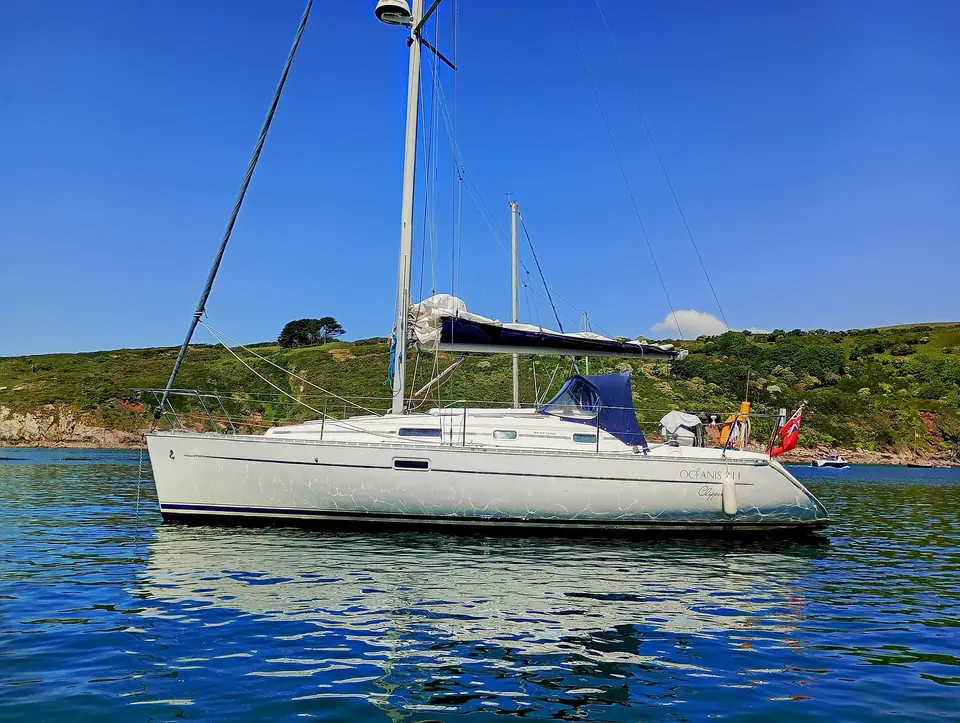
We have not found a freely licensed photo of the Beneteau First 40.7 yet, so these show other Beneteau boats, each captioned with the boat pictured.
More performance sailboats to explore
J/120
Performance Sailboats, 40 ft
Used $85K to $200K
Beneteau First 38
Performance Sailboats, 40 ft
Used $28K to $65K
Dehler 38 SQ
Performance Sailboats, 40 ft
Used $250K to $340K
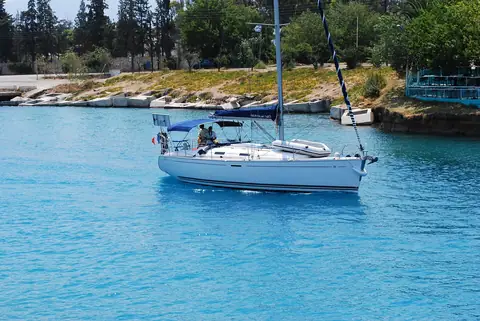
Dufour 40 Performance
Performance Sailboats, 40 ft
Used $85K to $145K
Other Beneteau models
- Beneteau 49
- Beneteau 50
- Beneteau 57
- Beneteau 343
- Beneteau Antares 5.80
- Beneteau Antares 6
- Beneteau Antares 6.80
- Beneteau Antares 7
- Beneteau Antares 7.30
- Beneteau Antares 7.60
- Beneteau Antares 7.80
- Beneteau Antares 8
- Beneteau Antares 8.00
- Beneteau Antares 8.05
- Beneteau Antares 8.60
- Beneteau Antares 8.80
- Beneteau Antares 9
- Beneteau Antares 9.80
- Beneteau Antares 10.80
- Beneteau Antares 11
- Beneteau Antares 12
- Beneteau Antares 13.80
- Beneteau Antares 30
- Beneteau Antares 32
- Beneteau Antares 36
- Beneteau Antares 42
- Beneteau Antares 620 HB
- Beneteau Antares 650 HB
- Beneteau Antares 750 HB
- Beneteau Cyclades 39.3
- Beneteau Cyclades 43.3 and 43.4
- Beneteau Cyclades 50.5
- Beneteau First 18 SE
- Beneteau First 20
- Beneteau First 21.7
- Beneteau First 24
- Beneteau First 25
- Beneteau First 25.7
- Beneteau First 27
- Beneteau First 27.7
- Beneteau First 30
- Beneteau First 31.7
- Beneteau First 35
- Beneteau First 36
- Beneteau First 36.7
- Beneteau First 38
- Beneteau First 40
- Beneteau First 44
- Beneteau First 45
- Beneteau First 47.7
- Beneteau First 53
- Beneteau First 211
- Beneteau First 235
- Beneteau First 285
- Beneteau First 305
- Beneteau First 310
- Beneteau First 345
- Beneteau Flyer 6
- Beneteau Flyer 7
- Beneteau Flyer 8
- Beneteau Flyer 9
- Beneteau Flyer 10
- Beneteau Flyer 12
- Beneteau Flyer 500
- Beneteau Flyer 550
- Beneteau Flyer 650
- Beneteau Flyer 701
- Beneteau Flyer 750
- Beneteau Grand Trawler 62
- Beneteau Gran Turismo 32
- Beneteau Gran Turismo 36
- Beneteau Gran Turismo 40
- Beneteau Gran Turismo 41
- Beneteau Gran Turismo 44
- Beneteau Gran Turismo 45
- Beneteau Monte Carlo 6
- Beneteau Oceanis 30.1
- Beneteau Oceanis 31
- Beneteau Oceanis 34
- Beneteau Oceanis 34.1
- Beneteau Oceanis 35
- Beneteau Oceanis 35.1
- Beneteau Oceanis 36 CC
- Beneteau Oceanis 37
- Beneteau Oceanis 38
- Beneteau Oceanis 38.1
- Beneteau Oceanis 40
- Beneteau Oceanis 40 CC
- Beneteau Oceanis 41
- Beneteau Oceanis 41.1
- Beneteau Oceanis 42
- Beneteau Oceanis 42 CC
- Beneteau Oceanis 43
- Beneteau Oceanis 44 CC
- Beneteau Oceanis 45
- Beneteau Oceanis 46
- Beneteau Oceanis 46.1
- Beneteau Oceanis 48
- Beneteau Oceanis 50
- Beneteau Oceanis 51.1
- Beneteau Oceanis 54
- Beneteau Oceanis 55
- Beneteau Oceanis 58
- Beneteau Oceanis 311
- Beneteau Oceanis 320
- Beneteau Oceanis 321
- Beneteau Oceanis 323
- Beneteau Oceanis 331
- Beneteau Oceanis 350
- Beneteau Oceanis 351
- Beneteau Oceanis 370
- Beneteau Oceanis 390
- Beneteau Oceanis 400
- Beneteau Oceanis 411
- Beneteau Oceanis 423
- Beneteau Oceanis 430
- Beneteau Oceanis 440
- Beneteau Oceanis 461
- Beneteau Oceanis 473
- Beneteau Oceanis 500
- Beneteau Oceanis 510
- Beneteau Oceanis Clipper 361
- Beneteau Oceanis Clipper 373
- Beneteau Oceanis Clipper 381
- Beneteau Oceanis Clipper 393
- Beneteau Oceanis Yacht 54
- Beneteau Oceanis Yacht 60
- Beneteau Oceanis Yacht 62
- Beneteau Sense 43
- Beneteau Sense 46
- Beneteau Sense 50
- Beneteau Sense 55
- Beneteau Swift Trawler 30
- Beneteau Swift Trawler 34
- Beneteau Swift Trawler 35
- Beneteau Swift Trawler 41
- Beneteau Swift Trawler 44
- Beneteau Swift Trawler 48
- All Beneteau models