Beneteau Oceanis 500 Guide for Buyers of a 1988 Classic
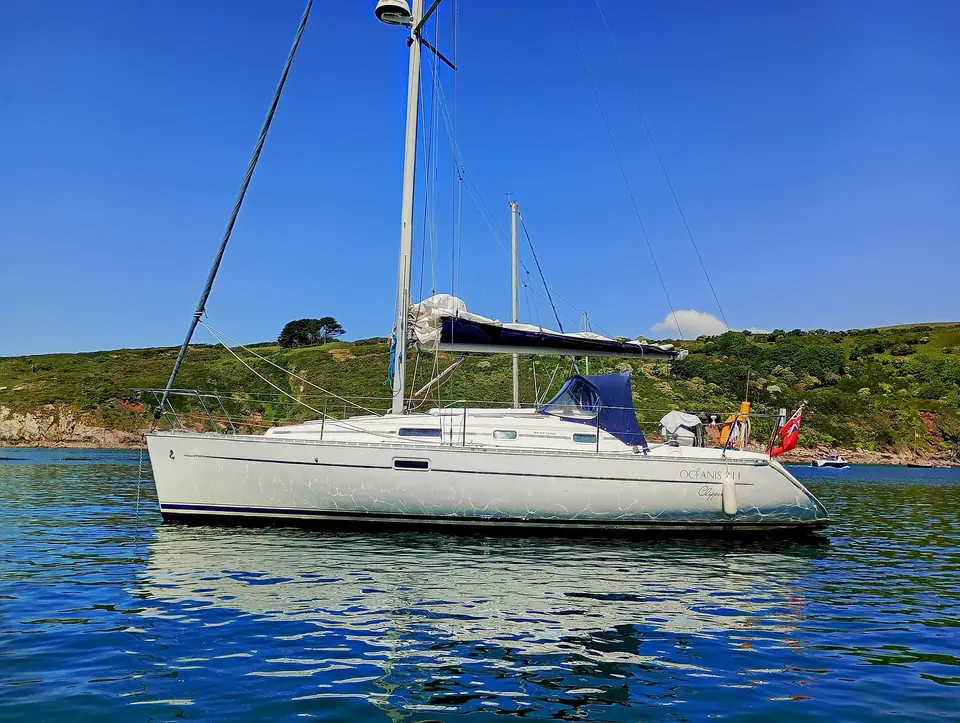
The big Philippe Briand cruiser of Beneteau's first Oceanis range, with a long waterline, a wing keel and tanks sized for living aboard.
- Length
- 50.3 ft15.32 m
- Beam
- 15.6 ft4.75 m
- Draft
- 6 ft1.83 m
- Used price
- $75K to $140K
On this page
- Overview
- The big boat of Beneteau's first Oceanis range
- Philippe Briand's numbers, decoded
- A wing keel at 6 ft
- A Perkins 4-236 and tanks for living aboard
- Moorings 500 and Prestige 500
- Where the 500 sits among the big Oceanis boats
- Survey priorities for a boat from 1988
- What a Beneteau Oceanis 500 is worth today
- Specifications
- Price and value
- Strengths and weaknesses
- Used buyer checklist
- Rivals
- Our verdict
- FAQ
The Beneteau Oceanis 500 is a 50 ft 3 in Philippe Briand designed masthead sloop first built in 1988. It has a wing keel drawing 6 ft, a Perkins 4-236 diesel and 265 gallons of water, and was also sold as the Moorings 500 and Prestige 500.
- Liveaboards on a budget
- Refit-minded owners who want a big hull
- Shallow water cruising in the Bahamas and Florida
- Sailors who value tankage over modern styling
The big boat of Beneteau's first Oceanis range
Searches for beneteau 500 oceanis lead to one of the larger boats in Beneteau's original Oceanis line. Practical Sailor's history of the company records that Beneteau commissioned Philippe Briand in 1986 to inaugurate the Oceanis performance cruising range, and Beneteau USA's own literature dates the range to 1985. Sailboatdata lists the Oceanis 500 as a Briand design first built in 1988, with figures taken from the original builder's brochure.
The boat is a 50 ft 3 in masthead sloop with a 15 ft 7 in beam, a wing keel and a displacement of 30,700 lb. For the late 1980s that was a lot of boat for a production builder, and it was clearly aimed at owners who wanted to live aboard and cruise far: the tanks hold 148 gallons of diesel and 265 gallons of water. Today it is a rare sight in the US, and most buyers who find one are looking at a 35 year old cruiser that has had several owners and, often, a charter career.
Beneteau Oceanis 500 by the numbers
- Sail area to displacement
- 18.2Balanced power for coastal and offshore cruising.
- Displacement to length
- 156Light displacement for its length, quick but sensitive to added cruising weight.
- Theoretical hull speed
- 8.9 knThe practical top speed of a displacement monohull under normal sailing, based on waterline length.
- Ballast ratio
- 35%A typical ballast ratio for a cruising monohull.
- Capsize screening
- 1.99Below 2.0, the traditional threshold for offshore suitability.
- Motion comfort ratio
- 26.5Moderate motion comfort, typical of modern cruisers.
- Length to beam ratio
- 3.23 : 1Moderate proportions.
Philippe Briand's numbers, decoded
The most striking figure is the 44 ft 6 in waterline on a 50 ft 3 in hull. In 1988 many cruisers still carried long overhangs, so a waterline this close to overall length was notable, and it gives the 500 a theoretical hull speed of about 8.9 knots. The displacement to length ratio of about 155 is moderate, and the ballast ratio of about 35 percent, with 10,800 lb of ballast, is respectable.
With 1,115 sq ft of sail on the masthead rig, the sail area to displacement ratio is about 18.3, which sailboatdata's scale places in the reasonably good performance band. In practical terms, the 500 should be a steady, powerful cruiser in 12 knots and up, but it is not a light air boat, and it will need a large genoa or a cruising spinnaker to keep moving in the lighter summer breezes of the US East Coast.
A wing keel at 6 ft
The Oceanis 500 is listed with a wing keel drawing 6 ft. On a 50 footer that is a practical draft for the Chesapeake, the Florida Keys and much of the Bahamas, and it is one of the reasons boats like this appealed to American cruisers. Wing keels trade a little upwind performance and some ability to kedge off a grounding for that shallower draft.
The charter version cataloged as the Moorings 500 is listed by sailboatdata with a fin keel and spade rudder, a lighter 28,600 lb displacement and a smaller sail plan of 1,021 sq ft. So two boats that look alike in the water may behave differently, and the keel type should be the first thing you confirm on any listing.
A Perkins 4-236 and tanks for living aboard
The original brochure figures list a Perkins 4-236 of 85 hp. The 4-236 is a heavy, slow-revving, naturally aspirated four cylinder that was fitted to thousands of yachts and work boats in that era, and parts and rebuild knowledge are still widely available. The Moorings 500 is listed with a different engine, a Perkins 6-354 of 80 hp, which is another reminder to check the actual installation rather than the brochure.
Tankage is the 500's quiet strength: 148 gallons of fuel and 265 gallons of water put it ahead of many newer 50 footers, and make longer passages and extended stays at anchor realistic. The flip side is age. Tanks from the late 1980s may be due for inspection or replacement, and replacing a large tank often means removing furniture. Ask what the tanks are made of, when they were last inspected, and whether there is any sign of leaks or corrosion.
Moorings 500 and Prestige 500
Sailboatdata notes that the charter version was sold as the Moorings 500 and the Prestige 500. Like the later Moorings Beneteaus, these boats were fitted out for fleet use, with interiors and equipment specified by the charter companies. Many came onto the brokerage market after their charter terms.
That history affects value and inspection. Charter boats were serviced on a schedule but sailed hard by many different crews, and cabins, heads and galley equipment were often modified or replaced over the years. Ask for the boat's original documents, which will show whether it was built as a private Oceanis 500 or as a charter version.
Where the 500 sits among the big Oceanis boats
The Oceanis 500 belongs to the generation that included the Briand designed Oceanis 430, built from 1986 to 1992. It was followed at the top of the range by the Oceanis 510, first built in 1992 and also credited to Briand. Sailboatdata's figures for the two are almost identical, with the same 15 ft 7 in beam, essentially the same 44 ft 6 in waterline and the same 10,800 lb of ballast, which suggests the 510 was a development of the 500 rather than a clean sheet design.
From 1995 Beneteau's large cruiser was the Farr designed Beneteau 50, a completely different and more modern boat. If you are comparing a 500 with either of those, remember that the 510 is a few years newer and the Farr 50 roughly a decade newer, and price them accordingly.
Survey priorities for a boat from 1988
Any 50 foot production boat from the late 1980s needs a thorough pre-purchase survey. The biggest risks are structural and systems related rather than design related: deck core moisture around fittings, the condition of the hull to deck joint, chainplates and their knees, and the bond between the hull and its internal structure in the keel area. A wing keel boat that has grounded hard deserves particular attention around the keel stub.
Systems age is the other issue. Original wiring, panels, through-hulls, hoses and tanks are all due for replacement after 35 years if they have not been done. A rig survey is essential, as is an engine survey with oil analysis on the Perkins.
- Hull moisture readings and any history of osmosis treatment
- Deck core around stanchions, winches, hatches and the mast step
- Keel bolts and wing keel attachment, especially after groundings
- Standing rigging age, chainplates and mast step corrosion
- Fuel and water tanks, fittings and gauges
- Perkins engine mounts, exhaust, heat exchanger and hours
What a Beneteau Oceanis 500 is worth today
With so few boats on the market, there is no tight price band for the Beneteau Oceanis 500. A realistic US range in 2026 is about $75,000 to $140,000. The bottom of the range buys a boat that needs rigging, engine work and interior refurbishment; the top requires recent big ticket work with receipts. At these prices, the 500 offers a great deal of length, waterline and tankage for the money, but the purchase price is only the start: budget for a refit fund of 10 to 20 percent of the price in the first two years.
Annual costs for slip, insurance and maintenance on a 50 footer typically run $12,000 to $24,000, more if the boat is kept in a high cost marina.
Beneteau Oceanis 500 specifications
| Length overall | 50.3 ft15.32 m |
|---|---|
| Waterline length | 44.5 ft13.56 m |
| Beam | 15.6 ft4.75 m |
| Draft | 6 ft1.83 m |
| Displacement | 30,7 lbs13,925 kg |
| Ballast | 10,8 lbs4,899 kg |
| Sail area | 1,115 sq ft103.6 m² |
| Fuel capacity | 148 gal56 L |
| Fresh water | 265 gal1,003 L |
| Standard engines | Perkins 4-236 diesel, 85 hp |
| Maximum power | 85 hp |
| Hull type | Moderate displacement monohull with wing keel |
| Keel | Wing keel, 6 ft draft (the Moorings 500 charter version is listed with a fin keel) |
| Rig | Masthead sloop |
| Hull construction | Fiberglass |
| Builder | Beneteau, France |
| Naval architect | Philippe Briand |
| Production | 1988 to present |
| Status | Discontinued |
Figures come from builder documentation and independent tests where available. Displacement is usually quoted light, so a loaded cruising boat will weigh more. Compare these specs with another model.
How much does a Beneteau Oceanis 500 cost?
There are very few Oceanis 500s on the US market at any time, so each boat is priced on its own condition. A boat with a recent repower, new standing rigging and a dry deck can justify the top of the range; one with the original Perkins, old tanks and tired canvas belongs at the bottom. Former Moorings 500 charter boats usually trade below private boats.
Estimate your yearly cost
A planning estimate using common rules of thumb: insurance near 1.5 percent of value, maintenance near 3 percent, haul out and bottom paint by length. Your marina, region and use will move these numbers. Open the full cost calculator.
Versions and options
- Oceanis 500
- The private version with a wing keel, 85 hp Perkins 4-236 and about 1,115 sq ft of sail, according to sailboatdata.
- Moorings 500
- Charter version listed with a fin keel, Perkins 6-354 of 80 hp, 28,600 lb displacement and 1,021 sq ft of sail.
- Prestige 500
- Another charter variant of the same design.
Beneteau Oceanis 500 timeline
- 1986Beneteau commissions Philippe Briand to design its Oceanis performance cruisers
- 1988Oceanis 500 first built
- 1992Oceanis 510 with near-identical dimensions takes over the top of the range
- 1995Farr designed Beneteau 50 arrives as the next big Beneteau cruiser
Strengths and weaknesses
What owners like
- Long 44 ft 6 in waterline
- 6 ft wing keel for shallow cruising grounds
- 148 gallons of fuel and 265 of water
- Proven Perkins 4-236 diesel
- A lot of boat for the money
What to weigh up
- Every example is more than 35 years old
- Rare in the US, with few comparables
- Not a light air boat
- Layout and equipment vary widely, especially on charter boats
Used Beneteau Oceanis 500 buyer checklist
Take this list to a viewing. Your ticks are saved in this browser so you can come back to it.
Always commission an independent marine survey and an engine survey before you buy. How a marine survey works.
Rivals to consider
Beneteau Oceanis 510
The 1992 successor with almost the same dimensions, a few years newer and usually a little more expensive.
Compare side by sideBeneteau 50
The Farr designed 50 from 1995, a newer and more refined hull with large tanks.
Compare side by sideAmel Super Maramu
A purpose-built ketch for long distance cruising, far more expensive but built to a very different standard.
Compare side by sideOur verdict on the Beneteau Oceanis 500
The Beneteau Oceanis 500 is a lot of hull for the money: a long waterline, a shoal wing keel and tanks sized for serious cruising, on a design by one of the best known French designers of the period. What it is not is a turnkey boat. Every example is now well over 30 years old, the US market is thin and many have a charter past. Buy one only after a full survey, with a refit budget in hand, and you can have a capable, roomy liveaboard cruiser for the price of a much smaller modern boat.
Beneteau Oceanis 500 questions answered
Who designed the Beneteau Oceanis 500?
Philippe Briand, who designed Beneteau's first Oceanis cruisers in the mid 1980s.
When was the Oceanis 500 built?
Sailboatdata lists 1988 as the first year built. It was succeeded at the top of the range by the Oceanis 510 in 1992.
What engine does the Beneteau 500 Oceanis have?
The original brochure figures list a Perkins 4-236 of 85 hp. Many boats have since been repowered, so check the installed engine.
How much water and fuel does the Oceanis 500 carry?
About 265 gallons of water and 148 gallons of diesel, which is generous for a 50 footer.
What is the Moorings 500?
A charter version of the Oceanis 500 design, listed with a fin keel and a different Perkins engine.
How much is a Beneteau Oceanis 500 worth?
Roughly $75,000 to $140,000 in the US in 2026, depending heavily on the condition of the rig, engine and deck.
Photos from the Beneteau range
We have not found a freely licensed photo of the Beneteau Oceanis 500 yet, so these show other Beneteau boats, each captioned with the boat pictured.
More cruising sailboats to explore
Beneteau Oceanis 510
Cruising Sailboats, 50 ft
Used $90K to $165K
Beneteau Sense 50
Cruising Sailboats, 50 ft
Used $260K to $420K
Bavaria 49
Cruising Sailboats, 51 ft
Used $115K to $170K
Bavaria 50 Cruiser
Cruising Sailboats, 51 ft
Used $135K to $210K
Other Beneteau models
- Beneteau 49
- Beneteau 50
- Beneteau 57
- Beneteau 343
- Beneteau Antares 5.80
- Beneteau Antares 6
- Beneteau Antares 6.80
- Beneteau Antares 7
- Beneteau Antares 7.30
- Beneteau Antares 7.60
- Beneteau Antares 7.80
- Beneteau Antares 8
- Beneteau Antares 8.00
- Beneteau Antares 8.05
- Beneteau Antares 8.60
- Beneteau Antares 8.80
- Beneteau Antares 9
- Beneteau Antares 9.80
- Beneteau Antares 10.80
- Beneteau Antares 11
- Beneteau Antares 12
- Beneteau Antares 13.80
- Beneteau Antares 30
- Beneteau Antares 32
- Beneteau Antares 36
- Beneteau Antares 42
- Beneteau Antares 620 HB
- Beneteau Antares 650 HB
- Beneteau Antares 750 HB
- Beneteau Cyclades 39.3
- Beneteau Cyclades 43.3 and 43.4
- Beneteau Cyclades 50.5
- Beneteau First 18 SE
- Beneteau First 20
- Beneteau First 21.7
- Beneteau First 24
- Beneteau First 25
- Beneteau First 25.7
- Beneteau First 27
- Beneteau First 27.7
- Beneteau First 30
- Beneteau First 31.7
- Beneteau First 35
- Beneteau First 36
- Beneteau First 36.7
- Beneteau First 38
- Beneteau First 40
- Beneteau First 40.7
- Beneteau First 44
- Beneteau First 45
- Beneteau First 47.7
- Beneteau First 53
- Beneteau First 211
- Beneteau First 235
- Beneteau First 285
- Beneteau First 305
- Beneteau First 310
- Beneteau First 345
- Beneteau Flyer 6
- Beneteau Flyer 7
- Beneteau Flyer 8
- Beneteau Flyer 9
- Beneteau Flyer 10
- Beneteau Flyer 12
- Beneteau Flyer 500
- Beneteau Flyer 550
- Beneteau Flyer 650
- Beneteau Flyer 701
- Beneteau Flyer 750
- Beneteau Grand Trawler 62
- Beneteau Gran Turismo 32
- Beneteau Gran Turismo 36
- Beneteau Gran Turismo 40
- Beneteau Gran Turismo 41
- Beneteau Gran Turismo 44
- Beneteau Gran Turismo 45
- Beneteau Monte Carlo 6
- Beneteau Oceanis 30.1
- Beneteau Oceanis 31
- Beneteau Oceanis 34
- Beneteau Oceanis 34.1
- Beneteau Oceanis 35
- Beneteau Oceanis 35.1
- Beneteau Oceanis 36 CC
- Beneteau Oceanis 37
- Beneteau Oceanis 38
- Beneteau Oceanis 38.1
- Beneteau Oceanis 40
- Beneteau Oceanis 40 CC
- Beneteau Oceanis 41
- Beneteau Oceanis 41.1
- Beneteau Oceanis 42
- Beneteau Oceanis 42 CC
- Beneteau Oceanis 43
- Beneteau Oceanis 44 CC
- Beneteau Oceanis 45
- Beneteau Oceanis 46
- Beneteau Oceanis 46.1
- Beneteau Oceanis 48
- Beneteau Oceanis 50
- Beneteau Oceanis 51.1
- Beneteau Oceanis 54
- Beneteau Oceanis 55
- Beneteau Oceanis 58
- Beneteau Oceanis 311
- Beneteau Oceanis 320
- Beneteau Oceanis 321
- Beneteau Oceanis 323
- Beneteau Oceanis 331
- Beneteau Oceanis 350
- Beneteau Oceanis 351
- Beneteau Oceanis 370
- Beneteau Oceanis 390
- Beneteau Oceanis 400
- Beneteau Oceanis 411
- Beneteau Oceanis 423
- Beneteau Oceanis 430
- Beneteau Oceanis 440
- Beneteau Oceanis 461
- Beneteau Oceanis 473
- Beneteau Oceanis 510
- Beneteau Oceanis Clipper 361
- Beneteau Oceanis Clipper 373
- Beneteau Oceanis Clipper 381
- Beneteau Oceanis Clipper 393
- Beneteau Oceanis Yacht 54
- Beneteau Oceanis Yacht 60
- Beneteau Oceanis Yacht 62
- Beneteau Sense 43
- Beneteau Sense 46
- Beneteau Sense 50
- Beneteau Sense 55
- Beneteau Swift Trawler 30
- Beneteau Swift Trawler 34
- Beneteau Swift Trawler 35
- Beneteau Swift Trawler 41
- Beneteau Swift Trawler 44
- Beneteau Swift Trawler 48
- All Beneteau models