Dufour Yachts Cruising Sailboats
Dufour 390 Grand Large Review, Layout Choices and Used Values
A beamy 2019 family cruiser with a modest rig that surprised testers by sailing hard and well in 30 knots of wind.
- Length
- 39.2 ft11.94 m
- Beam
- 13.1 ft3.99 m
- Draft
- 6.4 ft1.95 m
- Cabins
- 2 or 3
- Used price
- $175K to $260K
On this page
- Overview
- The first of the post-2018 Dufours
- Where all that volume comes from
- Thirty knots in the Solent: the test that sold the boat
- Small rig details worth fixing on a used boat
- Five ways to lay out a 39-foot interior
- Outdoor galley, twin wheels and the hinged transom
- Thirty or forty horsepower, and the rare electric boat
- What a used 390 costs, and which ones to avoid
- Specifications
- Price and value
- Strengths and weaknesses
- Used buyer checklist
- Rivals
- Our verdict
- FAQ
The Dufour 390 is an 11.94 m Felci design launched in 2019 with a 3.99 m beam, five interior layouts, a 30 hp or 40 hp saildrive and a hull that feels livelier than its numbers. Now a brokerage boat.
- Couples and families cruising coastal waters
- Owners stepping up from a 33 to 35 footer
- Buyers who want space without a dull sail
- Charter-to-private conversions on a budget
The first of the post-2018 Dufours
The Dufour 390 Grand Large made its public debut at boot Düsseldorf in January 2019, next to its bigger sister, the 430. Yachting World's show guide summed up the pair in one line: stronger hull chines and wider sterns for more form stability. It was the first new generation from the La Rochelle yard after its 2018 purchase by Fountaine Pajot, and it took the place of the 382 Grand Large in the range.
The boat reached the United States that spring. Cruising World editor Mark Pillsbury sailed both new Dufours on Chesapeake Bay before their official debut at the Annapolis show in October 2019 and stepped off, in his words, with a smile plastered on his face. Both were nominated for Cruising World's 2020 Boat of the Year, and the 390 was a family cruiser finalist for European Yacht of the Year 2019.
If you are researching the dufour 390, the naming can be confusing. Early press material calls it the Dufour Grand Large 390 or 390 Grand Large; later brochures and listings simply say Dufour 390. They are the same boat. It stayed in the range alongside the newer Dufour 37, 41 and 44 into 2024, and today's lineup has moved on to the Dufour 39.
Dufour 390 Grand Large by the numbers
- Sail area to displacement
- 17.3Balanced power for coastal and offshore cruising.
- Displacement to length
- 185Light displacement for its length, quick but sensitive to added cruising weight.
- Theoretical hull speed
- 7.9 knThe practical top speed of a displacement monohull under normal sailing, based on waterline length.
- Ballast ratio
- 27%Relatively low ballast, form stability does more of the work.
- Capsize screening
- 2.04Above 2.0, so this hull leans toward coastal stability over ultimate offshore resistance.
- Motion comfort ratio
- 23.8A quicker motion in waves, typical of light, beamy hulls.
- Length to beam ratio
- 2.99 : 1A beamy hull with lots of volume for its length.
Where all that volume comes from
The hull itself is 11.19 m (36 ft 9 in) long. A molded bowsprit that doubles as the anchor roller takes the overall length to 11.94 m (39 ft 2 in), which is why the boat is sometimes listed as a 37-footer and sometimes as a 39-footer. Beam is 3.99 m (13 ft 1 in), and David Harding of Yachting Monthly noticed that it is carried much further forward than on earlier Dufours, giving the 390 broad shoulders and an enormous forecabin.
Felci drew nearly vertical topsides down to long chines that start well forward, then tucked the hull in below them to keep the waterline narrower. The result is a light, flat-sectioned shape: 7,700 kg (16,976 lb) light, with a 2,100 kg cast iron bulb keel and a 10.50 m waterline. Below the water there is a moderate-aspect fin and a high-aspect, semi-balanced rudder, a single blade rather than the twin rudders many rivals adopted.
- Standard keel draws 1.95 m (6 ft 5 in); the shoal option draws 1.75 m (5 ft 9 in)
- Sail area 66.5 m2 (36.6 m2 main, 29.9 m2 headsail)
- Sail area to displacement about 16.3 on the 100 percent foretriangle (Yachting Monthly)
- Ballast ratio about 27 percent and displacement to length about 185 (sailboatdata)
Thirty knots in the Solent: the test that sold the boat
Numbers like those usually describe a boat that needs the engine on in light air and a reef early. Yachting Monthly's two-part test in 2021 says otherwise. On the first day, in a shifty breeze gusting to about 6 knots, the owner's boat with a deep keel and overlapping headsail clocked 3.5 knots on the wind. On the second, with gusts near 30 knots down Southampton Water, it reached at up to 8 knots on the log under full headsail and one reef, then punched upwind through Solent chop at 6 to 6.4 knots, touching 6.7 in flatter water while tacking through about 75 degrees.
Harding then tried to make the boat misbehave. With the sheets pinned in and the traveller amidships, the rudder held until about 30 degrees of heel before the boat rounded up, gently by modern standards, and settled hove to. Fore-reaching at about 3 knots, it still answered the helm well enough to be turned downwind, gybed and brought back close-hauled. His verdict was responsive, obedient and fun to sail, which is not what you expect from a boat bought mostly for its saloon.
The weak point is momentum. A light, high-volume, flat-sectioned hull sheds speed quickly in a tack, so the headsail has to come in fast. Expect the usual beamy-boat trait too: constant small helm corrections as the hull heels and comes upright in gusts, and downwind in a seaway.
Small rig details worth fixing on a used boat
The test exposed a few cheap fixes. The genoa tracks stop too far forward for the overlapping sail, so the leech closes while the foot stays slack; longer tracks or a barber hauler solve it. Standard rigging is twin backstays with no tensioner, and a single bifurcated backstay with an adjuster was on the options list, worth having for headsail shape. The two-bladed fixed propeller costs speed in light air, so a folding prop is a common upgrade.
Good news is in the standard hardware: a mainsheet traveller, which many family cruisers omit, a German-style split mainsheet led to both helm consoles, and Lewmar 40 self-tailers forward of the wheels.
Five ways to lay out a 39-foot interior
Dufour's 2020 brochure listed five layouts, which is unusually many for a boat this size. The most common in private hands is three cabins and two heads: twin double cabins aft, a communal head to port opposite an L-shaped galley, and an en suite head in the forecabin. Cruising World's Annapolis boat, at about $303,000, had that arrangement. A two-cabin version replaces one aft cabin with a huge athwartships double or with storage and a bigger aft head.
Charter fleets favored the three-cabin, three-head plan with a linear galley along the port side, and there are single-head versions with two or three cabins. For a couple who cruise, the two-cabin boat with the L-galley is the best boat to live on. For resale, the three-cabin, two-head layout is the safest bet in the US.
Joinery is moabi as standard, with teak or light oak as options, all built in-house. Harding liked the split mattresses that allow lee cloths, a chart table that lowers to extend the 6 ft settee into a berth, and the optional wine rack under the sole. The European Yacht of the Year jury found the interior annoyingly noisy at sea and spotted some poor finish, while praising the standard digital or analog switch panel.
Outdoor galley, twin wheels and the hinged transom
Topsides the 390 follows the Grand Large recipe: twin wheels, a fold-down swim platform that also opens the liferaft stowage, and an outdoor galley with grill and sink built into the transom seats. The cockpit table carries handholds, a light and a stowage bin. Side decks are wide and run all the way aft, though Yachting Monthly found the molded non-slip less grippy than some.
The European jury singled out the cockpit as easy to work in, because Dufour did not cram the winches beside the wheels the way many rivals do, and the aft quarter seats are comfortable places to steer from. Half-depth lockers on each side swallow fenders and lines.
Thirty or forty horsepower, and the rare electric boat
Standard power is a 30 hp Volvo Penta with saildrive, with a 40 hp upgrade. Yachting Monthly recorded a quiet 6.2 knots at 2,500 rpm with the 30, and found the boat handy under power, although it takes a while to steer to port in reverse. Fuel capacity is 200 liters (53 gallons) and water 380 liters (100 gallons). Dufour also offered a Smart Electric pack; such boats are rare on the brokerage market, and the lithium bank and its monitoring system need a specialist's check.
Construction is conventional: a hand-laid solid laminate hull with NPG resin, a structural grid under the sole and stainless steel backing plates for the keel bolts. The deck is injected around a PU foam core to cut weight and lower the center of gravity.
What a used 390 costs, and which ones to avoid
Most US listings are 2019 to 2022 boats. Expect roughly $175,000 to $260,000 in 2026, with keel, sail plan and charter history moving the price as much as model year. Dufour's own used-boat guide flags the checks a surveyor will make: sails and furler, engine hours, which keel is fitted, osmosis, and the batteries on electric boats.
Ex-charter boats from the Caribbean and Mediterranean are plentiful and cheaper, but check the rudder bearing, the saildrive seal service record and the gelcoat on the hinged transom, which takes a beating from dinghies. A privately owned boat with the genoa, deep keel and 40 hp engine is the one to hunt.
Dufour 390 Grand Large specifications
| Length overall | 39.2 ft11.94 m |
|---|---|
| Waterline length | 34.5 ft10.5 m |
| Beam | 13.1 ft3.99 m |
| Draft | 6.4 ft1.95 m |
| Displacement | 16,976 lbs7,7 kg |
| Ballast | 4,63 lbs2,1 kg |
| Sail area | 716 sq ft66.5 m² |
| Fuel capacity | 53 gal2 L |
| Fresh water | 1 gal38 L |
| Cabins | 2 or 3 |
| Berths | 6 to 8 |
| Heads | 1 to 3 depending on layout |
| Standard engines | Volvo Penta 30 hp diesel with saildrive |
| Optional engines | 40 hp diesel; Smart Electric pack offered |
| Maximum power | 40 hp |
| Cruise speed | 6.2 knots |
| Hull type | Monohull with long chines, beam carried well forward and a single semi-balanced spade rudder |
| Keel | Cast iron bulb fin, 6 ft 5 in standard or 5 ft 9 in shoal |
| Rig | Fractional sloop, self-tacking jib standard, optional 108 percent overlapping genoa and in-mast furling |
| Hull construction | Hand-laid solid fiberglass hull with NPG resin, injected deck with PU foam core |
| Builder | Dufour Yachts, France |
| Naval architect | Felci Yacht Design (Umberto Felci) |
| Production | 2019 to present |
| Status | Discontinued |
Figures come from builder documentation and independent tests where available. Displacement is usually quoted light, so a loaded cruising boat will weigh more. Compare these specs with another model.
Performance data
| Conditions | Point of sail or rpm | Speed (kn) | Notes |
|---|---|---|---|
| Gusts to about 6 kn true | Close-hauled | 3.5 | Overlapping genoa, deep keel, flat water |
| Mid 20s, gusts near 30 kn | Reaching, one reef | Up to 8 | Full headsail |
| Mid 20s, Solent chop | Close-hauled | 6.0 to 6.4 | Traveller eased |
| Strong breeze, smoother water | Close-hauled | Up to 6.7 | Tacking through about 75 degrees |
| Under power | 2,500 rpm | 6.2 | 30 hp Volvo saildrive |
Yachting Monthly test by David Harding, published 2021, on a privately owned boat with the deep keel, overlapping headsail, fixed two-blade propeller and Dacron sails.
How much does a Dufour 390 Grand Large cost?
The boat Cruising World saw at the 2019 Annapolis show was priced at a little over $303,000, while Yachting Monthly quoted a UK base of £151,963 including VAT and the European Yacht of the Year jury listed €137,000 ex VAT. Overlapping genoa, deep keel, 40 hp engine, teak or oak joinery and a three-cabin, two-head plan are the options that hold value. Ex-charter three-head boats sit at the bottom of the range.
Estimate your yearly cost
A planning estimate using common rules of thumb: insurance near 1.5 percent of value, maintenance near 3 percent, haul out and bottom paint by length. Your marina, region and use will move these numbers. Open the full cost calculator.
Versions and options
- Self-tacking jib (standard)
- Easiest to handle but loses power in light air, especially combined with in-mast furling.
- 108 percent overlapping genoa
- About 7 m2 more sail and better drive off the wind; the more desirable used spec.
- Shoal keel
- 1.75 m draft for thin water at a small cost in pointing and pace.
Dufour 390 Grand Large timeline
- 2019Public debut at boot Düsseldorf in January, alongside the 430
- 2019European Yacht of the Year finalist and North American debut at Annapolis in October
- 2020Nominated for Cruising World's Boat of the Year
- 2021Yachting Monthly heavy-weather test praises its manners in 30 knot gusts
- 2024Still listed alongside the Dufour 37, 41 and 44 before leaving the range
Strengths and weaknesses
What owners like
- Sails far better in a breeze than its modest rig suggests
- Huge forecabin and saloon for a hull under 37 ft
- Traveller, split mainsheet and sensible winch placement as standard
- Five layouts, including a genuine two-cabin cruising plan
- Single rudder that grips to about 30 degrees of heel
What to weigh up
- Loses way quickly in tacks
- Short genoa tracks and no backstay tensioner on standard boats
- Interior criticized as noisy at sea
- Self-tacker and in-mast furling versions are sluggish in light air
Used Dufour 390 Grand Large buyer checklist
Take this list to a viewing. Your ticks are saved in this browser so you can come back to it.
Always commission an independent marine survey and an engine survey before you buy. How a marine survey works.
Rivals to consider
Beneteau Oceanis 38.1
The obvious French alternative, similar volume and price, with a very different deck layout and a large charter fleet behind it.
Compare side by sideJeanneau Sun Odyssey 380
Launched in 2022 with walk-around side decks; newer and pricier on the used market.
Hanse 388
German self-tacking simplicity and a high-volume hull, a direct competitor in the same years.
Bavaria C38
Twin-rudder, high-volume cruiser that usually costs a little less used.
Compare side by sideOur verdict on the Dufour 390 Grand Large
The Dufour 390 is easy to underestimate. Parked beside rivals it is just another high-freeboard, twin-wheel 39-footer, but on the water it proved tolerant and genuinely fun in conditions most owners would avoid, and below it offers more layout choice than almost anything its size. Buy one with the overlapping genoa and deep keel, budget for longer headsail tracks and a backstay adjuster, and accept a noisier interior than some competitors. In return you get a family cruiser that sails like a smaller, livelier boat.
Dufour 390 Grand Large questions answered
How long is the Dufour 390?
Overall length is 11.94 m (39 ft 2 in) including the molded bowsprit, while the hull itself is 11.19 m (36 ft 9 in). Beam is 3.99 m.
What does a used Dufour 390 cost?
Expect roughly $175,000 to $260,000 in the US in 2026, depending on year, keel, sail plan and charter history. A new boat shown at Annapolis in 2019 was priced at about $303,000.
How does the Dufour 390 sail?
Better than its numbers suggest. Yachting Monthly sailed it in gusts near 30 knots and saw up to 8 knots reaching and 6 to 6.7 knots upwind while tacking through about 75 degrees.
Which engine does the Dufour 390 have?
A 30 hp Volvo Penta saildrive is standard and a 40 hp version was optional. Dufour also offered a Smart Electric pack.
Where can I find a Dufour 390 for sale?
Brokerage listings in the US, the Caribbean and Europe, plus Dufour's own certified used program. Many are ex-charter boats, so compare private and charter histories carefully.
Photos from the Dufour Yachts range
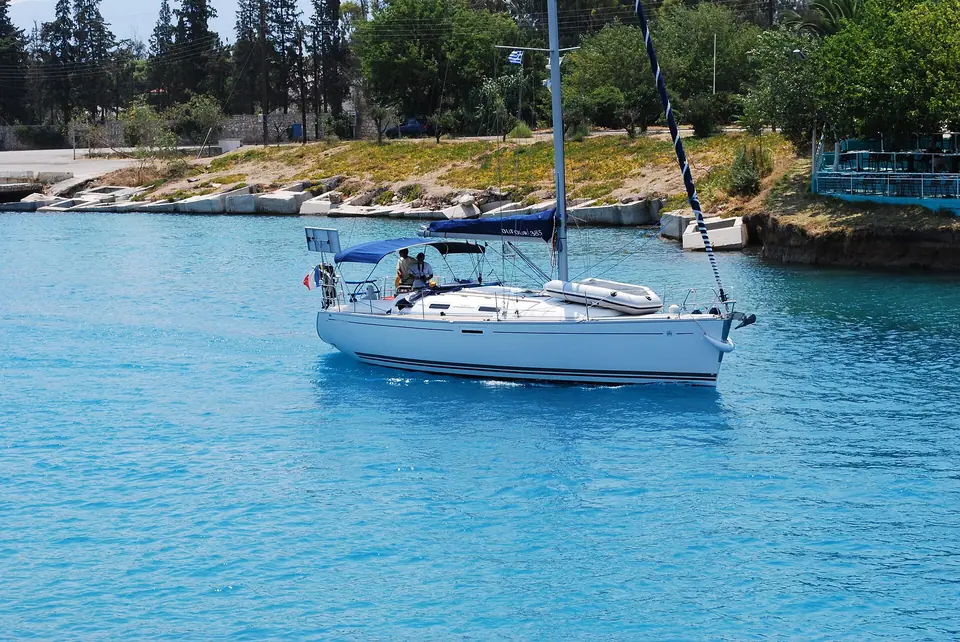
We have not found a freely licensed photo of the Dufour 390 Grand Large yet, so these show other Dufour Yachts boats, each captioned with the boat pictured.
More cruising sailboats to explore
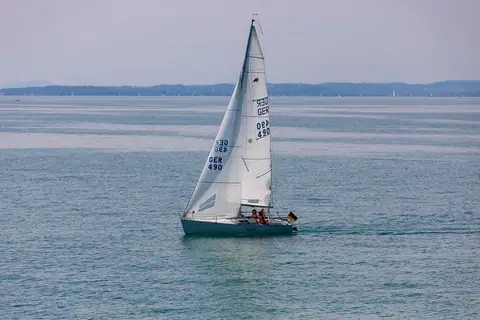
Delphia 40
Cruising Sailboats, 39 ft
Used $70K to $115K
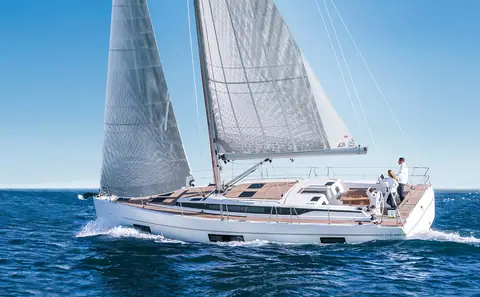
Bavaria 39 Cruiser
Cruising Sailboats, 39 ft
Used $68K to $112K
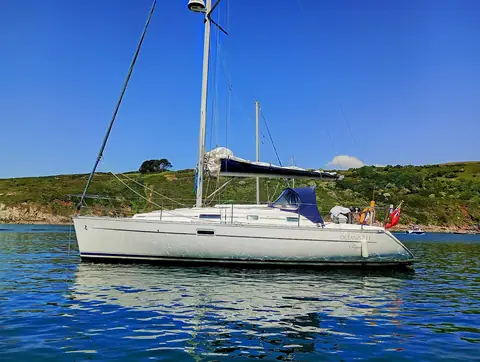
Beneteau Cyclades 39.3
Cruising Sailboats, 39 ft
Used $65K to $105K
Beneteau Oceanis Clipper 393
Cruising Sailboats, 39 ft
Used $72K to $118K
Other Dufour Yachts models
- Dufour 30 Classic
- Dufour 36 Classic
- Dufour 40 Performance
- Dufour 50 Classic
- Dufour 56 Exclusive
- Dufour 61
- Dufour 360 Grand Large
- Dufour 385 Grand Large
- Dufour 405 Grand Large
- Dufour 412 Grand Large
- Dufour 430 Grand Large
- Dufour 455 Grand Large
- Dufour 460 Grand Large
- Dufour 470
- Dufour 520 Grand Large
- Dufour 530
- Dufour 560 Grand Large
- Dufour Catamarans 48
- All Dufour Yachts models