Catalina Yachts Cruising Sailboats
Catalina 34 Review, Year-by-Year Changes and Used Buying Advice
A long-waterline Frank Butler cruiser that sold more than 1,400 copies and still anchors one of the most organized owner groups in American sailing.
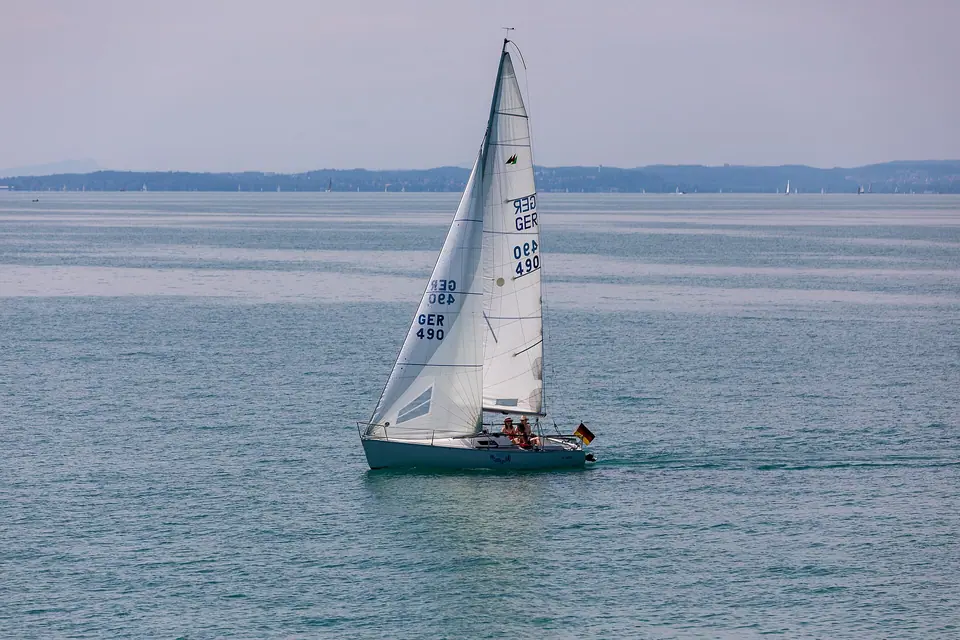
- Length
- 34.5 ft10.52 m
- Beam
- 11.8 ft3.58 m
- Draft
- 5.6 ft1.7 m
- Cabins
- 2 (V-berth forward, athwartships double aft)
- Used price
- $25K to $90K
On this page
- Overview
- Why the Catalina 34 became the default mid-thirties cruiser
- Reading a C34 by its year: masts, transoms and engines
- The Mk II kept the waterline so the fleet could keep racing
- An aft head and a full-width double under the cockpit
- PHRF numbers, weather helm and the elliptical rudder fix
- Three Universal engines and a two-blade prop problem
- Owning a forty-year-old Catalina 34
- Catalina 34 for sale: where the money goes
- Specifications
- Price and value
- Strengths and weaknesses
- Used buyer checklist
- Rivals
- Our verdict
- FAQ
The Catalina 34 is a 34 ft 6 in masthead sloop designed by Frank Butler and launched in 1985. Sailboatdata counts 1,438 of the original boats; a reworked Mk II followed in 1996 on the same underwater lines.
- Couples and young families cruising coastal waters
- PHRF and one-design club racers on a budget
- First-time owners stepping up from a 27 or 30 footer
- Bahamas and ICW sailors who want the wing keel
Catalina 34 by the numbers
- Sail area to displacement
- 16.2Balanced power for coastal and offshore cruising.
- Displacement to length
- 201Moderate displacement, a classic cruising balance between load carrying and speed.
- Theoretical hull speed
- 7.3 knThe practical top speed of a displacement monohull under normal sailing, based on waterline length.
- Ballast ratio
- 42%A high ballast ratio, so the boat stands up well to a breeze.
- Capsize screening
- 2.06Above 2.0, so this hull leans toward coastal stability over ultimate offshore resistance.
- Motion comfort ratio
- 22.2A quicker motion in waves, typical of light, beamy hulls.
- Length to beam ratio
- 2.94 : 1A beamy hull with lots of volume for its length.
Why the Catalina 34 became the default mid-thirties cruiser
Frank Butler drew the Catalina 34 for the 1985 model year, at a time when his Woodland Hills, California, company already had the 27, 30 and 36 selling in their thousands. The 34 filled the gap between the 30 and the 36 with a hull that was more refined than either. It had a long 29 ft 10 in waterline on a 34 ft 6 in hull, full sections amidships, a flattish sheer and the short overhangs that defined Catalinas of that era. Sailboatdata and Wikipedia both record 1,438 of the original boats built, which makes the Catalina 34 one of the most common 34 footers in North America.
The formula was the Catalina formula. Practical Sailor, which first sailed the boat in 1990, noted that the list of standard equipment was complete enough to sail away with no options: main and 110 percent jib, self-tailing primaries, a two-burner stove with oven, pressure hot and cold water, two batteries and 110-volt shore power. That made the C34 a turnkey family boat at a price the imports of the day could not touch, and it is why searches for a Catalina 34 for sale still turn up dozens of boats every season.
Reading a C34 by its year: masts, transoms and engines
Unlike most production boats, the Catalina 34 changed in visible steps, and the year on the documentation tells you a lot about what you are looking at. Sailboatdata's build notes, which follow the owner association's records, break the original boat into three periods.
A 1986 Catalina 34, one of the most searched years, belongs to the first group. Those boats have the old closed transom, a deck-stepped mast and the small three-cylinder Universal. Practical Sailor warns that pre-1988 boats should have the revised alternator mount that came with the 25XP, because the original bracket allowed vibration that could crack the cylinder head. Check for it.
- 1985 to 1986: deck-stepped mast, Universal 25 diesel of 21 hp, closed transom
- 1987 to 1990: keel-stepped mast and the Universal 25XP of 23 hp
- 1990 to 1991: walk-through transom cutout and the Universal M35 of 30 hp
- About 1990: a wing keel replaces the original shoal fin
- 1996 onward: the Mk II, with an open transom, larger cockpit and new deck mold
The Mk II kept the waterline so the fleet could keep racing
When Catalina introduced the Catalina 34 Mk II in 1996, it widened the deck aft and enlarged the cockpit but deliberately left the hull identical at the waterline, so the new boats could race one-design against the hundreds already sailing. The underwater dimensions and published weights did not change: 11,950 lb on the fin keel with 5,000 lb of lead, or 12,550 lb and 5,600 lb on the wing.
The list of revisions is long and practical rather than dramatic. Sailboatdata records a deck-stepped mast on a compression post, seats on the stern pulpit, a new head molding that drains better, a lower traveler, a revised companionway, the removal of almost all exterior teak and the dorade vents, the engine panel moved to the steering pedestal, louvered teak cabinet fronts instead of sliding plexiglass, a hanging locker in the aft cabin and a relocated electrical panel. The open transom with a swim step is the easy way to tell a Mk II from across the marina.
Catalina was still printing a Catalina 34 Mk II brochure in February 2004, quoting a 35 ft 8 in overall length including the pulpit and a four-cylinder 35 hp diesel. Sailboatdata lists 2008 as the last Mk II year, though Practical Sailor's 2025 review quotes different dates, so trust the hull number over any listing.
An aft head and a full-width double under the cockpit
The C34 was the first Catalina with the head aft by the companionway, a European idea at the time, but unlike a Beneteau or Jeanneau of the same size it stays very full forward. You get a big V-berth cabin, a dinette and settee in the saloon, an L-shaped galley to starboard and an aft-facing nav desk. The settee seats six and drops to a double.
The aft cabin runs athwartships under the cockpit and is entered through a door that opens into the galley. Practical Sailor's owner surveys rate the interior as the most praised feature of the boat, with comments like 'most room for the money' showing up in most reports, but the galley door is a real compromise: when it is open the cook is boxed in, and in hot climates the aft cabin tends to become a storage room because ventilation is limited. Some early boats carried the water tank forward, which Practical Sailor considers less desirable for trim.
PHRF numbers, weather helm and the elliptical rudder fix
On paper the Catalina 34 is a respectable performer. Sailboatdata's ratios give a sail area to displacement of 16.1 on the standard rig, a ballast ratio of almost 42 percent, a displacement to length ratio of 201 and a hull speed of 7.3 knots. Wikipedia lists average PHRF ratings of 138 for the standard boat and 153 for the wing keel, and Practical Sailor puts the boat in the middle of its class: slower than a J/35 but significantly quicker than a Crealock 34.
The known weakness is weather helm in puffs on boats with the original rudder and the full-cut original sails. Practical Sailor's Lake Michigan test found strong weather helm when overpowered, cured largely by the longer elliptical rudder Catalina developed later and by a flatter mainsail. The elliptical rudder is a recognized retrofit for the fin keel boats; the version for the wing keel is shallower, so the improvement is smaller.
Owners who sail in breezy places often swap the standard 155 percent furling genoa for a 110 percent jib, which sets better than a partly rolled genoa. The tall rig adds 26 sq ft of mainsail, worth having on lakes and in light summer air.
Three Universal engines and a two-blade prop problem
Standard power on early boats was the three-cylinder Universal 25, which Practical Sailor found adequate in calm water. Owners complain about vibration with the original two-blade propeller and some find the boat underpowered into a chop. A three-blade 15 x 10 in prop, or the Catalina-specified 15 x 9, cures both issues. Racers prefer a feathering or folding prop.
The Universal M35 fitted from 1990 is the engine most owners describe with affection. In SAIL's long-term owner story, Robert Beringer had 2,600 hours on the M35 in his 1992 boat after 14 years and 30,000 miles and found it easy to service, though he still described the boat as slow under power. Many older C34s have since been repowered, and a recent repower is one of the strongest value drivers on the used market. We could not verify factory tank capacities from a primary source, so ask the seller and check the tank labels.
Owning a forty-year-old Catalina 34
Practical Sailor describes the construction as conventional and well executed: solid laminate hull, plywood rather than balsa deck core, and chainplates that look small but have no reputation for failure. Older boats show slop in the rudder bearing and messy wiring, and pre-1988 hulls had leaky ports and a weak traveler setup. The magazine suggests dropping the rudder and inspecting the keel attachment on any older boat headed offshore.
Running costs are modest for the size. Expect roughly $9,000 to $19,000 a year in the US for a slip, haul-out and bottom paint, insurance, engine service and a reserve for sails and rigging, with Northeast and South Florida slips at the top of that range. Parts support is helped by the Catalina 34 International Association, one of the most active owner groups in the country.
Catalina Yachts itself is gone. After a 2025 sale to Michael Reardon, the company paused production in October 2025 and its tooling and remaining assets were auctioned in June 2026. Generic marine suppliers and the owner association now carry most of the parts knowledge, which matters more for a 34 than for a newer boat because so many components are proprietary moldings.
Catalina 34 for sale: where the money goes
Practical Sailor's 2025 review says Catalina 34 prices continue to soften slowly and vary by region, with fully equipped 1990 boats asking $37,500 to $40,000 and around a dozen boats listed in the US at the time. In our reading of the market, early closed-transom boats with original engines sit at the bottom, around $25,000 to $36,000, while tidy Mk IIs from the 2000s run from the high $50,000s to about $90,000 for the best late examples.
Pay for engine hours, rudder and rigging age, not for teak and cushions. A boat with the elliptical rudder, a three-blade prop, a recent repower or M35 overhaul and standing rigging under ten years old is worth a premium of several thousand dollars over a cosmetically similar boat without them.
Catalina 34 specifications
| Length overall | 34.5 ft10.52 m |
|---|---|
| Waterline length | 29.8 ft9.09 m |
| Beam | 11.8 ft3.58 m |
| Draft | 5.6 ft1.7 m |
| Displacement | 11,95 lbs5,42 kg |
| Ballast | 5, lbs2,268 kg |
| Sail area | 528 sq ft49.1 m² |
| Cabins | 2 (V-berth forward, athwartships double aft) |
| Berths | 6 (two doubles plus the dinette, which converts to a double) |
| Heads | 1, aft by the companionway |
| Standard engines | Universal 25 (21 hp) diesel on 1985 to 1986 boats; Universal 25XP (23 hp) from 1987; Universal M35 (30 hp) from 1990 to 1991 |
| Hull type | Moderate displacement fin keel monohull with spade rudder |
| Keel | Lead fin, 5 ft 7 in; early shoal fin 4 ft 8 in; wing keel 4 ft 3 in (some sources quote 3 ft 10 in) from about 1990 |
| Rig | Masthead sloop; standard rig I 44 ft, P 38 ft 6 in, optional tall rig I 46 ft, P 40 ft 6 in (554 sq ft) |
| Hull construction | Solid fiberglass hull with molded interior pan, plywood-cored deck |
| Builder | Catalina Yachts, United States |
| Naval architect | Frank V. Butler |
| Other design credits | Catalina Yachts design team (Mk II revisions) |
| Production | 1985 to 2008 |
| Status | Discontinued |
Figures come from builder documentation and independent tests where available. Displacement is usually quoted light, so a loaded cruising boat will weigh more. Compare these specs with another model.
How much does a Catalina 34 cost?
A 1990 Catalina 34 carried a base price of $60,100 with sails, pressure water and shore power included, according to Practical Sailor. Its 2025 review put fully equipped 1990 boats at $37,500 to $40,000 asking, and European brokers have recently listed a 1989 hull at 30,000 euros and a 1998 Mk II at about 44,000 euros. Late Mk II boats, a repowered engine, the elliptical rudder upgrade and recent standing rigging move a C34 to the top of the range far more than cosmetic upgrades do.
Estimate your yearly cost
A planning estimate using common rules of thumb: insurance near 1.5 percent of value, maintenance near 3 percent, haul out and bottom paint by length. Your marina, region and use will move these numbers. Open the full cost calculator.
Versions and options
- Catalina 34 Mk I (1985 to 1995)
- Original hull and deck. Closed transom until about 1990, then a walk-through cutout. Engines progressed from the Universal 25 to the 25XP and M35.
- Catalina 34 Mk II (1996 onward)
- Same waterline and weights, wider deck aft, open transom, larger cockpit, deck-stepped mast on a compression post and a reworked interior.
- Fin, shoal and wing keels
- Standard 5 ft 7 in fin; an early shoal fin of about 4 ft 8 in; a wing keel of 4 ft 3 in (5,600 lb ballast) from about 1990.
- Tall rig
- Mast two feet taller (I 46 ft, P 40 ft 6 in) for 554 sq ft of rated sail area, available on both fin and wing boats.
Catalina 34 timeline
- 1985Catalina 34 introduced with a deck-stepped mast and Universal 25 diesel
- 1987Keel-stepped mast and Universal 25XP adopted
- 1990Walk-through transom, Universal M35 and the wing keel arrive; Practical Sailor tests the boat
- 1996Catalina 34 Mk II launched on the same waterline
- 2004Catalina still issuing a 34 Mk II brochure
- 2026Catalina Yachts' tooling and assets auctioned after the 2025 production pause
Strengths and weaknesses
What owners like
- Long waterline for the size and good all-round sailing
- Huge interior volume and full forward accommodation
- Aft head that doubles as a wet locker
- Enormous used fleet, so comparison shopping is easy
- Active owner association with decades of technical archives
- Low purchase price and moderate running costs
What to weigh up
- Weather helm in puffs with the original rudder
- Aft cabin door opens into the galley
- Molded pans hide much of the hull from inspection
- Early boats are slow under power with a two-blade prop
- Builder no longer exists, so factory parts are gone
Used Catalina 34 buyer checklist
Take this list to a viewing. Your ticks are saved in this browser so you can come back to it.
Always commission an independent marine survey and an engine survey before you buy. How a marine survey works.
Rivals to consider
Hunter 33
Similar money and space with a B&R rig and a different interior plan; Hunters of the era tend to be lighter built.
Compare side by sideJeanneau Sun Odyssey 34.2
French alternative with a more European finish and generally crisper sailing, usually priced a little higher.
Island Packet 35
Heavier full-keel cruiser for owners who value motion comfort and offshore ability over speed; costs considerably more.
Compare side by sideCatalina 36
The bigger sister with even more volume and a larger fleet; worth comparing if you need more cabin space.
Compare side by sideOur verdict on the Catalina 34
The Catalina 34 is not a boat to dream about, it is a boat to use. It sails better than its looks suggest, carries a remarkable interior on a 34 ft hull and costs less to buy and run than almost anything of similar size with a reputation to match. Buy the newest and best-maintained example you can afford, favor the fin keel unless your home waters demand the wing, and spend your negotiating energy on the rudder, engine and deck core. Get those right and a C34 will give a family a decade of coastal cruising with very few surprises.
Catalina 34 questions answered
How many Catalina 34s were built?
Sailboatdata and Wikipedia record 1,438 Catalina 34s of the original design. The Mk II, built from 1996 on the same waterline, is listed separately and pushes the total higher.
What is the difference between a Catalina 34 Mk I and Mk II?
The Mk II has a wider deck aft, an open transom, a larger cockpit, a deck-stepped mast on a compression post and a revised interior. The hull below the waterline is unchanged so the two can race together.
How much is a Catalina 34 worth?
Most Catalina 34s for sale ask between about $25,000 and $90,000. Practical Sailor put well-equipped 1990 boats at $37,500 to $40,000 in 2025, and late Mk II boats command the most.
What engine does a 1986 Catalina 34 have?
A 1986 boat originally came with the three-cylinder Universal 25 of about 21 hp and a deck-stepped mast. Many have since been repowered, so check the engine plate.
Is the Catalina 34 a bluewater boat?
It is a coastal and island-hopping cruiser rather than an ocean boat. Practical Sailor recommends heavier designs for long offshore work and an inspection of the rudder and keel before any extended passage.
Is the wing keel Catalina 34 a good choice?
Choose it only if you need the shallower draft. Owner reports are mixed on pointing ability, and the fin keel boats benefit more from the elliptical rudder upgrade.
More cruising sailboats to explore
Beneteau Oceanis 35
Cruising Sailboats, 34 ft
Used $95K to $145K
Beneteau Oceanis 35.1
Cruising Sailboats, 34 ft
Used $115K to $170K
Beneteau Oceanis 351
Cruising Sailboats, 35 ft
Used $35K to $62K
Beneteau Oceanis 331
Cruising Sailboats, 34 ft
Used $42K to $72K