Beneteau 361 Buyer's Guide, the Oceanis 361 and Clipper 361 Explained
A Berret-Racoupeau 36 footer from 1999 to 2004 that cruising couples and charter fleets both loved, sold under three different names.
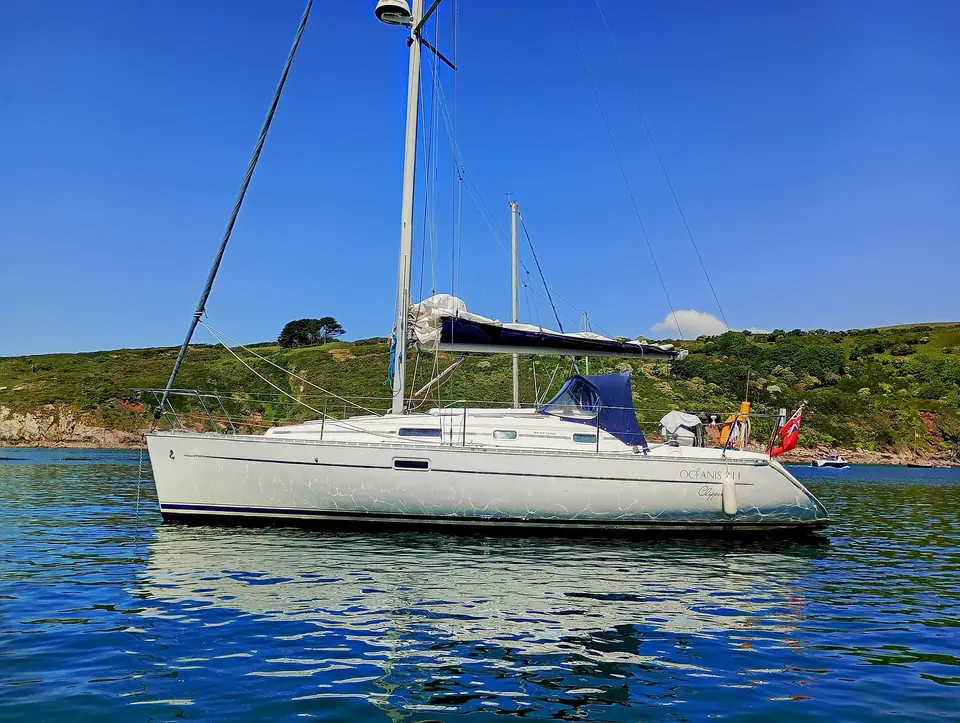
- Length
- 36.4 ft11.1 m
- Beam
- 12.5 ft3.8 m
- Draft
- 5 ft1.53 m
- Cabins
- 2 or 3
- Used price
- $55K to $88K
On this page
- Overview
- Why the Beneteau 361 wears so many names
- A short-ended hull with its weight in the keel bulb
- Masthead rig, furling main and a cockpit built for six
- Two cabins or three, and the head with its own shower stall
- Twenty gallons of diesel and other numbers to respect
- What the ratios say about sailing the 361
- Fleet history and what it means for a buyer
- Beneteau 361 for sale, price by year and what moves it
- Specifications
- Price and value
- Strengths and weaknesses
- Used buyer checklist
- Rivals
- Our verdict
- FAQ
The Beneteau 361, also called the Oceanis 361 and Oceanis Clipper 361, is a 36 ft 5 in Berret-Racoupeau cruiser built from 1999 to 2004 in two and three cabin versions. Today it is an affordable, roomy coastal boat.
- Couples coastal cruising on a budget
- First keelboat owners stepping up from a 30 footer
- Families who need three private cabins
Beneteau Oceanis Clipper 361 by the numbers
- Sail area to displacement
- 21.0Plenty of sail for the weight, the boat should feel lively in light air.
- Displacement to length
- 190Light displacement for its length, quick but sensitive to added cruising weight.
- Theoretical hull speed
- 7.5 knThe practical top speed of a displacement monohull under normal sailing, based on waterline length.
- Ballast ratio
- 33%A typical ballast ratio for a cruising monohull.
- Capsize screening
- 2.13Above 2.0, so this hull leans toward coastal stability over ultimate offshore resistance.
- Motion comfort ratio
- 21.0A quicker motion in waves, typical of light, beamy hulls.
- Length to beam ratio
- 2.92 : 1A beamy hull with lots of volume for its length.
Why the Beneteau 361 wears so many names
Search for a Beneteau 361 and you will see the same boat listed as an Oceanis 361, an Oceanis Clipper 361 or simply a Beneteau 361. They are one design. Beneteau USA launched it in 1999 as the Oceanis 361, its 1999 web pages describing it as the latest step after the Oceanis 352. By 2003 the American arm had dropped the Oceanis label and filed it under a Beneteau Series, so US boats built later usually carry the plain Beneteau 361 name. In Europe the factory sold it as the Oceanis Clipper 361, Clipper being Beneteau's tag for its better-equipped cruising versions.
There are charter variants too. Sailboatdata records the two cabin version as the Moorings 362 and the three cabin version as the Moorings 363 and Stardust 363. A boat advertised under one of those names spent at least part of its life in a fleet, which is useful to know before you read the engine hours.
Production ran from 1999 to 2004, and Wikipedia notes that boats for the American market were built by Beneteau in the United States. The Oceanis 373, a longer Berret-Racoupeau design, replaced it.
A short-ended hull with its weight in the keel bulb
Berret-Racoupeau drew a hull of 35 ft 5 in on a 36 ft 5 in overall length, with a 31 ft 1 in waterline and a 12 ft 6 in beam. The bow is raked, the transom is reversed and walk-through, and a spade rudder hangs behind a cast iron fin that ends in a bulb with small winglets. Draft is a cruise-friendly 5 ft 0 in. Beneteau's French data sheet also listed a lifting keel version drawing 1.10 m up and 2.40 m down, roughly 3 ft 7 in to 7 ft 10 in, but nearly every 361 in the US has the fixed winged keel.
Construction followed Beneteau practice of the period: a solid glass hull stiffened by a fiberglass inner grid with molded floors and unidirectional roving, a balsa-cored deck covered by a full liner, and bulkheads bonded all the way around to both hull and deck liners. The propeller shaft runs through a small molded skeg, which protects it from lines and gives the boat a little directional stability under power.
Displacement figures disagree, which is normal for this era. Sailboatdata lists 12,787 lb, Beneteau USA's own spec page said 13,849 lb, and the French sheet quoted about 5,500 kg. Ballast is 4,156 lb in every source, a respectable 32 percent ballast ratio on the sailboatdata weight.
Masthead rig, furling main and a cockpit built for six
The 361 carries a masthead sloop rig with two sets of aft-swept spreaders, intermediate shrouds, a babystay and a split backstay. Sail area is 717 sq ft with the standard 140 percent genoa, and the mast stands about 49 ft 7 in above the water, a number that matters on the Intracoastal Waterway where most fixed bridges give 65 ft. Beneteau USA delivered the boat with an in-mast furling main as standard, so a 361 with a conventional battened main is either a European spec boat or has been converted.
Deck hardware was modest but adequate: two Lewmar 44 self-tailing primaries on the coamings, one Lewmar 30 on the coachroof for halyards and furling lines, and six deck stoppers. The mainsheet traveler runs on the coachroof, out of the cockpit. A single 42 in leather-covered wheel sits on a pedestal with a drop-leaf table, and the helmsman's seat folds down to open the way to a teak-inlaid swim platform. The 1999 equipment list even included a fiberglass foot brace in the middle of the cockpit, a small detail that makes the boat more comfortable heeled than many later wide-cockpit designs.
- Standard sails: in-mast furling main and 140 percent furling genoa
- Winches: two Lewmar 44 primaries, one Lewmar 30 on the coachroof
- Single 42 in wheel, coachroof traveler, lowering helm seat to the swim step
Two cabins or three, and the head with its own shower stall
Below, the layout is conventional and well proportioned for 36 ft. The forward cabin has a double berth about 6 ft 7 in long, a hanging locker and an opening hatch. The saloon has a U-shaped settee around a table that converts to a berth, plus a straight settee to port; an alternative arrangement replaced the port settee with two seats split by an armrest. The galley is to port with a double sink, a two burner stove and oven, and a 12 volt icebox. A forward-facing chart table sits to port with its own seat.
The head deserves a mention because it was ahead of its time on a 36 footer: a molded unit with a separate shower compartment and a teak seat. Headroom runs from about 6 ft 3 in in the forward cabin to 6 ft 5 in at the companionway.
Aft, buyers chose between one big double cabin across the stern, with the larger 5.6 cu ft icebox, or two symmetrical cabins with berths about 6 ft 7 in by 4 ft 9 in and a smaller 4 cu ft icebox. Couples should look for the two cabin boat, which also has more cockpit storage. Families and charter fleets bought the three cabin version, and it is the more common layout on the used market.
Twenty gallons of diesel and other numbers to respect
The engine is a 27 hp freshwater-cooled diesel, listed by sailboatdata as a Volvo Penta 2030, driving a fixed three-blade propeller on a conventional shaft. It is enough to push a 36 footer to hull speed, which works out at about 7.5 knots on this waterline, in calm water. We have not found a published test giving fuel burn, so plan on measuring your own.
The fuel tank is the number that surprises people: Beneteau listed only 20 gallons. Water, by contrast, is generous at 88 to 92 gallons depending on the source. For coastal hopping that balance works, but anyone planning a Bahamas crossing or a long motor down the ICW will want jerry cans or an added tank. Batteries were a 75 amp hour starting battery and a 200 amp hour house battery with a 20 amp charger, which is thin by modern standards; most well-kept boats have been upgraded.
Engines of this vintage are now 20 to 25 years old. A 361 with a replacement engine or a documented rebuild is worth real money, and a cheap boat with an original unit that smokes is often more expensive in the end.
What the ratios say about sailing the 361
We could not find a published sea trial with measured speeds, so the honest guide is the numbers. With the 140 percent genoa counted, sailboatdata puts the sail area to displacement ratio at 21, which suggests a lively boat in light air. Using only the 100 percent foretriangle and main, the figure drops to about 17.4, a more realistic picture once the genoa is partly furled. The displacement to length ratio of about 190 sits in the light cruiser band, and the ballast ratio of about 32 percent is better than many later Oceanis models.
In practice this is a masthead boat with a big overlapping headsail and a small, furling main. It likes a reach, it needs the genoa reefed early when the wind builds, and it will not point like a fractional rig with a battened main. A newer genoa cut flatter, or a conventional main with lazy jacks, are the two upgrades that transform it.
The capsize screening value of about 2.1 and Ted Brewer's comfort ratio near 21 place the 361 firmly in the coastal cruiser category. That is what it was designed for, and in the right weather it will happily cross to the islands, but it is not a heavy-weather passagemaker.
Fleet history and what it means for a buyer
The 361 was popular in charter, as the Moorings and Stardust versions show, and a share of the boats for sale today came out of fleets in the Caribbean and the Mediterranean. Charter use is not a reason to walk away, since fleet boats are usually serviced on schedule, but it changes what you inspect. Look hard at the steering cables and quadrant, the furling gear, the winches and the cabin soles, which take the most abuse, and expect a three cabin layout.
Privately owned two cabin boats usually show lighter use and cost more, and in our view the difference is worth paying.
Beneteau 361 for sale, price by year and what moves it
In 2026 we expect a Beneteau 361 for sale in the US to ask roughly $55,000 to $88,000. A 1999 or 2000 boat with original sails and engine sits near the bottom, and a 2003 or 2004 boat with new rigging, a refreshed interior and current electronics near the top. European listings for the Oceanis Clipper 361 we reviewed ranged from about 54,000 to 70,000 euros for 2000 to 2003 boats, with one UK boat at 44,950 pounds.
Budget around $8,000 to $15,000 a year to keep one in the US, covering a slip or mooring, insurance, haul-out and bottom paint, engine service and a sail and canvas reserve. Standing rigging on a boat of this age is due for replacement if the owner cannot show receipts, and that alone is a several-thousand-dollar job.
Beneteau Oceanis Clipper 361 specifications
| Length overall | 36.4 ft11.1 m |
|---|---|
| Waterline length | 31.1 ft9.48 m |
| Beam | 12.5 ft3.8 m |
| Draft | 5 ft1.53 m |
| Air draft | 49.6 ft15.11 m |
| Displacement | 12,787 lbs5,8 kg |
| Ballast | 4,156 lbs1,885 kg |
| Sail area | 717 sq ft66.6 m² |
| Fuel capacity | 2 gal76 L |
| Fresh water | 92 gal348 L |
| Cabins | 2 or 3 |
| Berths | 4 to 6 in cabins, plus saloon |
| Heads | 1 with separate shower stall |
| Standard engines | 27 hp freshwater-cooled diesel (Volvo Penta 2030 per sailboatdata) on a shaft with fixed three-blade prop |
| Hull type | Moderate-displacement fin keel monohull with spade rudder |
| Keel | Cast iron bulb keel with winglets, 5 ft 0 in draft; a lifting keel (about 3 ft 7 in to 7 ft 10 in) was listed in France |
| Rig | Masthead sloop, two sets of aft-swept spreaders, in-mast furling main and 140 percent furling genoa |
| Hull construction | Solid fiberglass hull with bonded structural inner grid; balsa-cored deck with full liner |
| CE design category | A |
| Builder | Beneteau (France, and Beneteau USA in Marion, South Carolina), France |
| Naval architect | Berret-Racoupeau Yacht Design |
| Production | 1999 to 2004 |
| Status | Discontinued |
Figures come from builder documentation and independent tests where available. Displacement is usually quoted light, so a loaded cruising boat will weigh more. Compare these specs with another model.
How much does a Beneteau Oceanis Clipper 361 cost?
Year matters less than what has been replaced. A 361 with newer standing rigging, recent sails, a healthy or repowered diesel and modern electronics sits at the top of the band, while tired ex-charter three cabin boats fill the bottom. European Clipper 361s were advertised at roughly 54,000 to 70,000 euros in 2026, which supports our US estimates.
Estimate your yearly cost
A planning estimate using common rules of thumb: insurance near 1.5 percent of value, maintenance near 3 percent, haul out and bottom paint by length. Your marina, region and use will move these numbers. Open the full cost calculator.
Versions and options
- Oceanis 361 (US, 1999 launch)
- Beneteau USA's original name, sold with a sail-away cruising package that included a Tridata instrument, VHF, stereo and cockpit shower.
- Beneteau 361 (US, later boats)
- The same boat under Beneteau USA's simplified naming from the early 2000s.
- Oceanis Clipper 361 (Europe)
- European designation; the French sheet listed a fixed keel of 1.53 m and a lifting keel of 1.10 to 2.40 m.
- Moorings 362, Moorings 363 and Stardust 363
- Charter versions in two cabin (362) and three cabin (363) form.
Beneteau Oceanis Clipper 361 timeline
- 1999Launched by Beneteau USA as the Oceanis 361, following the Oceanis 352
- 2001Beneteau USA cites the 361 as a Berret-Racoupeau success when announcing the 393
- 2003Listed in the US as the Beneteau 361 in the Beneteau Series
- 2004Production ends; the Oceanis 373 takes its place
Strengths and weaknesses
What owners like
- Separate shower stall in the head, rare on a 36 footer
- Sensible 5 ft draft for East Coast and Gulf cruising
- Good ballast ratio for an Oceanis of its era
- Big water tanks for coastal cruising
- Simple shaft drive with protective skeg
- Affordable entry into a modern-feeling French cruiser
What to weigh up
- Only 20 gallons of fuel
- Modest 27 hp engine, now old
- In-mast furling main limits windward ability
- Many boats are tired ex-charter three cabin versions
- Original electrical system is small by today's standards
Used Beneteau Oceanis Clipper 361 buyer checklist
Take this list to a viewing. Your ticks are saved in this browser so you can come back to it.
Always commission an independent marine survey and an engine survey before you buy. How a marine survey works.
Rivals to consider
Catalina 36
American alternative with a long production run, simpler styling and strong owner support.
Compare side by sideJeanneau Sun Odyssey 35
French rival from the sister brand with a similar charter-friendly layout.
Hunter 356
Roomy US-built rival from the same years, usually priced a little lower.
Beneteau 373
The longer successor, with a 40 hp engine and a newer interior, at a higher price.
Compare side by sideOur verdict on the Beneteau Oceanis Clipper 361
The Beneteau 361 is one of the better values in the used French cruiser market. Its hull is moderate rather than extreme, the winged keel keeps draft sensible, the ballast ratio is respectable and the head with its own shower stall still feels generous. The weak points are all fixable: a tiny fuel tank, a small engine that is now old, a furling main that blunts windward performance and an electrical system sized for 1999. Buy a two cabin boat with recent rigging, healthy machinery and receipts, and it will cruise the East Coast and the islands for years at a fraction of the price of a newer 36 footer.
Beneteau Oceanis Clipper 361 questions answered
Is the Beneteau 361 the same as the Oceanis 361 and the Clipper 361?
Yes. Oceanis 361 was the original US name in 1999, Beneteau 361 the later US name and Oceanis Clipper 361 the European designation, all for the same Berret-Racoupeau design.
What years was the Beneteau 361 built?
From 1999 to 2004, after which the Oceanis 373 replaced it.
What engine does a Beneteau 361 have?
A 27 hp freshwater-cooled diesel on a shaft, listed by sailboatdata as a Volvo Penta 2030. Some boats have since been repowered.
What is the draft of a Beneteau 361?
5 ft 0 in with the standard winged bulb keel. A lifting keel version was listed in France but is rare in the US.
How much is a Beneteau 361 for sale?
Expect roughly $55,000 to $88,000 in the US in 2026, depending mostly on rigging, engine and electronics rather than model year.
Can a Beneteau 361 cross to the Bahamas?
Yes, in a good weather window it is a capable coastal cruiser, but carry extra fuel, because the standard tank holds only 20 gallons.
Photos from the Beneteau range
We have not found a freely licensed photo of the Beneteau Oceanis Clipper 361 yet, so these show other Beneteau boats, each captioned with the boat pictured.
More cruising sailboats to explore
Beneteau Oceanis 36 CC
Cruising Sailboats, 36 ft
Used $45K to $80K
Catalina 36
Cruising Sailboats, 36 ft
Used $25K to $95K
Dufour 36 Classic
Cruising Sailboats, 36 ft
Used $50K to $85K
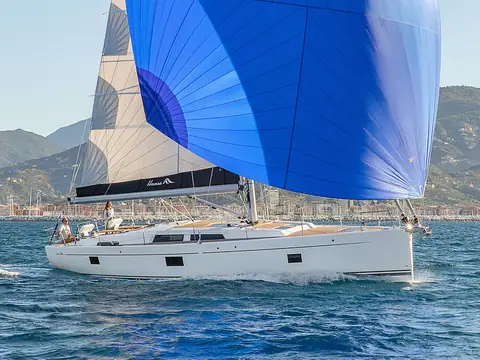
Hanse 371
Cruising Sailboats, 37 ft
Used $55K to $90K
Other Beneteau models
- Beneteau 49
- Beneteau 50
- Beneteau 57
- Beneteau 343
- Beneteau Antares 5.80
- Beneteau Antares 6
- Beneteau Antares 6.80
- Beneteau Antares 7
- Beneteau Antares 7.30
- Beneteau Antares 7.60
- Beneteau Antares 7.80
- Beneteau Antares 8
- Beneteau Antares 8.00
- Beneteau Antares 8.05
- Beneteau Antares 8.60
- Beneteau Antares 8.80
- Beneteau Antares 9
- Beneteau Antares 9.80
- Beneteau Antares 10.80
- Beneteau Antares 11
- Beneteau Antares 12
- Beneteau Antares 13.80
- Beneteau Antares 30
- Beneteau Antares 32
- Beneteau Antares 36
- Beneteau Antares 42
- Beneteau Antares 620 HB
- Beneteau Antares 650 HB
- Beneteau Antares 750 HB
- Beneteau Cyclades 39.3
- Beneteau Cyclades 43.3 and 43.4
- Beneteau Cyclades 50.5
- Beneteau First 18 SE
- Beneteau First 20
- Beneteau First 21.7
- Beneteau First 24
- Beneteau First 25
- Beneteau First 25.7
- Beneteau First 27
- Beneteau First 27.7
- Beneteau First 30
- Beneteau First 31.7
- Beneteau First 35
- Beneteau First 36
- Beneteau First 36.7
- Beneteau First 38
- Beneteau First 40
- Beneteau First 40.7
- Beneteau First 44
- Beneteau First 45
- Beneteau First 47.7
- Beneteau First 53
- Beneteau First 211
- Beneteau First 235
- Beneteau First 285
- Beneteau First 305
- Beneteau First 310
- Beneteau First 345
- Beneteau Flyer 6
- Beneteau Flyer 7
- Beneteau Flyer 8
- Beneteau Flyer 9
- Beneteau Flyer 10
- Beneteau Flyer 12
- Beneteau Flyer 500
- Beneteau Flyer 550
- Beneteau Flyer 650
- Beneteau Flyer 701
- Beneteau Flyer 750
- Beneteau Grand Trawler 62
- Beneteau Gran Turismo 32
- Beneteau Gran Turismo 36
- Beneteau Gran Turismo 40
- Beneteau Gran Turismo 41
- Beneteau Gran Turismo 44
- Beneteau Gran Turismo 45
- Beneteau Monte Carlo 6
- Beneteau Oceanis 30.1
- Beneteau Oceanis 31
- Beneteau Oceanis 34
- Beneteau Oceanis 34.1
- Beneteau Oceanis 35
- Beneteau Oceanis 35.1
- Beneteau Oceanis 36 CC
- Beneteau Oceanis 37
- Beneteau Oceanis 38
- Beneteau Oceanis 38.1
- Beneteau Oceanis 40
- Beneteau Oceanis 40 CC
- Beneteau Oceanis 41
- Beneteau Oceanis 41.1
- Beneteau Oceanis 42
- Beneteau Oceanis 42 CC
- Beneteau Oceanis 43
- Beneteau Oceanis 44 CC
- Beneteau Oceanis 45
- Beneteau Oceanis 46
- Beneteau Oceanis 46.1
- Beneteau Oceanis 48
- Beneteau Oceanis 50
- Beneteau Oceanis 51.1
- Beneteau Oceanis 54
- Beneteau Oceanis 55
- Beneteau Oceanis 58
- Beneteau Oceanis 311
- Beneteau Oceanis 320
- Beneteau Oceanis 321
- Beneteau Oceanis 323
- Beneteau Oceanis 331
- Beneteau Oceanis 350
- Beneteau Oceanis 351
- Beneteau Oceanis 370
- Beneteau Oceanis 390
- Beneteau Oceanis 400
- Beneteau Oceanis 411
- Beneteau Oceanis 423
- Beneteau Oceanis 430
- Beneteau Oceanis 440
- Beneteau Oceanis 461
- Beneteau Oceanis 473
- Beneteau Oceanis 500
- Beneteau Oceanis 510
- Beneteau Oceanis Clipper 373
- Beneteau Oceanis Clipper 381
- Beneteau Oceanis Clipper 393
- Beneteau Oceanis Yacht 54
- Beneteau Oceanis Yacht 60
- Beneteau Oceanis Yacht 62
- Beneteau Sense 43
- Beneteau Sense 46
- Beneteau Sense 50
- Beneteau Sense 55
- Beneteau Swift Trawler 30
- Beneteau Swift Trawler 34
- Beneteau Swift Trawler 35
- Beneteau Swift Trawler 41
- Beneteau Swift Trawler 44
- Beneteau Swift Trawler 48
- All Beneteau models