Beneteau Performance Sailboats
Beneteau First 53, Luxury Performance With a Dinghy Garage
Beneteau's first big First in 13 years pairs an America's Cup designer's hull with a Wally-influenced deck, a 5 m beam and a garage for the tender.
- Length
- 56.2 ft17.12 m
- Beam
- 16.4 ft5 m
- Draft
- 8.2 ft2.5 m
- Cabins
- 3 double cabins
- Used price
- $720K to $1.05M
On this page
- Overview
- The Beneteau First 53 and the reinvention of the First name
- Twenty-five hull shapes, twin rudders and three keels
- A flush, Wally-flavored deck with almost no visible rope
- Test speeds under sail and power
- Below decks, a lounge instead of a dining room
- What the First 53 costs to run
- Buying a Beneteau 53 for sale on the used market
- Specifications
- Price and value
- Strengths and weaknesses
- Used buyer checklist
- Rivals
- Our verdict
- FAQ
The Beneteau First 53, launched in 2019 as the First Yacht 53, is a 56 ft luxury performance cruiser by Biscontini Yacht Design and Lorenzo Argento, with twin rudders, three cabins, a tender garage and a base price now above 700,000 euros.
- Experienced couples who sail shorthanded
- Owners moving from racing to fast cruising
- Mediterranean and Caribbean coastal cruising
- Occasional regattas and offshore races
Beneteau First 53 by the numbers
- Sail area to displacement
- 27.0Racing level power, needs active reefing as the breeze builds.
- Displacement to length
- 119Ultralight. Built for speed, keep payload to a minimum.
- Theoretical hull speed
- 9.5 knThe practical top speed of a displacement monohull under normal sailing, based on waterline length.
- Ballast ratio
- 29%Relatively low ballast, form stability does more of the work.
- Capsize screening
- 2.02Above 2.0, so this hull leans toward coastal stability over ultimate offshore resistance.
- Motion comfort ratio
- 24.5A quicker motion in waves, typical of light, beamy hulls.
- Length to beam ratio
- 3.43 : 1Moderate proportions.
The Beneteau First 53 and the reinvention of the First name
Searches for the Beneteau First 53, First 53 or simply Beneteau 53 almost always land on this boat: the 56 ft flagship that Beneteau showed in 2019 under the name First Yacht 53 and now sells simply as the First 53. Yachting World pointed out that it was the builder's first new 50 ft racer-cruiser in 13 years, and Beneteau treated it as a statement. It ran a design competition before picking Roberto Biscontini, a veteran of Italian and New Zealand America's Cup programs, for the hull and rig, and Lorenzo Argento, who spent much of his career at Luca Brenta's office and worked on Wally projects, for the deck and interior.
The positioning was explicit. Beneteau wanted the space of a 55-footer at the price of a 50, aimed at owners moving from Solaris, Grand Soleil and Italia Yachts. Twenty boats were sold within the first few months, according to Yachting World, and the model remains in Beneteau's current First range alongside the newer First 60.
Do not confuse it with the First 53f5. That is a 1990 Bruce Farr and Pininfarina design, a 52 ft masthead sloop of about 30,900 lb that shares nothing with the current boat beyond the badge.
Twenty-five hull shapes, twin rudders and three keels
Biscontini's hull has a plumb bow, a slight reverse sheer, near vertical topsides and a 5 m beam carried well aft, with twin rudders to keep control at heel. Cape Horn Engineering's Dr Rodrigo Azcueta ran computational fluid dynamics on 25 candidate hull shapes before the final lines were chosen, according to Yachting World, with the goal of picking up waterline length quickly at just 5 to 10 degrees of heel while increasing righting moment.
Three keels are offered. The standard cast iron T-keel draws 8 ft 2 in, the performance keel with a cast iron fin and lead bulb draws about 9 ft 11 in, and a shoal option of roughly 6 ft 4 in was aimed at the US East Coast. SAIL and Cruising World put the displacement to length ratio at 118 and the sail area to displacement ratio at 27, numbers closer to a racing boat than to a cruiser. Construction is infused and balsa cored, with fiberglass stringers on an aluminum substructure to carry keel and rig loads.
A flush, Wally-flavored deck with almost no visible rope
Argento's deck is the boat's signature. Lines run under panels to clutches and Harken Performa electric winches at each of the twin carbon wheels, the jib furler is mounted below deck to keep the tack low, hatches are flush and tracks recessed. There is no traveler; the mainsheet runs to a single centerline block forward of the wheels, with an optional central mainsheet winch for owners who race. Cruising World liked the coamings that drop under the winches to make trimmer and helm seats while leaving a gap to step aft and onto the side deck.
The cockpit splits cleanly into a working area aft and a social area forward, with two smaller teak tables either side of a central aisle to the companionway rather than one big table. Behind the helms an electric drop-down transom opens a garage that holds an 8 ft inflated RIB. A fixed composite bowsprit carries the anchor roller and tack points for a code zero or gennaker. Yachting World's one reservation was crowding between winch and wheel when racing, and the long, steep walk to leeward across that 16 ft 5 in beam in a seaway.
Test speeds under sail and power
Every test boat seems to get a light day. SAIL logged 6.5 knots at 55 degrees apparent in 8.7 knots of true wind, 5.5 knots up to 35 degrees apparent, and 3 knots on a beam reach in under 6 knots of breeze with working sails. Yachting World slipped along at 6 to 7 knots reaching under code zero in 7 knots of true wind and praised a helm that felt balanced and alive despite twin wheels and twin rudders. Cruising World got the best of it on Chesapeake Bay: nearly 6 knots close-hauled in under 5 knots of wind, 8 to 9 knots once the breeze built to about 15, and 10 knots plus when cracked off with the code zero unrolled, the windward rudder clear of the water.
Under power, SAIL's test boat had the optional 110 hp Yanmar on a shaft with a Flexofold propeller. It reached 9.6 knots at 3,400 rpm and cruised at 8.7 knots at 2,200 rpm burning about 1.5 gallons per hour. The standard boat uses an 80 hp Yanmar with a saildrive. A retractable bow thruster was fitted to the test boats and a stern thruster is optional.
Below decks, a lounge instead of a dining room
Argento deliberately moved away from the apartment look. The saloon is split into a relaxation area to starboard, with a sofa and coffee table, and a smaller dining table to port that seats four and extends to six. The U-shaped galley sits toward the center for bracing, with chunky laminated fiddles and handrails throughout. White lacquered bulkheads angled at 70 degrees to the centerline, a teak sole and molded wood give the interior its character.
There is no conventional nav station and no traditional switch panel. Lights, generator and battery monitoring run through Beneteau's Ship Control system from a phone or tablet, with a backup switch panel hidden in a starboard locker. The owner's cabin is forward with a 1.60 m island berth, two hanging lockers, hull windows and a split head and shower. Two symmetrical doubles are aft under the cockpit. Beneteau offers three cabins with two heads or three cabins with three heads, and the boat was built on a semi-custom basis, so options like a crew cabin forward appear on some hulls.
What the First 53 costs to run
This is a big, technical boat. Electric winches, a below-deck furler, a hydraulic transom, Ship Control electronics and often a generator all need regular service, and the sail inventory is large: SAIL measured 1,785 sq ft for main and 105 percent genoa alone. A North laminate wardrobe with a code zero is a substantial line item every few seasons for anyone who races.
Plan on roughly $45,000 to $95,000 a year in the US for slip, insurance, haul-out, systems service and routine sail and rigging care, excluding depreciation and major sail replacement. Fuel is a minor cost at about 1.5 gallons per hour at cruise.
Buying a Beneteau 53 for sale on the used market
Used First 53s are still relatively young, and most on the market date from 2019 to 2023. Prices depend heavily on spec: a carbon rig, performance keel, shaft drive upgrade, generator and full North inventory can separate two otherwise similar boats by well over $100,000. Dark metallic hulls look spectacular but show heat and gelcoat wear faster in Florida and the Caribbean.
Because Beneteau built the boat semi-custom, insist on the original order specification, and check that software for Ship Control and the electronics has been kept current. The Beneteau 53 price new has risen sharply since launch, which has supported resale values for early hulls.
Beneteau First 53 specifications
| Length overall | 56.2 ft17.12 m |
|---|---|
| Waterline length | 50.5 ft15.4 m |
| Beam | 16.4 ft5 m |
| Draft | 8.2 ft2.5 m |
| Air draft | 85 ft25.91 m |
| Displacement | 34,38 lbs15,599 kg |
| Ballast | 9,921 lbs4,5 kg |
| Sail area | 1,785 sq ft165.9 m² |
| Fuel capacity | 106 gal4 L |
| Fresh water | 19 gal72 L |
| Cabins | 3 double cabins |
| Berths | 6 |
| Heads | 2 or 3 |
| Maximum persons | 14 |
| Standard engines | Yanmar 80 hp diesel with saildrive |
| Optional engines | Yanmar 110 hp with shaft drive |
| Maximum power | 110 hp |
| Cruise speed | 8.7 knots |
| Top speed | 9.6 knots |
| Hull type | Light displacement performance monohull with plumb bow, near vertical topsides, beam carried aft and twin rudders |
| Keel | Cast iron T-keel at 8 ft 2 in standard; shoal keel about 6 ft 4 in; performance keel 9 ft 11 in with cast iron fin and lead bulb |
| Rig | Fractional sloop, triple-spreader deck-stepped aluminum mast (85 ft air draft); carbon mast 1 m taller optional; fixed bowsprit |
| Hull construction | Infused balsa-cored fiberglass hull and deck with fiberglass stringers on an aluminum substructure |
| CE design category | A |
| Builder | Beneteau, France |
| Naval architect | Roberto Biscontini (Biscontini Yacht Design) |
| Other design credits | Lorenzo Argento (deck and interior design) |
| Production | 2019 to present |
| Status | In production |
Figures come from builder documentation and independent tests where available. Displacement is usually quoted light, so a loaded cruising boat will weigh more. Compare these specs with another model.
Performance data
| RPM | Speed (kn) | Fuel (gph) | Range (nm) |
|---|---|---|---|
| 2200 | 8.7 | 1.5 | |
| 3400 | 9.6 |
SAIL magazine test, May 2020, hull number 3 with optional 110 hp Yanmar, shaft drive and Flexofold propeller. Fuel at wide open throttle was not reported.
How much does a Beneteau First 53 cost?
At launch Yachting World quoted a base price of 482,800 euros excluding VAT, rising to just under 850,000 euros with options, and Cruising World's US test boat listed at $1,155,800. Beneteau now shows the First 53 from 719,300 euros excluding VAT, so a well-equipped US delivery in 2026 lands around $1 million to $1.4 million depending on carbon rig, performance keel, shaft drive and electronics. Early 2019 to 2021 boats trade well below that, and the rig and keel spec move used prices more than year.
Estimate your yearly cost
A planning estimate using common rules of thumb: insurance near 1.5 percent of value, maintenance near 3 percent, haul out and bottom paint by length. Your marina, region and use will move these numbers. Open the full cost calculator.
Versions and options
- Standard
- Aluminum triple-spreader mast with 85 ft air draft, 8 ft 2 in cast iron T-keel and 80 hp Yanmar saildrive.
- Performance pack
- Carbon mast 1 m taller (about 88 ft air draft), 9 ft 11 in performance keel with lead bulb, optional central mainsheet winch.
- Shoal keel
- Shallower keel of roughly 6 ft 4 in aimed at US East Coast cruising grounds.
- Accommodation
- Three cabins with two heads, or three cabins with three heads at the cost of some galley space.
Beneteau First 53 timeline
- 1990An earlier First 53f5 by Bruce Farr and Pininfarina shares the number but not the design
- 2019First Yacht 53 launched; US debut at the Annapolis sailboat show
- 2020Tests published by Cruising World, Yachting World and SAIL; 20 boats reported sold in the first months
- 2026Still in the First range, now priced from 719,300 euros excluding VAT, alongside the new First 60
Strengths and weaknesses
What owners like
- Exceptional light air speed and a lively, balanced helm
- Flush, clean deck with everything led to the twin helms
- Tender garage for an 8 ft inflated RIB
- Three keel options including a shoal version
- Distinctive interior with real handholds and a central galley
- Strong early sales support resale values
What to weigh up
- Tight space between winch and wheel when racing
- No traveler and no conventional nav station
- Wide beam makes moving to leeward awkward when heeled
- Complex electric and hydraulic systems to maintain
- Options push the price close to premium rivals
Used Beneteau First 53 buyer checklist
Take this list to a viewing. Your ticks are saved in this browser so you can come back to it.
Always commission an independent marine survey and an engine survey before you buy. How a marine survey works.
Rivals to consider
Solaris 50
Italian luxury performance cruiser that Beneteau targeted directly, with higher prices.
Grand Soleil 52 Long Cruise
More cruising-oriented Italian rival with a traditional nav station.
Italia Yachts 15.98
Sharper racing focus and similar length, usually more expensive equipped.
Swan 48
Shorter and pricier, with Nautor's build reputation and stronger long-term values.
Compare side by sideDehler 46
Smaller German alternative for owners who want performance at a lower budget.
Compare side by sideOur verdict on the Beneteau First 53
The Beneteau First 53 is the most stylish and arguably the most ambitious boat Beneteau has built under the First name. It sails beautifully in light air, the flush deck makes it manageable for two, and the garage and lounge-style saloon show real thought about how owners use boats today. It is not cheap once optioned, and racers will find the cockpit snug, but for an experienced couple who want a fast, elegant 56-footer without paying Italian boutique prices, it is one of the most convincing choices on the market, new or nearly new.
Beneteau First 53 questions answered
How much does a Beneteau First 53 cost?
Beneteau lists it from 719,300 euros excluding VAT, and Cruising World's US test boat was $1,155,800 in 2020. Expect about $1 million to $1.4 million equipped in the US today.
Is the First 53 the same as the First Yacht 53?
Yes. Beneteau launched it in 2019 as the First Yacht 53 and now markets it as the First 53.
How fast is the Beneteau First 53?
Cruising World saw 8 to 9 knots in about 15 knots of wind and over 10 knots reaching with a code zero. Under power, SAIL recorded 9.6 knots with the optional 110 hp engine.
What draft options does the First 53 have?
A standard 8 ft 2 in keel, a performance keel of about 9 ft 11 in and a shoal keel of roughly 6 ft 4 in.
How many cabins does the Beneteau 53 have?
Three double cabins, with either two or three heads.
Who designed the First 53?
Biscontini Yacht Design drew the hull and rig, and Lorenzo Argento designed the deck and interior.
Photos from the Beneteau range
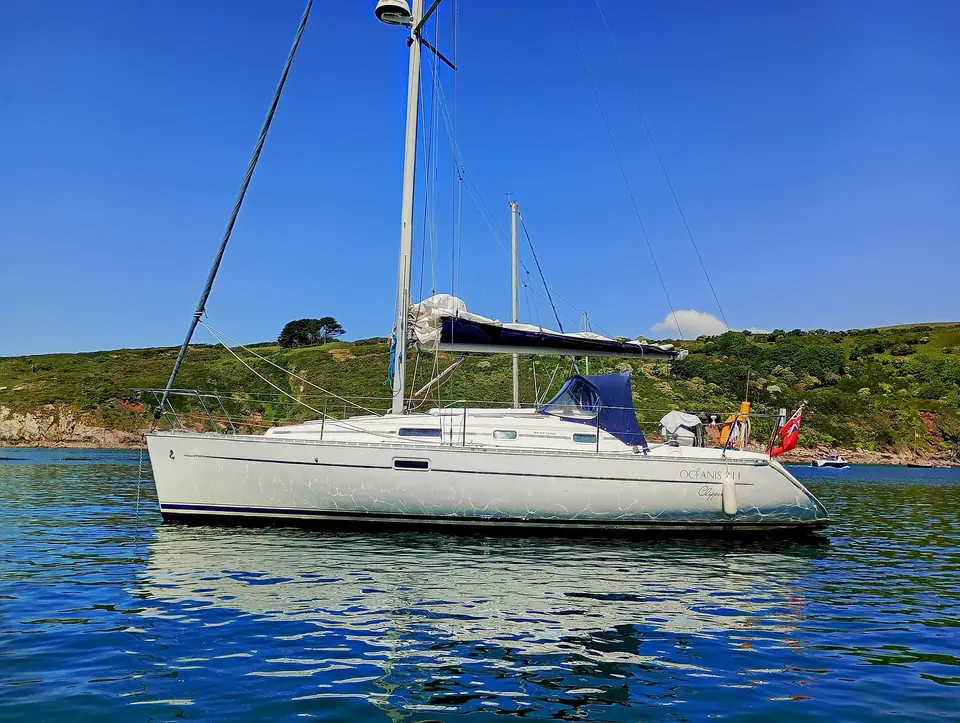
We have not found a freely licensed photo of the Beneteau First 53 yet, so these show other Beneteau boats, each captioned with the boat pictured.
More performance sailboats to explore
Swan 48
Performance Sailboats, 52 ft
Used $150K to $1.9M

Elan E6
Performance Sailboats, 50 ft
Used $380K to $560K
Beneteau First 47.7
Performance Sailboats, 49 ft
Used $125K to $190K
Dehler 46
Performance Sailboats, 48 ft
Used $330K to $520K
Other Beneteau models
- Beneteau 49
- Beneteau 50
- Beneteau 57
- Beneteau 343
- Beneteau Antares 5.80
- Beneteau Antares 6
- Beneteau Antares 6.80
- Beneteau Antares 7
- Beneteau Antares 7.30
- Beneteau Antares 7.60
- Beneteau Antares 7.80
- Beneteau Antares 8
- Beneteau Antares 8.00
- Beneteau Antares 8.05
- Beneteau Antares 8.60
- Beneteau Antares 8.80
- Beneteau Antares 9
- Beneteau Antares 9.80
- Beneteau Antares 10.80
- Beneteau Antares 11
- Beneteau Antares 12
- Beneteau Antares 13.80
- Beneteau Antares 30
- Beneteau Antares 32
- Beneteau Antares 36
- Beneteau Antares 42
- Beneteau Antares 620 HB
- Beneteau Antares 650 HB
- Beneteau Antares 750 HB
- Beneteau Cyclades 39.3
- Beneteau Cyclades 43.3 and 43.4
- Beneteau Cyclades 50.5
- Beneteau First 18 SE
- Beneteau First 20
- Beneteau First 21.7
- Beneteau First 24
- Beneteau First 25
- Beneteau First 25.7
- Beneteau First 27
- Beneteau First 27.7
- Beneteau First 30
- Beneteau First 31.7
- Beneteau First 35
- Beneteau First 36
- Beneteau First 36.7
- Beneteau First 38
- Beneteau First 40
- Beneteau First 40.7
- Beneteau First 44
- Beneteau First 45
- Beneteau First 47.7
- Beneteau First 211
- Beneteau First 235
- Beneteau First 285
- Beneteau First 305
- Beneteau First 310
- Beneteau First 345
- Beneteau Flyer 6
- Beneteau Flyer 7
- Beneteau Flyer 8
- Beneteau Flyer 9
- Beneteau Flyer 10
- Beneteau Flyer 12
- Beneteau Flyer 500
- Beneteau Flyer 550
- Beneteau Flyer 650
- Beneteau Flyer 701
- Beneteau Flyer 750
- Beneteau Grand Trawler 62
- Beneteau Gran Turismo 32
- Beneteau Gran Turismo 36
- Beneteau Gran Turismo 40
- Beneteau Gran Turismo 41
- Beneteau Gran Turismo 44
- Beneteau Gran Turismo 45
- Beneteau Monte Carlo 6
- Beneteau Oceanis 30.1
- Beneteau Oceanis 31
- Beneteau Oceanis 34
- Beneteau Oceanis 34.1
- Beneteau Oceanis 35
- Beneteau Oceanis 35.1
- Beneteau Oceanis 36 CC
- Beneteau Oceanis 37
- Beneteau Oceanis 38
- Beneteau Oceanis 38.1
- Beneteau Oceanis 40
- Beneteau Oceanis 40 CC
- Beneteau Oceanis 41
- Beneteau Oceanis 41.1
- Beneteau Oceanis 42
- Beneteau Oceanis 42 CC
- Beneteau Oceanis 43
- Beneteau Oceanis 44 CC
- Beneteau Oceanis 45
- Beneteau Oceanis 46
- Beneteau Oceanis 46.1
- Beneteau Oceanis 48
- Beneteau Oceanis 50
- Beneteau Oceanis 51.1
- Beneteau Oceanis 54
- Beneteau Oceanis 55
- Beneteau Oceanis 58
- Beneteau Oceanis 311
- Beneteau Oceanis 320
- Beneteau Oceanis 321
- Beneteau Oceanis 323
- Beneteau Oceanis 331
- Beneteau Oceanis 350
- Beneteau Oceanis 351
- Beneteau Oceanis 370
- Beneteau Oceanis 390
- Beneteau Oceanis 400
- Beneteau Oceanis 411
- Beneteau Oceanis 423
- Beneteau Oceanis 430
- Beneteau Oceanis 440
- Beneteau Oceanis 461
- Beneteau Oceanis 473
- Beneteau Oceanis 500
- Beneteau Oceanis 510
- Beneteau Oceanis Clipper 361
- Beneteau Oceanis Clipper 373
- Beneteau Oceanis Clipper 381
- Beneteau Oceanis Clipper 393
- Beneteau Oceanis Yacht 54
- Beneteau Oceanis Yacht 60
- Beneteau Oceanis Yacht 62
- Beneteau Sense 43
- Beneteau Sense 46
- Beneteau Sense 50
- Beneteau Sense 55
- Beneteau Swift Trawler 30
- Beneteau Swift Trawler 34
- Beneteau Swift Trawler 35
- Beneteau Swift Trawler 41
- Beneteau Swift Trawler 44
- Beneteau Swift Trawler 48
- All Beneteau models