Beneteau Performance Sailboats
Beneteau 21.7 First Review, Specs and Used Buying Notes
A 21-foot Finot trailer sailer with a pivoting iron keel, twin kick-up rudders and enough foam in the hull to keep it afloat when flooded.
- Length
- 21 ft6.4 m
- Beam
- 8.1 ft2.48 m
- Draft
- 5.9 ft1.8 m
- Cabins
- 1 (forward double behind a curtain, open saloon)
- Used price
- $12K to $26K
On this page
- Overview
- One hull, five names, and where the 21.7 fits
- Foam, liners and an injected deck
- A cast iron keel on a worm screw and two kick-up blades
- A sail plan one person can manage
- Four berths and a curtain, not a yacht interior
- On the road behind an SUV
- How it sails and where people race it
- Buying one in the US, and what it costs to keep
- Specifications
- Price and value
- Strengths and weaknesses
- Used buyer checklist
- Rivals
- Our verdict
- FAQ
The Beneteau First 21.7 is a Groupe Finot lifting-keel trailer sailer built in France from 2004 until the First 20 took over around 2012. It sleeps four, tows behind a mid-size vehicle and was certified unsinkable.
- Families stepping up from dinghies
- Trailer sailing to different lakes and coasts
- Shallow bays and beachable cruising
- Club racing under PHRF on a small budget
Beneteau First 21.7 by the numbers
- Sail area to displacement
- 22.1Plenty of sail for the weight, the boat should feel lively in light air.
- Displacement to length
- 160Light displacement for its length, quick but sensitive to added cruising weight.
- Theoretical hull speed
- 5.9 knThe practical top speed of a displacement monohull under normal sailing, based on waterline length.
- Ballast ratio
- 24%Relatively low ballast, form stability does more of the work.
- Capsize screening
- 2.33Above 2.0, so this hull leans toward coastal stability over ultimate offshore resistance.
- Motion comfort ratio
- 12.9A quicker motion in waves, typical of light, beamy hulls.
- Length to beam ratio
- 2.58 : 1A beamy hull with lots of volume for its length.
One hull, five names, and where the 21.7 fits
Searching for a Beneteau 21.7 First tends to throw up three or four boats that look almost identical, and that is because they are. Groupe Finot drew a 21-foot lifting-keel cruiser for Beneteau in 1992, the First 210, and the yard kept the hull for two decades. The First 210 Spirit followed, then the First 211 in 1998, then the First 21.7 in 2004, then a refreshed 21.7 S, and finally the First 20 in 2012 with a square-top main. Sailboatdata and Wikipedia both describe the whole series as sharing the same basic hull, and SAIL called it a runaway success that still commanded high prices on the brokerage market a decade after launch.
The 21.7 is the version in the middle of that run. It took the proven Finot hull, gave it the light grey gelcoat, teak rubbing strake, pear-tinted joinery and lazy-bag sail plan of the .7 family (the 25.7 and 27.7 were launched alongside it), and pitched it at families who wanted a fast little boat they could tow to a different coast each summer. Yachting Monthly put the combined fleet of 210, 211 and 21.7 at around 2,300 boats, so parts knowledge and owner experience are easy to find even if the boats themselves are rare in American marinas.
Foam, liners and an injected deck
Beneteau marketed the 21.7 as a concentrate of its technology, and the 2006 inventory list backs that up. The hull is a single-skin GRP laminate with a structural inner moulding of unidirectional glass bonded and laminated to it, which carries loads from the shroud tie rods, keel and rudders. Buoyancy foam is distributed through the hull structure, and the boat was certified unsinkable to the French merchant navy standard of the time. The deck is injection moulded with a balsa core, which gives a stiffer and more consistent part than hand lay-up and keeps weight down high in the boat.
The hull-to-deck joint is covered by a teak toerail that is bonded and screwed in place. That detail matters on a used boat: the teak greys and checks over time, and loose screws in the rail are a common path for water into the joint. Inside, the structural beam for the mast is integrated into the coachroof moulding, which is why the saloon feels more open than the 211's.
A cast iron keel on a worm screw and two kick-up blades
The keel is the heart of the boat. It is a profiled cast iron fin that pivots on a pin and is raised or lowered with a manual worm-screw mechanism turned by a standard winch handle. Down, it draws 1.80 m (5 ft 11 in) and puts weight deep for windward ability; up, the boat floats in 0.70 m (2 ft 4 in). On the 21.7 S, Beneteau listed the keel at 300 kg (661 lb). Adjustable pads in the keel box stop the fin rattling, and the factory treated the casting with an epoxy-based coating before assembly.
Steering is by twin GRP rudders hung on the transom and raised through a sleeve system, with a teak tiller and a universal-joint extension. The twin blades keep grip when the boat heels and let you dry out on the keel stub and rudders in a tidal harbor. Sailboatdata calculates a sail area to displacement ratio of about 22 and a displacement to length ratio of about 161, numbers that put the 21.7 well into the lively end of trailer sailers.
A sail plan one person can manage
The rig is a deck-stepped 9/10 fractional aluminum mast with a single set of aft-swept spreaders, a 1x19 wire backstay with a tackle, and two shrouds plus aft lowers. Standard sails were a four-batten main of 13.8 m2 (149 sq ft) with two reefs and lazy jacks, and a 110 percent roller-furling genoa of 11.4 m2 (123 sq ft). The asymmetric spinnaker kit with a small pole carried 31.1 m2, and a symmetric spinnaker of 34.8 m2 was also available. Air draft is about 10.40 m (34 ft 1 in).
All the principal control lines run aft to four jammers on the coachroof and two Harken H08A winches, one each side, which handle sheets, halyards and reefing. The mainsheet is a four-part tackle on a snap shackle in the cockpit sole, so it can be unclipped to clear the cockpit at the dock. When Cruising World reviewed the original 210, Herb McCormick noted that the wide spreader base rules out an overlapping genoa; that remains true here, so light-air speed comes from a well-cut main and an asymmetric rather than a big headsail.
Four berths and a curtain, not a yacht interior
Below, the 21.7 is honest about its size. Forward is a double berth with a 1.90 m by 1.40 m mattress, separated from the saloon by a fabric curtain on a pole. The saloon has two single berths of 2.20 m by 0.60 m either side of the keel case, with stowage under them and under the cockpit. A sink sits in the galley area with space left for a hob, and the companionway hatch hinges up to give a little more headroom while you cook. There is no enclosed head; a chemical toilet was an option.
Most boats were ordered with the Yacht Club pack, which added hull-length storage nets, a stainless movable stove with a storage case, a 35 L fresh water tank with a manual pump, a saloon or cockpit table, a bulkhead compass and teak-slatted cockpit benches. If a boat you are looking at lacks that pack, adding the water tank and stove retroactively is easy, but the nets and teak slats are worth checking for. The later 21.7 S brought a new interior style with blond oak joinery and parquet-style flooring.
On the road behind an SUV
At 8 ft 2 in wide the 21.7 sits inside the standard US trailer width, so no oversize permit is needed. Add a braked single-axle trailer, an outboard and cruising gear and you are towing roughly 3,500 to 4,000 lb, which suits a full-size SUV or a pickup rather than a family sedan. With the keel wound up the boat floats in about two and a half feet, so a normal ramp works, though steep ramps make the twin rudders vulnerable if you forget to lift them.
Power comes from an outboard on a transom bracket. Beneteau rated the hull for 8 kW (11 hp) maximum in 2006 and 10 hp on the 21.7 S, but most owners find a 4 to 6 hp four-stroke long-shaft more than enough for a 2,745 lb boat, and a lighter motor keeps the stern from squatting.
How it sails and where people race it
The 21.7 inherited the 210's reputation for being quick for its length. The 210 was Sailing World's 1993 Daysailer and Weekender Boat of the Year, and Steve Henkel later noted that its PHRF number put it close to a J/24, a larger purpose-built racer. Hull speed works out at about 5.9 knots, but the light, fine-bowed hull and generous main let it surf readily on a reach in a breeze. Upwind, keep the keel fully down and locked; sailing with it partly raised costs pointing and puts strain on the pivot.
Class racing for the First 21 family has existed in France, Britain and Ireland, which keeps used values firm in Europe. In the US, expect to race a 21.7 under PHRF in a mixed fleet; there is no domestic one-design class to lean on, so its appeal here is as a fast pocket cruiser and a teaching boat for a family stepping up from dinghies.
Buying one in the US, and what it costs to keep
Because the 21.7 was built for European buyers, many US shoppers end up comparing an imported boat with a domestic J/22 or Catalina 22. Expect asking prices around $12,000 to $26,000 depending on year, trailer and sails. A well-sorted 21.7 S with a galvanized braked trailer and a newer main sits at the top of that band, while early boats needing keel work belong at the bottom.
Running costs are modest if the boat lives on its trailer: roughly $1,800 to $4,500 a year for insurance, storage, an occasional haulout and outboard service, with new sails the big periodic expense.
Beneteau First 21.7 specifications
| Length overall | 21 ft6.4 m |
|---|---|
| Waterline length | 19.7 ft6 m |
| Beam | 8.1 ft2.48 m |
| Draft | 5.9 ft1.8 m |
| Air draft | 34.1 ft10.39 m |
| Displacement | 2,745 lbs1,245 kg |
| Ballast | 661 lbs3 kg |
| Sail area | 271 sq ft25.2 m² |
| Fresh water | 9 gal35 L |
| Cabins | 1 (forward double behind a curtain, open saloon) |
| Berths | 4 (forward double plus two saloon singles) |
| Heads | None fitted as standard; portable chemical toilet optional |
| Maximum persons | 6 |
| Standard engines | Outboard on transom bracket (engine not included in base boat) |
| Maximum power | 11 hp |
| Hull type | Light displacement monohull with foam buoyancy compartments (unsinkable rating) |
| Keel | Pivoting cast iron swing keel, 0.70 m (2 ft 4 in) up to 1.80 m (5 ft 11 in) down, wound by a worm-screw and winch handle |
| Rig | Fractional 9/10 aluminum sloop, single aft-swept spreader, furling 110 percent genoa |
| Hull construction | Single-skin GRP hull with bonded structural inner moulding and buoyancy foam, injection-moulded balsa-cored deck |
| CE design category | C |
| Builder | Chantiers Beneteau, France |
| Naval architect | Groupe Finot (later Finot-Conq et Associes) |
| Production | 2004 to 2012 |
| Status | Discontinued |
Figures come from builder documentation and independent tests where available. Displacement is usually quoted light, so a loaded cruising boat will weigh more. Compare these specs with another model.
How much does a Beneteau First 21.7 cost?
The 21.7 was a European-market boat first, so US examples are scarce. Asking prices depend on the trailer, the sail inventory and whether the keel mechanism has been rebuilt. These are 2026 US estimates rather than figures from current listings, and an import should be valued after shipping.
Estimate your yearly cost
A planning estimate using common rules of thumb: insurance near 1.5 percent of value, maintenance near 3 percent, haul out and bottom paint by length. Your marina, region and use will move these numbers. Open the full cost calculator.
Versions and options
- First 21.7 (2004)
- Groupe Finot hull with pivoting cast iron keel, twin kick-up rudders, Harken H08A winches, pear-tinted joinery and light grey gelcoat. CE C6, outboard up to 11 hp.
- First 21.7 S
- Later refresh credited to Finot Conq et Associes with a new interior style in blond oak, parquet-style flooring and updated upholstery. Same hull and 1,245 kg displacement, outboard rated to 10 hp.
- Siblings on the same hull
- First 210 (1992 to 1997) and First 211 (1998 to 2004) came before; the First 20 (from 2012) followed with a square-top main and a backstay-free rig.
Beneteau First 21.7 timeline
- 1992Groupe Finot's First 210 launches the 21-foot lifting-keel hull.
- 1998The First 211 update improves the accommodation for four.
- 2004The First 21.7 replaces the 211 alongside the new 25.7 and 27.7.
- 2011Equipment lists show the 21.7 S with a restyled interior.
- 2012Beneteau launches the First 20 as the next evolution of the same boat.
Strengths and weaknesses
What owners like
- Pivoting keel gives 5 ft 11 in of draft for sailing and 2 ft 4 in for ramps and beaches
- Foam buoyancy and an unsinkable rating are rare at this price
- Twin rudders keep control when heeled and allow drying out
- All lines led aft to two winches, easy for one or two people
- Strong European class following and a deep pool of owner knowledge
What to weigh up
- Sitting headroom only and no enclosed head
- Wide spreader base rules out an overlapping genoa for light air
- Few boats in the US, so buying often means importing
- Worm-screw keel mechanism and pivot need regular attention
- Teak toerail over the hull-deck joint needs maintenance to stay watertight
Used Beneteau First 21.7 buyer checklist
Take this list to a viewing. Your ticks are saved in this browser so you can come back to it.
Always commission an independent marine survey and an engine survey before you buy. How a marine survey works.
Rivals to consider
J/22
A fixed-keel one-design with a big US fleet, faster around the cans and easier to race, but with less cruising space and a deeper draft on the trailer.
Compare side by sideCatalina 22
The American default trailer sailer, heavier and roomier with a swing keel, plentiful and cheap but slower and less refined under sail.
Compare side by sideBeneteau First 20
The direct successor on the same hull with a square-top main and more sail area, newer and pricier on the used market.
Compare side by sideJeanneau Sun 2000
The French rival from Jeanneau with a similar lifting-keel trailer sailer brief and comparable European pricing.
Our verdict on the Beneteau First 21.7
The First 21.7 is the sweet spot of a design that Beneteau barely needed to change for twenty years. It sails like a bigger boat, tows like a smaller one and forgives the mistakes of a family learning the ropes, while the foam buoyancy and twin rudders add a safety margin few 21-footers offer. The catch for American buyers is availability: you will likely be shopping an import or a rare domestic boat, and the keel mechanism and trailer deserve as much scrutiny as the hull. Find a 21.7 S with a good trailer and a recent keel service and you have one of the most capable small cruisers ever built for the money.
Beneteau First 21.7 questions answered
Is the Beneteau 21.7 First trailerable?
Yes. Its 8 ft 2 in beam is within the US trailer width limit and the keel winds up to 2 ft 4 in of draft, so it launches from a normal ramp.
Is the Beneteau First 21.7 unsinkable?
Beneteau fitted buoyancy foam throughout the hull and certified the boat unsinkable to the French merchant navy standard of the time. That rating depends on the foam still being in place on a used boat.
What is the difference between the Beneteau 21.7 and the First 211?
They share the same Finot hull and keel concept. The 21.7 added an integrated coachroof beam for more interior space, new joinery and hardware, and a lazy-bag sail plan; the 211 is the earlier, simpler version.
What outboard suits a Beneteau 21.7?
Beneteau rated it for up to 11 hp (10 hp on the 21.7 S), but a 4 to 6 hp long-shaft four-stroke is the usual choice and keeps weight off the transom.
How many people can sleep on a First 21.7?
Four, two in the forward double and two on the saloon singles. CE category C allowed up to six people aboard for day sailing.
How much is a Beneteau 21.7 for sale in the US?
Expect roughly $12,000 to $26,000 in 2026 depending on year, trailer and sails, with the later 21.7 S at the upper end.
Photos from the Beneteau range
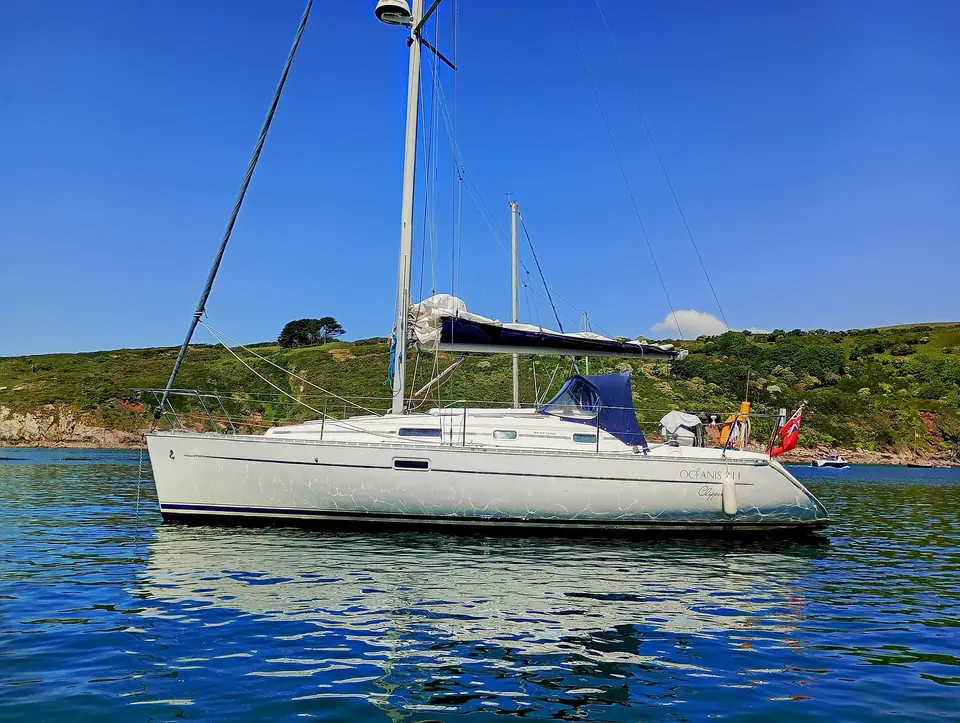
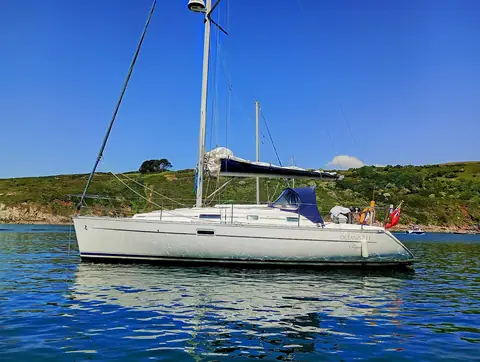
We have not found a freely licensed photo of the Beneteau First 21.7 yet, so these show other Beneteau boats, each captioned with the boat pictured.
More performance sailboats to explore
Beneteau First 20
Performance Sailboats, 21 ft
Used $19K to $37K
Beneteau First 211
Performance Sailboats, 21 ft
Used $9K to $20K
J/22
Performance Sailboats, 23 ft
Used $3K to $22K
Pearson Ensign
Performance Sailboats, 23 ft
Used $2K to $35K
Other Beneteau models
- Beneteau 49
- Beneteau 50
- Beneteau 57
- Beneteau 343
- Beneteau Antares 5.80
- Beneteau Antares 6
- Beneteau Antares 6.80
- Beneteau Antares 7
- Beneteau Antares 7.30
- Beneteau Antares 7.60
- Beneteau Antares 7.80
- Beneteau Antares 8
- Beneteau Antares 8.00
- Beneteau Antares 8.05
- Beneteau Antares 8.60
- Beneteau Antares 8.80
- Beneteau Antares 9
- Beneteau Antares 9.80
- Beneteau Antares 10.80
- Beneteau Antares 11
- Beneteau Antares 12
- Beneteau Antares 13.80
- Beneteau Antares 30
- Beneteau Antares 32
- Beneteau Antares 36
- Beneteau Antares 42
- Beneteau Antares 620 HB
- Beneteau Antares 650 HB
- Beneteau Antares 750 HB
- Beneteau Cyclades 39.3
- Beneteau Cyclades 43.3 and 43.4
- Beneteau Cyclades 50.5
- Beneteau First 18 SE
- Beneteau First 20
- Beneteau First 24
- Beneteau First 25
- Beneteau First 25.7
- Beneteau First 27
- Beneteau First 27.7
- Beneteau First 30
- Beneteau First 31.7
- Beneteau First 35
- Beneteau First 36
- Beneteau First 36.7
- Beneteau First 38
- Beneteau First 40
- Beneteau First 40.7
- Beneteau First 44
- Beneteau First 45
- Beneteau First 47.7
- Beneteau First 53
- Beneteau First 211
- Beneteau First 235
- Beneteau First 285
- Beneteau First 305
- Beneteau First 310
- Beneteau First 345
- Beneteau Flyer 6
- Beneteau Flyer 7
- Beneteau Flyer 8
- Beneteau Flyer 9
- Beneteau Flyer 10
- Beneteau Flyer 12
- Beneteau Flyer 500
- Beneteau Flyer 550
- Beneteau Flyer 650
- Beneteau Flyer 701
- Beneteau Flyer 750
- Beneteau Grand Trawler 62
- Beneteau Gran Turismo 32
- Beneteau Gran Turismo 36
- Beneteau Gran Turismo 40
- Beneteau Gran Turismo 41
- Beneteau Gran Turismo 44
- Beneteau Gran Turismo 45
- Beneteau Monte Carlo 6
- Beneteau Oceanis 30.1
- Beneteau Oceanis 31
- Beneteau Oceanis 34
- Beneteau Oceanis 34.1
- Beneteau Oceanis 35
- Beneteau Oceanis 35.1
- Beneteau Oceanis 36 CC
- Beneteau Oceanis 37
- Beneteau Oceanis 38
- Beneteau Oceanis 38.1
- Beneteau Oceanis 40
- Beneteau Oceanis 40 CC
- Beneteau Oceanis 41
- Beneteau Oceanis 41.1
- Beneteau Oceanis 42
- Beneteau Oceanis 42 CC
- Beneteau Oceanis 43
- Beneteau Oceanis 44 CC
- Beneteau Oceanis 45
- Beneteau Oceanis 46
- Beneteau Oceanis 46.1
- Beneteau Oceanis 48
- Beneteau Oceanis 50
- Beneteau Oceanis 51.1
- Beneteau Oceanis 54
- Beneteau Oceanis 55
- Beneteau Oceanis 58
- Beneteau Oceanis 311
- Beneteau Oceanis 320
- Beneteau Oceanis 321
- Beneteau Oceanis 323
- Beneteau Oceanis 331
- Beneteau Oceanis 350
- Beneteau Oceanis 351
- Beneteau Oceanis 370
- Beneteau Oceanis 390
- Beneteau Oceanis 400
- Beneteau Oceanis 411
- Beneteau Oceanis 423
- Beneteau Oceanis 430
- Beneteau Oceanis 440
- Beneteau Oceanis 461
- Beneteau Oceanis 473
- Beneteau Oceanis 500
- Beneteau Oceanis 510
- Beneteau Oceanis Clipper 361
- Beneteau Oceanis Clipper 373
- Beneteau Oceanis Clipper 381
- Beneteau Oceanis Clipper 393
- Beneteau Oceanis Yacht 54
- Beneteau Oceanis Yacht 60
- Beneteau Oceanis Yacht 62
- Beneteau Sense 43
- Beneteau Sense 46
- Beneteau Sense 50
- Beneteau Sense 55
- Beneteau Swift Trawler 30
- Beneteau Swift Trawler 34
- Beneteau Swift Trawler 35
- Beneteau Swift Trawler 41
- Beneteau Swift Trawler 44
- Beneteau Swift Trawler 48
- All Beneteau models