Dehler 36 Review, a Slim Judel/Vrolijk Racer-Cruiser from 2001
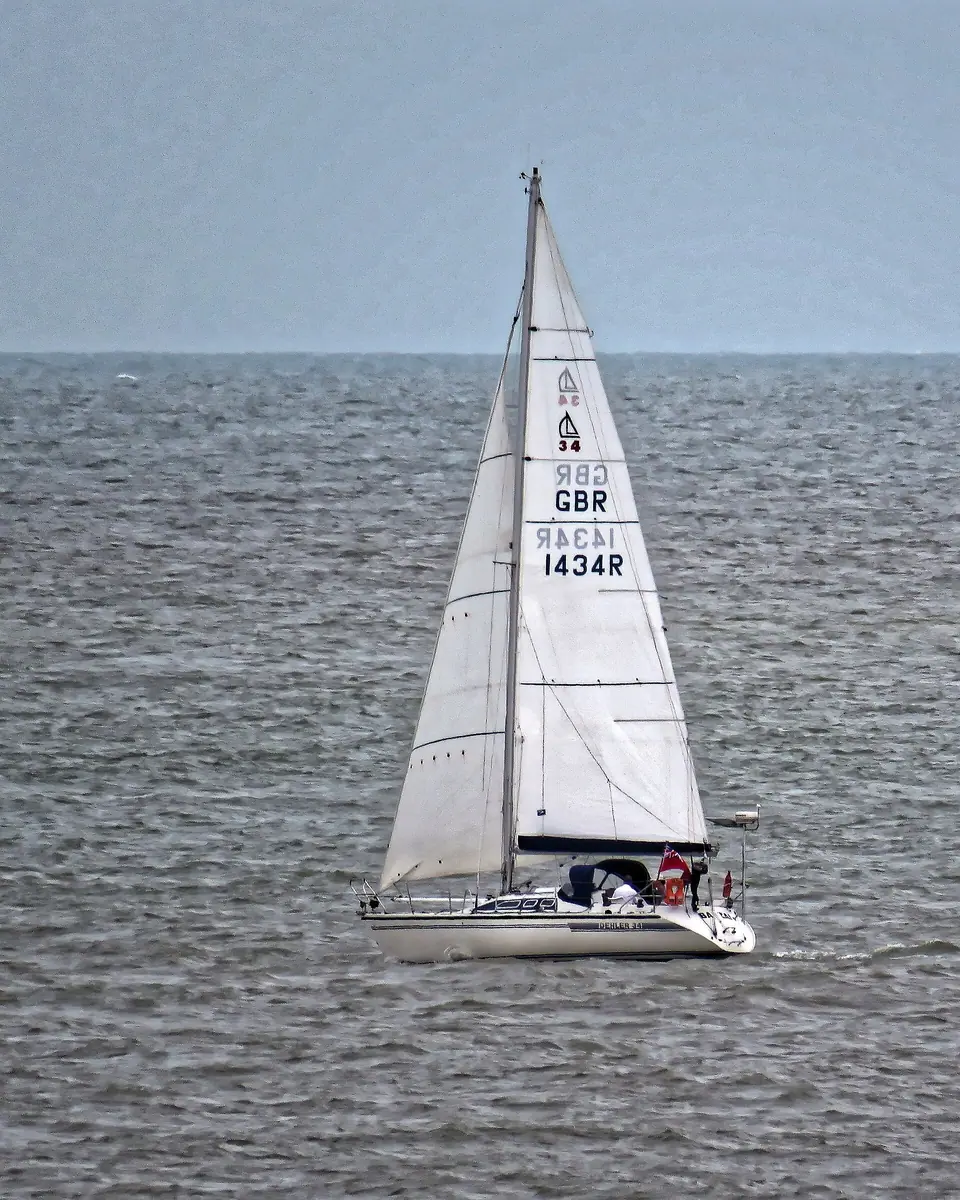
Long waterline, fine ends and a powerful 9/10 rig: the 2001 Dehler 36, later sold as the 36 SQ, is a quick, narrow-gutted club racer that cruises well for two.
- Length
- 35.9 ft10.95 m
- Beam
- 11.5 ft3.5 m
- Draft
- 6.4 ft1.95 m
- Cabins
- 2 or 3
- Used price
- $65K to $120K
On this page
- Overview
- The 39's little sister
- The numbers behind the speed
- How it sails: quick, responsive and a little wet
- How Dehler built it
- Four layouts in 36 feet
- Engine and motoring
- Regatta results and a club-racing future
- What to expect when buying one
- Specifications
- Price and value
- Strengths and weaknesses
- Used buyer checklist
- Rivals
- Our verdict
- FAQ
The Dehler 36 is a 10.95 m Judel/Vrolijk performance cruiser launched in 2001 and later marketed as the 36 SQ. Light, long-waterlined and Category A rated, it won IMS regattas and sells today as an affordable fast cruiser.
- PHRF club racing
- Couples who enjoy a lively boat
- Weekend and coastal cruising in moderate climates
- Buyers moving up from a sportboat
The 39's little sister
Search for a Dehler 36 and you will meet at least three different boats. The one most buyers mean, and the subject of this page, is the Judel/Vrolijk design that Sailing World and Cruising World first listed in October 2001. Yachting Monthly, which tested it in February 2002, described it as a 2001 design that followed closely in the wake of its big sister, the 39: elegant, low and sleek, with a long, narrow waterline and fine ends.
Later in the decade Dehler marketed the same boat as the 36 SQ, for speed and quality, and the brochure under that name shows the same 10.95 m length and 9.95 m waterline. The older Dehler 36 CWS of 1986 and the racing 36 DB of 1990 are van de Stadt designs with shorter waterlines and very different deck layouts; sailboatdata also lists a Judel/Vrolijk Dehler 36 under 1990, which conflicts with every test we found and is best treated as a database error.
Dehler 36 by the numbers
- Sail area to displacement
- 21.1Plenty of sail for the weight, the boat should feel lively in light air.
- Displacement to length
- 170Light displacement for its length, quick but sensitive to added cruising weight.
- Theoretical hull speed
- 7.7 knThe practical top speed of a displacement monohull under normal sailing, based on waterline length.
- Ballast ratio
- 37%A typical ballast ratio for a cruising monohull.
- Capsize screening
- 1.94Below 2.0, the traditional threshold for offshore suitability.
- Motion comfort ratio
- 23.6A quicker motion in waves, typical of light, beamy hulls.
- Length to beam ratio
- 3.13 : 1Moderate proportions.
The numbers behind the speed
Cruising World's Ralph Naranjo summed up the formula as a straight sheer, a long waterline and a powerful 9/10 rig. With 737 sq ft of working sail (main plus 104 percent jib) on about 13,227 lb, the sail area to displacement ratio is just over 21, enough to keep the boat moving in the 10 to 12 knot breezes typical of summer on Long Island Sound or the Chesapeake. Sailboatdata's figures give a displacement to length ratio of about 170, light for a cruiser of its day.
Ballast is 4,850 lb (about 2,200 kg) in a fin and bulb keel drawing 1.95 m (6 ft 5 in), with a shoal option around 1.6 m. The 36 SQ brochure lists a 6,200 kg standard boat and a heavier 6,600 kg shoal version, a 39.1 m2 main, a 27.9 m2 jib or 40.9 m2 genoa, an 81.4 m2 gennaker and a 100 m2 spinnaker, so later boats carry slightly more weight than the early test boats.
How it sails: quick, responsive and a little wet
Naranjo close-reached at 6 to 7 knots in 8 to 10 knots of true wind and found the 414 sq ft mainsail and 140 percent genoa gave plenty of light-air power, even as the wind went aft of the beam. He praised the efficient reefing system for the big main and noted it will get a lot of use. Yachting Monthly called the 36 very responsive on the helm and rewarding to trim, with real ability to power to windward.
The caveats come in heavier weather. Yachting Monthly warned that some people will find the boat a handful in a blow and that it tends to slam in steep, short seas, a consequence of the fine, low entry. The cockpit is not ideal for singlehanding, although two people can sail it easily thanks to the wide traveler and lines led aft. Treat it as a fast boat for competent sailors rather than a forgiving first cruiser.
How Dehler built it
Both hull and deck are balsa-cored sandwich laid up by hand, and Cruising World was impressed by the glasswork. The hull-deck joint is laminated while both parts are still in the mold, creating a monocoque. Deck hardware is fastened to aluminum flat stock bonded inside the deck, with thread sealant to slow the galvanic corrosion between stainless steel and aluminum. The boat met European Category A offshore requirements.
That backing-plate detail is the main thing to check on an older boat: if the sealant has failed and water has reached the aluminum, fasteners can corrode and loosen. Naranjo also flagged slick gelcoat on much of the coachroof instead of nonskid, which is worth fixing for anyone who goes forward to work the mast.
Four layouts in 36 feet
The early boats tested in 2002 had a double V-berth in the forepeak and a double cabin aft of the companionway, with a utility space beside it under the cockpit; a second aft double was optional. The 36 SQ brochure lists four versions: a standard three-cabin layout with the head next to the saloon, a three-cabin layout with the head aft, a two-cabin boat with the starboard aft space fitted as a storage room with a mattress, and a plain two-cabin layout.
Yachting Monthly liked the good-sized galley that works at sea and a bright, attractive saloon with a dinette seating five, but found stowage tight and the chart table small. Opening ports work well at anchor, though Cruising World thought the boat was better ventilated for temperate climates than for the tropics.
Engine and motoring
A Volvo Penta saildrive diesel of about 27 hp sits beneath the companionway steps. Cruising World recorded 6.4 knots at a fuel-saving 2,200 rpm and reminded owners that saildrives need careful attention to the isolation between the aluminum leg and the stainless and bronze around it. Sailboatdata lists a Volvo D1-30 for the 36 SQ, with tanks of about 91 liters (24 gallons) of fuel and 254 liters (67 gallons) of water, adequate for weekend and coastal cruising.
Regatta results and a club-racing future
Dehler's 36 SQ brochure highlights a win at the Copa del Rey in IMS 670, and later 36 SQs kept winning: Dehler reported an NRW Cup victory in 2007 and an overall win at the Sandhamn Open under ORC International in 2010. For an American owner the takeaway is that the hull is genuinely competitive, so a 36 with a good sail inventory can hold its own in PHRF fleets against newer and more expensive boats.
What to expect when buying one
Most boats on the market are in Germany, France, Scandinavia and the Netherlands; a 2005 36 SQ listed in Lorient at 95,000 euros is typical of a well-kept example. In the US, expect roughly $65,000 to $120,000, with condition, sails and engine hours mattering more than the year. Budget about $8,000 to $19,000 a year to keep one on a slip with insurance, haul-out and routine maintenance.
Because the boat is light and was often raced, look for signs of hard use: keel-joint cracks, rudder bearing play, worn sails, rig fatigue and deck hardware that has been loaded beyond cruising norms.
Dehler 36 specifications
| Length overall | 35.9 ft10.95 m |
|---|---|
| Waterline length | 32.6 ft9.95 m |
| Beam | 11.5 ft3.5 m |
| Draft | 6.4 ft1.95 m |
| Displacement | 13,227 lbs6, kg |
| Ballast | 4,85 lbs2,2 kg |
| Sail area | 737 sq ft68.5 m² |
| Fuel capacity | 24 gal91 L |
| Fresh water | 67 gal254 L |
| Cabins | 2 or 3 |
| Berths | 4 to 6 |
| Heads | 1 |
| Standard engines | Volvo Penta saildrive diesel, about 27 hp (D1-30 on later 36 SQ boats) |
| Maximum power | 29 hp |
| Cruise speed | 6.4 knots |
| Hull type | Light, long-waterline monohull with fine ends, canoe body and spade rudder |
| Keel | Fin with bulb, 1.95 m (6 ft 5 in) standard; shoal keel about 1.60 to 1.65 m (5 ft 3 in to 5 ft 5 in) |
| Rig | 9/10 fractional sloop, all lines led aft, 140 percent genoa or 100 percent jib option, gennaker or spinnaker downwind |
| Hull construction | Hand-laid GRP balsa-core sandwich hull and deck, hull-deck joint laminated in the mold |
| CE design category | A |
| Builder | Dehler Yachtbau, Freienohl, Germany |
| Naval architect | judel/vrolijk & co |
| Production | 2001 to present |
| Status | Discontinued |
Figures come from builder documentation and independent tests where available. Displacement is usually quoted light, so a loaded cruising boat will weigh more. Compare these specs with another model.
How much does a Dehler 36 cost?
Cruising World quoted a base price of $146,167 in 2002. In 2026 a 2005 Dehler 36 SQ was listed in France at 95,000 euros, a fair guide to well-kept European boats. US examples are uncommon, so the few already in North America tend to command a premium over an import once shipping and survey travel are counted. Racing sails, the keel version and the state of the saildrive and standing rigging drive value more than the model year.
Estimate your yearly cost
A planning estimate using common rules of thumb: insurance near 1.5 percent of value, maintenance near 3 percent, haul out and bottom paint by length. Your marina, region and use will move these numbers. Open the full cost calculator.
Versions and options
- Dehler 36 (2001)
- About 6,000 kg, 737 sq ft working sail, Volvo 27 hp saildrive, two-cabin layout with optional second aft cabin.
- Dehler 36 SQ
- Same hull, 6,200 kg standard or 6,600 kg with shoal keel, four layout options including three cabins.
- Shoal keel
- About 1.6 to 1.65 m draft with extra ballast.
- Dehler 36 CWS (1986 to 1994)
- Unrelated van de Stadt cruiser with a central winch system and self-tacking jib.
- Dehler 36 DB (1990)
- Van de Stadt racing sister of the CWS with a plastic, wood-free interior.
Dehler 36 timeline
- 2001Judel/Vrolijk Dehler 36 announced in the US through Dehler International
- 2002Tested by Yachting Monthly and Cruising World; base price $146,167
- 2007A Dehler 36 SQ wins the NRW Cup
- 201036 SQ Shakira wins the Sandhamn Open overall under ORC International
Strengths and weaknesses
What owners like
- Fast, close-winded hull with a long waterline
- Light helm that rewards good trimming
- Solid hand-laid balsa sandwich with a monocoque hull-deck joint
- Flexible two- and three-cabin layouts
- Category A rating
- Proven race winner at an affordable price
What to weigh up
- Can slam in steep, short seas
- A handful in strong winds for inexperienced crews
- Tight stowage and a small chart table
- Slick gelcoat on parts of the coachroof
- Few boats in North America
Used Dehler 36 buyer checklist
Take this list to a viewing. Your ticks are saved in this browser so you can come back to it.
Always commission an independent marine survey and an engine survey before you buy. How a marine survey works.
Rivals to consider
J/109
Slightly larger American cruiser-racer with a retractable sprit and a big US one-design fleet.
Compare side by sideBeneteau First 36.7
Popular French one-design cruiser-racer of the same years, easy to find and race in the US.
Compare side by sideElan 37
Slovenian Rob Humphreys design with a similar mix of club racing and cruising.
X-Yachts X-362 Sport
Danish racer-cruiser with a stronger premium image and higher used prices.
Our verdict on the Dehler 36
The Dehler 36 is a sharp, honest performance cruiser: long on the waterline, light on its feet and built by hand to a standard that has aged well. It rewards owners who sail actively and like to race, and it asks for a little respect when the wind and sea get up. As a used buy it offers a lot of speed for the money, provided you check the deck fasteners, saildrive and rig. If you want a forgiving, roomy family cruiser, look elsewhere; if you want a 36-footer that still wins on handicap, this is one of the better values from the 2000s.
Dehler 36 questions answered
Is the Dehler 36 the same as the Dehler 36 SQ?
Yes, essentially. The 2001 Judel/Vrolijk Dehler 36 was later marketed as the 36 SQ with the same hull, slightly higher displacement and four layout options.
What is the difference between the Dehler 36 and the 36 CWS?
The 36 CWS is a 1986 van de Stadt design with a central winch system and self-tacking jib. The 2001 Dehler 36 is a lighter Judel/Vrolijk racer-cruiser with a conventional deck layout.
How fast is the Dehler 36?
Cruising World close-reached at 6 to 7 knots in 8 to 10 knots of wind and motored at 6.4 knots at 2,200 rpm. Hull speed is about 7.7 knots.
How much does a used Dehler 36 cost?
Roughly $65,000 to $120,000 in 2026. A 2005 36 SQ was listed in France at 95,000 euros.
Is the Dehler 36 good for offshore sailing?
It is Category A rated and strongly built, but its light, fine-ended hull can slam in steep seas and it has modest stowage, so it suits fast coastal passages better than long ocean cruising.
More performance sailboats to explore
Beneteau First 36
Performance Sailboats, 36 ft
Used $250K to $360K
Beneteau First 36.7
Performance Sailboats, 36 ft
Used $55K to $105K
Dehler 36 CWS
Performance Sailboats, 36 ft
Used $35K to $70K
Beneteau First 35
Performance Sailboats, 36 ft
Used $95K to $165K