Dufour Yachts Performance Sailboats
Dufour 40 Performance Racer-Cruiser Review and Buying Guide
The Felci design that relaunched Dufour's racing pedigree in 2002, with an IMS world champion behind its deck plan and a full cruising interior below.
- Length
- 40.4 ft12.32 m
- Beam
- 12.8 ft3.91 m
- Draft
- 6.9 ft2.11 m
- Cabins
- 2 or 3
- Used price
- $85K to $145K
On this page
- Overview
- The boat that brought Dufour back to the racecourse
- Derived from an IMS world champion
- Three trims on one hull: 40, Performance and Performance+
- Numbers that explain the speed
- Below, a real cruising interior
- The 40E Performance that followed
- Buying one that has raced
- Specifications
- Price and value
- Strengths and weaknesses
- Used buyer checklist
- Rivals
- Our verdict
- FAQ
Launched in 2002 and built in standard, Performance and Performance+ trims until the 40E replaced it in 2009, the Dufour 40 is a 12.32 m racer-cruiser with a 7.8 tonne hull, a single big wheel and a Felci rig.
- Club racers who also cruise with family
- Sailors moving up from a sportboat or J-boat
- Mediterranean-style coastal cruising
- Owners who value helm feel over cockpit lounging
Dufour 40 Performance by the numbers
- Sail area to displacement
- 21.3Plenty of sail for the weight, the boat should feel lively in light air.
- Displacement to length
- 175Light displacement for its length, quick but sensitive to added cruising weight.
- Theoretical hull speed
- 8.0 knThe practical top speed of a displacement monohull under normal sailing, based on waterline length.
- Ballast ratio
- 34%A typical ballast ratio for a cruising monohull.
- Capsize screening
- 1.99Below 2.0, the traditional threshold for offshore suitability.
- Motion comfort ratio
- 24.1A quicker motion in waves, typical of light, beamy hulls.
- Length to beam ratio
- 3.15 : 1Moderate proportions.
The boat that brought Dufour back to the racecourse
By 2000 Dufour was in trouble. In March 2001 Cantiere del Pardo, the Italian builder of Grand Soleil yachts, took a large stake in the La Rochelle yard, and Umberto Felci was given the job of renewing the range. SAIL later noted that his first new Dufours were performance cruisers of 34, 40 and 44 feet, and the 40 came first, in 2002. Dufour's own history page says the dufour 40 performance was voted Sailing Yacht of the Year 2003 in France. The 34 and 44 Performance followed in 2003.
Cruising World contributor Jeremy McGeary attended Dufour's 2005 dealer meeting in Mallorca, where hull number one of the 1960s Arpège was on display and managers promised to build on that boat's spirit. Sailing the 40 in 2009, he concluded that the yard had kept its word: a modern boat that combined racing and cruising the way the Arpège had 40 years earlier.
Derived from an IMS world champion
The deck specification of the 40 was not invented in an office. According to Cruising World, it was derived from the Mediterranean-based Dufour 40 Quum, which won an IMS World Championship, and the yard kept taking feedback from experienced owners like Quum's crew. That pedigree shows in the details: double-drum Harken Quattro winches beside the companionway for halyards and spinnaker sheets, jib winches forward on the coamings, a separate pair of winches aft for an Admiral's Cup-style double-ended mainsheet, and a mainsheet traveler on the cockpit sole just forward of a single big wheel.
McGeary called the boat agile and responsive to every input from the wheel and the sheets, while noting that Felci gave the hull and appendages conservative proportions, so it signals changes quickly without becoming hard to control.
Three trims on one hull: 40, Performance and Performance+
Dufour sold the same hull and interior in three levels. The plain Dufour 40 was the cruising version, the 40 Performance added sailing hardware, and the Performance+ of 2008 went further for owners heading to grand prix regattas. The plus package, Cruising World reported, included monitored construction of the hull to control weight, reinforcement for higher rig loads, a rod-rigged Sparcraft mast, Dyneema running rigging, a full-batten main with changeable headsails on a Facnor furler, barber haulers, a high-performance vang and flush through-hulls, some of them raised high on the topsides.
Racing owners also got a clean foredeck and an open transom: the usual centerline helm seat was deleted, and the windlass was supplied but not installed, with instruments left to the owner. In Annapolis in 8 knots of breeze, the Performance+ sailed close-hauled at 6.6 knots and won Cruising World's 2009 Best Midsize Cruiser award, although, as McGeary noted, it could just as easily have entered the racer-cruiser class.
Numbers that explain the speed
Cruising World's 2009 specification gives a 12.32 m (40 ft 5 in) hull, a 10.74 m waterline, a 3.91 m beam and 7,782 kg (17,160 lb) of displacement carrying 2,684 kg of ballast on a 2.11 m keel. Sail area is 82.3 m2 (886 sq ft) and the mast stands 60 ft. That works out to a sail area to displacement ratio of 21.3, a displacement to length ratio of 175 and a ballast ratio of 35 percent, a genuinely sporty set of numbers for a boat with a full cruising interior.
Sailboatdata's record for the Dufour 40 adds a cast iron keel of about 2,815 kg at a shallower draft, alongside a 2,690 kg lead keel at 2.10 m. Check which one a boat carries, because it changes both draft and stiffness.
- Fuel 159 L (42 gal), water 329 L (87 gal)
- 40 hp Volvo saildrive
- Single wheel about 5.5 ft in diameter
Below, a real cruising interior
What separates the Dufour 40 from many racer-cruisers is the accommodation. All three trims share it: moabi mahogany joinery, an L-shaped galley to port, a large table forward with U-shaped seating and a settee opposite, a nav desk to starboard well away from the companionway, and an aft head next to the steps. Around that fixed core Dufour offered four cabin permutations. Aft, there are twin cabins, or one cabin plus a large storage locker to starboard. Forward, you choose a Pullman double or a V-berth with a second head.
McGeary judged the galley seaworthy: fiddles on the counters and inside the lockers, a two-burner stove with room to gimbal through a wide arc, and a sturdy bar between stove and cook that doubles as a harness point. Lockers are well ventilated and the deep-fiddled shelves keep things in place on port tack.
The 40E Performance that followed
In 2009 Dufour replaced the 40 with the 40E Performance, launched alongside the 405 Grand Large. Do not confuse the two on the used market. The 40E has a new hull and a different deck: twin wheels with a full-width traveler just ahead of them, a belowdecks furler, lines led aft in covered channels and three interior layouts. Its specs are similar in size, 12.35 m overall with a 3.89 m beam and 7,950 kg displacement, with 88 m2 of sail on the standard mast or 93 m2 on the long one and a choice of 40 or 55 hp Volvo engines.
SAIL's Peter Nielsen sailed an early 40E during a visit to the La Rochelle factory in 20 knots gusting toward 30 and saw 7.5 knots to windward with a reef and speeds nudging double digits on a beam reach. It was priced at $281,000 FOB Annapolis in 2010. If you want twin wheels and a newer interior, look for a 40E; if you want the single-wheel, IMS-derived cockpit, the original 40 is the boat.
Buying one that has raced
Some Dufour 40s have racing histories, on both sides of the Atlantic, while others were sold through Dufour's US importer as cruisers. Expect asking prices around $85,000 to $145,000 in 2026. The best buys are boats that cruised with occasional club racing, kept their structure in good order and have a recent rig survey.
On a raced boat, look hardest at the keel attachment and floors, the chainplates, rod rigging age and terminals, and the PBO backstay, which has a limited life. Racing sails may look impressive in a listing but are often past their best. Factor the cost of a cruising inventory into your offer if that is how you plan to use the boat.
Dufour 40 Performance specifications
| Length overall | 40.4 ft12.32 m |
|---|---|
| Waterline length | 35.3 ft10.74 m |
| Beam | 12.8 ft3.91 m |
| Draft | 6.9 ft2.11 m |
| Displacement | 17,16 lbs7,782 kg |
| Ballast | 5,918 lbs2,684 kg |
| Sail area | 886 sq ft82.3 m² |
| Fuel capacity | 42 gal159 L |
| Fresh water | 87 gal329 L |
| Cabins | 2 or 3 |
| Berths | 4 to 6 |
| Heads | 1 or 2 |
| Standard engines | Volvo Penta 40 hp diesel with saildrive |
| Maximum power | 40 hp |
| Hull type | Moderate-displacement fin keel racer-cruiser with a spade rudder |
| Keel | Bulb fin, 2.11 m (6 ft 11 in) lead keel on Performance boats; sailboatdata also lists a cast iron version at 1.65 m |
| Rig | Fractional sloop, deck-stepped double-spreader aluminum mast; Performance+ adds rod shrouds and a PBO backstay |
| Hull construction | Fiberglass; Performance+ hulls built under monitored weight control |
| Builder | Dufour Yachts, France |
| Naval architect | Umberto Felci |
| Other design credits | Patrick Roséo (interior) |
| Production | 2002 to 2009 |
| Status | Discontinued |
Figures come from builder documentation and independent tests where available. Displacement is usually quoted light, so a loaded cruising boat will weigh more. Compare these specs with another model.
How much does a Dufour 40 Performance cost?
Cruising World quoted a base sailaway price of $285,000 in 2009. On the used market, sail inventory and rig condition matter more than the trim name: a Performance+ boat with tired rod rigging and old racing sails can be worth less than a well-kept cruising version. Boats raced hard in the Mediterranean deserve a keel and structural survey before any money changes hands.
Estimate your yearly cost
A planning estimate using common rules of thumb: insurance near 1.5 percent of value, maintenance near 3 percent, haul out and bottom paint by length. Your marina, region and use will move these numbers. Open the full cost calculator.
Versions and options
- Dufour 40
- Cruising trim of the same hull, with helm seat and windlass installed.
- Dufour 40 Performance
- Upgraded sailing hardware and the deep lead keel.
- Dufour 40 Performance+
- Weight-controlled hull, rod-rigged Sparcraft mast, PBO backstay, Dyneema running rigging and an open transom.
- Dufour 40E Performance (2009)
- Successor with a new hull, twin wheels and 40 or 55 hp engines.
Dufour 40 Performance timeline
- 2001Cantiere del Pardo takes a major stake in Dufour
- 2002Dufour 40 Performance launched
- 2003Voted Sailing Yacht of the Year 2003 in France, according to Dufour
- 2008Performance+ package introduced
- 2009Wins Cruising World's Best Midsize Cruiser; the 40E Performance replaces it
Strengths and weaknesses
What owners like
- Real racing pedigree with an IMS-derived deck
- Sporty ratios, including SA/D of 21.3
- Full cruising interior with a seaworthy galley
- Single wheel and sole-mounted traveler suit serious trimmers
- Award-winning Performance+ version
What to weigh up
- Raced boats can hide structural wear
- Rod rigging and PBO backstay are expensive to renew
- Deep keel limits shallow cruising grounds
- Single-wheel cockpit is less social than twin-wheel cruisers
Used Dufour 40 Performance buyer checklist
Take this list to a viewing. Your ticks are saved in this browser so you can come back to it.
Always commission an independent marine survey and an engine survey before you buy. How a marine survey works.
Rivals to consider
Beneteau First 40.7
The best-known French racer-cruiser of the same era, with a larger racing fleet.
Compare side by sideElan 40
Slovenian performance cruiser with a similar mix of race pedigree and comfort.
Compare side by sideBeneteau First 40
Newer Farr design that replaced the 40.7, faster but pricier used.
Compare side by sideX-Yachts X-40
Danish racer-cruiser with higher build cost and stronger resale.
Our verdict on the Dufour 40 Performance
The Dufour 40 Performance is the boat that proved Dufour could still build a proper sailing yacht after its troubled years, and it does what a racer-cruiser should: sails quickly, steers precisely and still offers a comfortable home below. Its strengths come from real racing experience, which is also its risk on the used market. Buy a well-documented boat, check the keel and rig thoroughly, and you get a lot of performance for about the price of an ordinary cruiser.
Dufour 40 Performance questions answered
When was the Dufour 40 Performance built?
It was launched in 2002 and built until 2009, when the 40E Performance replaced it.
What is the difference between the Dufour 40 Performance and Performance+?
The Performance+ package added a weight-controlled hull, a rod-rigged Sparcraft mast, a PBO backstay, Dyneema running rigging and other racing details, and removed the helm seat.
How fast is the Dufour 40 Performance?
Cruising World's judges sailed the Performance+ close-hauled at 6.6 knots in about 8 knots of wind, and its sail area to displacement ratio of 21.3 is high for a cruiser.
How much is a used Dufour 40 Performance?
Most asking prices fall around $85,000 to $145,000 in 2026, depending on rig and sail condition and racing history.
Is the Dufour 40E the same boat?
No. The 40E Performance of 2009 has a new hull, twin wheels and different layouts, although it is about the same size.
Photos from the Dufour Yachts range
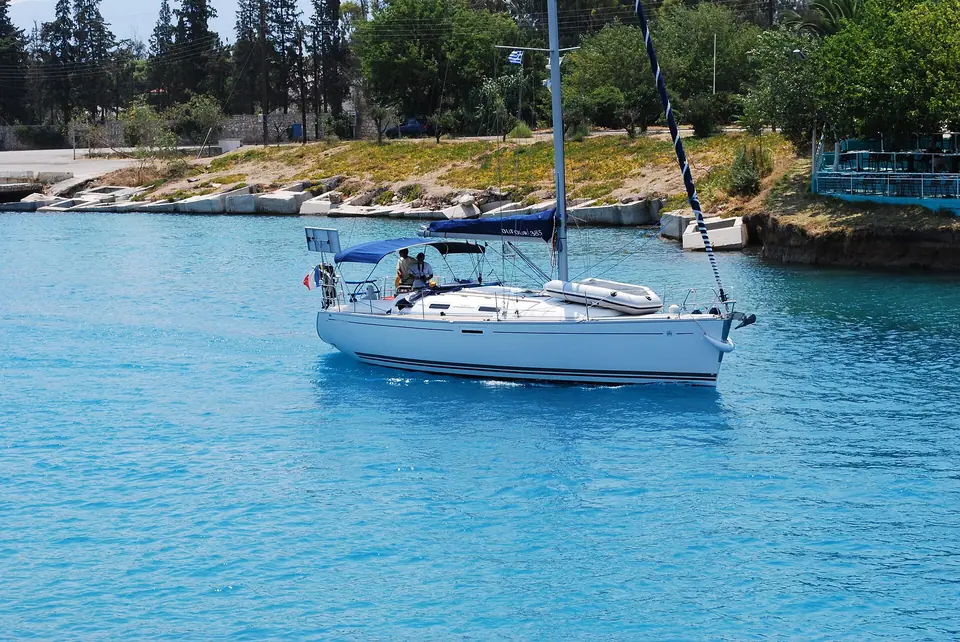
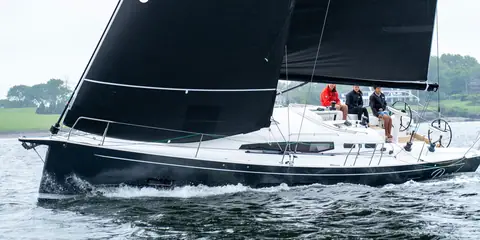
We have not found a freely licensed photo of the Dufour 40 Performance yet, so these show other Dufour Yachts boats, each captioned with the boat pictured.
More performance sailboats to explore
Beneteau First 38
Performance Sailboats, 40 ft
Used $28K to $65K
J/124
Performance Sailboats, 41 ft
Used $130K to $220K
J/120
Performance Sailboats, 40 ft
Used $85K to $200K
J/40
Performance Sailboats, 41 ft
Used $45K to $620K
Other Dufour Yachts models
- Dufour 30 Classic
- Dufour 36 Classic
- Dufour 50 Classic
- Dufour 56 Exclusive
- Dufour 61
- Dufour 360 Grand Large
- Dufour 385 Grand Large
- Dufour 390 Grand Large
- Dufour 405 Grand Large
- Dufour 412 Grand Large
- Dufour 430 Grand Large
- Dufour 455 Grand Large
- Dufour 460 Grand Large
- Dufour 470
- Dufour 520 Grand Large
- Dufour 530
- Dufour 560 Grand Large
- Dufour Catamarans 48
- All Dufour Yachts models