Dufour Yachts Cruising Sailboats
Dufour 50 Classic, a Used Buyer's Guide to Dufour's 1990s Flagship
The biggest boat in Dufour's Classic range: a 50 foot masthead cruiser with 500 liters of fuel and room for ten, now a value buy for patient sailors.
- Length
- 49.9 ft15.22 m
- Beam
- 15.1 ft4.6 m
- Draft
- 6.9 ft2.11 m
- Cabins
- Several layouts; Dufour quoted 8 to 10 berths
- Used price
- $85K to $165K
On this page
- Overview
- The top of Dufour's Classic range
- Hull, rig and what the ratios promise
- Deep fin or shoal keel
- Room for ten: living aboard a 1990s French 50
- Volvo power and long-range tankage
- Survey priorities on a boat that is 25 years old
- Buying one in Europe and bringing it to the US
- Specifications
- Price and value
- Strengths and weaknesses
- Used buyer checklist
- Rivals
- Our verdict
- FAQ
The Dufour 50 Classic is a 49 ft 11 in masthead sloop from the late 1990s and early 2000s, the flagship of Dufour's Classic series, credited to the Berret studio and Olivier Poncin. It is out of production and found mostly in Europe.
- Liveaboards wanting tankage and space on a budget
- Families or groups who need many berths
- Experienced owners comfortable managing a refit
- Buyers already sailing in Europe
Dufour 50 Classic by the numbers
- Sail area to displacement
- 22.1Plenty of sail for the weight, the boat should feel lively in light air.
- Displacement to length
- 187Light displacement for its length, quick but sensitive to added cruising weight.
- Theoretical hull speed
- 8.6 knThe practical top speed of a displacement monohull under normal sailing, based on waterline length.
- Ballast ratio
- 32%A typical ballast ratio for a cruising monohull.
- Capsize screening
- 1.94Below 2.0, the traditional threshold for offshore suitability.
- Motion comfort ratio
- 28.4Moderate motion comfort, typical of modern cruisers.
- Length to beam ratio
- 3.31 : 1Moderate proportions.
The top of Dufour's Classic range
Dufour is one of France's oldest production builders, founded in La Rochelle in 1964 by engineer and naval architect Michel Dufour and owned since 2018 by Fountaine Pajot. In the 1990s and early 2000s its cruising line was the Classic series, which ran from the Classic 30 through the 32, 35, 36, 38, 41, 43 and 45 up to the 50. The Dufour 50 Classic was the flagship, the boat for owners who wanted a true 50 footer with long-range tankage and space for a crowd.
Dufour's own 2000 specification sheet describes a boat of 15.22 m (49 ft 11 in) overall on a 14.99 m hull, with a 4.60 m (15 ft 1 in) beam, 124 m2 (1,333 sq ft) of sail, 13,665 kg (30,063 lb) displacement, 4,400 kg (9,680 lb) of ballast, 650 liters of water, 500 liters of diesel, 8 to 10 berths and an engine in the 60 to 80 hp range. Sailboatdata credits the design to Olivier Poncin and the Berret studio, now Berret-Racoupeau, and notes that a closely related boat was sold into charter as the Stardust 495.
Production dates are not well documented. Sailboatdata gives 1996 as the first year, a 1995-built boat has been advertised in France, and the 50 was still in Dufour's catalog in 2003. By 2008, SAIL noted that the 425 and 525 Grand Large completed a range that had been completely redesigned since 2000, so the Classic name and the 50 had passed into history.
Hull, rig and what the ratios promise
On a 41 ft 7 in waterline and roughly 30,000 to 31,000 pounds, the Dufour 50 Classic is a moderate-displacement cruiser rather than a heavy passagemaker. With 1,333 square feet of sail on a masthead rig, its sail area to displacement ratio is around 21.8, a lively figure for a cruiser of its era. Ballast is about 30 percent of displacement, and hull speed is roughly 8.6 knots.
Those numbers describe a boat that should sail well in moderate breezes and need reefing earlier than a deep, heavily ballasted bluewater boat. The masthead sloop rig means a big overlapping genoa does much of the work, which suits roller furling and makes sail changes simple, though a 50 footer's genoa is a big sail to trim by hand. Most surviving boats will have electric or upgraded primary winches; if not, budget for them.
Deep fin or shoal keel
Sailboatdata lists a maximum draft of 2.11 m (6 ft 11 in), and Dufour's spec sheet quotes a minimum draft of 1.60 m (5 ft 3 in), indicating a shoal version. For the US East Coast, the Bahamas and the Gulf, the shoal keel is far more practical, while the deep fin will point higher and track better offshore. Because most boats are in Europe, where the deep keel was common, a shoal-draft example may take longer to find.
Room for ten: living aboard a 1990s French 50
A quoted capacity of 8 to 10 berths tells you how Dufour expected the 50 Classic to be used: families, large crews and charter. Layouts varied by order and by the boat's original market, so treat every listing on its own merits and walk through the actual boat. Owners' versions tend to have fewer, larger cabins and more stowage; charter-derived boats have more cabins and heads and more wear.
Expect the interior style of its era: warm wood joinery, a large saloon with settees and a dining table, a substantial galley and a proper chart table. What matters more than the original plan is how the interior has aged. Check for water damage at the base of bulkheads, delaminated veneers near hatches and ports, and the condition of headliners, which on many boats of this age sag and need replacing.
Volvo power and long-range tankage
Dufour quoted engines from 60 to 80 hp, and sailboatdata lists Volvo Penta as the original make. With 500 liters (132 gallons) of fuel and 650 liters (172 gallons) of water, the 50 Classic carries more than most modern 45 to 50 footers, and that tankage is one of its strongest selling points for liveaboards and long-distance cruisers.
At this age, the engine is the first thing to price. Many boats will have been repowered at least once; if the original Volvo is still installed, plan for replacement or a thorough overhaul and look carefully at the exhaust elbow, heat exchanger, shaft seal and engine mounts. Tank inspection is just as important, because aluminum or steel fuel tanks of this vintage can corrode and are often hard to remove.
Survey priorities on a boat that is 25 years old
Any Dufour 50 Classic on the market is now more than two decades old, and the survey should be planned accordingly. The items that sink the budget are rarely cosmetic: standing rigging and chainplates past their service life, rudder bearings, keel bolts on a boat that has touched bottom, original deck hardware bedding, and electrical systems that have been modified by several owners. A rig survey by a specialist is money well spent.
If the boat has a teak deck, assess it carefully; a replacement on a 50 footer is a major expense. Ports and hatches on boats of this age frequently need rebedding or replacement. Ask for a moisture survey of the deck, particularly around stanchions, winches and the mast partners.
Buying one in Europe and bringing it to the US
Because the model was built for European owners and charter fleets, the realistic path for a US buyer is usually a purchase in France, Spain, Italy or Greece. Factor in a transatlantic delivery or shipping, survey travel, import formalities and conversion of shore power and some electrical systems to US standards. Done well, the result is a 50 foot cruiser with big tanks for the price of a much smaller new boat.
Annual costs in the US run roughly $18,000 to $40,000, driven by a 50 ft slip, insurance, haul-out and bottom paint, engine and generator service if fitted, and a reserve for sails and rigging, which are expensive on a boat of this size.
Dufour 50 Classic specifications
| Length overall | 49.9 ft15.22 m |
|---|---|
| Waterline length | 41.6 ft12.67 m |
| Beam | 15.1 ft4.6 m |
| Draft | 6.9 ft2.11 m |
| Displacement | 30,063 lbs13,665 kg |
| Ballast | 9,68 lbs4,391 kg |
| Sail area | 1,333 sq ft124 m² |
| Fuel capacity | 132 gal5 L |
| Fresh water | 172 gal65 L |
| Cabins | Several layouts; Dufour quoted 8 to 10 berths |
| Berths | 8 to 10 |
| Standard engines | Volvo Penta diesel, 60 to 80 hp range quoted by Dufour |
| Maximum power | 80 hp |
| Hull type | Moderate displacement fin keel monohull with spade rudder |
| Keel | Fin keel, about 6 ft 11 in deep, or a shoal version drawing 1.60 m (5 ft 3 in) |
| Rig | Masthead sloop |
| Hull construction | Fiberglass (GRP) with bolted ballast keel |
| Builder | Dufour Yachts, France |
| Naval architect | Berret (now Berret-Racoupeau) with Olivier Poncin |
| Status | Discontinued |
Figures come from builder documentation and independent tests where available. Displacement is usually quoted light, so a loaded cruising boat will weigh more. Compare these specs with another model.
How much does a Dufour 50 Classic cost?
Very few Dufour 50 Classics are offered in the US; most are in France and the Mediterranean, where one 1995-built example was recently advertised at 99,000 euros. Price is driven almost entirely by refit history: a boat with a recent repower, new standing rigging and sails can be worth nearly double a tired ex-charter boat. US buyers should add the cost of shipping or a transatlantic delivery, import formalities and a survey trip, which is why a well-documented boat already in North America deserves a premium.
Estimate your yearly cost
A planning estimate using common rules of thumb: insurance near 1.5 percent of value, maintenance near 3 percent, haul out and bottom paint by length. Your marina, region and use will move these numbers. Open the full cost calculator.
Versions and options
- Deep fin keel
- About 6 ft 11 in draft, the better choice for windward work offshore.
- Shoal keel
- 1.60 m (5 ft 3 in) minimum draft listed by Dufour, better suited to the US East Coast and Bahamas.
- Stardust 495
- A closely related version sold into the charter market, according to sailboatdata.
Dufour 50 Classic timeline
- 1964Michel Dufour founds the company in La Rochelle
- 1996Sailboatdata's first-built year for the Dufour 50 Classic
- 2000Dufour's spec sheet lists the 50 Classic as the flagship of the Classic range
- 2003The 50 Classic still appears in Dufour's catalog
- 2008SAIL notes the Grand Large range, redesigned since 2000, is complete
- 2018Fountaine Pajot acquires Dufour Yachts
Strengths and weaknesses
What owners like
- True 50 foot volume with 8 to 10 berths
- Large 500 liter fuel and 650 liter water tanks
- Lively sail area to displacement ratio for a cruiser
- Shoal-draft version available
- Low price per foot compared with newer 50 footers
What to weigh up
- Very few boats in the US, so most purchases involve import
- Production details and layouts are poorly documented
- Large masthead genoa is heavy work without powered winches
- Age-related refit costs can exceed the purchase price
Used Dufour 50 Classic buyer checklist
Take this list to a viewing. Your ticks are saved in this browser so you can come back to it.
Always commission an independent marine survey and an engine survey before you buy. How a marine survey works.
Rivals to consider
Beneteau 50
Farr-designed contemporary built from 1995 to 2004, more common in the US thanks to The Moorings charter versions.
Compare side by sideJeanneau Sun Odyssey 52.2
Another late-1990s French 50 footer with a large charter presence and similar pricing.
Bavaria 50
German alternative of the same era with simpler joinery and generally lower prices.
Dufour 470
Dufour's modern cruiser for buyers who prefer a newer, smaller and much more expensive boat.
Compare side by sideOur verdict on the Dufour 50 Classic
The Dufour 50 Classic is a big, fast-for-its-type French cruiser with tankage most modern 50 footers cannot match, and it can be bought for the price of a new 35 footer. The catch is age and geography: almost every boat is in Europe, documentation is thin, and the condition of the rig, engine and deck will matter far more than the original brochure. For an experienced owner willing to import a carefully surveyed, well-refitted example, it is a lot of boat for the money.
Dufour 50 Classic questions answered
Who designed the Dufour 50 Classic?
Sailboatdata credits Olivier Poncin and the Berret studio, today known as Berret-Racoupeau.
How big is the Dufour 50 Classic?
Dufour lists 15.22 m (49 ft 11 in) overall, a 14.99 m hull, a 4.60 m (15 ft 1 in) beam and 13,665 kg (30,063 lb) displacement.
How much does a used Dufour 50 Classic cost?
Expect roughly $85,000 to $165,000 depending on condition and refit history. A 1995-built boat was recently advertised in France at 99,000 euros.
What engine does the Dufour 50 Classic have?
Dufour quoted engines of 60 to 80 hp, and sailboatdata lists Volvo Penta as the original make. Many boats have since been repowered.
Is the Dufour 50 Classic still built?
No. Dufour replaced the Classic range with the Grand Large series in the 2000s, and its current range is made up of much newer designs such as the Dufour 41, 44 and 48.
Photos from the Dufour Yachts range
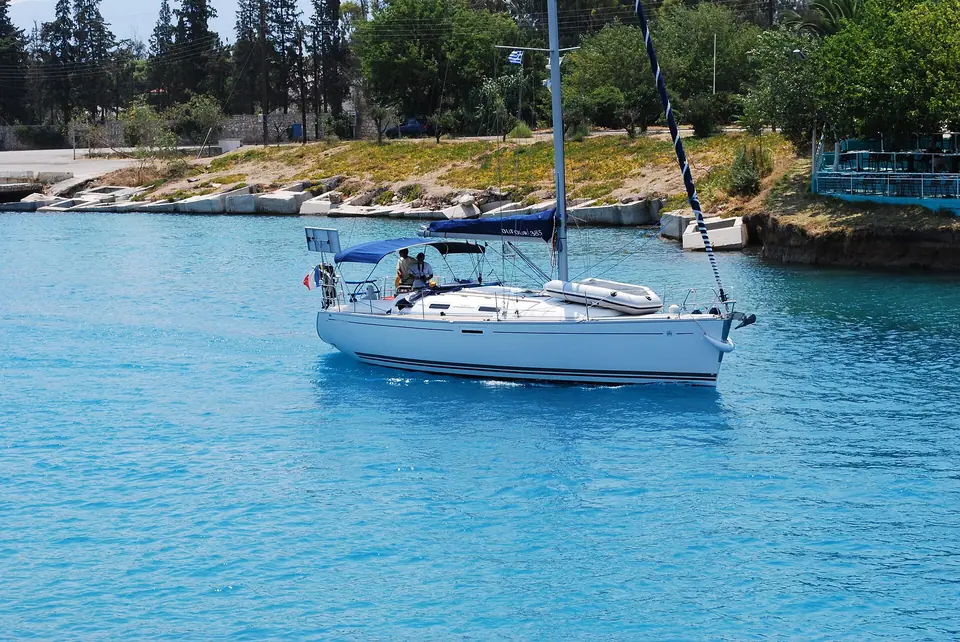
We have not found a freely licensed photo of the Dufour 50 Classic yet, so these show other Dufour Yachts boats, each captioned with the boat pictured.
More cruising sailboats to explore
Dufour 520 Grand Large
Cruising Sailboats, 50 ft
Used $320K to $480K
Elan Impression 50
Cruising Sailboats, 50 ft
Used $195K to $340K
Gulfstar 50
Cruising Sailboats, 50 ft
Used $60K to $170K
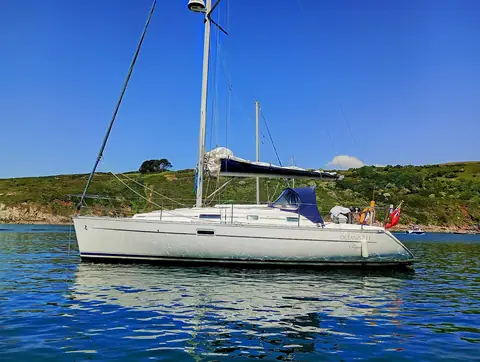
Beneteau Sense 50
Cruising Sailboats, 50 ft
Used $260K to $420K
Other Dufour Yachts models
- Dufour 30 Classic
- Dufour 36 Classic
- Dufour 40 Performance
- Dufour 56 Exclusive
- Dufour 61
- Dufour 360 Grand Large
- Dufour 385 Grand Large
- Dufour 390 Grand Large
- Dufour 405 Grand Large
- Dufour 412 Grand Large
- Dufour 430 Grand Large
- Dufour 455 Grand Large
- Dufour 460 Grand Large
- Dufour 470
- Dufour 520 Grand Large
- Dufour 530
- Dufour 560 Grand Large
- Dufour Catamarans 48
- All Dufour Yachts models