Beneteau 390 Oceanis, What to Know Before Buying a 1987 to 1991 Boat
The first-generation Oceanis that brought open, bright French interiors to 39 ft, and a boat whose limits are now well documented.
- Length
- 38.3 ft11.68 m
- Beam
- 12.8 ft3.91 m
- Draft
- 5.4 ft1.65 m
- Cabins
- 2 (owner's version) or 3 (charter versions)
- Used price
- $38K to $65K
On this page
- Overview
- An enlarged Oceanis 350 for the late 1980s
- Specs that depend on whom you ask
- Three interiors, every one with two heads
- What the 1997 Biscay capsize taught
- Wing keel or fin, and the engine question
- Survey priorities on a boat nearing 40
- Where the Oceanis 390 still makes sense
- Prices for a 1987 to 1991 Oceanis 390
- Specifications
- Price and value
- Strengths and weaknesses
- Used buyer checklist
- Rivals
- Our verdict
- FAQ
The Beneteau Oceanis 390 is a Philippe Briand masthead sloop introduced in 1987 as an enlarged Oceanis 350, offered with an owner's layout and two charter layouts, all with two heads. It is a comfortable coastal cruiser, not a heavy-weather boat.
- Families wanting two heads on a budget
- Summer coastal and island cruising
- Owners comfortable managing an older boat
Beneteau Oceanis 390 by the numbers
- Sail area to displacement
- 17.1Balanced power for coastal and offshore cruising.
- Displacement to length
- 174Light displacement for its length, quick but sensitive to added cruising weight.
- Theoretical hull speed
- 7.7 knThe practical top speed of a displacement monohull under normal sailing, based on waterline length.
- Ballast ratio
- 36%A typical ballast ratio for a cruising monohull.
- Capsize screening
- 2.11Above 2.0, so this hull leans toward coastal stability over ultimate offshore resistance.
- Motion comfort ratio
- 21.2A quicker motion in waves, typical of light, beamy hulls.
- Length to beam ratio
- 2.99 : 1A beamy hull with lots of volume for its length.
An enlarged Oceanis 350 for the late 1980s
The Oceanis line started in 1986 with Philippe Briand's Oceanis 350 and 430, and the Beneteau 390 Oceanis followed in 1987. Yachting Monthly described it as very much an enlarged version of the original 350 in both shape and style, and very successful in its day. Beneteau's heritage archive places it in the first Oceanis range of 1986 to 1991, alongside the 320, 350, 370, 430 and 500, under the slogan experience the sea intensely.
Those boats changed what buyers expected below decks. Beneteau USA's Wayne Burdick later told Practical Sailor that much of the shift from dark, deep cruising interiors to open, bright ones should be credited to the Oceanis line, and the 390 was a big part of that. Beneteau USA still showed the 390 in its earlier models archive in 1999, so boats were sold in America as well as Europe, although most survivors are in European waters.
Buyers searching for a 1989 or 1992 Beneteau Oceanis 390 should know that published production dates are thin. Sailboatdata starts the run in 1987, Beneteau's heritage range closes in 1991, and European listings we found covered 1988 to 1991 boats.
Specs that depend on whom you ask
Sailboatdata lists the 390 at 38 ft 4 in overall, 33 ft 3 in on the waterline and 12 ft 10 in in beam, with 14,300 lb of displacement, 5,180 lb of ballast and a 5 ft 5 in draft. Yachting Monthly's figures are a little different: 11.5 m (37 ft 9 in) overall, 10.15 m on the waterline, 3.9 m beam, 1.65 m draft and 6,500 kg. Differences of this size usually reflect whether the bow fitting and stern are counted, and light versus loaded weights.
On sailboatdata's numbers the ballast ratio is about 36 percent, the displacement to length ratio about 174 and the sail area to displacement ratio about 17 for a reported 630 sq ft. Tankage is listed as 45 gallons of fuel and 145 gallons of water. A wing keel option drew about 4 ft 6 in.
Treat all of these as approximate and measure what matters to you, especially draft and mast height, before planning a cruise through shallow water or under bridges.
Three interiors, every one with two heads
Yachting Monthly records three interior options. Private buyers usually chose the two cabin owner's version. Charter fleets took one of two three cabin versions: one with a dinette and a galley facing it, the other with a conventional L-shaped galley and saloon. All three had two heads, a real luxury on a late-1980s 39 footer, and light ash veneers that keep the open-plan interior bright.
The weak spot was navigation: YM called the chart table rudimentary in every version. Most owners now navigate from a cockpit plotter, so it matters less than it once did. Up top, the large cockpit has a semi-permanent table that is handy at anchor and a useful brace when heeled.
If you are buying privately for two, the owner's version is the one to look for. A three cabin boat is more likely to have done charter time, so inspect its interior and plumbing with that in mind.
- Owner's version: two cabins, two heads
- Charter version A: three cabins, dinette with facing galley, two heads
- Charter version B: three cabins, L-shaped galley and saloon, two heads
What the 1997 Biscay capsize taught
Any honest page on the Oceanis 390 has to mention October 1997. PBO reports that a 1989 Oceanis 390 crossing the Bay of Biscay was knocked down and inverted in a Force 8 to 9, with the loss of a crew member who was on deck; two others were lifted off by a French rescue helicopter.
The UK Marine Accident Investigation Branch concluded, as PBO quotes it, that the Oceanis 390 is a safe, comfortable yacht suitable for pleasure sailing and charter work, but that her lightweight design and stability characteristics introduce a high risk factor in extreme sea states, and that she is not designed for crossing oceans in bad weather. PBO adds that early Oceanis models in general were lightly ballasted, relatively shallow and lacked low center of gravity bulb keels, which Beneteau addressed in later generations.
For a buyer that is a clear operating limit, not a reason to reject the boat. The 390 is a coastal and island-hopping cruiser. Choose your weather windows, reef early, and leave the Bay of Biscay in autumn or a winter Gulf Stream crossing to boats designed for it.
Wing keel or fin, and the engine question
The fin keel draws about 5 ft 5 in and gives better windward ability; the wing keel at about 4 ft 6 in opens up the Chesapeake, the Keys and the Bahamas. On a boat with the stability history described above, we would favor the fin for anyone sailing in exposed waters.
Sailboatdata lists the original engine as a Perkins 4-108, a robust and widely known diesel. After more than 35 years, though, many boats will have been repowered or rebuilt, and European boats may differ. Identify the engine on the boat, confirm its hours and rebuild history, and value the boat accordingly.
Survey priorities on a boat nearing 40
Start with the keel: bolts, the keel-to-hull joint and the structure that spreads its load, especially on wing keel boats that may have grounded. Then the rig, because original standing rigging and chainplates on a late-1980s boat are long past their service life. Then the deck, with a moisture meter around stanchions, the mast step and hardware.
Below, look for water stains and delamination in the ash veneers around ports and hatches, check both heads' plumbing and the holding tanks, and trace the wiring for old, undersized cable. Rudder bearings and the steering system complete the list.
Where the Oceanis 390 still makes sense
For a family or two couples who want two heads and real volume for the least money, the 390 is hard to beat. Big water tanks, a large cockpit and an airy interior make it a fine platform for summer cruising, weekend trips and island hopping in settled weather.
It makes less sense for anyone planning offshore passages, for racing, or for a buyer who does not want to manage an older boat. In those cases a later generation Oceanis, with a deeper bulb keel, is the better spend.
Prices for a 1987 to 1991 Oceanis 390
European listings we reviewed asked roughly 40,000 to 69,000 euros for 1988 to 1991 boats in 2026, and Yachting Monthly's 2009 guide put them at 50,000 to 68,000 pounds at the time. We estimate a Beneteau 390 for sale in the US at about $38,000 to $65,000, with refit history doing most of the work.
Plan on $7,500 to $14,000 a year to keep one in the US, and set aside a refit fund if the rig, engine or electrics have not been renewed.
Beneteau Oceanis 390 specifications
| Length overall | 38.3 ft11.68 m |
|---|---|
| Waterline length | 33.3 ft10.13 m |
| Beam | 12.8 ft3.91 m |
| Draft | 5.4 ft1.65 m |
| Displacement | 14,3 lbs6,486 kg |
| Ballast | 5,18 lbs2,35 kg |
| Sail area | 63 sq ft58.5 m² |
| Fuel capacity | 45 gal17 L |
| Fresh water | 145 gal549 L |
| Cabins | 2 (owner's version) or 3 (charter versions) |
| Berths | 4 to 6 in cabins, plus saloon |
| Heads | 2 |
| Standard engines | Perkins 4-108 diesel listed by sailboatdata as original equipment |
| Hull type | Fin keel monohull with spade rudder |
| Keel | Fin keel, 5 ft 5 in draft, or wing keel, about 4 ft 6 in |
| Rig | Masthead sloop |
| Hull construction | Fiberglass |
| Builder | Beneteau, France |
| Naval architect | Philippe Briand |
| Production | 1987 to present |
| Status | Discontinued |
Figures come from builder documentation and independent tests where available. Displacement is usually quoted light, so a loaded cruising boat will weigh more. Compare these specs with another model.
How much does a Beneteau Oceanis 390 cost?
Asking prices for the Oceanis 390 depend almost entirely on refit history. In Europe, 1988 to 1991 boats were listed at roughly 40,000 to 69,000 euros in 2026. In the US, a boat with a newer engine, recent rigging and sails can command the top of our range, while an original boat needing work should sit well below it.
Estimate your yearly cost
A planning estimate using common rules of thumb: insurance near 1.5 percent of value, maintenance near 3 percent, haul out and bottom paint by length. Your marina, region and use will move these numbers. Open the full cost calculator.
Versions and options
- Owner's version
- Two cabins and two heads, the best choice for private cruising.
- Charter versions
- Three cabins and two heads, with either a dinette and facing galley or an L-shaped galley.
- Wing keel
- Shoal option of about 4 ft 6 in draft.
Beneteau Oceanis 390 timeline
- 1986Oceanis line launched with the 350 and 430
- 1987Oceanis 390 introduced as an enlarged 350
- 1991End of the first Oceanis range in Beneteau's heritage listing
- 1997A 1989 Oceanis 390 is inverted in the Bay of Biscay; the MAIB investigates
- 2009Yachting Monthly prices used examples at 50,000 to 68,000 pounds
Strengths and weaknesses
What owners like
- Two heads in every layout
- Bright, open interior for its era
- Large water capacity
- Wing keel option for shallow cruising grounds
- Low purchase price for a 39 footer
What to weigh up
- Documented stability limits in extreme seas
- Rudimentary chart table
- Published specifications vary between sources
- Age means rig, engine and wiring may all need renewal
- Many boats are ex-charter three cabin versions
Used Beneteau Oceanis 390 buyer checklist
Take this list to a viewing. Your ticks are saved in this browser so you can come back to it.
Always commission an independent marine survey and an engine survey before you buy. How a marine survey works.
Rivals to consider
Catalina 36
American cruiser of the same era with simpler styling and a large owner network.
Compare side by sideHunter 37 Legend
US-built contemporary with a roomy interior at a similar price.
Beneteau First 38
Performance-oriented Beneteau of the 1980s for buyers who value sailing over space.
Compare side by sideOur verdict on the Beneteau Oceanis 390
The Oceanis 390 earned its success by putting two heads and a bright, open interior into a 39 footer at a time when most cruisers were dark and cramped. It still delivers that, at a low price. But its limits are on the record: the MAIB judged it safe and comfortable for pleasure sailing and charter, not for ocean crossings in bad weather. Buy one as a coastal cruiser, insist on a sound keel, a renewed rig and a known engine, and it will serve well. Buy one for offshore ambitions and you are asking it to be a different boat.
Beneteau Oceanis 390 questions answered
Who designed the Beneteau Oceanis 390?
Philippe Briand, as an enlarged version of his 1986 Oceanis 350.
What years was the Oceanis 390 built?
It was introduced in 1987 and belongs to Beneteau's first Oceanis range of 1986 to 1991; boats for sale in Europe date from 1988 to 1991.
Is the Beneteau Oceanis 390 safe?
The MAIB, after a 1997 Biscay capsize, called it safe and comfortable for pleasure sailing and charter but not designed for crossing oceans in bad weather.
How many heads does the Oceanis 390 have?
Two, in the owner's version and in both three cabin charter versions.
How much is a Beneteau 390 for sale?
About $38,000 to $65,000 in the US in 2026, depending on refit history.
Photos from the Beneteau range
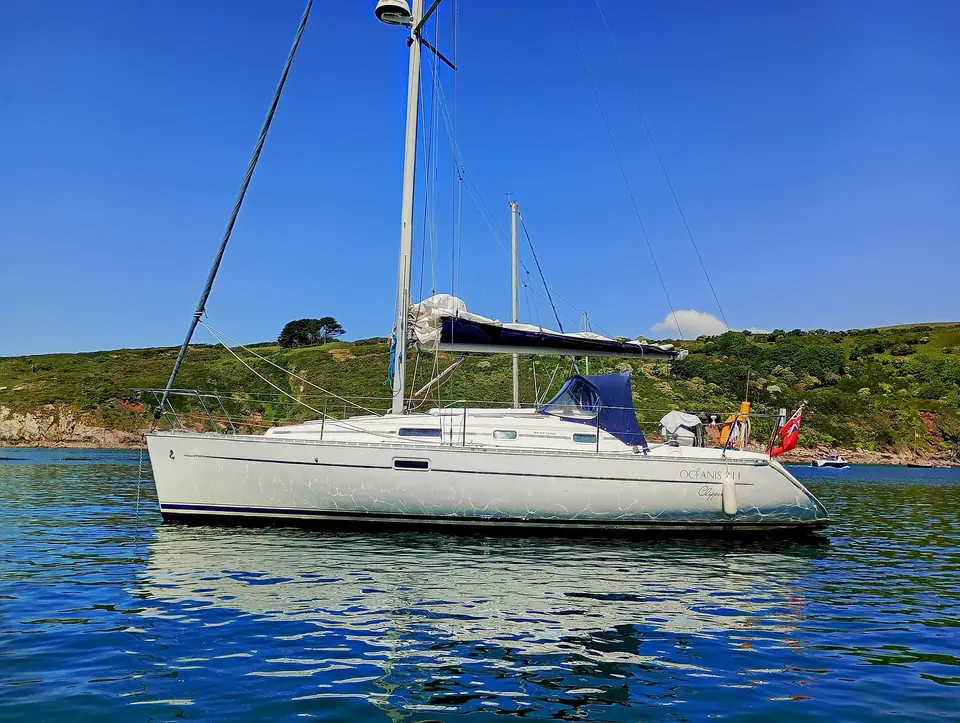
We have not found a freely licensed photo of the Beneteau Oceanis 390 yet, so these show other Beneteau boats, each captioned with the boat pictured.
More cruising sailboats to explore
Morgan 384
Cruising Sailboats, 38 ft
Used $32K to $75K
Bavaria 38 Cruiser
Cruising Sailboats, 38 ft
Used $70K to $110K
Dufour 385 Grand Large
Cruising Sailboats, 38 ft
Used $70K to $110K
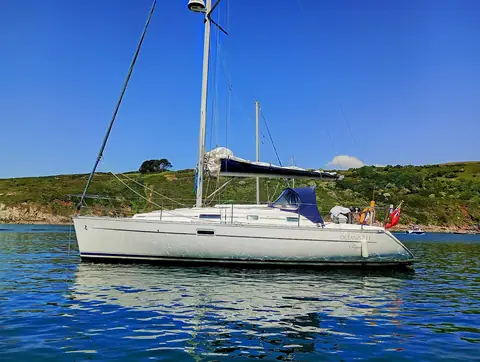
Beneteau Oceanis Clipper 381
Cruising Sailboats, 39 ft
Used $52K to $85K
Other Beneteau models
- Beneteau 49
- Beneteau 50
- Beneteau 57
- Beneteau 343
- Beneteau Antares 5.80
- Beneteau Antares 6
- Beneteau Antares 6.80
- Beneteau Antares 7
- Beneteau Antares 7.30
- Beneteau Antares 7.60
- Beneteau Antares 7.80
- Beneteau Antares 8
- Beneteau Antares 8.00
- Beneteau Antares 8.05
- Beneteau Antares 8.60
- Beneteau Antares 8.80
- Beneteau Antares 9
- Beneteau Antares 9.80
- Beneteau Antares 10.80
- Beneteau Antares 11
- Beneteau Antares 12
- Beneteau Antares 13.80
- Beneteau Antares 30
- Beneteau Antares 32
- Beneteau Antares 36
- Beneteau Antares 42
- Beneteau Antares 620 HB
- Beneteau Antares 650 HB
- Beneteau Antares 750 HB
- Beneteau Cyclades 39.3
- Beneteau Cyclades 43.3 and 43.4
- Beneteau Cyclades 50.5
- Beneteau First 18 SE
- Beneteau First 20
- Beneteau First 21.7
- Beneteau First 24
- Beneteau First 25
- Beneteau First 25.7
- Beneteau First 27
- Beneteau First 27.7
- Beneteau First 30
- Beneteau First 31.7
- Beneteau First 35
- Beneteau First 36
- Beneteau First 36.7
- Beneteau First 38
- Beneteau First 40
- Beneteau First 40.7
- Beneteau First 44
- Beneteau First 45
- Beneteau First 47.7
- Beneteau First 53
- Beneteau First 211
- Beneteau First 235
- Beneteau First 285
- Beneteau First 305
- Beneteau First 310
- Beneteau First 345
- Beneteau Flyer 6
- Beneteau Flyer 7
- Beneteau Flyer 8
- Beneteau Flyer 9
- Beneteau Flyer 10
- Beneteau Flyer 12
- Beneteau Flyer 500
- Beneteau Flyer 550
- Beneteau Flyer 650
- Beneteau Flyer 701
- Beneteau Flyer 750
- Beneteau Grand Trawler 62
- Beneteau Gran Turismo 32
- Beneteau Gran Turismo 36
- Beneteau Gran Turismo 40
- Beneteau Gran Turismo 41
- Beneteau Gran Turismo 44
- Beneteau Gran Turismo 45
- Beneteau Monte Carlo 6
- Beneteau Oceanis 30.1
- Beneteau Oceanis 31
- Beneteau Oceanis 34
- Beneteau Oceanis 34.1
- Beneteau Oceanis 35
- Beneteau Oceanis 35.1
- Beneteau Oceanis 36 CC
- Beneteau Oceanis 37
- Beneteau Oceanis 38
- Beneteau Oceanis 38.1
- Beneteau Oceanis 40
- Beneteau Oceanis 40 CC
- Beneteau Oceanis 41
- Beneteau Oceanis 41.1
- Beneteau Oceanis 42
- Beneteau Oceanis 42 CC
- Beneteau Oceanis 43
- Beneteau Oceanis 44 CC
- Beneteau Oceanis 45
- Beneteau Oceanis 46
- Beneteau Oceanis 46.1
- Beneteau Oceanis 48
- Beneteau Oceanis 50
- Beneteau Oceanis 51.1
- Beneteau Oceanis 54
- Beneteau Oceanis 55
- Beneteau Oceanis 58
- Beneteau Oceanis 311
- Beneteau Oceanis 320
- Beneteau Oceanis 321
- Beneteau Oceanis 323
- Beneteau Oceanis 331
- Beneteau Oceanis 350
- Beneteau Oceanis 351
- Beneteau Oceanis 370
- Beneteau Oceanis 400
- Beneteau Oceanis 411
- Beneteau Oceanis 423
- Beneteau Oceanis 430
- Beneteau Oceanis 440
- Beneteau Oceanis 461
- Beneteau Oceanis 473
- Beneteau Oceanis 500
- Beneteau Oceanis 510
- Beneteau Oceanis Clipper 361
- Beneteau Oceanis Clipper 373
- Beneteau Oceanis Clipper 381
- Beneteau Oceanis Clipper 393
- Beneteau Oceanis Yacht 54
- Beneteau Oceanis Yacht 60
- Beneteau Oceanis Yacht 62
- Beneteau Sense 43
- Beneteau Sense 46
- Beneteau Sense 50
- Beneteau Sense 55
- Beneteau Swift Trawler 30
- Beneteau Swift Trawler 34
- Beneteau Swift Trawler 35
- Beneteau Swift Trawler 41
- Beneteau Swift Trawler 44
- Beneteau Swift Trawler 48
- All Beneteau models