Beneteau Performance Sailboats
Beneteau 285 First, the Finot 28 Footer for Club Racing and Cruising
A 1980s Finot racer-cruiser with a sugar-scoop stern, a real chart table and a past as a match-racing boat in New York Harbor.
- Length
- 28.2 ft8.58 m
- Beam
- 9.8 ft3 m
- Draft
- 5.3 ft1.6 m
- Cabins
- 2 (V-berth forward, double aft cabin)
- Used price
- $12K to $32K
On this page
- Overview
- A Beneteau 285 in New York Harbor, 1989
- Jean-Marie Finot's design, light for its era
- Bulb, wing or shoal, and what each rates
- How the 285 is built, and where it leaks
- Six berths and a proper chart table in 28 feet
- Deck and rig for a small crew
- An 18 hp Volvo and seven gallons of fuel
- What a 1991 Beneteau First 285 costs now
- Specifications
- Price and value
- Strengths and weaknesses
- Used buyer checklist
- Rivals
- Our verdict
- FAQ
The Beneteau First 285 is a 28 ft fractional sloop designed by Groupe Finot and built in France and the US from 1985 to 1993, with 451 hulls. Bulb or wing keel, tiller or wheel, an 18 hp Volvo diesel and a double aft cabin.
- Club racers on a budget
- Couples who daysail and weekend
- Lake and coastal sailors
A Beneteau 285 in New York Harbor, 1989
In 1989 Beneteau built ten First 285s for the Liberty Cup, an eight-boat international match-racing event sailed in New York Harbor. When the racing was over the boats were sold, and at least one, Wings, hull number 3 of the Liberty Cup edition, still sails on Indiana's Lake Monroe with its original spinnaker, as Good Old Boat reported in 2016. It is a neat summary of what the Beneteau 285 is: a production 28 footer quick enough to race seriously, and comfortable and simple enough for a couple to keep for decades.
Beneteau built 451 of them between 1985 and 1993, in France and in the United States, according to sailboatdata and Wikipedia. Owners and listings use several names, including Beneteau 285, Beneteau 285 First and First 285, but they all describe the same Groupe Finot design. Because so many were built, a few are usually on the US market, mostly on lakes and in protected coastal waters.
Beneteau First 285 by the numbers
- Sail area to displacement
- 16.2Balanced power for coastal and offshore cruising.
- Displacement to length
- 193Light displacement for its length, quick but sensitive to added cruising weight.
- Theoretical hull speed
- 6.6 knThe practical top speed of a displacement monohull under normal sailing, based on waterline length.
- Ballast ratio
- 34%A typical ballast ratio for a cruising monohull.
- Capsize screening
- 2.14Above 2.0, so this hull leans toward coastal stability over ultimate offshore resistance.
- Motion comfort ratio
- 17.8A quicker motion in waves, typical of light, beamy hulls.
- Length to beam ratio
- 2.86 : 1A beamy hull with lots of volume for its length.
Jean-Marie Finot's design, light for its era
Beneteau credits Jean-Marie Finot as naval designer. The 285 has sharp, wedge-shaped lines, a powerful 7/8 fractional rig, a partially balanced spade rudder and a sugar-scoop transom. Sailboatdata lists an overall length of 28 ft 2 in (8.58 m), a 24 ft 3 in (7.39 m) waterline, a 9 ft 10 in (3.00 m) beam and 6,160 lb (2,794 kg) of displacement, with 2,115 lb (959 kg) of cast iron ballast.
On paper that is a lively boat. A displacement to length ratio of about 193 put it toward the lighter side for its era, and the generous beam gives good form stability. Yet the sail area to displacement ratio is a modest 16.3, and some owners who responded to Good Old Boat described performance as average and the boat as easily overpowered. The consensus is that it handles well if you reef early, and that a well-tuned rig and good sails make the difference between a mid-fleet club racer and a frustrated one.
Bulb, wing or shoal, and what each rates
Good Old Boat describes two keel options, both cast iron: a bulb keel drawing about 5 ft 3 in and a wing keel drawing about 3 ft 10 in. Sailboatdata and Wikipedia list a deep draft of 5 ft 3 in plus a 3 ft 9 in shoal version and a 3 ft 10 in wing keel, and Yachting Monthly's summary of the European market also mentions a centerboard version. For most US buyers the choice is between the bulb fin and the wing.
PHRF ratings reflect the difference. Good Old Boat quotes a base of 183 to 186 seconds per mile for the bulb keel and 192 for the wing keel, and notes that several owners found it hard to sail to those numbers. For comparison, it cited the Sabre 28 at 192 to 210 and the faster J/28 at 174. If you plan to race, buy the bulb keel and budget for sails; if your home waters are shallow, the wing keel is a reasonable compromise.
How the 285 is built, and where it leaks
Like most Beneteaus of its time, the 285 has a solid fiberglass hull and a balsa-cored deck. A molded interior pan with an integral grid is bonded to the hull with adhesive, stiffening the structure and forming berth flats and furniture. The hull-to-deck joint is fastened with rivets and screws rather than through-bolted. The pan saves weight and labor but condenses moisture and makes modifications harder.
The common complaints are leaking portlights and deteriorating headliners. Leaks can let water collect at the base of bulkheads and lead to plywood delamination, and the shower drains into a shallow bilge. Owners also report cracked portlights over time. None of these is unusual for a production boat of the 1980s, but a careful survey should check every portlight, the bulkhead bases and the deck core around fittings.
Six berths and a proper chart table in 28 feet
Belowdecks the 285 has more wood than its fiberglass pan suggests, including tongue-and-groove ceiling on the hull sides of the saloon. The V-berth forward is tight for two and can be closed off with bi-fold doors or a single door. The saloon has a centerline table built around the mast compression post, with settees either side; the starboard settee is long enough for a nap and its aft end doubles as the seat for a chart table, which Good Old Boat called a luxury on a 28 ft boat.
Aft of the nav desk is an enclosed head to starboard, tucked partly under the cockpit. The compact galley to port has a propane stove and oven, a deep top-loading icebox and a round stainless sink. The aft cabin has a large double berth, half of it under the cockpit with no sitting headroom, plus a seat and enough standing room to dress. Pressurized fresh water from a 10 gallon tank, a 6 gallon water heater and a 10 gallon holding tank are standard.
Deck and rig for a small crew
The deck works well. Non-skid is good, inboard shrouds leave wide side decks, and teak handrails sit in molded pockets on the cabintop. Two large Lewmar hatches, a self-draining anchor locker and four aluminum cleats complete the foredeck. The single-spreader fractional mast is deck-stepped over a compression post, and the split backstay is adjustable.
The 285 was offered with tiller or wheel steering. The mainsheet runs to a short traveler on the cabintop; headsail sheets go to Lewmar 30 self-tailing winches on the coamings, and lines from the mast lead aft to two smaller winches. Good Old Boat found the boat tracked very straight with a light helm, though the rack-and-pinion wheel steering gave little feedback. The many lines on the cabintop can roll underfoot when handling the mainsail.
An 18 hp Volvo and seven gallons of fuel
Good Old Boat's test boat had an 18 hp Volvo diesel with a folding propeller, and some owners have fitted larger three-blade feathering props for better maneuvering. With just 7 gallons in the tank, the engine will push the boat for more than 10 hours at about half a gallon per hour. Access is excellent from both sides and the front once the companionway ladder is removed.
Many original engines are now well past 30 years old. A repower with a modern small diesel is a common and sensible upgrade, and a boat that has had one is worth noticeably more. The engine control is low and out of the way, and the gauges sit at the aft end of the cockpit where they are hard to see, so rely on the alarms.
What a 1991 Beneteau First 285 costs now
Expect roughly $12,000 to $32,000 in 2026 for a First 285, with later boats such as a 1991 or 1993 hull, newer sails, a repowered engine and resealed portlights at the top. Liberty Cup boats can appeal to buyers who value the history. Parts are available through Beneteau dealers, and most hardware is common to other boats of the same era.
Annual running costs are modest: typically $3,500 to $8,000 for slip or mooring, insurance, haul-out and bottom paint, engine service and small repairs. On a lake with a mooring and DIY maintenance, it can be less.
Beneteau First 285 specifications
| Length overall | 28.2 ft8.58 m |
|---|---|
| Waterline length | 24.3 ft7.39 m |
| Beam | 9.8 ft3 m |
| Draft | 5.3 ft1.6 m |
| Displacement | 6,16 lbs2,794 kg |
| Ballast | 2,115 lbs959 kg |
| Sail area | 341 sq ft31.7 m² |
| Fuel capacity | 7 gal26 L |
| Fresh water | 1 gal38 L |
| Cabins | 2 (V-berth forward, double aft cabin) |
| Berths | 6 |
| Heads | 1 enclosed |
| Standard engines | Volvo Penta diesel, 18 hp (as described by Good Old Boat) |
| Maximum power | 18 hp |
| Hull type | Fin keel monohull with partially balanced spade rudder |
| Keel | Cast iron bulb fin about 5 ft 3 in, or wing keel about 3 ft 10 in; sailboatdata also lists a 3 ft 9 in shoal version |
| Rig | 7/8 fractional sloop, deck-stepped single-spreader mast, inboard shrouds, adjustable split backstay |
| Hull construction | Solid fiberglass hull, balsa-cored deck, cast iron keel |
| Builder | Beneteau, France (also built in the United States) |
| Naval architect | Groupe Finot (Jean-Marie Finot) |
| Production | 1985 to 1993 |
| Status | Discontinued |
Figures come from builder documentation and independent tests where available. Displacement is usually quoted light, so a loaded cruising boat will weigh more. Compare these specs with another model.
How much does a Beneteau First 285 cost?
Good Old Boat found US asking prices in 2016 ranging from $17,900 for a 1987 boat to $30,500 for a 1991 model, averaging about $20,000. Ten years on, condition matters far more than model year: an original Volvo with high hours, leaking portlights and a tired headliner can halve a boat's value, while new sails, a repowered engine and resealed hardware push it to the top.
Estimate your yearly cost
A planning estimate using common rules of thumb: insurance near 1.5 percent of value, maintenance near 3 percent, haul out and bottom paint by length. Your marina, region and use will move these numbers. Open the full cost calculator.
Versions and options
- Bulb keel
- About 5 ft 3 in draft, PHRF base around 183 to 186.
- Wing keel
- About 3 ft 10 in draft, PHRF base around 192.
- Liberty Cup edition (1989)
- Ten boats built for the New York Harbor match-racing event, later sold privately.
Beneteau First 285 timeline
- 1985First 285 introduced, designed by Groupe Finot
- 1989Ten boats built for the Liberty Cup match race in New York Harbor
- 1993Production ends after 451 boats
- 2016Good Old Boat reviews the 285 and finds US asking prices of $17,900 to $30,500
Strengths and weaknesses
What owners like
- Quick, light and well balanced when reefed early
- Proper chart table and enclosed head in 28 feet
- Bulb or wing keel options
- Many built, so parts and boats are available
- Very economical diesel
What to weigh up
- Easily overpowered without early reefing
- Leaking portlights and failing headliners are common
- Small fuel and water tanks
- Aft berth is cramped under the cockpit
Used Beneteau First 285 buyer checklist
Take this list to a viewing. Your ticks are saved in this browser so you can come back to it.
Always commission an independent marine survey and an engine survey before you buy. How a marine survey works.
Rivals to consider
Sabre 28
A heavier, more traditional American 28 footer that rates slower under PHRF.
J/28
Faster under PHRF but rarer and more expensive.
Beneteau First 305
The bigger Berret sister from the same era, with more interior.
Compare side by sideOur verdict on the Beneteau First 285
The Beneteau First 285 is an affordable, lively 28 footer with a proper chart table, a double aft cabin and a history that includes match racing in New York Harbor. It rewards a crew that reefs early and keeps the rig tuned, and it asks for vigilance about portlight leaks and aging engines. For club racers on a budget or couples who want a quick, simple weekender, a well-maintained 285 is still a smart buy.
Beneteau First 285 questions answered
Who designed the Beneteau First 285?
Groupe Finot, with Jean-Marie Finot credited by Beneteau as naval designer.
How many Beneteau First 285s were built?
451, between 1985 and 1993, in France and the United States.
What is the PHRF rating of a Beneteau 285?
Good Old Boat quotes a base of 183 to 186 seconds per mile for the bulb keel and 192 for the wing keel.
What engine does a Beneteau First 285 have?
Good Old Boat's test boat had an 18 hp Volvo diesel, burning about half a gallon per hour.
How much is a Beneteau 285 for sale worth?
Roughly $12,000 to $32,000 in 2026, depending on condition, sails and engine.
Photos from the Beneteau range
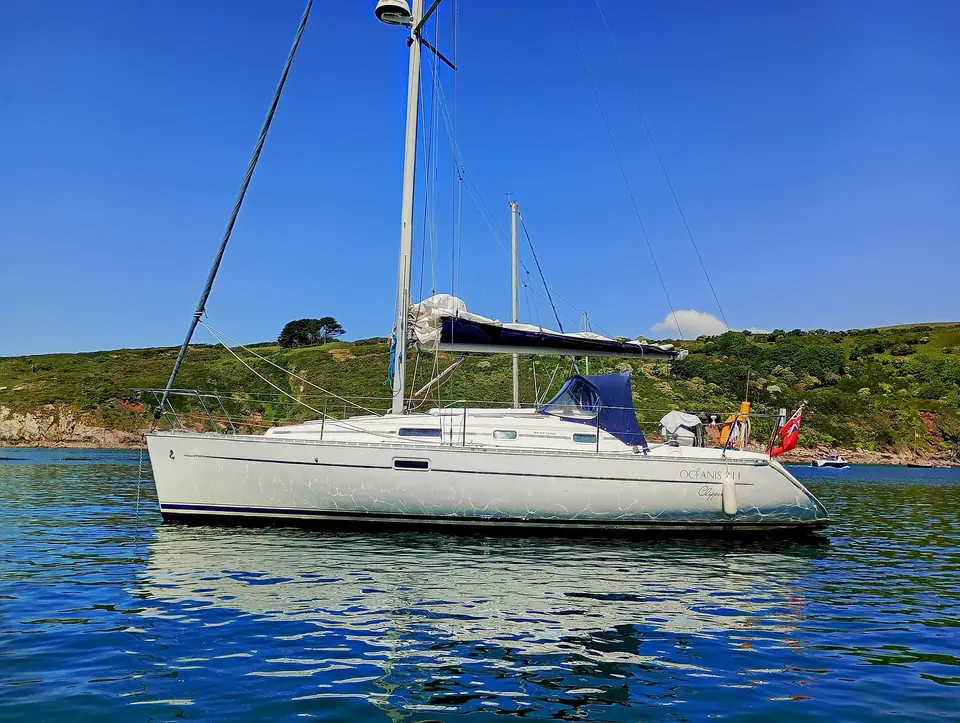
We have not found a freely licensed photo of the Beneteau First 285 yet, so these show other Beneteau boats, each captioned with the boat pictured.
More performance sailboats to explore
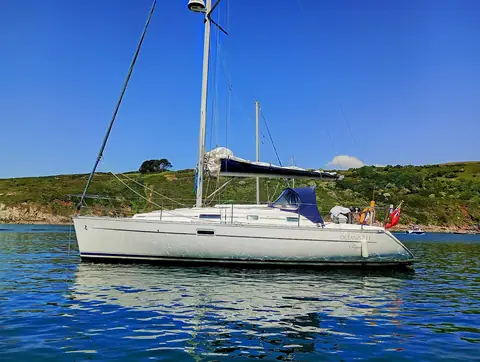
Beneteau First 27.7
Performance Sailboats, 28 ft
Used $25K to $55K
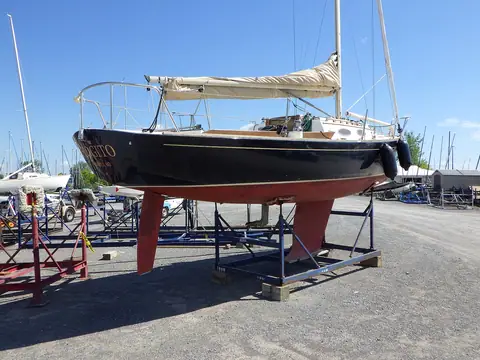
Alerion 28
Performance Sailboats, 28 ft
Used $38K to $95K
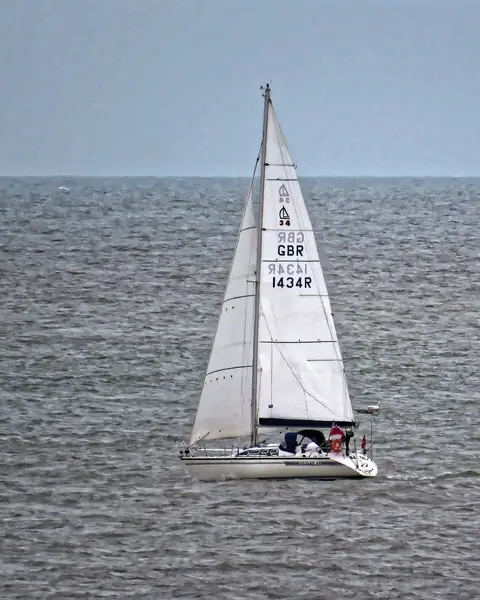
Dehler 29
Performance Sailboats, 29 ft
Used $35K to $70K
J/88
Performance Sailboats, 29 ft
Used $80K to $150K
Other Beneteau models
- Beneteau 49
- Beneteau 50
- Beneteau 57
- Beneteau 343
- Beneteau Antares 5.80
- Beneteau Antares 6
- Beneteau Antares 6.80
- Beneteau Antares 7
- Beneteau Antares 7.30
- Beneteau Antares 7.60
- Beneteau Antares 7.80
- Beneteau Antares 8
- Beneteau Antares 8.00
- Beneteau Antares 8.05
- Beneteau Antares 8.60
- Beneteau Antares 8.80
- Beneteau Antares 9
- Beneteau Antares 9.80
- Beneteau Antares 10.80
- Beneteau Antares 11
- Beneteau Antares 12
- Beneteau Antares 13.80
- Beneteau Antares 30
- Beneteau Antares 32
- Beneteau Antares 36
- Beneteau Antares 42
- Beneteau Antares 620 HB
- Beneteau Antares 650 HB
- Beneteau Antares 750 HB
- Beneteau Cyclades 39.3
- Beneteau Cyclades 43.3 and 43.4
- Beneteau Cyclades 50.5
- Beneteau First 18 SE
- Beneteau First 20
- Beneteau First 21.7
- Beneteau First 24
- Beneteau First 25
- Beneteau First 25.7
- Beneteau First 27
- Beneteau First 27.7
- Beneteau First 30
- Beneteau First 31.7
- Beneteau First 35
- Beneteau First 36
- Beneteau First 36.7
- Beneteau First 38
- Beneteau First 40
- Beneteau First 40.7
- Beneteau First 44
- Beneteau First 45
- Beneteau First 47.7
- Beneteau First 53
- Beneteau First 211
- Beneteau First 235
- Beneteau First 305
- Beneteau First 310
- Beneteau First 345
- Beneteau Flyer 6
- Beneteau Flyer 7
- Beneteau Flyer 8
- Beneteau Flyer 9
- Beneteau Flyer 10
- Beneteau Flyer 12
- Beneteau Flyer 500
- Beneteau Flyer 550
- Beneteau Flyer 650
- Beneteau Flyer 701
- Beneteau Flyer 750
- Beneteau Grand Trawler 62
- Beneteau Gran Turismo 32
- Beneteau Gran Turismo 36
- Beneteau Gran Turismo 40
- Beneteau Gran Turismo 41
- Beneteau Gran Turismo 44
- Beneteau Gran Turismo 45
- Beneteau Monte Carlo 6
- Beneteau Oceanis 30.1
- Beneteau Oceanis 31
- Beneteau Oceanis 34
- Beneteau Oceanis 34.1
- Beneteau Oceanis 35
- Beneteau Oceanis 35.1
- Beneteau Oceanis 36 CC
- Beneteau Oceanis 37
- Beneteau Oceanis 38
- Beneteau Oceanis 38.1
- Beneteau Oceanis 40
- Beneteau Oceanis 40 CC
- Beneteau Oceanis 41
- Beneteau Oceanis 41.1
- Beneteau Oceanis 42
- Beneteau Oceanis 42 CC
- Beneteau Oceanis 43
- Beneteau Oceanis 44 CC
- Beneteau Oceanis 45
- Beneteau Oceanis 46
- Beneteau Oceanis 46.1
- Beneteau Oceanis 48
- Beneteau Oceanis 50
- Beneteau Oceanis 51.1
- Beneteau Oceanis 54
- Beneteau Oceanis 55
- Beneteau Oceanis 58
- Beneteau Oceanis 311
- Beneteau Oceanis 320
- Beneteau Oceanis 321
- Beneteau Oceanis 323
- Beneteau Oceanis 331
- Beneteau Oceanis 350
- Beneteau Oceanis 351
- Beneteau Oceanis 370
- Beneteau Oceanis 390
- Beneteau Oceanis 400
- Beneteau Oceanis 411
- Beneteau Oceanis 423
- Beneteau Oceanis 430
- Beneteau Oceanis 440
- Beneteau Oceanis 461
- Beneteau Oceanis 473
- Beneteau Oceanis 500
- Beneteau Oceanis 510
- Beneteau Oceanis Clipper 361
- Beneteau Oceanis Clipper 373
- Beneteau Oceanis Clipper 381
- Beneteau Oceanis Clipper 393
- Beneteau Oceanis Yacht 54
- Beneteau Oceanis Yacht 60
- Beneteau Oceanis Yacht 62
- Beneteau Sense 43
- Beneteau Sense 46
- Beneteau Sense 50
- Beneteau Sense 55
- Beneteau Swift Trawler 30
- Beneteau Swift Trawler 34
- Beneteau Swift Trawler 35
- Beneteau Swift Trawler 41
- Beneteau Swift Trawler 44
- Beneteau Swift Trawler 48
- All Beneteau models