Beneteau 400 Oceanis, a 1990s Forty Explained for Used Buyers
Jean-Marie Finot's second-generation Oceanis, with a pullman owner's cabin forward and a choice of one or two cabins aft.
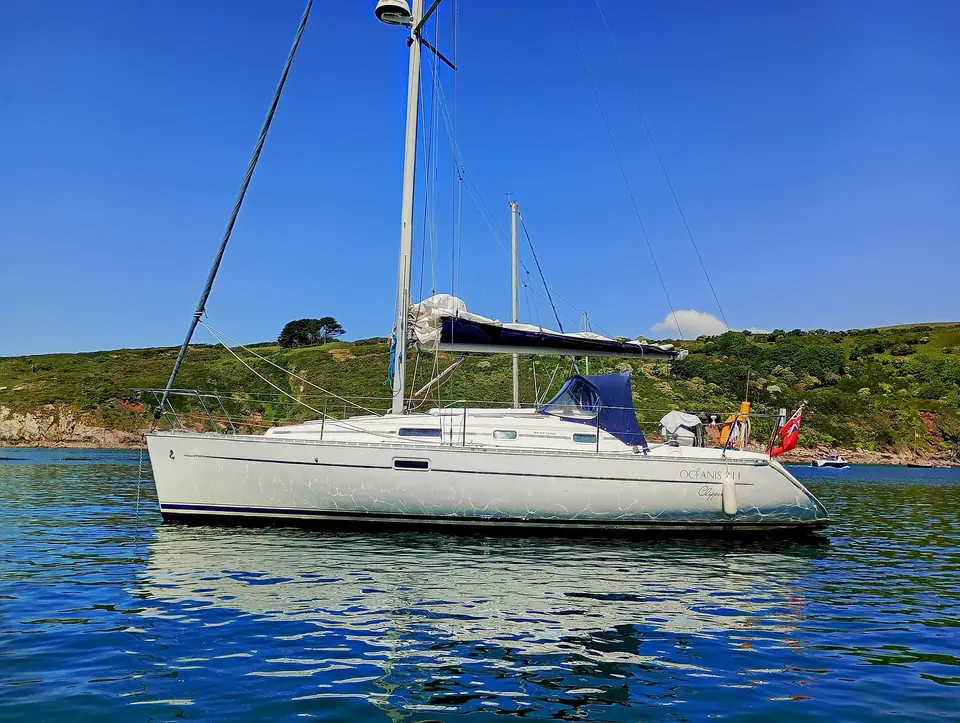
- Length
- 39.8 ft12.12 m
- Beam
- 12.8 ft3.91 m
- Draft
- 5.5 ft1.68 m
- Cabins
- 3 (two aft cabins) or 2 (single aft cabin version)
- Used price
- $55K to $100K
On this page
- Overview
- Where the Beneteau 400 Oceanis sits in the family tree
- Factory numbers versus database numbers
- An owner's cabin forward and a choice aft
- Coachroof tracks and a clear side deck
- Perkins, Yanmar and the repower question
- Charter pasts, and how to read them
- What a thirty-year-old Oceanis 400 usually needs
- Valuing a 1993, 1994, 1995 or 1996 boat
- Specifications
- Price and value
- Strengths and weaknesses
- Used buyer checklist
- Rivals
- Our verdict
- FAQ
The Beneteau Oceanis 400 (1991 to 1997) is a Groupe Finot designed 40 ft cruiser with a forward owner's cabin, two heads and one or two aft cabins. Beneteau USA sold it with in-mast furling and a bulb or wing keel.
- Couples who want a private forward stateroom
- Shallow water cruising grounds
- Budget buyers willing to refit
Beneteau Oceanis 400 by the numbers
- Sail area to displacement
- 16.9Balanced power for coastal and offshore cruising.
- Displacement to length
- 168Light displacement for its length, quick but sensitive to added cruising weight.
- Theoretical hull speed
- 7.9 knThe practical top speed of a displacement monohull under normal sailing, based on waterline length.
- Ballast ratio
- 35%A typical ballast ratio for a cruising monohull.
- Capsize screening
- 2.04Above 2.0, so this hull leans toward coastal stability over ultimate offshore resistance.
- Motion comfort ratio
- 22.7A quicker motion in waves, typical of light, beamy hulls.
- Length to beam ratio
- 3.10 : 1Moderate proportions.
Where the Beneteau 400 Oceanis sits in the family tree
Beneteau launched the Oceanis cruising line in 1986, and the first wave of boats (the 320, 350, 370, 390, 430 and 500) set the template of a comfortable, easily handled cruiser built in large numbers. The Beneteau 400 Oceanis belongs to the next wave. Beneteau USA's own brochure called it a second generation Oceanis, drawn by Jean-Marie Finot to give owners cruising performance without demanding a racing crew, and sold it under the line Performance Cruising for the 90's.
Searchers type the name both ways, Beneteau 400 Oceanis and Beneteau Oceanis 400, but it is one boat. Sailboatdata lists it from 1991 to 1997 with roughly 430 hulls built, and Beneteau's heritage site files it under the 1991 to 1994 Oceanis generation, which suggests the design was conceived early in the decade and then kept in production. A center cockpit derivative, the Oceanis 400 CC (also called the Oceanis 40 CC), followed in 1995, and the charter trade knew close relatives as the Moorings 405 and Stardust 413. Do not confuse any of these with the later Oceanis 40 from Beneteau's 2005 to 2014 generation or the Oceanis 40.1 that SAIL tested in 2021, which are entirely different boats.
Factory numbers versus database numbers
Beneteau USA's archived specification sheet gives an LOA of 39 ft 9 in, a 34 ft 11 in waterline, a 12 ft 10 in beam, about 16,000 lb of displacement and about 5,600 lb of ballast. The sail area with the standard furling main is quoted as 670 sq ft at 100 percent foretriangle. Sailboatdata's record is noticeably heavier, at 19,183 lb, with a 35 ft 5 in waterline and a 652 sq ft sail plan, and it quotes a draft of 5 ft 5 in. We use the factory figures in our table, but treat the displacement with caution, because a cruising-ready boat with full tanks, an anchor and batteries will weigh more than either brochure suggests.
Two keels were offered in the US. The deep option is a cast iron fin with a bulb drawing 5 ft 6 in, and the shoal option is a wing keel drawing 4 ft 8 in. Both are modest by modern standards, which is one reason the 400 still appeals in the Chesapeake, the Gulf Coast and the Bahamas. The brochure stressed the low center of gravity of the bulb, a large leather-wrapped wheel and a counter-balanced rudder for light steering.
- LOA 39 ft 9 in, LWL 34 ft 11 in, beam 12 ft 10 in (Beneteau USA)
- Draft 5 ft 6 in bulb or 4 ft 8 in wing
- Fuel 41 gal and water 140 gal on the US equipment list
- About 430 built according to sailboatdata
An owner's cabin forward and a choice aft
The layout is the reason many buyers shortlist this boat. The forward cabin was billed as the owner's cabin, with a double pullman berth to starboard, a settee to port, a hanging locker, two large drawers and its own one-piece molded head with a hand-held shower. That is an unusual arrangement on a 40 footer of the period and gives the forward occupants a little sitting room of their own instead of a V-berth wedged into the bow.
Aft of the saloon, buyers chose between a double aft cabin version and a single aft cabin version. With two aft cabins the boat sleeps three couples and suits charter or family use. The single aft cabin version, which Beneteau USA introduced as new, gives the space back to the galley and stowage. In both, the aft head is to port and also carries a hand shower with an electric sump pump.
The saloon has a U-shaped settee with a fold-down table that converts to a double, lockers and bottle stowage along the hull, and an aft-facing chart table with a hinged panel for electronics. The galley is close to the companionway, with a three-burner propane stove and oven, double stainless sinks, and separate 12 volt fridge and freezer compartments in a six cubic foot insulated box.
Coachroof tracks and a clear side deck
Finot and Beneteau put the genoa tracks, turning blocks and mainsheet traveler on the coachroof rather than on the side decks. The brochure argued this tightened the genoa sheeting angle for better pointing and left the side decks clear for crew moving forward, and that is still how the boat feels to walk around. All halyards and control lines run aft under a cowling to seven Spinlock stoppers, with two 30 size winches for halyards and two 48 size winches for the genoa sheets.
The rig is a masthead sloop with double aft-swept spreaders, forward lower shrouds and discontinuous rigging. US boats came standard with an in-mast furling mainsail and a 153 percent furling genoa. That combination is easy for a couple, but it costs performance upwind and the big overlapping genoa needs to be rolled early as the breeze builds. Expect a 400 to be a pleasant reacher and an average performer close-hauled.
The cockpit is built around a pedestal and table with two folding leaves, an insulated icebox and the engine panel. Aft there is a transom access door to a swim platform with a stainless ladder and two lockers, plus a lazarette that reaches the steering quadrant.
Perkins, Yanmar and the repower question
The Beneteau USA equipment list specifies a Perkins Prima 50 diesel with 41 gallons of fuel, while sailboatdata records a 44 hp Yanmar 4JH2E. Both engines appear in the used fleet, and by now many boats have been repowered with modern Yanmar or Beta units. The engine sits under the molded companionway steps with additional access panels from the aft cabin.
Ask for receipts. An original engine of this age is not automatically bad if it has been maintained, but parts support, exhaust elbows, heat exchangers and the shaft seal should all be documented. A repower in the last decade adds real value and is worth paying for, since installing a new 40 to 50 hp diesel with labor will typically cost a large share of what a tired 400 sells for.
Charter pasts, and how to read them
Like most Oceanis models of the era, the 400 worked in charter fleets, and sailboatdata notes the Moorings 405 and Stardust 413 as similar charter boats. Former charter boats are not a reason to walk away, since fleets usually maintain engines and rigging on a schedule, but they bring heavy wear to winches, sail track, cushions, head plumbing and gelcoat around the cockpit.
Three-cabin boats are the usual charter configuration. A privately owned single aft cabin version with documented upgrades is generally the better buy for a couple, and it is also the version that sells fastest on the US brokerage market.
What a thirty-year-old Oceanis 400 usually needs
Beneteau built the hull with a structural grid bonded into it to spread rig and keel loads, and the brochure advertised a Watershield barrier in the laminate against osmotic blistering, backed when new by a five year transferable limited warranty. Those features help, but every 400 is now three decades old. A survey should include moisture readings, a look at the grid for cracks or delamination around the keel bolts, and a check of the keel to hull joint for weeping rust.
The other big items are standing rigging (replace it if there is no record from the last 10 to 15 years), the in-mast furler, chainplates, portlight and hatch seals, and the plumbing and wiring that have been modified by several owners. Budget for these before you make an offer.
Valuing a 1993, 1994, 1995 or 1996 boat
Most Beneteau Oceanis 400 for sale listings in the US fall between about $55,000 and $100,000 in 2026. Model year matters less than equipment. A 1995 Beneteau Oceanis 400 with a recent repower, new sails and an updated electrical system can be worth more than a 1997 boat that has been neglected.
Plan on $8,000 to $16,000 a year to keep one, covering a slip or mooring, insurance, haul-out and bottom paint, and routine engine and rigging maintenance, with larger refit items on top.
Beneteau Oceanis 400 specifications
| Length overall | 39.8 ft12.12 m |
|---|---|
| Waterline length | 34.9 ft10.64 m |
| Beam | 12.8 ft3.91 m |
| Draft | 5.5 ft1.68 m |
| Displacement | 16, lbs7,257 kg |
| Ballast | 5,6 lbs2,54 kg |
| Sail area | 67 sq ft62.2 m² |
| Fuel capacity | 41 gal155 L |
| Fresh water | 14 gal53 L |
| Cabins | 3 (two aft cabins) or 2 (single aft cabin version) |
| Berths | 6, plus a saloon table that converts to a double |
| Heads | 2 |
| Standard engines | Perkins Prima 50 diesel on the Beneteau USA equipment list; sailboatdata records a 44 hp Yanmar 4JH2E |
| Hull type | Moderate displacement fin keel monohull with counter-balanced spade rudder |
| Keel | Cast iron bulb fin, 5 ft 6 in, or wing keel, 4 ft 8 in |
| Rig | Masthead sloop, double aft-swept spreaders, discontinuous rigging, in-mast furling main and 153 percent furling genoa |
| Hull construction | Fiberglass hull with bonded structural grid and Beneteau Watershield barrier against osmotic blistering |
| Builder | Beneteau, France |
| Naval architect | Jean-Marie Finot (Groupe Finot) |
| Production | 1991 to 1997 |
| Status | Discontinued |
Figures come from builder documentation and independent tests where available. Displacement is usually quoted light, so a loaded cruising boat will weigh more. Compare these specs with another model.
How much does a Beneteau Oceanis 400 cost?
Age has flattened the spread between model years, so condition and recent refit work set the price. A boat with a repowered engine, newer furling sails and rebuilt rigging sits at the top of the band, while tired former charter boats with original canvas and an unknown engine history trade near the bottom. Two-cabin owner boats tend to sell faster than three-cabin charter versions in the US.
Estimate your yearly cost
A planning estimate using common rules of thumb: insurance near 1.5 percent of value, maintenance near 3 percent, haul out and bottom paint by length. Your marina, region and use will move these numbers. Open the full cost calculator.
Versions and options
- Double aft cabin
- Three cabins and two heads, the usual charter configuration and the most common layout.
- Single aft cabin
- Two cabins with more galley and stowage space aft; introduced by Beneteau USA as a new version.
- Bulb or wing keel
- Cast iron bulb fin at 5 ft 6 in or wing keel at 4 ft 8 in.
- Oceanis 400 CC
- Separate center cockpit derivative from 1995, also called the Oceanis 40 CC.
Beneteau Oceanis 400 timeline
- 1986Beneteau launches the Oceanis cruising range
- 1991First Oceanis 400 built, a second generation Groupe Finot design
- 1995Center cockpit Oceanis 400 CC joins the range
- 1997Last year of production listed by sailboatdata
Strengths and weaknesses
What owners like
- Forward owner's cabin with pullman berth and settee
- Two heads on a 40 footer
- Shoal wing keel option at 4 ft 8 in
- Large 140 gallon water capacity
- Clear side decks with sheeting on the coachroof
- Affordable entry to a 40 ft cruiser
What to weigh up
- In-mast furling and a big genoa limit windward performance
- Small 41 gallon fuel tank for motoring range
- Specifications vary between sources
- Every boat now needs age-related refit work
Used Beneteau Oceanis 400 buyer checklist
Take this list to a viewing. Your ticks are saved in this browser so you can come back to it.
Always commission an independent marine survey and an engine survey before you buy. How a marine survey works.
Rivals to consider
Catalina 42
American-built contemporary with a similar three-cabin charter heritage and strong owner support.
Compare side by sideJeanneau Sun Odyssey 42.2
French sister-brand rival from later in the decade with a little more length.
Beneteau Oceanis 390
First generation Oceanis predecessor in the same size band.
Compare side by sideBeneteau Oceanis 411
The Finot-designed successor of 1997 with more volume and two heads in every layout.
Compare side by sideOur verdict on the Beneteau Oceanis 400
The Beneteau Oceanis 400 is a practical 1990s cruiser with a layout that still feels thoughtful, especially the forward owner's cabin with its own head and the choice of one or two cabins aft. It will not point with modern performance cruisers, and the published numbers are inconsistent enough that you should measure the boat in front of you rather than trust a brochure. Buy one on condition, favor a repowered privately owned boat, and it will deliver a lot of comfortable cruising for the money.
Beneteau Oceanis 400 questions answered
Is the Beneteau 400 Oceanis the same as the Oceanis 400?
Yes. Both names describe the same Groupe Finot designed boat, built from 1991 to 1997 according to sailboatdata.
How much is a Beneteau 400 for sale?
In 2026 most US listings fall between about $55,000 and $100,000, with repowered, well-equipped boats at the top.
What is the draft of the Beneteau Oceanis 400?
Beneteau USA lists 5 ft 6 in for the bulb keel and 4 ft 8 in for the wing keel.
How many cabins does the Oceanis 400 have?
Either three (a forward owner's cabin and two aft cabins) or two in the single aft cabin version, always with two heads.
Is a 1995 Beneteau Oceanis 400 a good buy?
It can be, if the survey is clean and the engine, rigging and sails have been renewed; condition matters more than the exact year.
What engine does the Oceanis 400 have?
The US equipment list specifies a Perkins Prima 50, and sailboatdata records a 44 hp Yanmar 4JH2E; many boats have since been repowered.
Photos from the Beneteau range
We have not found a freely licensed photo of the Beneteau Oceanis 400 yet, so these show other Beneteau boats, each captioned with the boat pictured.
More cruising sailboats to explore
Beneteau Oceanis 40
Cruising Sailboats, 40 ft
Used $100K to $150K
Dufour 405 Grand Large
Cruising Sailboats, 40 ft
Used $100K to $150K
Bristol 40
Cruising Sailboats, 40 ft
Used $25K to $60K
Beneteau Oceanis Clipper 393
Cruising Sailboats, 39 ft
Used $72K to $118K
Other Beneteau models
- Beneteau 49
- Beneteau 50
- Beneteau 57
- Beneteau 343
- Beneteau Antares 5.80
- Beneteau Antares 6
- Beneteau Antares 6.80
- Beneteau Antares 7
- Beneteau Antares 7.30
- Beneteau Antares 7.60
- Beneteau Antares 7.80
- Beneteau Antares 8
- Beneteau Antares 8.00
- Beneteau Antares 8.05
- Beneteau Antares 8.60
- Beneteau Antares 8.80
- Beneteau Antares 9
- Beneteau Antares 9.80
- Beneteau Antares 10.80
- Beneteau Antares 11
- Beneteau Antares 12
- Beneteau Antares 13.80
- Beneteau Antares 30
- Beneteau Antares 32
- Beneteau Antares 36
- Beneteau Antares 42
- Beneteau Antares 620 HB
- Beneteau Antares 650 HB
- Beneteau Antares 750 HB
- Beneteau Cyclades 39.3
- Beneteau Cyclades 43.3 and 43.4
- Beneteau Cyclades 50.5
- Beneteau First 18 SE
- Beneteau First 20
- Beneteau First 21.7
- Beneteau First 24
- Beneteau First 25
- Beneteau First 25.7
- Beneteau First 27
- Beneteau First 27.7
- Beneteau First 30
- Beneteau First 31.7
- Beneteau First 35
- Beneteau First 36
- Beneteau First 36.7
- Beneteau First 38
- Beneteau First 40
- Beneteau First 40.7
- Beneteau First 44
- Beneteau First 45
- Beneteau First 47.7
- Beneteau First 53
- Beneteau First 211
- Beneteau First 235
- Beneteau First 285
- Beneteau First 305
- Beneteau First 310
- Beneteau First 345
- Beneteau Flyer 6
- Beneteau Flyer 7
- Beneteau Flyer 8
- Beneteau Flyer 9
- Beneteau Flyer 10
- Beneteau Flyer 12
- Beneteau Flyer 500
- Beneteau Flyer 550
- Beneteau Flyer 650
- Beneteau Flyer 701
- Beneteau Flyer 750
- Beneteau Grand Trawler 62
- Beneteau Gran Turismo 32
- Beneteau Gran Turismo 36
- Beneteau Gran Turismo 40
- Beneteau Gran Turismo 41
- Beneteau Gran Turismo 44
- Beneteau Gran Turismo 45
- Beneteau Monte Carlo 6
- Beneteau Oceanis 30.1
- Beneteau Oceanis 31
- Beneteau Oceanis 34
- Beneteau Oceanis 34.1
- Beneteau Oceanis 35
- Beneteau Oceanis 35.1
- Beneteau Oceanis 36 CC
- Beneteau Oceanis 37
- Beneteau Oceanis 38
- Beneteau Oceanis 38.1
- Beneteau Oceanis 40
- Beneteau Oceanis 40 CC
- Beneteau Oceanis 41
- Beneteau Oceanis 41.1
- Beneteau Oceanis 42
- Beneteau Oceanis 42 CC
- Beneteau Oceanis 43
- Beneteau Oceanis 44 CC
- Beneteau Oceanis 45
- Beneteau Oceanis 46
- Beneteau Oceanis 46.1
- Beneteau Oceanis 48
- Beneteau Oceanis 50
- Beneteau Oceanis 51.1
- Beneteau Oceanis 54
- Beneteau Oceanis 55
- Beneteau Oceanis 58
- Beneteau Oceanis 311
- Beneteau Oceanis 320
- Beneteau Oceanis 321
- Beneteau Oceanis 323
- Beneteau Oceanis 331
- Beneteau Oceanis 350
- Beneteau Oceanis 351
- Beneteau Oceanis 370
- Beneteau Oceanis 390
- Beneteau Oceanis 411
- Beneteau Oceanis 423
- Beneteau Oceanis 430
- Beneteau Oceanis 440
- Beneteau Oceanis 461
- Beneteau Oceanis 473
- Beneteau Oceanis 500
- Beneteau Oceanis 510
- Beneteau Oceanis Clipper 361
- Beneteau Oceanis Clipper 373
- Beneteau Oceanis Clipper 381
- Beneteau Oceanis Clipper 393
- Beneteau Oceanis Yacht 54
- Beneteau Oceanis Yacht 60
- Beneteau Oceanis Yacht 62
- Beneteau Sense 43
- Beneteau Sense 46
- Beneteau Sense 50
- Beneteau Sense 55
- Beneteau Swift Trawler 30
- Beneteau Swift Trawler 34
- Beneteau Swift Trawler 35
- Beneteau Swift Trawler 41
- Beneteau Swift Trawler 44
- Beneteau Swift Trawler 48
- All Beneteau models