Catalina Yachts Cruising Sailboats
Catalina 38 Review, Specs and Used Buying Notes
Frank Butler bought a bankrupt builder's Sparkman & Stephens racing molds and turned them into the most purposeful sailing boat Catalina ever sold.
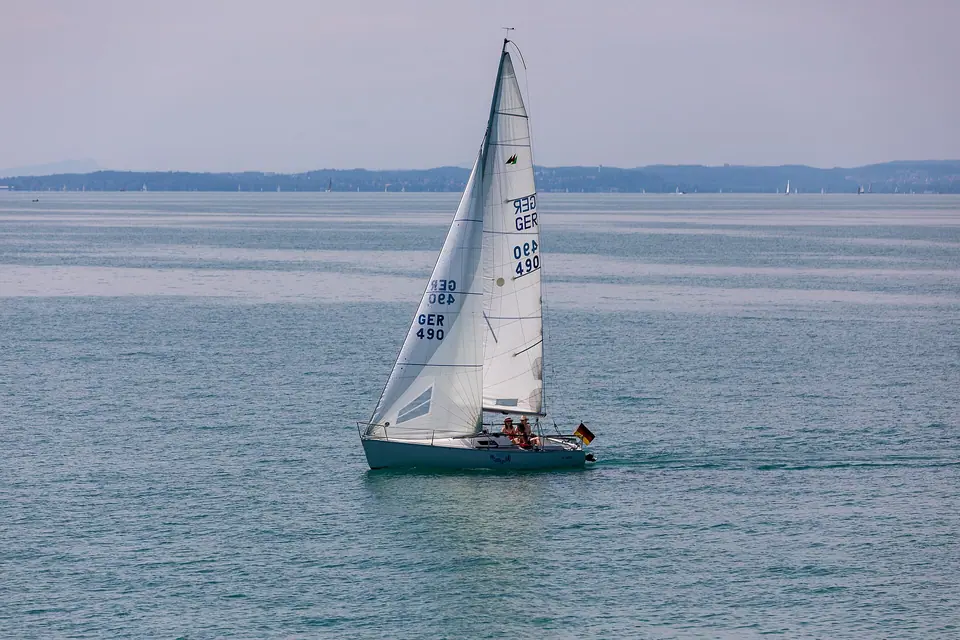
- Length
- 38.1 ft11.61 m
- Beam
- 11.8 ft3.61 m
- Draft
- 6.8 ft2.07 m
- Cabins
- 1 (forward V-berth cabin) plus open saloon
- Used price
- $18K to $60K
On this page
- Overview
- How a bankrupt builder's molds became the Catalina 38
- The numbers behind its upwind manners
- Deep fin or shoal keel, and why it matters for resale
- Low profile on deck, with narrow side decks
- Below decks: a weekender layout around a molded liner
- Atomic 4 gasoline or Universal diesel
- Owning a Catalina 38 after the factory closed
- Who the Catalina 38 suits, and who it does not
- Specifications
- Price and value
- Strengths and weaknesses
- Used buyer checklist
- Rivals
- Our verdict
- FAQ
The Catalina 38 is a Sparkman & Stephens hull, born as the Yankee 38, that Catalina Yachts rebuilt with a new deck, taller rig and spade rudder. About 365 were built from 1978 to 1990.
- PHRF club racers who also cruise
- Couples who prioritize sailing feel over volume
- Coastal cruising in deep-water regions
- Buyers wanting a classic hull on a modest budget
How a bankrupt builder's molds became the Catalina 38
In 1978 Catalina Yachts was a young, fast-growing company selling 22 to 30 footers that it designed and built in house. The Catalina 38 broke that pattern. Frank Butler bought the molds of the Yankee 38 from the bankrupt Yankee Yachts, a Sparkman & Stephens design (S&S #2094) descended from a successful one-off aluminum IOR racer. Yankee had built only about 30 of them between 1972 and 1975. Butler wanted a flagship that would lift the profile of the whole Catalina range, and he got one.
He did not simply pop hulls out of someone else's tooling. Butler replaced the skeg-hung rudder with a balanced spade rudder, gave the boat a taller, higher-aspect rig with a shorter boom, and drew a new deck and coachroof so the boat looked like a Catalina. The interior was redesigned for weekending rather than racing crews. Catalina built about 365 of them through 1990, and Cruising World notes that in 1980 the Catalina 38 was selected for the Congressional Cup, the match racing event in Long Beach, which says plenty about how seriously the hull was taken.
For a buyer searching for a 38 Catalina sailboat today, that history is the whole point. This is not a volume cruiser stretched from a smaller model. It is a pedigreed racing hull with production-boat practicality bolted on, and it sails like one.
Catalina 38 by the numbers
- Sail area to displacement
- 16.2Balanced power for coastal and offshore cruising.
- Displacement to length
- 256Moderate displacement, a classic cruising balance between load carrying and speed.
- Theoretical hull speed
- 7.4 knThe practical top speed of a displacement monohull under normal sailing, based on waterline length.
- Ballast ratio
- 43%A high ballast ratio, so the boat stands up well to a breeze.
- Capsize screening
- 1.88Below 2.0, the traditional threshold for offshore suitability.
- Motion comfort ratio
- 28.1Moderate motion comfort, typical of modern cruisers.
- Length to beam ratio
- 3.22 : 1Moderate proportions.
The numbers behind its upwind manners
On paper the Catalina 38 is a slender, ballasted boat by modern standards: 38 ft 1 in overall on a 30 ft 3 in waterline, an 11 ft 10 in beam, 15,900 pounds of displacement and 6,850 pounds of lead. That is a ballast ratio of about 43 percent, a displacement to length ratio of about 256 and a sail area to displacement ratio near 16.3 based on 641 square feet of reported sail area. Hull speed works out to roughly 7.4 knots.
Those figures describe a stiff, moderately heavy boat that needs a decent genoa in light air but stands up and drives once the breeze fills in. Owners quoted by Cruising World say it goes to windward "like it's on rails" and also ghosts well in light air, which fits the long, fine-ended IOR hull. Its PHRF average is about 116, quick for a production cruiser of its era.
The IOR heritage brings the usual caveat. Boats from that rule had a reputation for rolling and broaching downwind when raced hard and overpowered. Cruising couples who reef early rarely see that behavior, and the balanced spade rudder Butler added gives far more control than the original skeg arrangement. Still, if you plan to fly a big symmetric spinnaker in 20 knots, practice with an experienced crew first.
Deep fin or shoal keel, and why it matters for resale
The standard keel draws 6 ft 10 in, close to seven feet, and that is the version that delivers the upwind performance the boat is known for. A shoal keel drawing 4 ft 11 in was offered for thin-water cruising grounds. Cruising World flagged the deep draft as a limiting factor for some cruising sailors, and it is: the deep boat is a poor fit for much of Florida's west coast, the Bahamas or the upper Chesapeake.
Choose on geography, not on brochure speed. In San Francisco Bay, Southern California, Long Island Sound or the Great Lakes, the deep fin is the boat to own and the one other buyers will want. In shallow regions a shoal-draft 38 is the practical choice and tends to sell to local buyers who already know why they need it.
Low profile on deck, with narrow side decks
Butler's deck gives the Catalina 38 a sleek, low-slung look with long overhangs, generous tumblehome and a small reverse transom. The trade-off is narrow side decks. Going forward from the cockpit is awkward, especially once a wide dodger is fitted, and new owners often reroute jacklines and add handholds before their first season.
Sail handling is conventional for the period. Halyards run to two winches on the cabin top, the mainsheet traveler sits on the coachroof, and genoa sheets run to tracks on the bulwarks and primaries in the cockpit. Most surviving boats have been converted to roller furling, and many have had halyards led aft. A wheel is standard.
Below decks: a weekender layout around a molded liner
The interior is built on a molded fiberglass hull liner with teak trim and veneer on doors, drawer fronts and bulkheads. Early boats had a fiberglass cabin sole; later boats got teak and holly veneer. The keel-stepped mast lands on the bulkhead forward of the saloon.
Forward of that bulkhead is a V-berth for two adults, with the head and shower to port and lockers to starboard. The saloon has a U-shaped dinette to port that converts to a double, and a long settee to starboard with stowage behind and below. The galley is a compact U-shape at the foot of the companionway with a two-burner stove, icebox and double sink. The chart table is to starboard, backed by a quarter berth that runs under the cockpit. Total sleeping space is five or six.
Ventilation and light are modest by modern standards: a saloon skylight, a forward hatch and fixed ports. Many owners have added opening ports, fans and LED lighting. Tankage is limited for long cruising, and the hull's fine ends punish anyone who stows heavy gear, extra water or chain in the bow and stern.
Atomic 4 gasoline or Universal diesel
Very early Catalina 38s were fitted with the Universal Atomic 4 gasoline engine, the same unit found in thousands of 1970s American sailboats. Later boats received a Universal diesel of about 24 hp. Cruising World reports that the diesel lacks the power to push the boat at hull speed into moderate wind and chop, so plan passages around the breeze rather than the engine. Engine access is adequate rather than generous.
Many 38s have since been repowered with newer diesels, and a documented repower is the single biggest value item on any listing. A boat still running an original Atomic 4 is not necessarily a bad buy, as these engines are simple and well supported, but price it as a gasoline boat with a finite engine life. Published fuel capacity varies between sources, from 20 to 25 gallons, so measure the actual tank on any boat you survey.
Owning a Catalina 38 after the factory closed
When Cruising World reviewed the boat in 2014 it noted that, unusually for a design of that vintage, the builder was still in business and supplying parts and design support. That is no longer true. Catalina Yachts was sold to Michael Reardon of Daedalus Yachts in spring 2025, paused production in October 2025, and its remaining assets and tooling were auctioned on June 9, 2026.
For a model that left production in 1990 the practical impact is small. Most parts for a 38 are generic marine hardware, rigging and engines, and the owner community has decades of shared knowledge about refits. What you lose is the chance to call the factory for an original drawing or a molded part, so treat any listing that includes original manuals, rigging specs or the factory owner's binder as a genuine plus.
Who the Catalina 38 suits, and who it does not
This is a boat for sailors who care how a boat feels on the wind: club racers who want a competitive PHRF boat that can still take a couple away for a week, and coastal cruisers who would rather sail than motor. It is not a liveaboard or a long-range cruiser. The tankage, the single cabin forward, the narrow decks and the modest engine all argue against loading it for extended voyages.
If you want more volume for the same money, the Catalina 36 or a later Catalina 380 gives far more room below. If you want the best-sailing older Catalina under 40 feet, the 38 is the one to look at.
Catalina 38 specifications
| Length overall | 38.1 ft11.61 m |
|---|---|
| Waterline length | 30.3 ft9.22 m |
| Beam | 11.8 ft3.61 m |
| Draft | 6.8 ft2.07 m |
| Displacement | 15,9 lbs7,212 kg |
| Ballast | 6,85 lbs3,107 kg |
| Sail area | 641 sq ft59.6 m² |
| Fresh water | 55 gal208 L |
| Cabins | 1 (forward V-berth cabin) plus open saloon |
| Berths | 5 to 6 (V-berth, convertible dinette, settee, optional quarter berth) |
| Heads | 1, forward to port, with shower |
| Standard engines | Universal Atomic 4 gasoline on very early boats; Universal diesel of about 24 hp on later boats |
| Hull type | IOR-era fin keel monohull with long overhangs and balanced spade rudder |
| Keel | Fixed lead fin, 6 ft 10 in standard or 4 ft 11 in shoal draft |
| Rig | Masthead sloop, keel-stepped aluminum mast, taller than the original Yankee 38 rig |
| Hull construction | Fiberglass with molded interior liner and lead fin keel |
| Builder | Catalina Yachts, United States |
| Naval architect | Sparkman & Stephens (S&S design #2094) |
| Other design credits | Frank Butler (deck, coachroof, rig, rudder and interior changes) |
| Production | 1978 to 1990 |
| Status | Discontinued |
Figures come from builder documentation and independent tests where available. Displacement is usually quoted light, so a loaded cruising boat will weigh more. Compare these specs with another model.
How much does a Catalina 38 cost?
Cruising World put asking prices at $25,000 to $75,000 in 2014, with older boats at the bottom. Twelve years on, most 38s have had at least one round of major spending or need it, so the spread in 2026 is driven by engine (an original Atomic 4 versus a modern diesel repower), sail and rig age, and keel choice. Deep-draft boats with new sails sell first among racers; shoal boats suit the Chesapeake and Gulf but attract fewer buyers. The 2025 to 2026 collapse of Catalina Yachts has had little measurable effect on prices because this model has relied on owners and aftermarket suppliers for years.
Estimate your yearly cost
A planning estimate using common rules of thumb: insurance near 1.5 percent of value, maintenance near 3 percent, haul out and bottom paint by length. Your marina, region and use will move these numbers. Open the full cost calculator.
Versions and options
- Deep fin keel
- 6 ft 10 in draft, the better performer upwind and the version racers look for.
- Shoal keel
- 4 ft 11 in draft for thin-water cruising grounds, at some cost in pointing ability.
- Atomic 4 boats
- Very early hulls with the Universal Atomic 4 gasoline engine, many since repowered.
- Diesel boats
- Later hulls with a Universal diesel of about 24 hp, often repowered with a larger modern diesel.
Catalina 38 timeline
- 1972Yankee Yachts begins building the S&S designed Yankee 38, about 30 completed by 1975
- 1978Catalina launches the Catalina 38 using the Yankee molds with a new deck, taller rig and spade rudder
- 1980The Catalina 38 is selected for the Congressional Cup
- 1990Production ends after about 365 boats
- 2014Cruising World profiles the 38 in its Classic Plastic series
- 2026Catalina Yachts' remaining assets and tooling are auctioned on June 9
Strengths and weaknesses
What owners like
- Genuine Sparkman & Stephens racing hull that points high and sails well in light air
- Ballast ratio around 43 percent makes it stiff in a breeze
- Competitive PHRF rating of about 116 for club racing
- Classic long-overhang looks that age well
- Low purchase price for a pedigreed 38 footer
What to weigh up
- Draft near seven feet on the standard keel
- Narrow side decks make going forward awkward
- Original diesel is underpowered in chop
- Limited tankage and a single sleeping cabin
- No factory support since Catalina's 2025 to 2026 collapse
Used Catalina 38 buyer checklist
Take this list to a viewing. Your ticks are saved in this browser so you can come back to it.
Always commission an independent marine survey and an engine survey before you buy. How a marine survey works.
Rivals to consider
C&C 38
Another 1970s and 1980s racer-cruiser with a strong PHRF following and a similar performance-first character.
Sabre 38
Better-finished Maine-built cruiser with more joinery and a higher price for equivalent condition.
Tartan 37
A centerboard S&S design that suits shallow cruising grounds where the deep Catalina 38 cannot go.
Compare side by sideCatalina 36
Catalina's own in-house design, roomier below and easier to find, but less of a thoroughbred under sail.
Compare side by sideOur verdict on the Catalina 38
The Catalina 38 is the best-sailing older boat Catalina ever sold because it was never really a Catalina design: it is a Sparkman & Stephens racing hull that Frank Butler made livable. It points high, stands up to a breeze and still wins its share of club races, and it costs a fraction of comparable pedigreed boats. Accept the deep draft, the narrow side decks and the modest interior, budget for a repower if the original engine is still aboard, and a well-kept 38 rewards its owner far more under sail than most production cruisers of its size.
Catalina 38 questions answered
Who designed the Catalina 38?
The hull is a Sparkman & Stephens design that began life as the Yankee 38. Frank Butler of Catalina bought the molds in 1978 and added a new deck, a taller rig, a spade rudder and a new interior.
How much is a Catalina 38 worth?
Most trade between roughly $18,000 and $60,000 in 2026, depending on engine, sails and condition. Cruising World put the range at $25,000 to $75,000 in 2014.
How many Catalina 38s were built?
About 365 were built between 1978 and 1990, according to sailboatdata and Wikipedia; Cruising World cites 366.
What is the draft of a Catalina 38?
The standard fin keel draws 6 ft 10 in. A shoal version draws 4 ft 11 in.
Is the Catalina 38 the same boat as the Catalina 380 or 385?
No. The 380 and 385 are later, much roomier Catalina designs. The 38 is the 1978 to 1990 boat built from the Yankee 38 molds.
Can I still get parts for a Catalina 38?
Yes, through owner groups and aftermarket suppliers. Catalina Yachts itself stopped production in 2025 and its assets were auctioned in June 2026, so factory support is gone.
More cruising sailboats to explore
Beneteau Oceanis 390
Cruising Sailboats, 38 ft
Used $38K to $65K
Morgan 384
Cruising Sailboats, 38 ft
Used $32K to $75K
Beneteau Oceanis 38
Cruising Sailboats, 38 ft
Used $135K to $205K
Bavaria 38 Cruiser
Cruising Sailboats, 38 ft
Used $70K to $110K