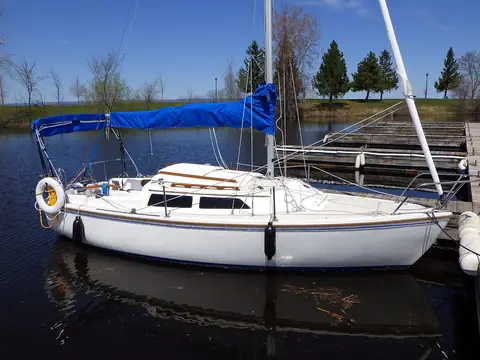
Catalina 22
Cruising Sailboats, 22 ft
Used $3K to $40K
Frank Butler's company put more Americans under sail than any other builder, and its boats will outlive it by decades.
Cruising Sailboats, 22 ft
Used $3K to $40K
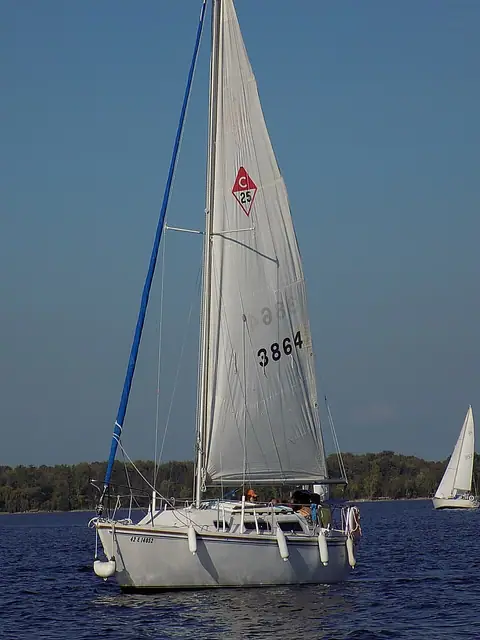
Cruising Sailboats, 25 ft
Used $4K to $20K
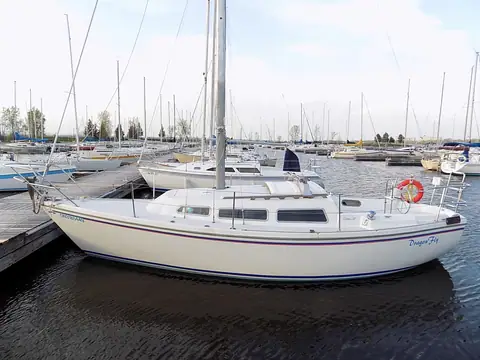
Cruising Sailboats, 27 ft
Used $3K to $20K
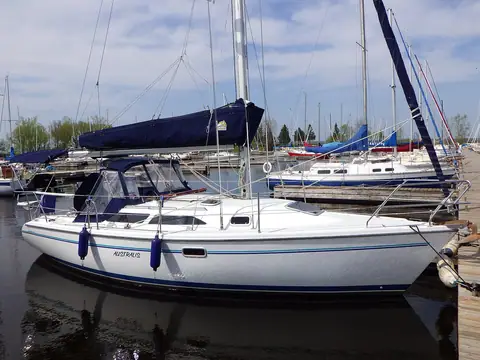
Cruising Sailboats, 29 ft
Used $18K to $62K
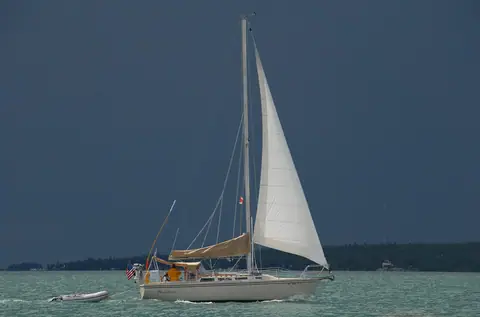
Cruising Sailboats, 30 ft
Used $8K to $58K
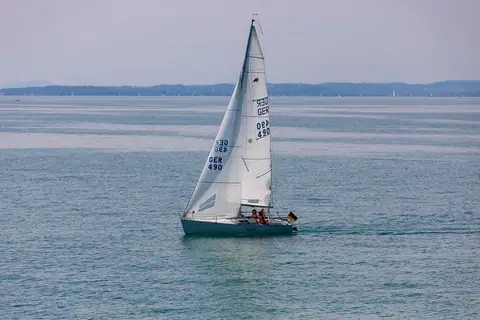
Cruising Sailboats, 35 ft
Used $25K to $90K
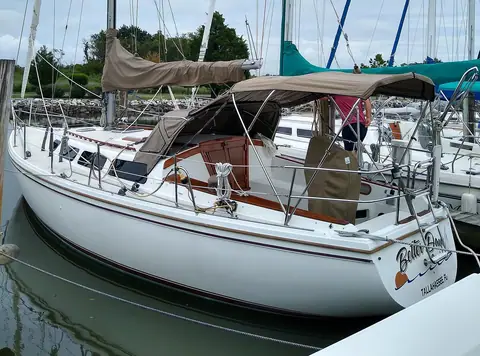
Cruising Sailboats, 36 ft
Used $25K to $95K
Cruising Sailboats, 38 ft
Used $18K to $60K
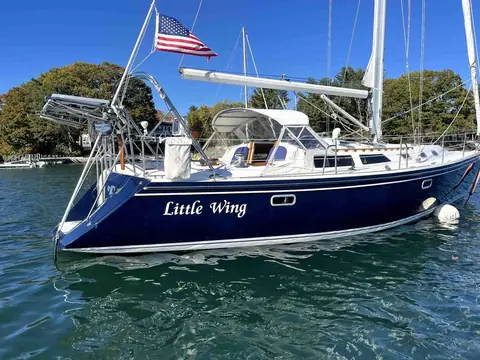
Cruising Sailboats, 42 ft
Used $65K to $195K
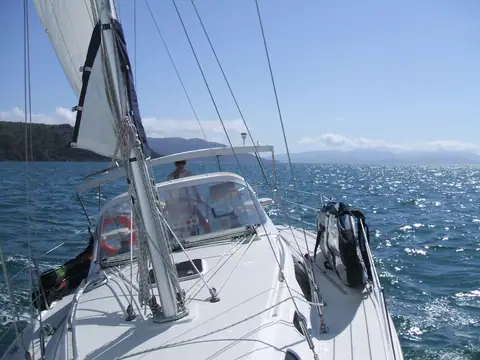
Cruising Sailboats, 33 ft
Used $30K to $85K
Cruising Sailboats, 35 ft
Used $145K to $290K
Cruising Sailboats, 44 ft
Used $255K to $450K
Catalina built more than 80,000 sailboats in California and Florida from 1969. The company ceased operations in 2025 and its assets were auctioned in 2026, but owner associations and parts suppliers keep the fleet sailing.
Frank Butler (1928 to 2020) had already built boats under the Wesco Marine and Coronado names, which he sold to Whittaker Corporation in 1969. That same year he founded Catalina Yachts in Hollywood, California, and launched the Catalina 22, a trailerable family boat that went on to sell roughly 15,000 copies. The formula of solid, simple, affordable boats with more interior room than rivals carried the company through five decades.
Catalina bought Morgan Yachts in 1984 for its center-cockpit designs and built small Capri boats alongside. Production eventually consolidated in Largo, Florida, and the company says it built more than 80,000 boats between 8 and 54 feet, making it one of the most prolific sailboat builders in the world. Gerry Douglas, Catalina's long-time chief engineer, drew the later generation, starting with the Catalina 36 of 1982 and continuing through the 42, 28 and 320, before retiring in 2021.
In April 2025 Michael Reardon, founder of Daedalus Yachts, acquired Catalina as long-time president Sharon Day retired. The new ownership soon ran into unpaid promissory notes and rent. In October 2025 management announced a temporary production pause, and the facility was locked down after an eviction on October 22, 2025. In May 2026 the Butler family announced the liquidation of the factory contents, and the remaining assets, tooling and unfinished hulls were sold at public auction on June 9, 2026, ending a 57-year history. No successor company has taken over the brand.
For owners, the practical impact is smaller than it sounds. Catalinas were built with mainstream engines, rigging and hardware, and support now comes from the class and owner associations, which hold manuals, tech notes and decades of repair know-how, and from aftermarket suppliers such as Catalina Direct that have long stocked model-specific parts. The real casualty is warranty cover: on boats built in the last few years before the shutdown, any remaining factory warranty is effectively gone.
For buyers, every Catalina is now a used boat, including the Catalina 22 Sport, the last model in production.
Our coverage follows the company from its trailer sailers to its big cruisers. Frank Butler's own designs come first. The Catalina 22 (1969 to 2025, roughly 15,000 built) is the classic trailer sailer, while the Catalina 25 (1978 to 1991) and Catalina 27 (1971 to 1991) are budget pocket cruisers. The Catalina 30 (1975 to 2008, about 6,450 built) is perhaps the definitive American family cruiser.
The Catalina 38 is the odd one out: a Sparkman and Stephens hull from the failed Yankee 38 project that Butler rebuilt with a new deck, taller rig and spade rudder. About 365 were built from 1978 to 1990, and it remains the best sailer of the older range.
Gerry Douglas's boats make up the rest. The Catalina 36, his first design, ran from 1982 into the mid-2000s with 2,305 built and a Mk II from 1994. The Catalina 42 (Mk I and Mk II) of 1989 was one of the first American production 42 footers with three cabins, passed 1,000 hulls across its Mk I and Mk II versions and ended around 2011. The Catalina 28 filled the gap between the 27 and 30 from 1991, gaining a wider stern in its 1995 Mk II, and the Catalina 320 (1993 to 2009) modernized the 30 formula with an aft cabin and a longer waterline.
Active class and owner associations for the 22, 25, 27, 30, 36 and 42 provide manuals, tech notes and racing, and that support matters more than ever now the factory has gone. Prices are low and stable. A Catalina 22 can be had for a few thousand dollars, a Catalina 30 for roughly $8,000 to $58,000, a 320 for about $30,000 to $85,000 and a Catalina 42 for about $65,000 to $195,000.
No. Catalina ceased operations in 2025 and its remaining assets, tooling and unfinished hulls were auctioned on June 9, 2026. There is no successor company, so no new Catalinas are being built.
Yes. Most components are standard marine items, and class associations, owner associations and aftermarket suppliers such as Catalina Direct support model-specific parts.
In practice, no. With the company liquidated there is no one left to honor factory warranty claims, so recent boats should be surveyed as carefully as older ones.
Catalina says it built more than 80,000 boats, including about 15,000 Catalina 22s, about 6,450 Catalina 30s, 2,305 Catalina 36s and more than 1,000 Catalina 42s.
They are solid, roomy coastal cruisers with excellent value and support, though not designed as heavy bluewater boats.
For coastal cruising, a Catalina 36 or 320 offers two cabins and easy handling at a modest price. Couples who want more room and tankage often move to a two-cabin Catalina 42 Mk II, while the Catalina 38 suits sailors who care most about performance.