Catalina Yachts Cruising Sailboats
Catalina 425 Review, the Twin-Wheel Heir to the Catalina 42
Gerry Douglas's second swing at a 42 footer, 2,000 pounds lighter than the original and one of the last big American production cruisers.
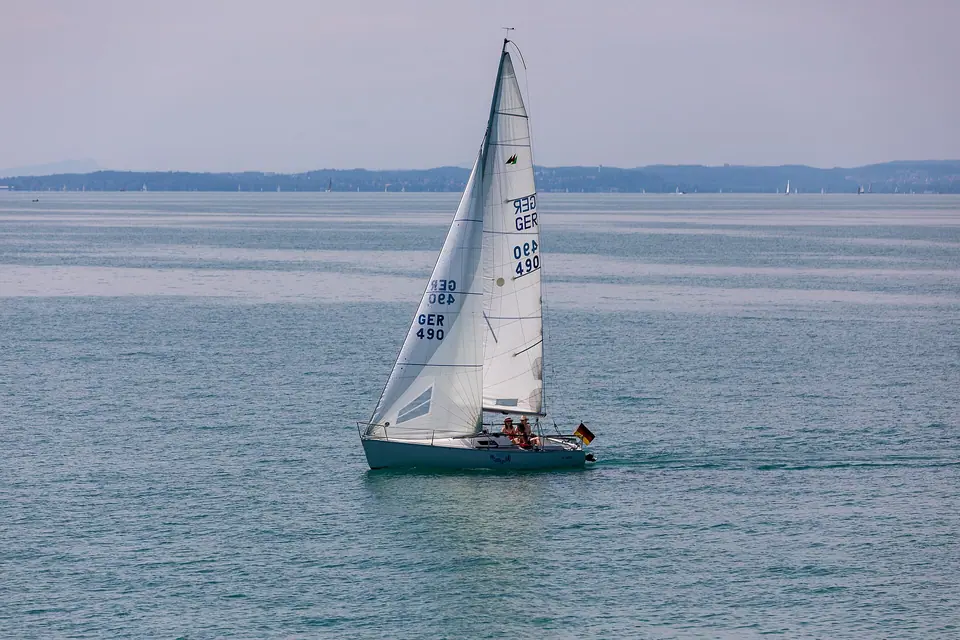
- Length
- 43.5 ft13.26 m
- Beam
- 13.7 ft4.17 m
- Draft
- 6.7 ft2.03 m
- Cabins
- 3 (forward owner's cabin plus port and starboard aft cabins)
- Used price
- $255K to $450K
On this page
- Overview
- The Catalina 425 and the weight of a 1,000-boat predecessor
- No chines, no plumb bow, and two thousand pounds lighter
- A deck plan built around a self-tacking jib
- Three cabins, two heads and maple joinery
- Six knots upwind in six to ten knots of breeze
- A central machinery space and grouped through-hulls
- The 2025 Catalina 426 and the end of production
- Specifications
- Price and value
- Strengths and weaknesses
- Used buyer checklist
- Rivals
- Our verdict
- FAQ
The Catalina 425 is a 41 ft 8 in three-cabin, two-head cruiser designed by Gerry Douglas and launched in 2016 with a self-tacking jib, twin wheels and a 57 hp Yanmar. It was updated as the Catalina 426 for 2025.
- Couples who want guest cabins for visiting family
- Owners stepping up from a Catalina 36, 38 or older 42
- Florida, Chesapeake and Bahamas cruising
- Club racers who also cruise
The Catalina 425 and the weight of a 1,000-boat predecessor
Replacing a legend is a thankless job, and the Catalina 425 had to replace the Catalina 42, launched at the end of the 1980s and built to more than 1,000 hulls. Gerry Douglas, who had drawn the original, took the second swing himself. Catalina announced the boat in November 2015 for a March 2016 launch as the sixth member of its 5 Series, quoting a suggested base price of $262,900 including sails and electronics.
Demand was immediate. Cruising World reported 18 orders by the time it sailed hull number one, and SAIL said 20 hulls had been commissioned before the press had a chance to sail. The 425 won a SAIL Best Boats award for 2017, and Cruising World's reviewer called it a thoroughly modern example of an old-school cruising boat, meant entirely as a compliment.
Catalina 425 by the numbers
- Sail area to displacement
- 20.1Plenty of sail for the weight, the boat should feel lively in light air.
- Displacement to length
- 135Light displacement for its length, quick but sensitive to added cruising weight.
- Theoretical hull speed
- 8.4 knThe practical top speed of a displacement monohull under normal sailing, based on waterline length.
- Ballast ratio
- 37%A typical ballast ratio for a cruising monohull.
- Capsize screening
- 2.08Above 2.0, so this hull leans toward coastal stability over ultimate offshore resistance.
- Motion comfort ratio
- 21.3A quicker motion in waves, typical of light, beamy hulls.
- Length to beam ratio
- 3.18 : 1Moderate proportions.
No chines, no plumb bow, and two thousand pounds lighter
Douglas deliberately ignored the European fashions of the time: no straight stem, no hard chine, no fold-down transom. What he chased instead was weight. A carbon core in the deck, a 3/4 in end-grain balsa core above the waterline and the elimination of aluminum toerails at the molded hull-to-deck joint made the 425 about 2,000 lb lighter than the old 42, according to Cruising World. At 18,100 lb on the fin keel and a 39 ft 1 in waterline, sailboatdata calculates a displacement to length ratio of 135 and a sail area to displacement ratio around 21, numbers that put the 425 well into performance cruiser territory.
The stem is set at 81 degrees so the anchor does not bang the bow, and a bowsprit with a bobstay serves as both anchor roller and tack point for an asymmetric or code zero. Safety features carried over from the 5 Series include the watertight StrikeZone collision bulkhead forward, the DeepDefense rudder with a stainless core and the T-Beam mast step. The rig is a modified Selden with an extra set of forward shrouds to stop the mast pumping.
A deck plan built around a self-tacking jib
The standard sail plan is an in-mast furling main and a 100 percent self-tacking jib, both by Doyle. Catalina still fitted nearly 12 ft genoa tracks, so owners can add a 110, 135 or 155 percent genoa, and the published sail inventory runs up to a 1,223 sq ft asymmetric spinnaker. The double-ended German-style mainsheet can be trimmed at the helm or at the coachroof winches, and the sheets for both sails come back to the wheels.
The cockpit is one of the boat's best features. It was moved farther aft thanks to a more vertical transom than other 5 Series boats, with twin Edson pedestals and 32 in wheels, a split backstay that terminates forward of the helms and a walkway between them to the swim step. The throttle sits high on the starboard coaming so the driver can watch the dock, and SAIL praised the forward visibility from either wheel. The starboard cockpit settee unfolds into a double, the central table hides a fridge, and a gull-wing hatch in the port seat opens straight into the port aft cabin, which owners can convert to a sail and bicycle store.
Three cabins, two heads and maple joinery
Below, the owner's cabin is forward with a large centerline berth whose mattress raises for reading, and an adjacent head with a big stall shower. The saloon pairs a U-shaped settee and dining table to port with a central table to starboard flanked by two seats that double as the nav station, with USB and 12-volt outlets built in. The galley is to port at the foot of the companionway and the second head is opposite, convenient for a wet crew coming below. Two aft cabins sit under the cockpit.
The interior is light maple, LED lighting is dimmable throughout and the air-conditioning ducts run above the cabin windows. Cruising World's test boat carried five compressors, two for air conditioning and three for the cockpit fridge, galley freezer and a wine cooler, a reminder that the typical 425 is equipped for Florida and Chesapeake summers. Six large fixed ports in the hull add light and a view of the water.
Six knots upwind in six to ten knots of breeze
Cruising World sailed hull number one, a shoal draft boat, on Florida's Manatee River and Tampa Bay in a fluctuating 6 to 10 knots. The 425 made over 6 knots upwind in about the same wind speed and touched 8 knots on a tight reach under the asymmetric, with a light and responsive helm throughout. That boat's owner had moved up from a Catalina 380 and was planning to cruise to Key West and race offshore to Mexico.
The updated Catalina 426, tested by Cruising World on Chesapeake Bay in 12 to 14 knots, made 7.2 knots upwind on the same hull with a new rig. Those are good numbers for a cruiser carrying generator, air conditioning and three cabins of gear, and they show that the self-tacking jib does not cripple the boat to windward as long as the breeze is up.
A central machinery space and grouped through-hulls
Douglas designed the 425 for owners who maintain their own boats. The steering quadrant is reachable from the aft cabins, filters and machinery have dedicated lockers, the generator, water heater and air-conditioning units share a central mechanical space, and all through-hulls are grouped in one place in the port cabin. Cruising World summed up the systems as logical.
Power is a 57 hp Yanmar 4JH57CR common-rail diesel on a shaft, turning a three-blade 18 x 14 in prop. Fuel is 62 gallons with an optional 18 gallon auxiliary tank, water is 117 gallons including an 11 gallon heater, and holding totals 54 gallons in two tanks. We found no published speed and fuel curve, so ask sellers for real-world burn figures; the common-rail Yanmar's electronic controls also mean diagnostic access matters when choosing a yard.
The 2025 Catalina 426 and the end of production
For 2025 Catalina reworked the boat as the Catalina 426, part of a new 6 Series. Changes included a lighter Selden LMP spar package with swept spreaders, a Mars bulb shoal keel replacing the wing, multiaxial laminates with carbon in high-load areas, a Sensar monitoring system and diesel heating options. Catalina quotes the 426 at 24,500 lb half-load on the fin keel, a different basis from the 425's 18,100 lb basic weight, so do not read it as a weight gain.
The timing was unlucky. Catalina was sold in April 2025, paused production in October and had its tooling and remaining assets auctioned in June 2026. Very few 426s exist, which keeps the 425 as the model most buyers will find. Ownership costs for a 43 ft cruiser in the US run roughly $18,000 to $36,000 a year before depreciation, with slip fees, insurance and the generator and air-conditioning service on a typical boat the main variables.
Catalina 425 specifications
| Length overall | 43.5 ft13.26 m |
|---|---|
| Waterline length | 39.1 ft11.91 m |
| Beam | 13.7 ft4.17 m |
| Draft | 6.7 ft2.03 m |
| Air draft | 62.9 ft19.18 m |
| Displacement | 18,1 lbs8,21 kg |
| Ballast | 6,7 lbs3,039 kg |
| Sail area | 865 sq ft80.4 m² |
| Fuel capacity | 62 gal235 L |
| Fresh water | 117 gal443 L |
| Cabins | 3 (forward owner's cabin plus port and starboard aft cabins) |
| Berths | 6 in cabins plus the saloon and a cockpit settee that converts to a double |
| Heads | 2 (forward en suite with stall shower, second head at the companionway) |
| Standard engines | Yanmar 4JH57CR common-rail diesel, 57 hp at 3,000 rpm, shaft drive with three-blade 18 x 14 in prop |
| Maximum power | 57 hp |
| Hull type | Moderate displacement fin keel monohull with spade rudder |
| Keel | Lead fin, 6 ft 8 in (6,700 lb ballast) or lead wing keel, 5 ft (7,700 lb ballast, 19,100 lb displacement) |
| Rig | Fractional Selden sloop with extra forward lowers and split backstay; in-mast furling main and 100 percent self-tacking jib standard, genoas to 155 percent optional, bowsprit for asymmetric or code zero |
| Hull construction | Fiberglass with end-grain balsa core above the waterline, vinylester barrier, carbon-cored deck sections, molded structural grid |
| CE design category | A |
| Builder | Catalina Yachts, United States |
| Naval architect | Gerry Douglas |
| Production | 2016 to 2024 |
| Status | Discontinued |
Figures come from builder documentation and independent tests where available. Displacement is usually quoted light, so a loaded cruising boat will weigh more. Compare these specs with another model.
How much does a Catalina 425 cost?
Catalina announced the 425 in November 2015 at a suggested base price of $262,900 with sails and electronics, and well-equipped boats with air conditioning, generator and upgraded electronics left the dealer for considerably more. With Catalina out of production since October 2025, the used fleet is the only supply, and few 425s come to market each year, so condition and specification drive price more than age does. Treat our bands as estimates; listings for this model are scarce.
Estimate your yearly cost
A planning estimate using common rules of thumb: insurance near 1.5 percent of value, maintenance near 3 percent, haul out and bottom paint by length. Your marina, region and use will move these numbers. Open the full cost calculator.
Versions and options
- Catalina 425 fin keel
- 6 ft 8 in draft, 6,700 lb ballast, 18,100 lb basic weight, sail area to displacement of 20 per Catalina.
- Catalina 425 wing keel
- 5 ft draft, 7,700 lb ballast, 19,100 lb basic weight. Hull number one was a shoal draft boat.
- Optional headsails
- Self-tacking jib standard; 110, 135 and 155 percent genoas on the long tracks, plus asymmetric and code zero from the sprit.
- Catalina 426 (2025)
- 6 Series update with Selden LMP rig, Mars bulb shoal keel, revised laminate and standard boat monitoring.
Catalina 425 timeline
- 2015Catalina announces the 425 at a $262,900 base price
- 2016Hull number one launched in Florida; Cruising World tests it on Tampa Bay
- 2017Wins a SAIL Best Boats award
- 2025Replaced by the Catalina 426; Catalina pauses production in October
- 2026Catalina's tooling and remaining assets sold at auction in June
Strengths and weaknesses
What owners like
- Lively performance for a three-cabin cruiser
- Self-tacking jib and sheets led to twin helms for easy shorthanding
- Excellent cockpit with good sightlines and a swim-step walkway
- Thoughtful maintenance access and grouped through-hulls
- Watertight collision bulkhead and robust rudder design
- Long fin or 5 ft wing keel options
What to weigh up
- Few boats on the market and no factory support after 2025
- In-mast furling main limits light-air pace
- 62 gallon standard fuel tank is modest for a 43 footer
- Common-rail engine needs a yard with Yanmar electronic diagnostics
Used Catalina 425 buyer checklist
Take this list to a viewing. Your ticks are saved in this browser so you can come back to it.
Always commission an independent marine survey and an engine survey before you buy. How a marine survey works.
Rivals to consider
Jeanneau Sun Odyssey 410
Newer French design with a walk-around deck and chined hull; lighter, faster in light air and more modern in look.
Compare side by sideHanse 418
German self-tacking cruiser with a minimalist interior and drop-down transom, typically cheaper new.
Island Packet 420
Heavier, full-keel American alternative for owners who prioritize motion comfort over speed.
Compare side by sideCatalina 42
The original 42 at a fraction of the price, with dated systems but a huge owner base.
Compare side by sideOur verdict on the Catalina 425
The Catalina 425 is the most complete cruising boat Catalina built in its last decade: a quick, easy-handling three-cabin 43 footer whose systems were laid out by someone who expected to service them. It looks traditional next to its European rivals and that is part of its charm, because the traditional choices, such as a proper bow for the anchor, a protected cockpit and real tankage, are the right ones for American coastal cruising. With production over, a well-kept 425 is a scarce and sensible buy, and it should hold its value better than most imported 42 footers.
Catalina 425 questions answered
How much did a new Catalina 425 cost?
Catalina quoted a suggested base price of $262,900 with sails and electronics when it announced the boat in 2015. Typical commissioned boats with air conditioning and a generator cost more.
How many cabins does the Catalina 425 have?
Three: a forward owner's cabin with en suite head and stall shower, and two aft cabins. A second head is at the foot of the companionway.
What engine is in the Catalina 425?
A Yanmar 4JH57CR common-rail diesel rated at 57 hp at 3,000 rpm, with 62 gallons of fuel and an optional 18 gallon auxiliary tank.
How fast is the Catalina 425?
Cruising World saw over 6 knots upwind in 6 to 10 knots of wind and 8 knots on a reach under asymmetric. The updated 426 made 7.2 knots upwind in 12 to 14 knots.
What replaced the Catalina 425?
The Catalina 426, a 2025 6 Series update with a new Selden rig and a Mars bulb shoal keel. Catalina paused production later that year.
More cruising sailboats to explore
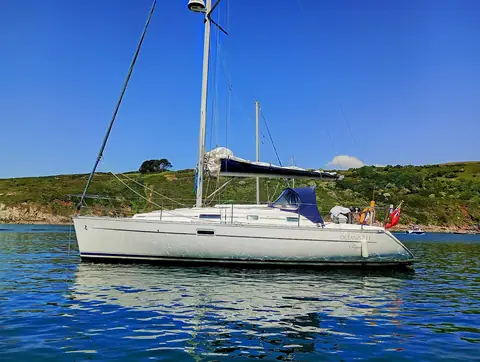
Beneteau Cyclades 43.3 and 43.4
Cruising Sailboats, 44 ft
Used $85K to $125K
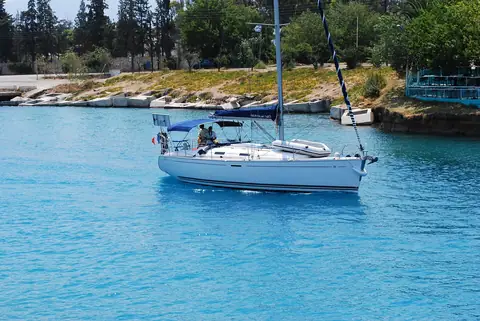
Dufour 430 Grand Large
Cruising Sailboats, 43 ft
Used $250K to $380K
Beneteau Oceanis 42 CC
Cruising Sailboats, 43 ft
Used $120K to $185K
Beneteau Sense 43
Cruising Sailboats, 43 ft
Used $170K to $270K