Dufour Yachts Cruising Sailboats
Dufour 36 Classic Review and Used Buying Tips
One of Dufour's best sellers of the early 2000s, a sweet-lined aft-cockpit 36 with a masthead rig and a center-cockpit twin on the same hull.
- Length
- 36.2 ft11.02 m
- Beam
- 12.4 ft3.77 m
- Draft
- 5.9 ft1.8 m
- Cabins
- 2 or 3
- Used price
- $50K to $85K
On this page
- Overview
- Where the 36 fits in Dufour's Classic years
- One hull, two decks: the Classic and the 36CC
- How Dufour described it in 2002
- Sailing manners: quick, but watch it downwind
- Inside: full-beam saloon and twin aft cabins on later boats
- Engine, tanks and what to expect from the Volvo
- Buying one in 2026
- Specifications
- Price and value
- Strengths and weaknesses
- Used buyer checklist
- Rivals
- Our verdict
- FAQ
The Dufour 36 Classic is an 11 m masthead sloop from Dufour's Classic range, built about 2000 to 2004 with roughly 450 hulls. It weighs 5,900 kg, draws 1.80 m or 1.45 m and has two or three cabins.
- Budget coastal cruising for a family
- Sailors who want a quick boat for club races
- Buyers comfortable importing from Europe
- First cruising boats with room to grow
Dufour 36 Classic by the numbers
- Sail area to displacement
- 19.9Balanced power for coastal and offshore cruising.
- Displacement to length
- 213Moderate displacement, a classic cruising balance between load carrying and speed.
- Theoretical hull speed
- 7.3 knThe practical top speed of a displacement monohull under normal sailing, based on waterline length.
- Ballast ratio
- 27%Relatively low ballast, form stability does more of the work.
- Capsize screening
- 2.10Above 2.0, so this hull leans toward coastal stability over ultimate offshore resistance.
- Motion comfort ratio
- 22.1A quicker motion in waves, typical of light, beamy hulls.
- Length to beam ratio
- 2.92 : 1A beamy hull with lots of volume for its length.
Where the 36 fits in Dufour's Classic years
Dufour launched its Classic range in the mid-1990s, under the ownership of Olivier Poncin, and it carried the yard through the late 1990s with models from 30 to 50 feet. The dufour 36 classic came late in that run. Yachting Monthly first tested the design in November 1999, and sailboatdata records production from 2000 to 2004 with about 450 built, which makes it one of the more common Dufours of its generation. Yachting Monthly later called it one of Dufour's best sellers.
When the range was renewed, Cruising World described the new three-digit Dufours, starting with the 385 of 2004, as the cruising heirs of the Classic line. The 36 Classic is therefore the last of the pre-Felci Dufour cruisers in its size.
One hull, two decks: the Classic and the 36CC
Dufour built two boats on this hull. The 36 Classic is the aft-cockpit version, with a deep, secure cockpit and slab reefing. The 36CC puts a shallower center cockpit on the same hull, adds a roller-furling main and uses a different interior. Yachting Monthly sailed them together and found them closely matched, although the Classic's larger sail area gave it the edge in light to moderate winds, and its rod steering felt more positive than the long, complex cable run on the 36CC.
If a listing just says Dufour 36, check the photos: the center cockpit, raised aft deck and furling main mark the CC. The aft-cockpit Classic is the better sailing boat and the more common one.
How Dufour described it in 2002
Dufour's own French product sheet from the early 2000s called the 36 Classic a long-distance cruiser conceived by Dufour and drawn by J&J Design, the Slovenian studio that also drew the 30, 32 and 35 Classic. It listed a wide, slender hull for liveliness, a gentle and precise helm, a comfortable cockpit with rounded shapes, a sloping coachroof with stainless steel portlights and a clever stern skirt. The boat came in two versions of layout and equipment.
Some databases credit the design to Mortain & Mavrikios instead. For a buyer the attribution changes nothing, but it explains why you will see both names in listings.
- Overall length 11.02 m (36 ft 2 in), hull 10.82 m
- Beam 3.77 m (12 ft 4 in)
- Weight 5,900 kg, ballast 1,600 kg
- Sail area 64 m2, water 340 L, fuel 160 L
- Engine 20 to 30 hp, six to eight berths in two or three cabins
Sailing manners: quick, but watch it downwind
Reviewers consistently describe the 36 Classic as quicker than a family cruiser needs to be. Yachting Monthly's Dick Durham credited its moderately pronounced rocker, which keeps the broad transom clear of the water even when the boat is heavily loaded for a long cruise, and said it was fast enough for competitive sailors. The masthead rig with slightly swept-back spreaders is simple to handle on most points of sail.
The caution is running in a blow. Yachting Monthly found the helm needs a lot of attention downwind in strong wind, a common trait of beamy hulls with a flat run aft. A good autopilot, a preventer and an early reef make the boat much more relaxed. Sailboatdata's ratios support the picture: a sail area to displacement ratio around 16.5 on the foretriangle, and a displacement to length near 215.
Inside: full-beam saloon and twin aft cabins on later boats
Durham noted that the saloon is taken right out to the hull sides, which gives a real sense of space at some cost to stowage. There are ample fore and aft cabins, and Yachting Monthly reported that later boats have twin aft cabins, which turns the 36 into a three-cabin boat for families or charter. The 36CC, by comparison, has useful sea berths in its saloon but a smaller living area.
Check headliners, hatch frames and the stainless portlights for leaks, the usual faults on boats of this age, and lift the cabin sole to look at the keel floors and bilge for old water damage.
Engine, tanks and what to expect from the Volvo
The factory sheet listed engines of 20 to 30 hp, and sailboatdata records the 30 hp Volvo Penta 2030 as original equipment. Many boats will have been repowered by now, which is a plus if the work was done properly. Fuel capacity is 160 liters (42 gallons) and water 340 liters (90 gallons), a good water reserve for a 36-footer.
Buying one in 2026
Expect $50,000 to $85,000 for a sound boat in 2026, with the best US boats and freshly refitted European imports at the top. At more than 20 years old, the survey matters more than the brochure. Pay attention to the iron keel and its bolts, the rudder bearings, the chainplates, the original wiring and the condition of the deck around fittings.
A boat that has been a sailing-school or charter workhorse may have a strong maintenance record or may be worn out, so ask for invoices rather than assurances.
Dufour 36 Classic specifications
| Length overall | 36.2 ft11.02 m |
|---|---|
| Waterline length | 30.1 ft9.17 m |
| Beam | 12.4 ft3.77 m |
| Draft | 5.9 ft1.8 m |
| Air draft | 49.3 ft15.01 m |
| Displacement | 13,007 lbs5,9 kg |
| Ballast | 3,527 lbs1,6 kg |
| Sail area | 689 sq ft64 m² |
| Fuel capacity | 42 gal16 L |
| Fresh water | 9 gal34 L |
| Cabins | 2 or 3 |
| Berths | 6 to 8 |
| Standard engines | Volvo Penta diesel of 20 to 30 hp (30 hp 2030 commonly fitted) |
| Maximum power | 30 hp |
| Hull type | High-volume canoe body with fairly full bows, a deepish forefoot, moderate rocker and a flat run aft |
| Keel | Iron fin, 1.80 m (5 ft 11 in) standard or 1.45 m (4 ft 9 in) shoal |
| Rig | Masthead sloop with slightly swept-back spreaders, slab-reefed main |
| Hull construction | Fiberglass |
| Builder | Dufour Yachts, France |
| Naval architect | J&J Design |
| Other design credits | Some references, including sailboatdata, credit Mortain & Mavrikios |
| Production | 2000 to 2004 |
| Status | Discontinued |
Figures come from builder documentation and independent tests where available. Displacement is usually quoted light, so a loaded cruising boat will weigh more. Compare these specs with another model.
How much does a Dufour 36 Classic cost?
Most Dufour 36 Classics are in Europe, and some served charter or sailing-school fleets, so US buyers often compare a local boat with an import. Recent engine replacement, newer standing rigging and the twin-aft-cabin layout support the top of the range; original-engine boats with tired sails sell at the bottom.
Estimate your yearly cost
A planning estimate using common rules of thumb: insurance near 1.5 percent of value, maintenance near 3 percent, haul out and bottom paint by length. Your marina, region and use will move these numbers. Open the full cost calculator.
Versions and options
- 36 Classic, two cabins
- Aft-cockpit boat with one aft cabin and more saloon stowage.
- 36 Classic, three cabins
- Later boats with twin aft cabins, the family and charter favorite.
- Dufour 36CC
- Center-cockpit sister on the same hull with a roller main and a different layout.
- Shoal keel
- 1.45 m draft instead of 1.80 m.
Dufour 36 Classic timeline
- 1995Dufour launches its Classic range
- 1999Yachting Monthly's first test of the design
- 2000Series production begins, according to sailboatdata
- 2003Yachting Monthly tests the 36 Classic again
- 2004Production ends after about 450 boats as the new 385 opens the next range
Strengths and weaknesses
What owners like
- Lively, easily driven hull
- Deep, secure aft cockpit
- Positive rod steering
- Good water capacity
- Large production run keeps parts and knowledge available
What to weigh up
- Demanding helm downwind in strong winds
- Saloon stowage sacrificed for space
- Most boats are in Europe
- Original equipment now more than 20 years old
Used Dufour 36 Classic buyer checklist
Take this list to a viewing. Your ticks are saved in this browser so you can come back to it.
Always commission an independent marine survey and an engine survey before you buy. How a marine survey works.
Rivals to consider
Beneteau Oceanis 361
The best-known French 36 of the same years, more plentiful in the US.
Compare side by sideJeanneau Sun Odyssey 36.2
Comparable size and price with a strong charter history.
Catalina 36
American-built alternative with a huge owner network and easy parts supply.
Compare side by sideBavaria 36
German volume cruiser of the period, often the cheapest choice.
Our verdict on the Dufour 36 Classic
The Dufour 36 Classic is a good-looking, quick and honest family cruiser from the last years before Felci reshaped the range. It sails better than most of its contemporaries, the aft cockpit is safe, and its large production run means plenty of boats and shared owner knowledge. Respect it downwind in a breeze, buy on survey rather than on age, and choose a three-cabin later boat if you have a family. For a sub-$85,000 budget it remains one of the more rewarding 36-footers to sail.
Dufour 36 Classic questions answered
When was the Dufour 36 Classic built?
Sailboatdata lists production from 2000 to 2004, with about 450 boats built. Yachting Monthly first tested the design in late 1999.
Who designed the Dufour 36 Classic?
Dufour's own product sheet credits J&J Design. Some databases list Mortain & Mavrikios instead.
What is the difference between the Dufour 36 Classic and 36CC?
They share a hull. The Classic has an aft cockpit, slab reefing and rod steering; the 36CC has a center cockpit, a roller main and a different interior.
How much does a Dufour 36 Classic cost?
Roughly $50,000 to $85,000 in 2026, depending on condition, layout and whether the boat is in the US or must be imported.
What is the draft of the Dufour 36 Classic?
1.80 m (5 ft 11 in) with the standard keel and 1.45 m (4 ft 9 in) with the shoal keel.
Photos from the Dufour Yachts range
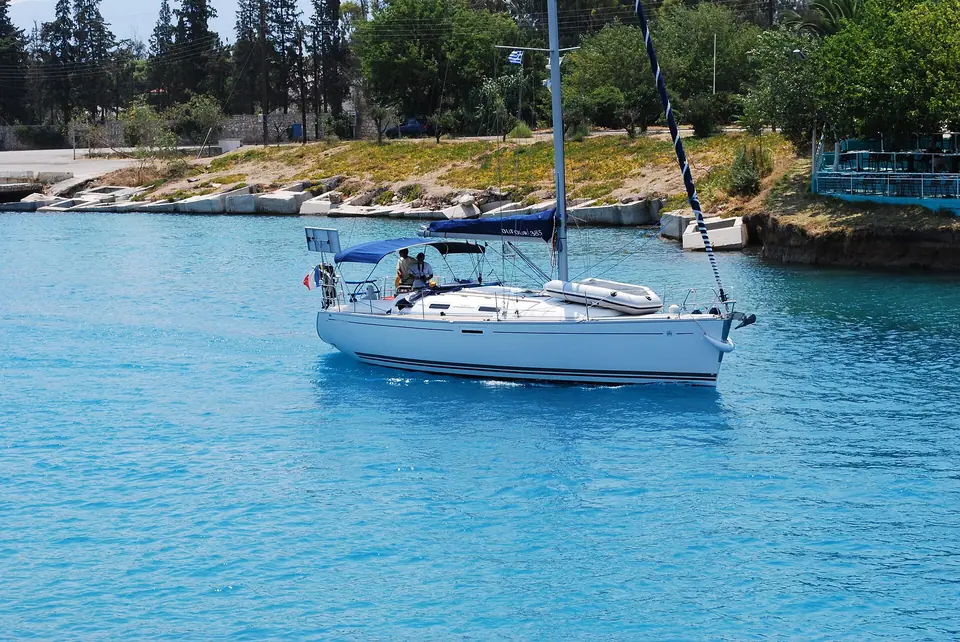
We have not found a freely licensed photo of the Dufour 36 Classic yet, so these show other Dufour Yachts boats, each captioned with the boat pictured.
More cruising sailboats to explore
Catalina 36
Cruising Sailboats, 36 ft
Used $25K to $95K
Beneteau Oceanis 36 CC
Cruising Sailboats, 36 ft
Used $45K to $80K
Beneteau Oceanis Clipper 361
Cruising Sailboats, 36 ft
Used $55K to $88K
Beneteau Oceanis 370
Cruising Sailboats, 36 ft
Used $28K to $50K
Other Dufour Yachts models
- Dufour 30 Classic
- Dufour 40 Performance
- Dufour 50 Classic
- Dufour 56 Exclusive
- Dufour 61
- Dufour 360 Grand Large
- Dufour 385 Grand Large
- Dufour 390 Grand Large
- Dufour 405 Grand Large
- Dufour 412 Grand Large
- Dufour 430 Grand Large
- Dufour 455 Grand Large
- Dufour 460 Grand Large
- Dufour 470
- Dufour 520 Grand Large
- Dufour 530
- Dufour 560 Grand Large
- Dufour Catamarans 48
- All Dufour Yachts models