Bavaria Yachts Cruising Sailboats
Bavaria 30 Cruiser, Review and Used Buying Guide
A roomy J&J-designed 30-footer from 2005 to 2007 that sails better than its reputation and ages better than many expect.
- Length
- 31 ft9.45 m
- Beam
- 10.8 ft3.29 m
- Draft
- 6.4 ft1.95 m
- Cabins
- 2
- Used price
- $38K to $62K
On this page
- Overview
- The Bavaria 30 Cruiser in brief
- Deep fin, shoal fin or tandem keel
- A forward mast and a mainsheet you cannot reach
- Below decks, where the 30 Cruiser earns its keep
- How she sails, from a test and two owners
- What a 20-year-old 30 Cruiser usually needs
- Bavaria 30 Cruiser for sale, what to pay
- Other Bavaria 30s, and the 31 Cruiser that followed
- Specifications
- Price and value
- Strengths and weaknesses
- Used buyer checklist
- Rivals
- Our verdict
- FAQ
The Bavaria 30 Cruiser is a 31 ft family cruiser built in Germany from 2005 to 2007 to a J&J Design. Two double cabins, 6 ft headroom, deep fin, shoal fin or tandem keel, and modest used prices.
- Couples and small families coastal cruising
- First keelboat owners stepping up from dinghies or charter
- Shallow-water cruising with the tandem keel
- Budget buyers who want a German-built 30-footer
Bavaria 30 Cruiser by the numbers
- Sail area to displacement
- 18.4Balanced power for coastal and offshore cruising.
- Displacement to length
- 220Moderate displacement, a classic cruising balance between load carrying and speed.
- Theoretical hull speed
- 7.0 knThe practical top speed of a displacement monohull under normal sailing, based on waterline length.
- Ballast ratio
- 25%Relatively low ballast, form stability does more of the work.
- Capsize screening
- 2.03Above 2.0, so this hull leans toward coastal stability over ultimate offshore resistance.
- Motion comfort ratio
- 22.3A quicker motion in waves, typical of light, beamy hulls.
- Length to beam ratio
- 2.86 : 1A beamy hull with lots of volume for its length.
The Bavaria 30 Cruiser in brief
The Bavaria 30 Cruiser was the smallest boat in the cruiser series that Bavaria launched in 2005, a family of J&J Design yachts running from 30 to 51 feet. Built at Giebelstadt in Bavaria from 2005 to 2007, it measures 31 feet overall on a 27-foot waterline with a beamy 10 feet 10 inches, and weighs about 9,700 pounds with 2,425 pounds of ballast in the keel bulb. Yachting Monthly gives 523 square feet of sail area.
Bavaria's reputation in the mid-2000s was for offering a lot of boat for the money, sometimes with criticism of detail finish. David Harding of Yachting Monthly, who tested many Bavarias of that era, called the 30 Cruiser perhaps not the most obvious choice for a family cruiser, then concluded that it was a surprisingly good one. Cruising World's judges also looked at it for their 2007 Boat of the Year contest. For a US buyer who wants a well-built, easy 30-footer to cruise a bay or a coast, it deserves a place on the shortlist.
Deep fin, shoal fin or tandem keel
Bavaria offered three keels. The deep bulb fin draws about 6 feet 5 inches, generous for a 30-footer and the best choice for windward work. A shoal bulb fin was also available. The third option, seen on a good number of boats, is the tandem keel, a design descended from Warwick Collins' work in the late 1980s that places two vertical foil sections above a single bulb. It cuts draft to about 4 feet 6 inches, nearly 2 feet less than the deep fin, while promising better performance than a conventional shoal keel.
Owners report the trade-off honestly. One tandem-keel owner told Practical Boat Owner that his boat does not point as well as a fin-keeled sister, but he sails single-handed happily. For the Chesapeake, Florida or the Bahamas, the tandem keel opens far more anchorages, and its rudder is the same depth as on the deep-fin boats.
A forward mast and a mainsheet you cannot reach
The rig is typical of Bavarias of the period. The mast is stepped a long way forward, giving a skinny foretriangle, and the genoa has a moderate overlap with inboard chainplates to keep the sheeting angle narrow. A slightly unusual detail is a set of semi-intermediate shrouds running from the spreader tips to a point midway up the lower mast, presumably to support a fairly tall section with a single set of spreaders.
The mainsheet is the arrangement critics dislike. It runs from mid-boom to deck fittings ahead of the companionway, then to the mast base and back to a winch on the coachroof. That keeps the cockpit clear, but the helmsman cannot dump the sheet in a gust without a crew member. The self-tailing Lewmar 30 primaries, on the other hand, are on the aft coamings within reach of the wheel. The helm is pushed right aft to maximize cockpit space, and the large console molding that carries the instruments also supports the cockpit table, which takes up much of the cockpit.
Below decks, where the 30 Cruiser earns its keep
This is where the boat wins converts. The layout is classic early-2000s: a double forward cabin, a saloon with two straight settees over 6 feet long and a table that drops to make a double, a conventional peninsula galley, a proper forward-facing chart table and a double aft cabin. The heads compartment is exceptionally roomy for a 30-footer, and holding tanks were commonly fitted from new. Headroom is about 6 feet almost throughout.
Bavaria did not use a molded interior liner. Joinery units are bonded directly to the hull, which wastes less space and lets you reach the hull and seacocks, and the deckhead is covered with removable vinyl-faced plywood panels, so leaks and deck fittings can be inspected. The cruiser series also switched to lighter-toned mahogany veneers than earlier Bavarias, and Harding found the joinery on a nearly 20-year-old boat still substantial and well finished. Stowage is good and berths are a sensible length.
How she sails, from a test and two owners
Yachting Monthly's test was in only 8 to 12 knots of wind, yet the boat made 4 to 5 knots and tacked through just under 100 degrees in fairly flat water, despite a fixed two-blade propeller and tired sails. The magazine found her nicely balanced, with direct feel through the wheel, though slightly stern-heavy, a trait 30 Cruisers are known for.
An owner interviewed by Practical Boat Owner put the sweet spot at 8 to 16 knots of wind, with a respectable 5 to 6 knots under sail, and said the boat is not much good below 5 knots of breeze. He also warned that in-mast furling hurts performance. Two adults and two children cruise comfortably; more adults and it gets tight. Treat this as a coastal cruiser that will cross a channel or a sound in the right weather, not an offshore passagemaker.
What a 20-year-old 30 Cruiser usually needs
The encouraging news is structural. The boat Yachting Monthly profiled came through survey cleanly, and the magazine reported that clean structural surveys are the norm for this model. The owner's first-winter list is a realistic guide to what you will face. Near the top was replacing the rudder-tube seal and making the bolt through the rudder stock captive, because the rudder had once tried to drop out and was stopped only by the steering quadrant. The rest was routine for the age: a section of backstay, the saildrive anode, seacocks, the calorifier and leaky plastic plumbing connections, plus electrical and mechanical tidying.
Those jobs cost about £7,000 on top of the purchase price, not counting the owner's own labor. In US terms, budget roughly $8,000 to $12,000 for the first year on a boat that has not been recently refitted, more if it needs sails. One detail worth checking before you buy: if a boat was built without an electric windlass, the anchor-well molding differs, so fitting one later is harder than you might expect.
Bavaria 30 Cruiser for sale, what to pay
Most 30 Cruisers are in Europe. In 2026 we saw them listed from £29,950 for a 2006 boat through £34,995 to £41,950 for 2005 and 2006 boats, £39,995 for a 2007 boat and €45,000 to €46,000 in Portugal and elsewhere. Yachting Monthly's guide is £38,000 to £52,000. In the US, expect roughly $38,000 to $62,000 depending on condition, keel and equipment, and allow for transport or delivery if the right boat is overseas. Annual running costs for a 31-footer, including a slip, insurance, haul-out and engine service, run about $6,000 to $12,000.
Other Bavaria 30s, and the 31 Cruiser that followed
Search for a Bavaria 30 yacht and you will also find older boats. Bavaria built 30-foot models in the late 1980s and 1990s, including the Axel Mohnhaupt-designed Bavaria 300 of 1989, with narrower beams and different interiors; listings sometimes call these 30 Cruisers too, so check the build year. The 30 Cruiser itself was replaced for the 2008 model year by the beamier Bavaria 31 Cruiser, which in turn gave way to the Cruiser 32 in 2010.
Bavaria 30 Cruiser specifications
| Length overall | 31 ft9.45 m |
|---|---|
| Waterline length | 27 ft8.25 m |
| Beam | 10.8 ft3.29 m |
| Draft | 6.4 ft1.95 m |
| Displacement | 9,7 lbs4,4 kg |
| Ballast | 2,425 lbs1,1 kg |
| Sail area | 523 sq ft48.6 m² |
| Fuel capacity | 25 gal95 L |
| Fresh water | 4 gal151 L |
| Cabins | 2 |
| Berths | 4 to 6 |
| Heads | 1 |
| Standard engines | Volvo Penta 18 hp diesel with saildrive |
| Maximum power | 18 hp |
| Hull type | Moderate-displacement monohull with short overhangs and transom sugar scoop |
| Keel | Deep bulb fin 6 ft 5 in, shoal bulb fin, or tandem keel 4 ft 6 in; spade rudder |
| Rig | Fractional sloop, single spreaders with semi-intermediate shrouds, inboard chainplates, overlapping genoa |
| Hull construction | GRP (fiberglass) hull and deck |
| Builder | Bavaria Yachtbau, Giebelstadt, Germany |
| Naval architect | J&J Design (Jernej and Japec Jakopin) |
| Production | 2005 to 2007 |
| Status | Discontinued |
Figures come from builder documentation and independent tests where available. Displacement is usually quoted light, so a loaded cruising boat will weigh more. Compare these specs with another model.
How much does a Bavaria 30 Cruiser cost?
Yachting Monthly puts the 30 Cruiser at about £38,000 to £52,000, and 2026 European listings we checked ran from £29,950 for a 2006 boat to €46,000. Few came to the US, so expect to pay a similar or slightly higher figure here, around $38,000 to $62,000. Tandem-keel boats with a windlass, holding tank and newer sails command the top of the range; in-mast furling and original sails pull values down.
Estimate your yearly cost
A planning estimate using common rules of thumb: insurance near 1.5 percent of value, maintenance near 3 percent, haul out and bottom paint by length. Your marina, region and use will move these numbers. Open the full cost calculator.
Versions and options
- Deep fin keel
- About 6 ft 5 in draft; best upwind performance.
- Shoal fin keel
- Bulbed fin with reduced draft.
- Tandem keel
- About 4 ft 6 in draft with twin foils over a bulb; popular for shallow cruising grounds.
Bavaria 30 Cruiser timeline
- 2005Bavaria launches its J&J-designed cruiser series, with the 30 Cruiser as the smallest model
- 2006Cruising World judges evaluate the 30 Cruiser for the 2007 Boat of the Year contest
- 2007Final model year; the Bavaria 31 Cruiser is introduced as its replacement
- 2024Yachting Monthly's used-boat test finds an 18-year-old example structurally sound and pleasant to sail
Strengths and weaknesses
What owners like
- Roomy, well-finished interior with 6 ft headroom
- Joinery bonded to the hull, with good access to hull and deckhead
- Tandem keel option cuts draft to about 4 ft 6 in
- Balanced, easy to handle and good for short-handed sailing
- Structurally sound examples are the norm
- Low purchase and running costs
What to weigh up
- Mid-boom mainsheet led to the coachroof, out of the helmsman's reach
- Slightly stern-heavy trim
- Not much use in under 5 knots of wind
- Large helm console and table crowd the cockpit
- Most boats are in Europe, so US supply is thin
Used Bavaria 30 Cruiser buyer checklist
Take this list to a viewing. Your ticks are saved in this browser so you can come back to it.
Always commission an independent marine survey and an engine survey before you buy. How a marine survey works.
Rivals to consider
Beneteau Oceanis 311
French equivalent with a similar two-cabin layout and a large used supply on both sides of the Atlantic.
Compare side by sideJeanneau Sun Odyssey 32
Slightly larger and a touch livelier, usually a little more expensive.
Catalina 30
The American classic 30-footer, cheaper and easier to find in the US, but a generation older.
Compare side by sideMoody S31
The alternative Yachting Monthly's featured owners considered, with deeper draft and less headroom.
Our verdict on the Bavaria 30 Cruiser
The Bavaria 30 Cruiser is better than its reputation. It offers a genuinely roomy two-cabin interior with honest joinery, a tandem-keel option that opens up shallow cruising grounds, and sailing manners that testers and owners both describe as balanced and easy. Its weaknesses are the mid-boom mainsheet, a dislike of very light air and a thin US supply. Buy one with a clean survey, check the rudder bearing and stock bolt, budget a few thousand for the usual age-related jobs, and you have a capable, inexpensive coastal cruiser for a small family.
Bavaria 30 Cruiser questions answered
What years was the Bavaria 30 Cruiser built?
From 2005 to 2007. It was replaced by the Bavaria 31 Cruiser for the 2008 model year.
How much is a Bavaria 30 Cruiser worth?
Yachting Monthly gives £38,000 to £52,000, and US buyers should expect roughly $38,000 to $62,000 depending on condition and equipment.
Who designed the Bavaria 30 Cruiser?
J&J Design, the Slovenian studio of Jernej and Japec Jakopin, which drew most Bavaria sailboats of the era.
What keel options does the Bavaria 30 Cruiser have?
A deep bulb fin of about 6 ft 5 in, a shoal bulb fin, and a tandem keel drawing about 4 ft 6 in.
Is the Bavaria 30 Cruiser a good boat?
Yes for coastal family cruising. Tests and owners describe it as balanced and easy to handle, and structural surveys are typically clean.
How many cabins does a Bavaria 30 Cruiser have?
Two double cabins, one forward and one aft, plus a saloon that converts to a double and a single heads.
Photos from the Bavaria Yachts range
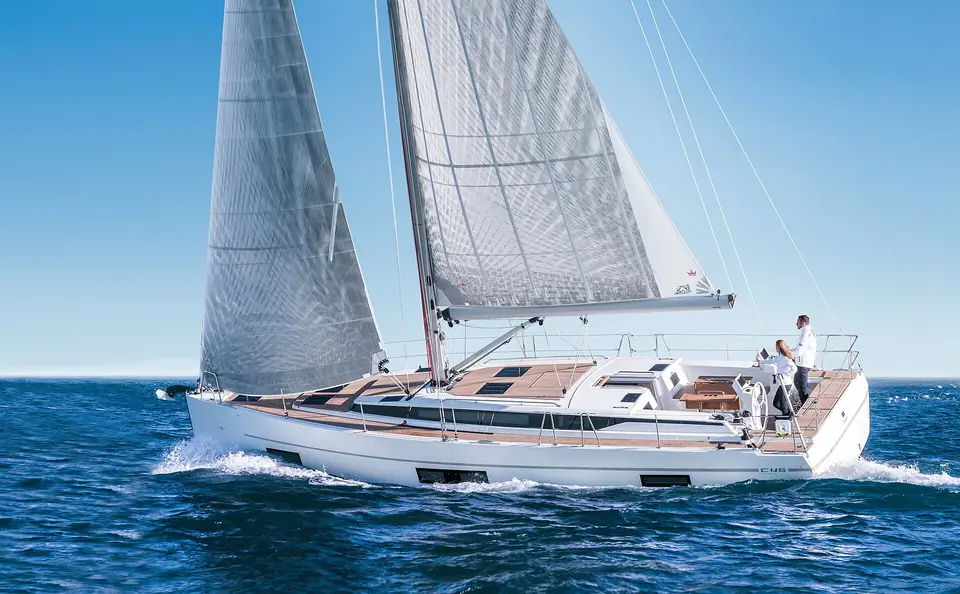
We have not found a freely licensed photo of the Bavaria 30 Cruiser yet, so these show other Bavaria Yachts boats, each captioned with the boat pictured.
More cruising sailboats to explore
Beneteau Oceanis 30.1
Cruising Sailboats, 31 ft
Used $95K to $175K
Dufour 30 Classic
Cruising Sailboats, 31 ft
Used $22K to $42K
Beneteau Oceanis 320
Cruising Sailboats, 32 ft
Used $14K to $33K
Hunter 30
Cruising Sailboats, 30 ft
Used $7K to $27K
Other Bavaria Yachts models
- Bavaria 31 Cruiser
- Bavaria 33 Sport
- Bavaria 35 Cruiser
- Bavaria 35 Match
- Bavaria 38 Cruiser
- Bavaria 39 Cruiser
- Bavaria 42 Cruiser
- Bavaria 43 Cruiser
- Bavaria 44
- Bavaria 47 Ocean
- Bavaria 49
- Bavaria 50 Cruiser
- Bavaria 340
- Bavaria 820
- Bavaria C38
- Bavaria C42
- Bavaria C50
- Bavaria C57
- Bavaria Cruiser 32
- Bavaria Cruiser 33
- Bavaria Cruiser 34
- Bavaria Cruiser 36
- Bavaria Cruiser 37
- Bavaria Cruiser 40
- Bavaria Cruiser 41
- Bavaria Cruiser 45
- Bavaria Cruiser 46
- Bavaria Cruiser 51
- Bavaria Cruiser 55
- Bavaria Cruiser 56
- Bavaria Ocean 38
- Bavaria R40
- Bavaria R55
- Bavaria S29
- Bavaria S33
- Bavaria S36
- Bavaria S40
- Bavaria Sport 32
- Bavaria Sport 34
- Bavaria Sport 35 HT
- Bavaria Sport 39
- Bavaria Sport 43
- Bavaria SR41
- Bavaria Vision 42
- Bavaria Vision 44
- Bavaria Vision 46
- All Bavaria Yachts models